
Holiday Rental Pergolas: Guest Use and Owner Upkeep
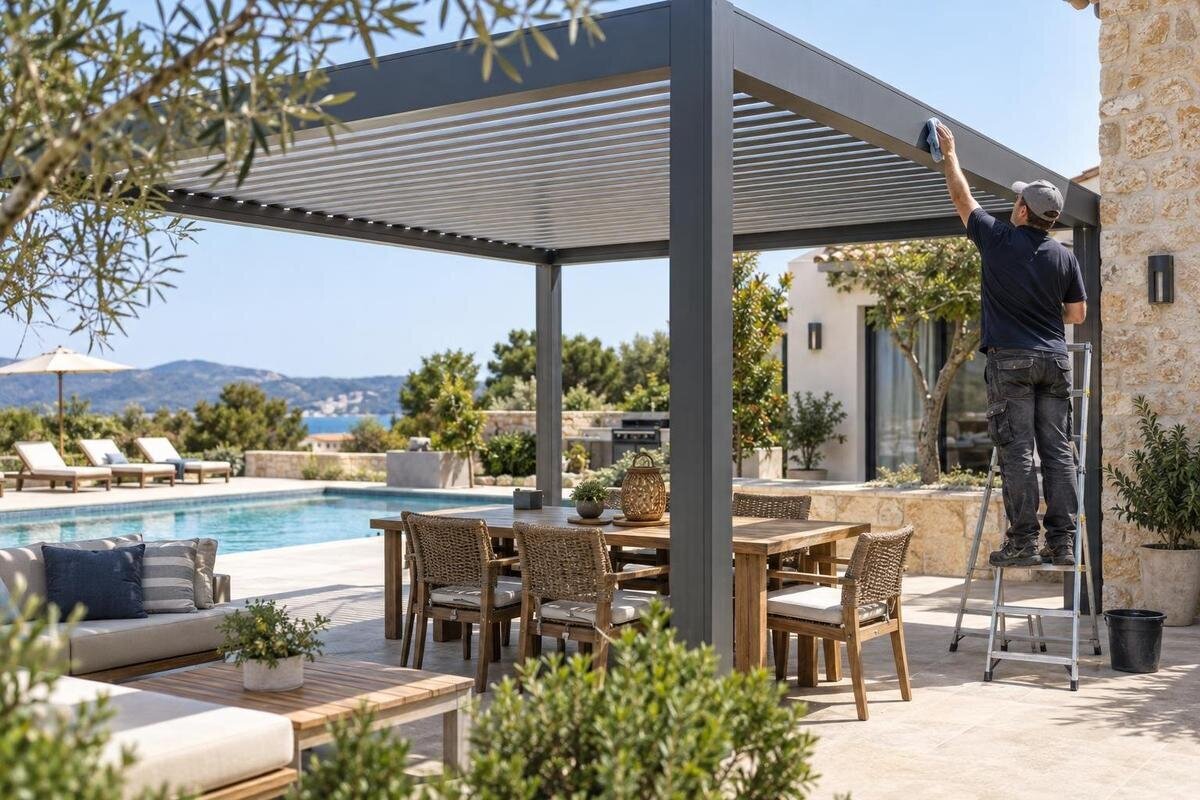
Holiday rental planning
A pergola can make a holiday rental’s outdoor area more useful, but it also needs clear arrangements for everyday use. Guests need simple instructions, cleaners need an agreed scope, and owners need access for inspection or servicing without disrupting a stay. These arrangements work best when they are set before the first booking, rather than left to a lengthy welcome guide or a cleaner’s judgement. This guide covers guest instructions, cleaning responsibility, routine checks, contractor access and downtime. Base the instructions on the installed product, the property’s actual layout and the operator’s requirements; a model name or photograph is not a substitute for handover information.

Project checks 1
Responsibility for guest use and upkeep
A holiday rental pergola is both a guest amenity and part of the property that needs looking after. Guests need clear instructions for ordinary use; the operator needs to know who makes decisions about condition, cleaning and access. Write a short house rule covering matters guests can reasonably follow: keep the marked route clear, use only furniture supplied for the area, report visible damage or anything that seems wrong, and do not climb on the structure or attach items unless the property’s instructions expressly allow it. Avoid assigning guests jobs that belong to a cleaner or service provider.
Assign responsibility to a role, not a vague group. For example, the owner can approve repair decisions, a property manager can handle guest reports and closure notices, and the cleaner can complete an agreed visual handover check. One person may hold several roles, but the procedure should still say who acts during a booking, who covers for the usual contact, and where an issue is recorded. Include a handover arrangement for reports received near the end of a shift or just before check-in, so an unresolved concern does not disappear between staff members. Keep the pergola contact route consistent with the property’s wider guest information, including its established process for urgent problems.
Base operating notes on the installed model
Write directions from the actual unit and its handover information, not from a product category or a photograph. If guests may use a control or move an adjustable part, include only the confirmed steps and limits for that installation. If guest operation is not intended, say so plainly. Do not ask visitors to diagnose a fault, force a part, remove covers or attempt a repair. The product name Bloomcabin Bioclimatic Pergola identifies a catalogue model, but it does not by itself describe how a particular installation operates or what actions its owner permits.
Set out instructions in the order a guest encounters the task: what the space is for, what they may operate, any limits they need to respect, and what to do if the area appears damaged or a fitted control does not work as described. Use the exact names for controls shown in the approved handover information; avoid vague wording such as “open it” if there is more than one component. If the guidance is unclear, ask the supplier or installer to clarify it before publishing the guest version. That keeps a welcome note from becoming an improvised technical manual.
Project checks 2
Put the guest guide where it is useful
A guest may read a long welcome guide in a hurry, so put the essential pergola note in the arrival information and repeat a brief reminder at a sensible point near the outdoor area. Keep any sign unobtrusive and out of the path; do not rely on a label alone where a fuller instruction is needed. A digital house guide can hold more detail, but the contact route and any immediate restriction should be easy to find. If the property uses self check-in, make sure the relevant information is available before arrival.
Use short, direct wording and give one action per sentence. Name who may use the area, whether a particular control is guest-operable, and whom to contact; keep service details in the owner’s records. Replace phrases such as “use as normal” with the action expected. When considering the Bloomcabin Wall-Mounted Pergola listing, include guest information in the project brief so it can be prepared for the final installation. Before publishing, ask someone unfamiliar with the property to read the draft and point out unclear references or missing directions. This is a check of the wording, not permission to test unfamiliar equipment. Review the guest copy if the equipment or operating arrangement changes, and update both the arrival guide and any on-site reminder.
Assign cleaning tasks at changeover
Put cleaning on a written changeover list, with a clear boundary between routine housekeeping and maintenance. A cleaner can remove ordinary litter, reset supplied furniture and clean surfaces only by a method approved for the actual materials and finish. Provide that method rather than expecting staff to guess, and identify where the relevant cleaning supplies are kept. Specify which surfaces are included in the booking’s cleaning allowance and which tasks are scheduled separately, so the cleaner can plan the available time. If a task requires a ladder, touching a control assembly, removing a panel or working above normal reach, keep it out of the routine changeover scope unless a competent person has expressly authorised and trained the worker for it.
Name the role responsible for each result: rubbish removed, furniture returned to its agreed position, the route left clear, and any damage or residue reported. The property manager can define how the cleaner records completion in the changeover system, while the owner decides how to handle a missed task or recurring issue. Give staff a way to mark a task as incomplete and explain why, rather than making a tick-box imply it was possible. Distinguish an unfinished cleaning task from a condition report requiring the manager’s attention; each needs a different response before the next arrival. Guests can be asked to leave the area reasonably tidy, but routine cleaning and condition checks should not depend on them.

Project checks 3
Keep visual checks separate from technical servicing
At each changeover, use a brief visual check to spot obvious changes since the previous stay: new damage, items left behind, rubbish, or a guest report that needs follow-up. A visual check is not a functional test or maintenance sign-off. Staff should not dismantle, adjust, climb on or operate parts outside their training and the product guidance. Set a clear threshold for pausing guest use and contacting the manager, especially where the condition cannot be judged confidently from the ground. The checklist should make it possible to record “unable to assess” rather than requiring a reassuring answer. Do not ask a cleaner to certify that the structure is safe.
Record the date, the person completing the check, observations, action taken and whether the area remained available to guests. Describe what was observed rather than guessing at a cause: a report of a part not moving as expected is more useful than an unsupported diagnosis. If cleaning or repair instructions depend on the exact product, keep them with the property’s maintenance record, not only in a staff member’s messages. When assessing the Bloomcabin Pergola catalogue entry, ask what product-specific care information will be supplied for the selected configuration. Agree who will follow that guidance and who will arrange any work outside the cleaner’s scope.
Plan maintenance access between bookings
Plan maintenance access before the first booking, while the site is being laid out. Mark how the owner or contractor reaches the work area, where tools and materials can be kept temporarily, and how the route avoids guest circulation and neighbouring private space. The arrangement depends on the actual floor plan; do not assume a side passage, gate or service entrance exists. Keep keys, codes and other access details in a controlled staff procedure, separate from the guest note, and identify who authorises contractor entry.
Where practical, reserve routine inspections, specialist cleaning and repairs for the gap between stays. Allow for the work itself, clearing tools and materials, and handing the area back to the manager before guests arrive; do not treat the whole gap as contractor working time. If work must happen during a booking, coordinate timing, privacy, communication and any temporary restriction with the guest before the contractor arrives. For a proposal involving the Bioclimatic Pergola catalogue entry, discuss servicing access alongside the layout. Give the contractor the exact product identity, current plan, issue description and relevant instructions. Agree who receives the completion report and what happens if the work cannot be finished within the reserved window.
Project checks 4
Set a clear process for faults and downtime
Agree on a stop-use process that staff can follow without diagnosing the cause. If a guest reports damage, a control that does not respond, or another concern, ask them to leave the affected area alone and contact the named manager. Staff can then decide whether to close the space, arrange professional assessment or record a routine issue, following the property’s established procedures. Do not ask guests to test a mechanism repeatedly or let cleaners reopen the area just because it looks tidy.
If the space is unavailable, tell incoming guests before arrival where possible, update the on-site information and direct people along a route that remains open and clear. Make the notice specific about which area is closed and whether access to nearby doors or outdoor furniture has changed. Avoid promising a reopening time before the work has been assessed. Keep contractors and tools out of guest areas unless the manager has arranged access and communication. Record when the closure began and ended and who confirmed the work was complete; do not reopen the space solely because a booking is waiting. If you are considering the Wall-Mounted Pergola product page for the property, include temporary closure arrangements in the project discussion and assess their effect on circulation using the actual plan.
Check the layout against guest and service routes
Draw the pergola into the property’s actual floor plan alongside nearby doors, furniture, waste storage and service routes. Mark guest movement in both directions, the cleaner’s working area, and a route for a contractor carrying materials. Include the room needed to pull chairs out and pass them without narrowing a route, as well as clear space to open nearby doors or gates. Do not treat the pergola’s nominal footprint as the full area guests need, or assume everyone approaches from the same side.
The catalogue lists the Bloomcabin Pergola in a range from 9 to 24 m²; that range can help frame a preliminary size comparison, but it does not establish the clearances or fit of a specific property’s plan. Confirm the selected configuration and dimensions against the measured site plan, including required routes and space to service the installation. Show the intended furniture positions on the same plan so the comparison reflects how guests will use the area. Have a qualified professional review the actual proposal for applicable access, fire and planning requirements. A product name, area range or visualisation cannot settle those project-specific checks.

Project checks 5
Define the operator’s requirements
Before comparing designs, write a short operator brief: the activities guests are expected to use the area for, the intended furniture arrangement, who manages everyday use, the cleaning workload the business can sustain, and how contractors will reach the space. Add relevant constraints from measured plans and describe the arrangements staff must be able to manage during a normal booking. State whether the owner lives nearby, which tasks are handled remotely and which require someone on site. Include the response that can reliably be provided when an issue is reported, rather than assuming a manager is always available in person. This brief is about managing the amenity, not promising extra bookings or particular weather protection.
Use the Bloomcabin bioclimatic model page to identify the option you want to discuss, then give the supplier or project team the operator brief and floor plan. Ask for the exact specification, operating instructions and maintenance information for the proposed configuration, including clarification of any controls guests would be allowed to use. For a commercial project enquiry, confirm suitability against the actual operator requirements and site. Clarify what is included for the specific project and what the owner must arrange separately, such as access, routine cleaning or specialist servicing. Compare proposals against the same brief so differences in the owner’s responsibilities are visible. Describe a guest benefit in the property listing only when the project information supports it.
Keep an upkeep record that survives staff changes
Keep one property-level record that remains useful when the manager or cleaner changes. Include the model name and identification, installation and handover documents, approved guest instructions, cleaning methods, service contacts, previous reports and closure dates. Store the current floor plan or a marked-up access plan with the record, and note who can approve repairs or return the space to use. Do not rely on a single staff member’s memory or a guest guide that might be edited without the maintenance team being told.
Set review intervals using supplier guidance, actual use and the operator’s maintenance programme rather than an invented universal calendar. Review the notes when a contractor reports a change, guests repeatedly raise the same issue, the installed arrangement changes, or seasonal staffing changes. Date each revision and identify the current version, then replace outdated printed instructions and digital notes together. Retain earlier reports in the maintenance history without leaving superseded directions in the guest guide. If the Bloomcabin Wall-Mounted Pergola product page was used to identify the selected model, keep it as a product reference alongside the as-installed project record and supplier instructions. This gives incoming staff a clear distinction between catalogue information, current operating directions and the history of work completed.
Frequently asked questions
What should a guest instruction card say?
Keep it to the intended use of the area, any controls guests are allowed to operate, the confirmed steps for using them, and what to do if something appears damaged or does not work as expected. Include the property’s contact route. Use only information confirmed for the installed pergola, and keep it consistent with the main guest guide.
Who should be responsible for cleaning the pergola?
The owner or property manager should define the cleaning scope and make sure the cleaner has the right instructions for the actual surfaces. Guests can be asked to leave the area reasonably tidy, but cleaning and condition checks should have an assigned staff role rather than being left to guests or assumed to happen.
Can guests operate adjustable parts or controls?
Only if the owner has confirmed that guest operation is permitted for the installed model and provided clear, product-specific instructions. Do not infer how a pergola works from its name or appearance. If the guidance is unclear, leave the feature out of the guest instructions until the supplier or installer has clarified it.
How often should the owner arrange maintenance?
Follow the supplier’s guidance for the exact installed product and consider the property’s actual use and maintenance programme. Keep routine visual checks separate from professional servicing, and record any issues reported by guests or staff. Do not apply a universal service interval where product-specific advice is available.
What should happen if the pergola is unavailable during a stay?
The manager should decide whether the area needs to be closed under the property’s established procedures, then tell guests what is unavailable and which route remains open. Arrange assessment or repair as needed, record the closure, and reopen the space only after the responsible person has confirmed that it is ready for use.
A holiday rental pergola is easier to manage when guests know what to do and whom to contact, cleaners understand their responsibilities, and maintenance can be scheduled without confusion. Keep the guest guide, changeover checklist and owner’s service record separate but consistent, and review them whenever the installation or site plan changes. Clear responsibilities and a reliable handover between stays help keep everyday upkeep organised.
