
Managing Insects Around a Pergola: Screens and Gaps
Pergola planning
Side screens can make pergola seating less exposed to mosquitoes, sandflies and other flying insects, but covering one or more sides does not turn an open pergola into an insect-proof room. The result depends on the mesh, how its edges meet the roof, posts and floor, and how people enter and leave. A privacy curtain or shade fabric may improve comfort without serving as a fine insect barrier. This guide traces likely entry gaps, compares mesh with curtains and explains what to confirm for the exact pergola model. The realistic aim is fewer insects reaching the seating area, not a sealed-room promise.
What a pergola screen can realistically do
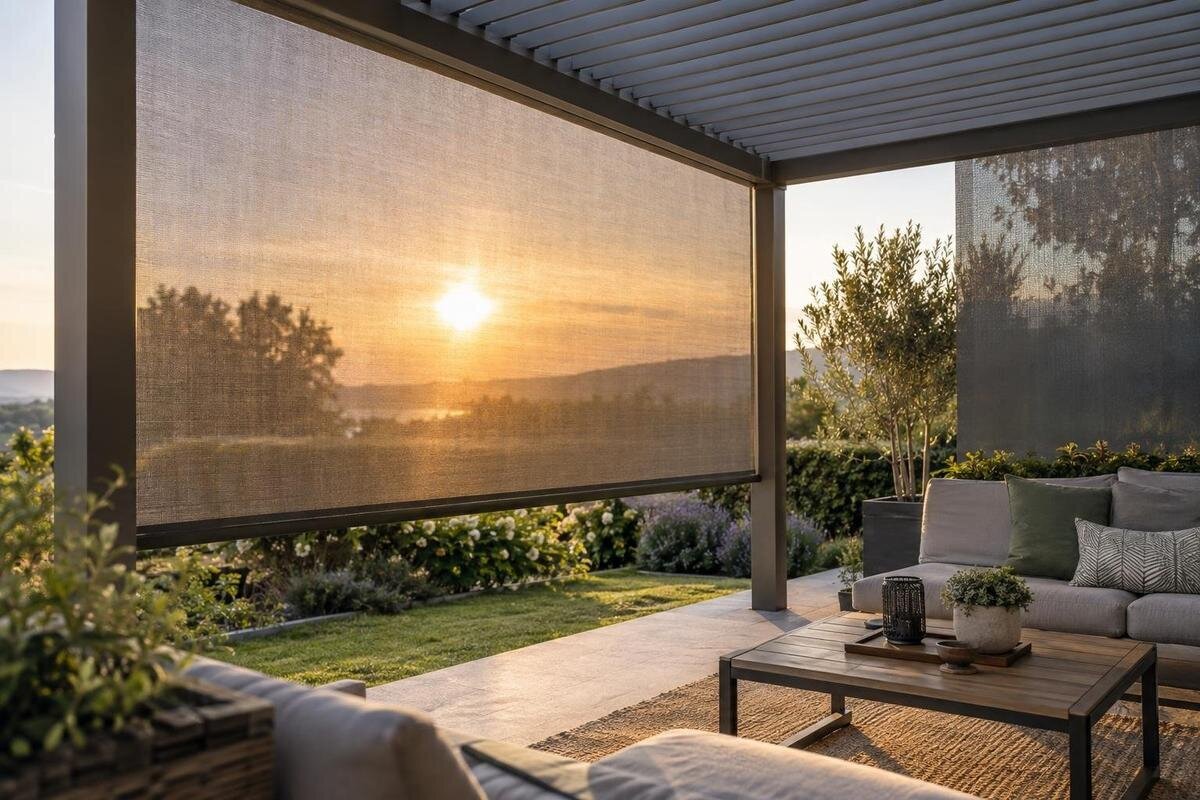
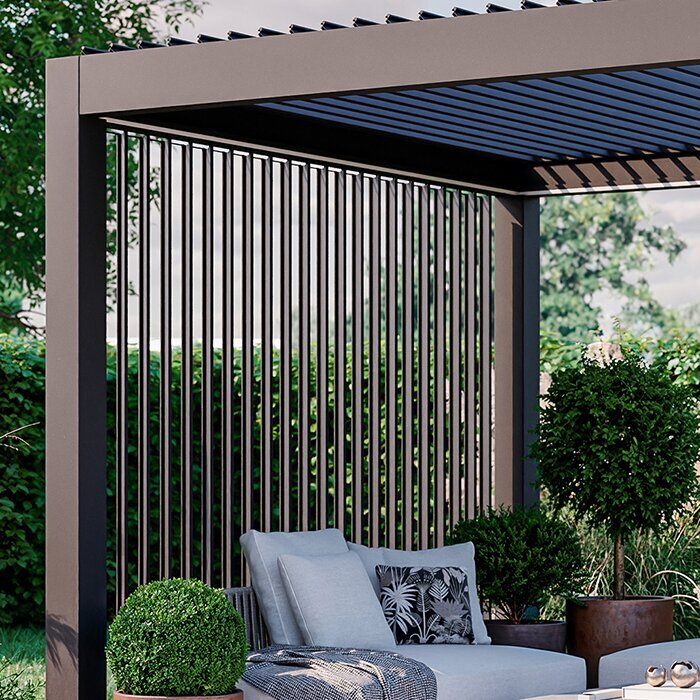
Think of a pergola as an outdoor frame with several possible routes into the seating area, not as a room that a curtain simply closes. A panel may cover one side while the opposite side, upper edge, post corners and space below remain open. Insects can use any uncovered route; a person also creates an opening each time a panel or door is moved. A screen on the side where insects are most noticeable may reduce nuisance there, but it cannot block every approach around the structure. A photograph of a continuous-looking panel does not show how its edges meet the frame in everyday use.
Set a practical target before comparing systems: perhaps fewer insects at the dining end during regular use, rather than a promise that none will enter. Note whether the issue is mosquitoes, sandflies or larger flies, because a weave suitable for one may not be fine enough for another. Consider which part of the seating area you want to screen and which sides you normally leave open. That makes the intended coverage clear before you compare fabrics or accessories. For a wall-adjoining layout, use the Bloomcabin Wall-Mounted Pergola model page to identify the base structure in your enquiry. Ask separately whether screening is included and how the proposed edges meet.
Map the perimeter before choosing a screen
Draw a simple plan showing the house wall, posts, roof outline, paving, furniture and the route people normally take. Add a side-on sketch of each proposed screen: where its top meets the frame, how it passes each post, where adjacent panels meet and where it ends at floor level. Mark openings needed for entry separately from gaps that are accidental. This gives a clearer picture than the pergola footprint alone, since a floor-area figure does not describe the length or shape of the edges that need closing. Note which sides should remain open for views or airflow as well.
Walk the route and inspect each transition: screen-to-roof, screen-to-post, screen-to-wall, panel-to-panel and screen-to-floor. Include corners, thresholds, drains and changes in paving height; a clearance that the structure needs should not be covered or altered just to make an edge look closed. Draw arrows for the route people use and circle any suspected entry gap. Then repeat the sketch with the screen open, partly open and fully lowered, because openings can change with its position. The Bloomcabin Pergola listing gives an area range of 9 to 24 m², but floor area alone does not show which edges can be screened or how they meet.
Choose mesh for the insects you want to deter
Ask what insect the mesh is intended to deter and what its opening size is, rather than treating labels such as privacy mesh, shade mesh or outdoor screen as proof. A coarser weave may soften sunlight or interrupt a view while leaving openings too large for a small insect. If sandflies or mosquitoes are the concern, ask for the stated mesh specification and the intended target; do not assume one material suits both equally well. An online image rarely shows the weave clearly at normal scale, so ask for a close-up or sample and compare it with the supplier’s specification.
Finer mesh may provide a more effective barrier against small insects, but it can also reduce airflow or make the view less clear. Consider those effects from the seats, not only beside the screen, and check whether the proposed format is practical to open and close. The mesh is only one part of the barrier: seams, side guides, lower edges and the entrance also affect coverage. When enquiring about the Bloomcabin Bioclimatic Pergola page, distinguish the base model from the proposed screening accessory. Ask which mesh grade would be used and how its edges would fit the frame, rather than judging the barrier by the fabric alone.
Curtains, shade fabrics and insect mesh have different jobs
Side curtains are often selected for shade, privacy or wind shelter, but those jobs do not automatically make a curtain an insect screen. A heavier or loosely woven fabric may have openings, a split centre or an uncovered edge; opaque fabric still allows insects through wherever it stops short of the roof, a post or the ground. Ask whether the proposed product is specified as insect mesh and which insects it is intended for, rather than relying on broad terms such as outdoor curtain or privacy screen. If its purpose is unclear, assess it for shade or privacy rather than relying on it to keep insects out.
Inspect how the curtain is held along both sides and how its lower edge sits when fully deployed. A freely hanging panel can leave a gap beside a post or shift as people pass; a guided arrangement may meet more consistently only if it is designed for that frame and installed as specified. Check the join between neighbouring panels and what happens when one is rolled or tied back. For the model shown in the wall-mounted pergola listing, ask how the proposed curtain would be held at each edge and whether it is an approved accessory. Inspect a sample at eye level and near the floor, rather than assessing only the centre of the fabric.

Check the roofline, posts, corners and floor
Start at the top, because a roof does not close the sides. Ask where the proposed screen is intended to meet the upper frame; a narrow line between the screen and beam can remain a route, particularly if the panel is fixed only at its ends. Check whether the connection follows the full edge or leaves breaks around posts, brackets or changes in shape. If the pergola has moving roof components, ask how the screen meets them in each position and whether operation creates a temporary opening. There is no useful universal gap figure without knowing the screen and target insect, so ask for the product’s fit details.
At the sides and bottom, inspect the panel’s junction with each post, wall and surface. Changes in paving height, a drain channel, steps or a deck edge can leave a gap, while bridging them may interfere with access or drainage. Ask how the edge is intended to meet an uneven surface rather than improvising a seal. A front-on image may not explain these junctions, so request details of the corners and thresholds. Use the Bloomcabin Pergola model page to identify the structure when discussing the fit. Keep side coverage, ground clearance and mesh fit as separate questions, since a panel can cover the opening without closing every edge.
Plan the entry opening as carefully as the sides
Every usable enclosure needs an opening for people. Depending on the system, this might be a hand-parted curtain, a zip opening, a sliding panel or a door; do not assume any particular option is included with a pergola screen. If an opening stays ajar while food or furniture is carried through, insects have a clear route inside. Ask whether the selected system has a defined entrance and how it is meant to return to its closed position after use. If the opening needs to be closed by hand, include that step when judging how much protection it can offer in everyday use.
Mark the usual entry route on your plan and place the access opening there, rather than making people pull aside a full panel repeatedly. Leave a clear path around chairs and tables so the screen does not need to be held open longer than necessary. If children, pets or someone carrying a tray will use the area, consider how easy the opening is to operate and whether its lower edge could obstruct the route. Include your access sketch when enquiring about the bioclimatic pergola model listing, and ask which entrance options, if any, are available with the proposed screening arrangement.
Balance screening with airflow and operation
A screened side changes how air moves through the seating area. Fine insect mesh may restrict airflow more than a coarser shade mesh, particularly when several sides are lowered. Compare the intended setup with one side open, one side screened and all proposed sides closed. Assess the view and airflow from the seating position as well as the amount of coverage. A partial arrangement may suit people who want both fewer insects and a breeze. The open side will still be an entry route, however, so weigh that limitation against the comfort of keeping part of the pergola open.
Ask which conditions are suitable for operating or leaving a screen down, and what the instructions say about retraction, storage and cleaning. Do not assume a screen intended for a sheltered setting suits a more exposed position, or that a third-party mesh can be attached to any frame. Before adding a separate panel to a Bloomcabin wall-mounted pergola, ask the retailer or installer to confirm compatibility for that exact model and intended use. This avoids choosing a barrier that cannot be fitted or operated as planned; it does not imply that the pergola itself is an insect enclosure.
Moving panels, wall joins and maintenance
Check the screening arrangement through its normal range of movement, rather than inspecting only a fully closed panel. Retractable screens leave a side uncovered when raised; panels that slide or fold can create openings at their ends or where they meet. Follow each panel from its stored position to its closed position and note which gaps remain in each arrangement. If the pergola has adjustable roof components, include their normal positions in this check. The aim is to understand how the whole arrangement works in use: the frame, screens, tracks and entrance may form a different boundary when some parts are open. Keep those operating positions on your sketch.
Where a pergola meets a house, fence or other fixed surface, do not assume the join is already sealed. Eaves, downpipes, wall projections or uneven paving can interrupt the line a screen needs to follow. Use the Bloomcabin Pergola product page to identify the model, then discuss these site-specific junctions with the supplier or installer. Once the proposed fit is clear, consider access for maintenance: how will mesh edges and tracks be kept clear of leaves and dirt, and how will you inspect for tears or loosened joins? Include wall-side corners in that check, rather than looking only at the exposed face of each panel.

Decide how much enclosure your use needs
Screening can change more than insect access. An opaque curtain may provide privacy and shade, while mesh can preserve a view but still alter the sightline; either can make that side feel less open. Compare the screen position with the time you use the pergola and the view, shade and airflow you want then. A panel that helps with insects but makes the seating area feel too enclosed may stay rolled up, limiting its practical value. Sketch a typical use of the space and decide which sides need to remain open, rather than assuming maximum enclosure is automatically best.
Separate a nuisance at the table from insects entering the house or appearing elsewhere in the garden. A pergola screen protects only the area bounded by its fitted edges; it cannot control every approach beyond that line. When using the space, note where insects appear, which panels are open and whether they enter as someone passes through. That pattern can help identify whether you need different mesh, a better edge fit, a more convenient entrance or screening on another side. It also keeps attention on the actual opening rather than the fabric label.
Ask for details for the exact pergola and accessory
Before choosing, ask for a description of the complete arrangement for the exact model: which screen material is proposed, whether it is an approved accessory, what edges it closes and which insects it is intended to deter. Request a drawing that includes the roofline, posts, corners, floor, wall joins and access opening. Ask what remains open for drainage, ventilation or normal movement, and what the manufacturer expects when the screen is raised, lowered or stored. If installation requires changes to a frame or attachment point, have the method confirmed by the manufacturer or a qualified installer rather than adapting it yourself.
Compare configurations on the same basis: how much of the perimeter they cover in everyday use, how easily the entrance can be closed, what sightline and airflow remain, and what inspection or cleaning is needed. Do not compare a single-side screen with a complete enclosure as if they offered equal coverage. Check compatibility before purchasing a third-party curtain or mesh separately. A well-specified screen can reduce opportunities for insects to enter, but intentional openings, panels left open and differences in fit mean no pergola should be described as completely insect-proof.
Frequently asked questions
Will pergola screens keep mosquitoes and sandflies out?
They may reduce entry if the mesh suits the insects and its edges meet the frame, but entrances and uncovered sides remain routes in. Insects can also enter while someone passes through. Treat screening as a way to reduce nuisance, not as a guarantee.
Is a shade curtain the same as insect mesh?
Not necessarily. Shade and privacy fabrics may have a weave or edge arrangement that is not intended to stop insects. Check the stated mesh opening, the insects it is designed for, and how seams and edges close before relying on a curtain as a barrier.
Do I need to screen every side?
There is no universal answer. Screening one side may address a particular entry route while leaving others open. Map the gaps, access needs, airflow and seating position, then choose coverage that matches the nuisance rather than assuming every side must be closed.
Is there a standard gap to leave at the bottom?
No single gap size suits every screen, target insect, paving surface and product. Ask for the accessory’s installation details for your site, including any required drainage or movement clearances. Do not improvise a seal or cover an opening intended for another function.
Can I add a third-party fly screen to any pergola?
Do not assume so. Frame shape, attachment points, moving parts and accessory compatibility vary. Before attaching a screen, confirm with the pergola supplier or a qualified installer that it suits the exact model and site.
Useful insect screening depends on both the mesh and how it fits, not merely on a curtain with a fine-looking weave. Identify the insects and likely entry routes, then assess the roofline, side, corner, floor and entrance joins alongside airflow, views and everyday access. If a junction is unclear, ask the supplier or installer to show how it would work on the exact pergola. The aim is a practical reduction in insect nuisance, with a clear understanding of which openings remain and how often the screens will actually be closed.
