
Pergola Furniture: Aluminium, Timber and Wicker Compared
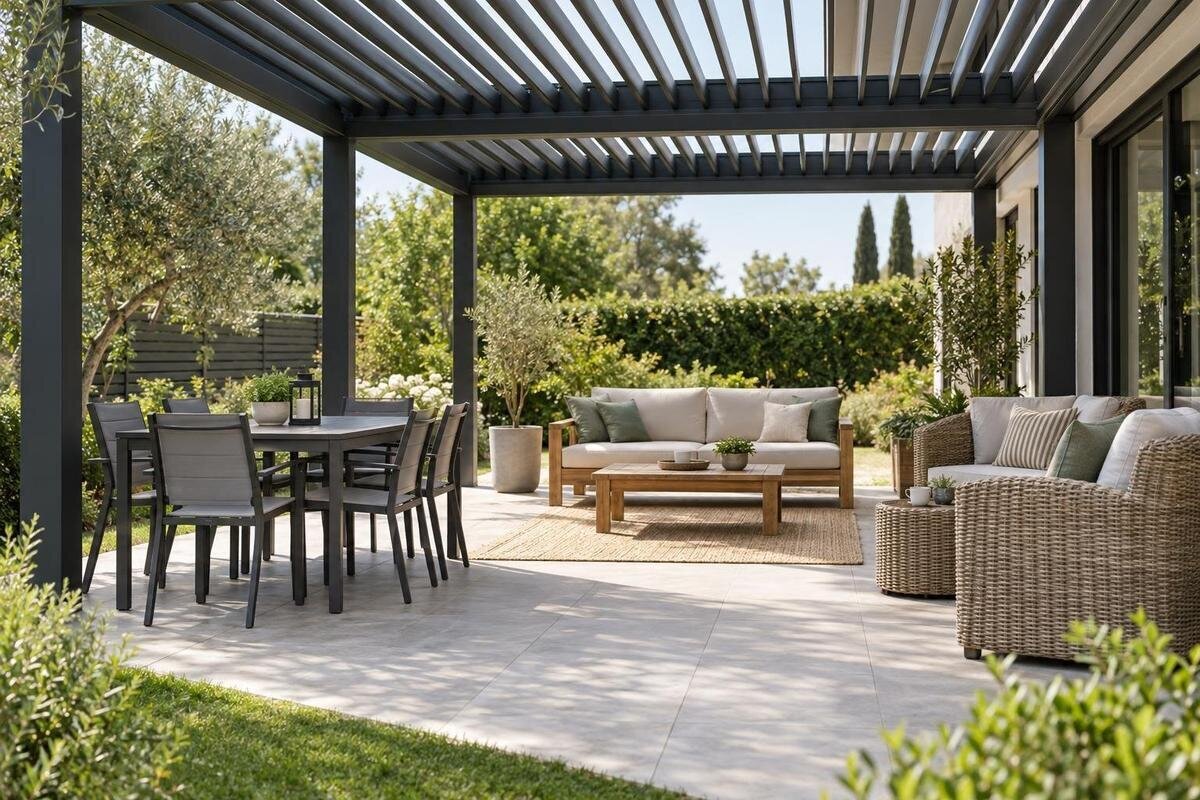
Pergola furniture
The furniture beneath a pergola still faces sun, moisture and regular use. Overhead shade can reduce direct exposure in some spots, but open sides, changing sun angles and wind-blown rain mean a pergola is not an automatic weatherproof room. Aluminium, timber and wicker differ in how their finishes, frames and woven parts need care, while comfort depends just as much on shape and cushions. Compare the actual seating zone with your routine: meals, lounging, moving chairs, storing cushions and cleaning the area. This guide focuses on furniture materials and practical layout, not the materials or weather performance of the pergola itself.

Before you buy 1
Check the exposure where the furniture will sit
The first check is what the furniture will experience where it stands, not simply whether it sits beneath a roof. A pergola may create shade while leaving the sides open; direct sun shifts through the day, and wind can carry rain into the seating area. Note where sunlight reaches the table and chairs, where rain splashes onto the paving, and whether leaves, dust or salt collect there. A chair beside an open edge can face a different routine from one near the centre. Observe the space at the times you expect to use it, rather than relying on a single midday impression. If possible, note what stays damp after rain.
Match that exposure to the details for the exact furniture. Look for a clear statement that the set is intended for outdoor use, then check its frame and surface materials, care directions and cushion instructions. For an initial scale reference, the Bloomcabin Pergola is listed from 9 to 24 m²; treat this as stated area, not a promise of clear seating space or protection from weather. Shade can reduce direct sun on some surfaces, but it does not remove dampness or make a finish immune to exposure. Shortlist against the actual seating zone rather than the label aluminium, timber or wicker alone.
Aluminium furniture: finish, weight and handling
Aluminium can suit a low-fuss routine because many frames are easy to wipe and some are easy to shift, but do not buy on the word lightweight alone. Designs differ in frame profile, construction, seat shape and overall weight. Lift or move a sample if possible, check that it feels stable on your paving, and inspect feet and joints as well as the visible finish. A chair you intend to move for sweeping or to adjust its position needs to be manageable for the person who will move it. Check whether the set stacks or folds instead of assuming all aluminium chairs do. Ask for the weight and assembled dimensions if they are not clear.
Aluminium itself does not develop the familiar red iron rust, yet its finish, joining hardware and contact points still need inspection. Scratches, salty deposits or standing water around fittings can be hard on finishes and fasteners not intended for that exposure, so follow the manufacturer’s care instructions, especially in a coastal location. Bare metal can feel hot in direct sun and cool in cooler weather; cushions change the contact surface but add storage and cleaning work. If you are also considering the Bloomcabin Bioclimatic Pergola, compare the furniture’s colour and finish with the structure as part of the overall look. Assess the furniture’s outdoor-use information separately: matching appearances do not mean matching care requirements.
Before you buy 2
Timber furniture needs a product-specific care plan
Timber offers a warm, tactile surface, but timber is not a care specification. Species, treatment, coating, joint construction and hardware all affect what outdoor use is intended and how the surface should be maintained. Ask whether the finish is designed to weather naturally or is expected to be renewed, and read the care directions before comparing the initial appearance. Oil, stain and paint are not interchangeable fixes, so do not apply a generic product just because a surface looks dry. If the furniture combines timber with metal, check the instructions for each part rather than assuming one treatment suits the whole piece. Look at the underside and joints too, as those areas can be overlooked when comparing the finish.
Natural variation in grain and gradual colour change can be part of timber’s appearance; moisture and sun can also affect its surface over time. Water held in joints or beneath cushions can keep it damp longer, so routine checks matter as much as the material label. Wipe away dirt as directed, let damp surfaces dry and check that feet remain sound where the chair meets the ground. A solid dining table may be difficult to reposition. If you are planning a dining area beneath a Bloomcabin Wall-Mounted Pergola, mark the table and chair positions in relation to the wall and doors. Give a heavy table a practical everyday position rather than relying on moving it whenever someone needs to pass.
Natural and synthetic wicker furniture
Wicker describes a woven style or construction, not one uniform material. Natural cane or rattan and synthetic resin weaves have different exposure and care needs, and a chair may use a separate supporting frame beneath the weave. Read the product details to identify both parts. Natural cane and rattan can be vulnerable to prolonged damp, while synthetic strands can still fade, stiffen or crack with exposure, depending on their formulation and finish. Do not infer outdoor suitability from a wicker appearance alone. Check for clear outdoor-use instructions and guidance on care, sun, rain and storage, rather than assuming every woven chair can stay in place year-round.
Look closely at the weave where hands, clothing and cushions rub, and at the frame’s joints and feet. Gaps can collect crumbs or leaves and take longer to clean than a smooth surface; an even-looking weave does not tell you how its core or frame will wear. Wicker lounge pieces can also be deeper than dining chairs, so measure the set rather than buying by visual impression. If you are comparing the regular pergola model for a lounge setting, include the sofa, coffee table and walking routes in your furniture sketch. Footstools and side tables are easy to overlook when concentrating on the main seats, yet they also need space in the arrangement.

Before you buy 3
Comfort depends on shape as well as material
Sit in the exact style if you can, rather than judging it from a product photo. Seat depth, back angle, arm height and the gap between the seat and table affect whether a chair feels right for an ordinary meal, not just a brief try. Aluminium, timber and woven seats all come in different shapes; the material alone cannot tell you how supportive or easy it is to get in and out of a particular chair. Check whether edges press against your legs, whether the feet sit firmly on the paving and whether the chair remains stable when you shift position. If buying online, compare stated seat and overall dimensions with a chair you already find comfortable.
Treat cushions as a separate part of the choice. Ask whether covers can be removed, how they should be cleaned, whether the cushions can remain outdoors and where they will go when not in use; a pergola does not guarantee dry fabric. Thick upholstery may improve comfort but takes storage space and can stay damp if packed away wet. Colour and fabric need to suit the exposure as well as the look you want. When furnishing a bioclimatic pergola, include cushion handling in your everyday routine rather than considering only the seats when they are ready to use. A removable cover is useful only if its cleaning instructions suit the time and facilities you have available.
Match the furniture to everyday use
Think through an ordinary day rather than a staged gathering. For meals, confirm that each intended seat can be used without blocking the route from the house or through the garden; for a lounge arrangement, allow for deeper chairs, side tables and room to put a drink down. If one set must serve both purposes, note how often you will move pieces and who will do it. Lightweight or stackable furniture can make a space more adaptable, but check the actual build and stacked footprint instead of relying on a category name. If seats are awkward to shift, a layout that requires frequent rearranging may not suit your routine.
Mark doors, fixed posts, planters and other objects on the same sketch, then look at the route from each seat. A photograph can make a layout look clear while hiding a chair back, table corner or pot that narrows the path in use. If you are comparing the wall-mounted pergola option, pay particular attention to how the furniture arrangement relates to the door you will use to reach it. Keep the pieces in their normal positions rather than compressing everything into a convenient drawing. Check the route while people are seated as well as when the chairs are tucked away, and test the arrangement before settling on a permanent set-up.
Before you buy 4
Measure the full footprint, including chairs in use
Measure the furniture assembled, not packed. Record the table’s length and width, chair width and depth, and the space a chair occupies when pulled out far enough for someone to sit and stand. Add side tables, footstools and any pieces that normally stay in the area. Painter’s tape or a full-size cardboard outline can reveal whether an arrangement crowds the table before you buy. Mark posts, walls and door openings too, but use the needs of the people using the space rather than an assumed universal clearance. Keep a separate outline for a lounge chair that reclines or uses an ottoman.
Compare the complete sketch with the clear area actually available; do not treat a published square-metre figure as proof of usable floor space. When reviewing the Bloomcabin Pergola size range, use the shape and dimensions of the proposed layout alongside its total area. A total area cannot show whether a chair back meets a post or whether a table leaves enough room to pass. Mark the supports and the routes you want to keep open, and leave space for chairs in use rather than only their parked positions. Keep the measurements for each furniture option on your shortlist so you can compare arrangements without redrawing from memory. Recheck the plan if the furniture list changes.
Allow space for storage and clear routes
Leave room for everything that keeps the furniture usable. Cushions may need an indoor storage spot, and covers, a small cleaning kit or folded chairs also take space; include the route between the seating area and that storage. If a set stacks, check the height and footprint of the stack and whether it blocks a doorway or a passage you want to keep clear. Do not plan around a storage box until you have measured it. Convenient storage encourages cushions to be put away after use, but it should not narrow the route or turn the dining area into a permanent store. Include a place for the items you actually move each day.
If you expect to move chairs regularly, identify where they can sit without obstructing the main path or being left where they stay damp. Include these temporary positions in your plan for a Bloomcabin Bioclimatic Pergola layout, alongside any storage box or chair stack. This helps distinguish the space used for sitting from the space needed when you put things away. For outdoor covers, follow the furniture maker’s guidance on fit and use; a cover that is awkward to handle can add work rather than simplify it. Decide whether each item will be left in place, stacked, covered or brought inside, and make sure that routine is practical for the people who use the space.

Before you buy 5
Read the furniture details before you buy
Read the product description for the actual materials in the frame, seat and woven parts, along with the intended outdoor use and care instructions. Terms such as all-weather or natural finish should be backed by specific information about maintenance and exposure; if a detail is missing, ask the retailer or manufacturer instead of filling the gap with assumptions. Check whether cushions, covers, protective feet or side tables are included or sold separately, and compare dimensions for the exact set or configuration you are considering. A close-looking photograph may show a different fabric, colour or arrangement from the option you select. Confirm which details apply to the item you intend to buy.
Inspect small components as well as the frame: fasteners, joints, feet, weave edges and coatings can affect how easily furniture is cleaned and kept in good condition. Ask what care is required and how often the finish may need attention, especially where different materials meet. For a large item, consider how it will reach its place and whether the route includes a narrow gate, step or turn; a table’s listed width does not describe the whole moving path. Keep the care instructions after purchase so routine cleaning does not depend on guesswork. If repair information or replacement parts matter to you, ask about them before deciding.
Compare ongoing care across the whole set
Compare the ongoing work for the whole set, not just one chair or the main table. Separate everyday tasks, such as wiping surfaces and putting cushions away, from occasional work such as renewing a finish. Then consider who will do each task and where it will be done. If regular treatment or bringing cushions inside feels unrealistic, a set that needs those steps may become frustrating even if it looks ideal on day one. Timber can still be a good choice when its particular care schedule works for you, and woven furniture can suit a location when its fibre and frame match the exposure. Choose according to the routine you will genuinely follow.
For mixed sets, keep a separate note for each component: an aluminium frame, timber tabletop, woven side chair and fabric cushion may each need different checks. Follow the relevant maker’s instructions, then set a practical reminder to remove debris, wipe or rinse surfaces as directed, let damp items dry and look for loose joints or worn feet. The right interval depends on the furniture and its exposure, so do not apply one schedule to every material. If a finish needs renewing, use only the method recommended for that piece. This way, appearance, comfort and upkeep are considered together without assuming the pergola takes care of maintenance.
Frequently asked questions
Which furniture material is best under a pergola?
It depends on the conditions in the seating area and how much upkeep you are prepared to do. Compare the outdoor-use and care instructions for each piece, then consider comfort and the space it takes up. The material name alone does not tell you how a particular finish or weave will cope.
Will a pergola keep outdoor furniture dry?
Not necessarily. Shade from above does not prevent wind-blown rain, moisture around the seating area or damp cushions. Check how exposed the furniture’s actual position is, and follow its instructions for cleaning, drying and storage.
Is wicker the same as rattan?
No. Wicker describes a woven style or construction; rattan is one natural material that can be woven. Outdoor furniture may also use synthetic strands, and the supporting frame can be made from something else. Check the product details for both the weave and the frame.
Which material is easiest to maintain?
There is no universal answer. Aluminium frames may be straightforward to wipe, but finishes and fittings still need care. Timber requirements vary with the wood and finish, while synthetic wicker can still need protection from exposure. Compare instructions for the exact furniture you are considering.
What should I measure before ordering outdoor furniture?
Measure the assembled table and chairs, including the space a chair takes up when pulled out. Add side tables, footstools, storage and the routes people need to use. Mark fixed posts, doors and other obstructions, then check the layout with furniture in its everyday positions.
Aluminium, timber and wicker can all work beneath a pergola when their construction and care requirements match the seating zone. Check what the spot experiences, try the seating style if possible, measure the furniture while chairs are in use and read instructions for frames, weaves and cushions separately. The best set is comfortable for its everyday purpose, fits the measured layout and has upkeep you can maintain. Let exposure and routine guide the material choice, then use appearance to narrow the shortlist.
