
Reducing pergola light glare with placement and shielding
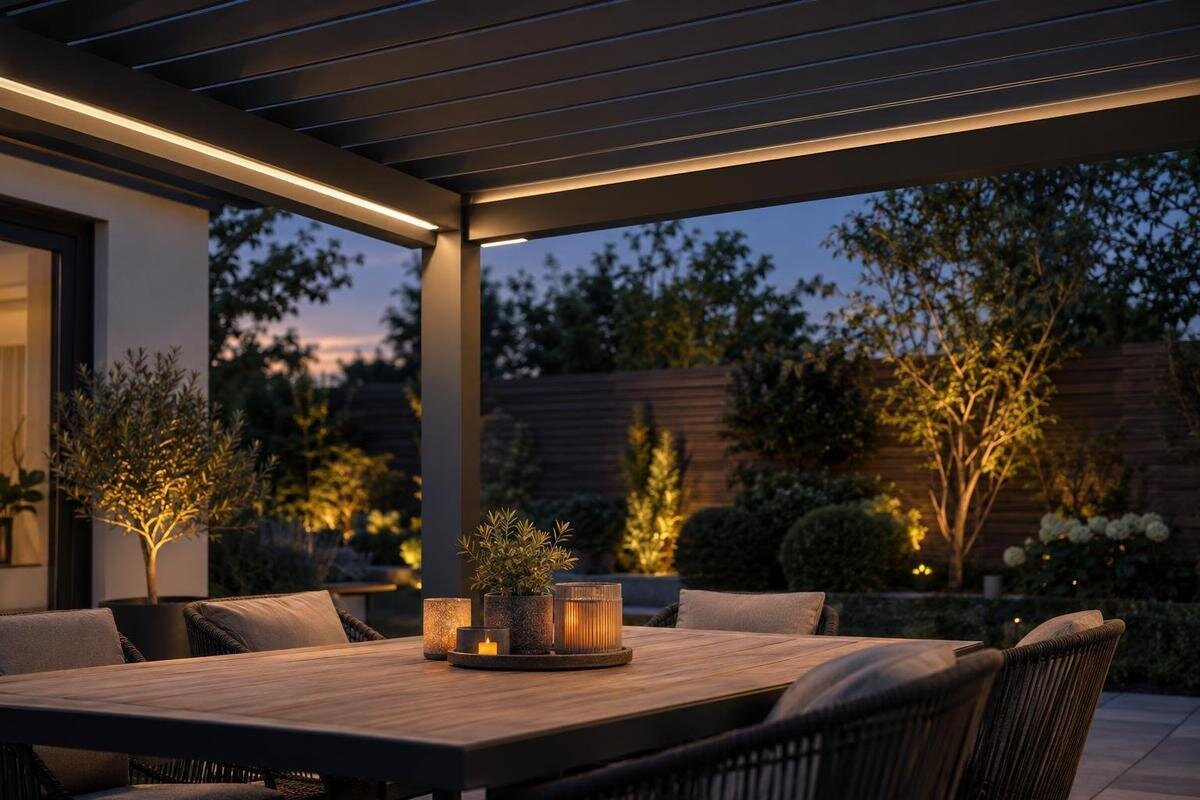
Pergola lighting
Pergola lights can look unobtrusive from the garden path yet feel harsh once you are seated at the table. The difference is often the viewing angle: a bare source in a direct line of sight can be more uncomfortable than light spread across a surface, while glass or a glossy tabletop may throw a second bright image back at you. Before changing fittings or adding covers, map where people sit, what they look towards and where each proposed light would appear. A simple plan and side-view sketch can show whether placement, shielding or both need attention.

Why a pergola light can feel glaring
Glare is not simply another word for a bright patio. It is visual discomfort when a light source or reflected image stands out too strongly from its surroundings. A fitting may illuminate a table well yet still feel harsh when its LED, lens or bright diffuser is visible from a chair. Conversely, a broad pool of light may seem intense because the surrounding area is dark, even when the source itself is hidden. The distinction matters: moving a visible fitting, screening it from a particular angle and balancing the lit surfaces are different responses.
Ask people who use the pergola where they notice the problem: while looking towards the house, across the garden, over dinner or when leaning back. Record whether they see a point source, a larger glowing surface, a reflection or a bright patch against a dark background. Note whether it happens at dusk, after dark or only from one seat. People use the word glare for several kinds of discomfort, so describe what is actually in view. A precise observation gives a supplier or electrician a useful problem to assess instead of assuming every fitting needs dimming or replacing.
Sketch the light positions and sightlines
Start with a plan view showing the pergola footprint, posts, nearby walls, doors, fixed seating, dining table and the paths people use. Mark every proposed fitting rather than writing a general note such as lights along the edge. Add arrows for the usual direction people face at the table or lounge. This can expose a fitting that sits directly above a seat or across the table in someone’s normal view. Use the actual furniture arrangement, not an empty rectangle, and note approximate dimensions where you know them so the drawing relates to the space.
Add a side view at seated eye level, and another at standing height if people regularly use the area that way. Draw a line from each viewpoint to the bright part of the fitting, not just to its mounting point: a shade may hide the source from one angle but leave it visible from another. Label the seats and fittings so you can refer to the same positions in both drawings. Distinguish existing fittings from proposed ones, and mark any positions that still need confirmation. If you are comparing the Bloomcabin Wall-Mounted Pergola, keep that model reference with your drawing. The product listing identifies the structure but does not establish light positions, compatibility or mounting approval. Ask for a layout tied to the specific structure and proposed fitting, with any uncertain positions clearly marked rather than presented as settled choices.
Check the view from every regular seat
Use the furniture in its intended position when you review the sketch. Check each seat people use often, including the end chairs and lounge seats where the viewing angle can differ from the dining table. Consider how someone’s view changes when they sit back, turn to talk or look towards the garden. Also mark the route between the house and the table: a fitting that is comfortable while seated may be distracting when it sits in view as someone walks through.
A daytime product image cannot show how a particular light will feel after dark, so assess the proposed arrangement from the real seating positions where possible. If the fitting is not installed, use the drawing to identify the angles that need checking rather than treating a rough visual mock-up as proof. Give each regular seat a simple label and record what is visible from it: the bright face of the fitting, a reflected image or neither. Include the view across the table towards another person, not just the view straight ahead into the garden. This makes it easier to explain why an arrangement may suit one chair but not the chair opposite. Keep the Bloomcabin Pergola model details alongside these notes if that is the structure being considered, so everyone discusses the same model and furniture layout.
Place fittings to keep bright sources out of direct view
Compare each candidate position with both the sightlines and the surface you want to illuminate. A fitting centred above a table may light it evenly, yet put its bright face in a diner’s normal gaze. Moving it to the perimeter is not automatically better: an end seat may then look straight at it. On the drawing, identify the visible source separately from the area its light is meant to reach. Where the proposed arrangement allows, test a position or orientation that keeps the bright part out of direct view without leaving the intended task area poorly lit.
Check nearby beams, posts and walls as well. They can interrupt the light reaching a surface without hiding the source from a seated person. Show these obstructions in the side view, and distinguish a blocked light path from a blocked view of the fitting. Otherwise, a position may appear to solve glare while leaving the intended surface poorly lit. If the selected design includes movable roof elements, consider the positions commonly used; a change above can alter the view of the fitting or where its light falls. Record those positions separately rather than combining them in one ambiguous sketch. When considering the Bloomcabin Bioclimatic Pergola, use the actual drawings and manuals to confirm the mounting options. Identify which proposed positions are supported and which remain questions for the supplier; do not treat every location drawn on the plan as an available mounting point.

Separate reflected glare from a visible fitting
A reflection can be mistaken for a second light. A fitting may appear in a glazed door or window, or make a bright patch on a polished tabletop, metal surface or glossy paving. Look from the seats people use after dark and note which surface carries the image. The apparent reflection may change as you move, even though the fitting stays in place. If the issue occurs only from one angle, record that angle; it can point to a different solution from a source that is visible from several seats.
Treat the reflected image and the fitting as separate parts of the problem. A small change to an approved position or orientation may keep light off glazing while retaining useful light on the table; a suitable shield may also block the troublesome direction. On your sketch, label the reflective surface and the seat from which the image is visible. Keep a separate note for any direct view of the fitting, even if both problems occur from the same chair. Recheck the other regular seats after considering a change, because removing one reflection may create another. For a layout beside the house, keep the wall-mounted pergola model reference with the drawing of nearby doors and glazing. Note which surfaces are fixed and which belong to movable furniture, so the discussion distinguishes a change to the lighting from a change to the furniture arrangement.
Use only shielding approved for the exact fitting
Shielding is useful only if it screens the bright part of the light from the viewing angles that matter and is suitable for that fitting. A built-in cutoff, louvre or baffle can block a direct view from one side; a hood may direct light away from a particular seat. The shape and position matter. A shield that works from the dining chair may leave the source exposed from the lounge or entry. Ask whether the proposed shield hides the bright element from the marked viewpoints while leaving the area you use lit appropriately.
Avoid improvised covers made from cloth, tape, foil, paint or generic trim. An added layer may affect a fitting’s heat management, water handling or light distribution, and the effect depends on the product. Use shielding documented as suitable for the exact fitting and check the proposed mounting against its instructions. Describe the problem in terms of the viewing angle you need to screen, rather than asking for a cover without explaining its purpose. For example, identify the dining chair from which the bright element is visible and the table area that still needs light. Include the Bloomcabin Pergola product page to identify the structure under discussion, then specify the fitting and shield separately. Ask for exact compatibility, outdoor suitability and mounting approval before adding the shield to the plan; a pergola model name does not establish those details.
How diffusers and baffles affect glare
A diffuser and a shield do not do the same job. A diffuser spreads light across a surface and can make a small bright point look less sharp. It can also create a larger glowing area or send light towards a different seat. A baffle or cutoff is intended to block a direct view from certain angles, but may limit where the light reaches. Neither option guarantees a comfortable result: the effect depends on the fitting, its position and the viewer’s line of sight.
Compare the exact fitting and shield from the angles on your sketch, rather than choosing from a broad product description. Ask for the manufacturer’s documentation or a demonstration of the specified, approved combination; a lifestyle image is not evidence of its light distribution or compatibility. In the comparison, record whether you can still see the bright element, whether a larger glowing surface has become visible and whether useful light still reaches the intended area. These are separate observations, so avoid reducing the result to a single comment such as softer light. Keep the bioclimatic pergola model page with the proposal to identify the structure, while recording the fitting and shielding details separately. The comparison should concern the particular combination and mounting position being considered, not an assumption that every diffuser or baffle will behave in the same way.
Recheck glare as the setting changes
The same fitting can look different as the surrounding light changes. Compare the layout at dusk and after dark, and notice whether nearby house or garden lights make the source stand out less or more. Check the common seating positions with the furniture set up as it will be used. If people routinely move between a dining area and a lounge, include both views rather than judging the arrangement from a single favourite chair.
Where the chosen structure has movable parts or other approved configurations, assess the positions people expect to use. A change overhead may alter the beam path or leave a bright source exposed from a different angle. Record each commonly used configuration against the same seat labels, so you can compare like with like. Note whether the concern appears only after dark, only in one roof position or whenever someone uses a particular chair. Keep the observations separate from possible remedies: first describe what is visible, then list the position or shielding changes worth discussing. This prevents a preferred solution from obscuring the original problem. A short record of the worst seat, the source or reflection causing discomfort and the conditions when it occurs gives the discussion a clear priority without trying to solve every possible angle at once.

Confirm outdoor suitability and mounting approval
A glare sketch helps with comfort, but it cannot establish whether a particular fitting is suitable for an outdoor location or can be mounted on a particular part of the pergola. Record the exact fitting and shield model, the proposed position and the structure being considered. Check the fitting’s own documentation for its outdoor rating and permitted use, rather than judging suitability from its appearance. Ask the supplier or relevant product specialist to confirm that the proposed mounting location has documented approval for that structure.
Have a qualified electrician review the exact fitting instructions and the electrical aspects of the proposed arrangement. Keep the chosen shield, mounting details and any relevant control information together so the review is based on the actual products, not a generic description. Consider access for cleaning and future servicing while comparing positions; a shield that is difficult to reach may be less practical to maintain. Mark the proposed fitting location clearly enough to distinguish, for example, an attachment to a beam from one near an adjacent wall. If the proposal concerns a Bloomcabin Wall-Mounted Pergola model, ask about approval for that exact location rather than assuming the model page confirms a fitting can be attached there. Keep these suitability and mounting questions separate from the glare observations: a comfortable viewing angle does not, by itself, settle whether the installation is appropriate.
Discuss placement and shielding with your supplier
Bring a marked plan, side view and a short description of the problem to a supplier or configuration discussion. Show the usual seated eye positions, the bright source or reflection, and the surface the light needs to reach. If two positions are being considered, mark both on the same drawing so the trade-off is clear. Compare whether each option removes the direct view, avoids a troublesome reflection and still provides useful light where people eat or sit.
Use the discussion to compare the options against the problem you recorded. For each proposed position, ask which seats would still have a direct view of the source, which reflections need another check and whether the intended surface remains lit. Note any unanswered questions beside the relevant fitting rather than leaving them in a separate, general list. The Bloomcabin Pergola listing can help identify the pergola being discussed, but the proposal should also name the exact light and any shield. Keep the suitability and mounting details from the technical review with this proposal. Before choosing between options, make sure each one is described at the same level of detail; a confirmed position should not be compared as though it were equivalent to an unconfirmed idea. The resulting plan should show what has been selected, what remains open and which viewing angles need a final check.
Frequently asked questions
How can I tell direct glare from a reflection?
From the usual seats, check whether you can see the fitting’s bright surface itself, or whether a separate bright image appears on glass, a table or another surface. Note the surface and viewing angle. A reflection can remain distracting even when the fitting is no longer directly in view.
Should I move a light or add a shield?
It depends on what the sightline sketch shows. A different supported position may remove the source from direct view; a compatible shield may block it from a particular angle. Compare both options against the area you need to light, and check the fitting’s documentation before choosing either.
Will a diffuser always reduce glare?
No. A diffuser can soften the appearance of a small bright point, but it may create a larger glowing surface or spread light towards another seat. Assess the exact fitting from the viewpoints that matter rather than assuming a diffuser will solve the problem.
Can I make a cover for an outdoor light?
Avoid improvised covers. They may affect how the fitting manages heat, water or light distribution. Use only shielding documented as suitable for the exact fitting, and have the proposed mounting checked against the relevant product instructions.
What should I take to a supplier or electrician?
Bring a plan showing the pergola, proposed fittings, furniture and seated sightlines, along with the exact fitting and shield details if you have them. Ask the supplier to confirm mounting approval for the chosen position, and have a qualified electrician review the fitting’s instructions and outdoor suitability.
A comfortable pergola lighting layout starts with the view from the seats people actually use. A plan that marks direct sightlines, reflected images and useful task areas helps distinguish whether a fitting needs a different supported position, suitable shielding or a closer technical review. Check the exact product documents and mounting approval before finalising the arrangement, so the solution addresses the glare without relying on an unverified cover or placement.
