
Should Your Pergola Go Beside the House or Further into the Garden?
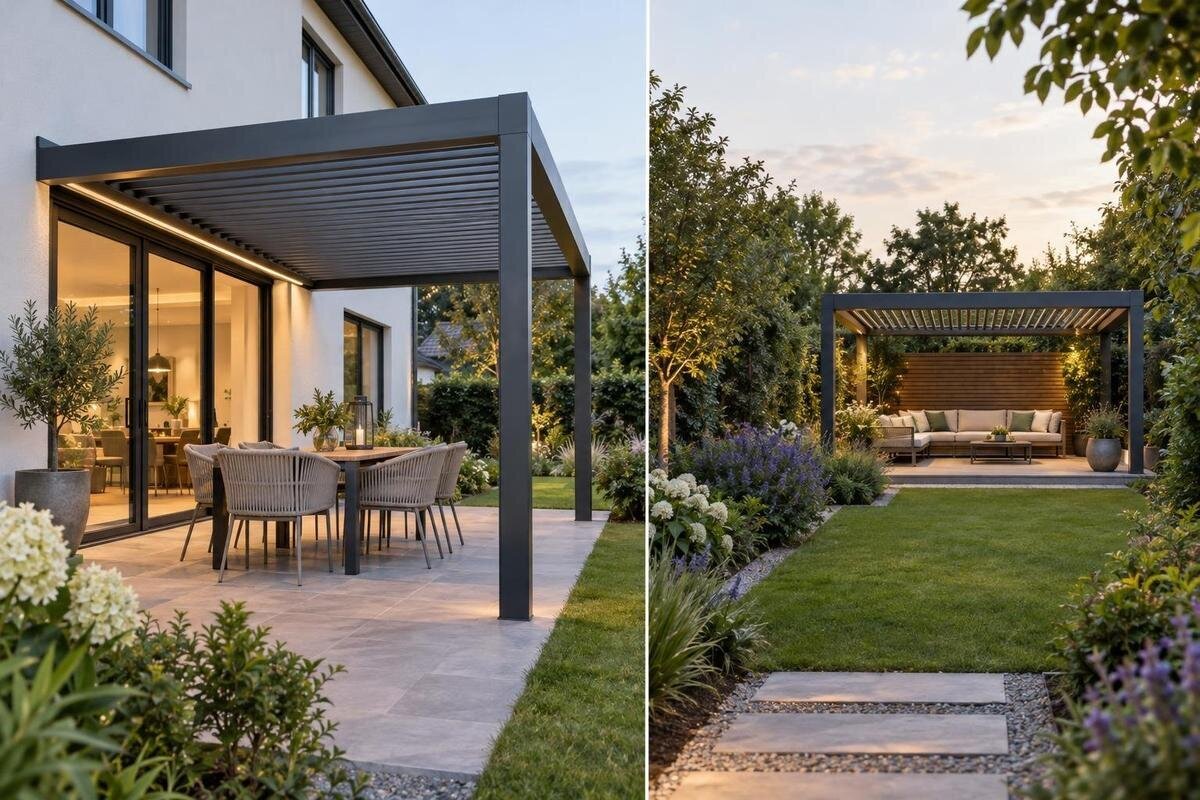
Pergola placement guide
Choosing between a pergola beside the house and one further into the garden is chiefly a question of how you will use the space. The closer site may make quick visits easier; a more distant one can give outdoor time a clearer sense of occasion. Neither advantage is automatic. Compare the routes you already take, the views from both settings and what remains usable around each proposed footprint. Notes made on site and a plan drawn to scale will tell you more than choosing by appearance alone.

How often will you use each position?
Start with how you expect to use the pergola, not the most attractive spot in a photograph. List the main activities—quiet coffee, meals, reading or time with friends—and how often each is likely to happen in an ordinary week or month. Note who will use the space and whether they would go there alone, together or mainly when guests visit. This helps distinguish an everyday setting from one that looks appealing chiefly for occasional entertaining. If several people will use it independently, consider whether their routines and preferred times are similar or whether one position needs to suit very different patterns.
Compare each activity against both proposed locations. Give regular, short visits more weight unless entertaining is the main reason for adding a pergola. A simple tally can show which activities would be easy at each spot, which would involve a deliberate walk and which you might not bother with there. Separate your current habits from things you hope to do more often: both matter, but an occasional ambition should not outweigh a routine you already enjoy. If household preferences differ, identify the activities both locations can accommodate before choosing between them. A place beside the house is not automatically useful just because it is close, and a distant spot is not automatically impractical if you already spend time in that part of the garden. Use the Bloomcabin Pergola as a product reference while comparing how each setting would suit those activities.
How easy is the route from the house?
Walk from the doors you actually use, rather than tracing the shortest-looking line on a plan. Think about ordinary trips with a cup, a meal or cushions; a route that involves a gate, a change in level or a narrow passage may feel different when your hands are full. Check whether the proposed position interrupts a main path through the garden or asks people to cross an area used for another purpose. If you expect to go in and out often, the ease of returning indoors can matter as much as reaching the pergola. Compare the complete trip from where you prepare or collect things, not just the distance from the nearest exterior wall. A pergola beside a rarely used door may offer less convenience than you first expect. Also consider whether someone carrying items would meet people travelling the other way and where they could comfortably pass.
At each option, note steps, pinch points, door openings and places where furniture or garden equipment tends to collect. Walk the route in both directions at the times you expect to use it. A nearby spot can still be awkward to reach if the approach is cluttered or conflicts with another route. If the house-side location is strongest, a wall-mounted pergola option is one category to investigate, but its label does not confirm that the wall, doorway clearances or route suit your site.
Will a garden-end pergola feel like a destination?
A position further into the garden can make outdoor time feel separate from the activity of the house. That may be exactly what you want for reading, taking a break or spending time with friends away from the main living area. It can also make a short visit feel like more of an undertaking. Ask what happens when you want to fetch a drink, answer the door or return indoors: the first walk out is only part of the journey if you expect to make several trips.
Think through a complete visit rather than judging only the walk out. For a quiet reading break, you might be content to take everything with you and stay for a while. For a short coffee break between household tasks, repeated returns indoors may make the same location less appealing. Consider whether you would use the space independently while someone else remains in the house, and whether that separation is welcome or inconvenient. Trace the approach from other places you regularly visit in the garden as well as from the house: a pergola near an area where you already spend time may become part of an existing routine. If reaching it involves a detour you would rarely choose, its secluded setting may not compensate for the extra effort. If you enjoy the walk and want a distinct place to pause, that distance may be part of the appeal.
Compare the view from indoors and outdoors
The view from the house may be the one you see most often, even when the pergola is empty. At each candidate position, look out from the living areas and other rooms that face the garden. Consider whether the structure would frame a part of the garden you enjoy, interrupt a valued outlook or draw attention to an area you would rather leave open. Temporary markers at the proposed corners can help you picture its position more accurately than a line on paper. Check from your usual seat as well as from the window, and consider the furniture that would remain visible beneath the structure. These are views you may see every day, so give them a place in the comparison alongside the outdoor experience. When considering the regular pergola model, relate its confirmed dimensions to those sightlines rather than judging the setting from a catalogue photograph.
Then stand or sit where you expect to spend time under the pergola and look back across the garden. Which planting, trees or open areas would be in view? Does the approach reveal a pleasant outlook, or would the structure face a boundary or another part of the site you rarely use? Compare the view from both positions at seated and standing height, and from more than one direction. A good-looking spot from one angle can feel less appealing when you arrive, sit down or look back towards the house.

Check sun and shade when you will use the space
Observe both candidate areas at the times you expect to use them. Note where the sun falls in the morning, around the middle of the day and later in the afternoon, as well as any shade cast by the house, trees or nearby structures. Conditions change through the year, so one visit is only a snapshot. If you are choosing a place for regular meals or afternoon breaks, observations made at those times are more useful than a general impression of which area feels sunny during a site visit.
Think about the light around the proposed pergola as well as the comfort of the spot itself. A position close to the house may affect daylight at nearby windows; the exact effect depends on the structure, its dimensions and the site. Consider which rooms face each proposed location and how you use them during the day. An outlook from a frequently used living area deserves attention even if the pergola will mainly be used in the evening. Record your observations separately for outdoor shade and indoor daylight, rather than treating them as one question. If the Bloomcabin Bioclimatic Pergola is on your shortlist, use the dimensions of the configuration you are considering to assess both positions. Its model name alone does not establish the shade or daylight effects at either site.
Consider privacy and connection with the house
Check privacy from the places where people will actually sit or stand, not only from the garden gate. Look towards neighbouring windows, shared boundaries and paths used by other people; also consider how visible the pergola would be from inside your own home. A position further from the house may feel more separate, but distance alone does not make it private. Existing fences and planting may help screen a view, yet their coverage and growth should not be treated as a guarantee of privacy.
Consider how connected you want to feel to the house and the rest of the garden. Being nearby may make it easier to talk with people indoors or move between activities, while a more distant setting can offer a clearer break from household bustle. Neither distance guarantees quiet: listen at the times you expect to use the space and notice what is happening around both locations. Decide whether you want to remain part of the activity at home or prefer a separate place to sit, and use that preference alongside the view and route when comparing options.
Fit the position around paths and planting
Map the existing routes before choosing a footprint. Mark entrances, gates, paths, planted beds and places where people need to pass through the garden. A pergola can take up more than the area directly beneath it if its position narrows a route or blocks access to a bed that needs regular care. Include mature trees and planting that you intend to keep, and allow for the access needed to maintain the surrounding garden. A location that fits only by squeezing out a useful path may be a poor choice even if the structure itself fits.
Use a measured landscape plan rather than estimating the footprint from a catalogue image. Once you have a particular model in mind, obtain confirmed dimensions for the configuration you are considering and draw those on both candidate layouts. The Bloomcabin Pergola product page provides a starting point for that comparison. Distinguish planting you want to retain from areas you are willing to change, and note where maintenance requires access from more than one side. A bed may still fit beside the proposed footprint yet become awkward to reach with tools or garden equipment. Record any planting requirements alongside the layout so they are not lost when the structure is positioned. Note visible drains, service access and other site constraints for further assessment; have relevant site conditions checked by a suitably qualified professional before work is planned.
Compare the usable space at both locations
A pergola’s stated area does not show how comfortable the surrounding layout will be. Draw the proposed footprint and add the furniture you expect to use, including the space needed to pull chairs out and move around them. Then mark the routes people will take through or beside the area. Try the same arrangement in both locations so you can see whether one makes it easier to sit together without obstructing the way through the garden. Avoid judging fit from the outline alone.
The Bioclimatic Pergola listing gives a range from 9 to 24 m². Treat that as area information, not as a description of the exact side lengths or a guarantee that a particular option fits your site. Confirm the dimensions of the configuration under consideration, then compare what remains for paths, planting and other uses at each position. Use the same furniture dimensions in both layouts so the comparison is fair. Mark where chairs would sit during a meal, not only when tucked away, and distinguish the space used by people sitting from the route others would take past them. This lets you compare the everyday arrangement rather than an empty footprint. If one location fits only by removing a route or feature that matters to you, the other may provide a better overall layout even if its outlook is less striking.
Decide on attachment after choosing the site
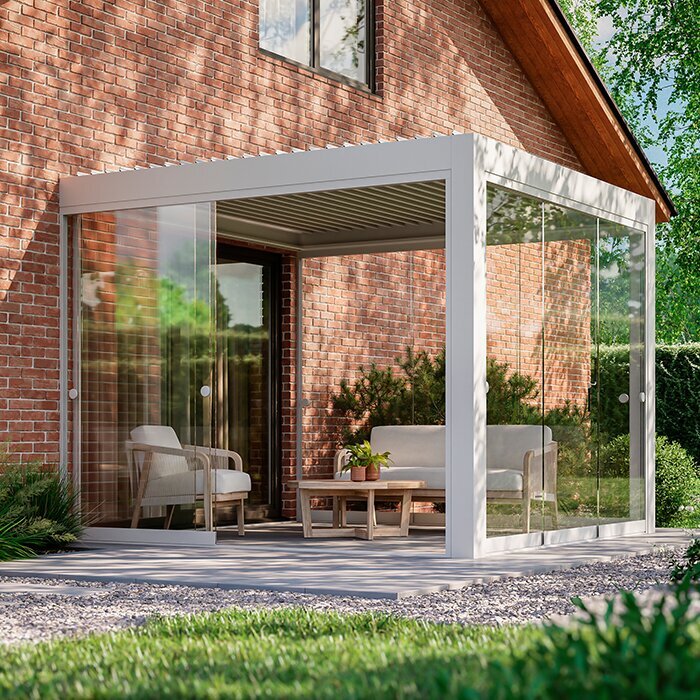
First decide where you want to spend time; then consider how the pergola could be supported there. A position beside the house does not have to be attached to it, and a wall-mounted design is not automatically the right choice just because a building is nearby. Conversely, a garden-end location still needs a layout that works with the available ground and surrounding routes. Treat the position and the construction approach as related but separate questions, rather than using one as a substitute for the other.
A wall-mounted option requires an assessment of the specific building and proposed attachment; a freestanding approach also needs suitable support locations on the site. Ask a suitably qualified professional to assess the relevant structure and ground conditions, and check any applicable approval requirements with the appropriate local authority. The Bloomcabin Wall-Mounted Pergola is a model to consider for the house-side layout, subject to that assessment. Keep your reasons for preferring the location clear while reviewing construction options. If an attachment or support arrangement would change the proposed footprint, access or outlook, revisit those parts of the comparison before committing to the layout.
Test both options on a measured plan
Draw the two candidate locations at the same scale. Include the house, doors and windows, boundaries, existing paths and planting, then add the confirmed pergola footprint and the furniture you expect to use. Mark the route from the house and any other route that needs to stay open. Add notes on frequency of use, outlook, sun and privacy for each position. If the Bloomcabin Bioclimatic Pergola option remains under consideration, use confirmed dimensions for the selected configuration rather than estimating from an image.
Take the plan outside and walk each route; then stand or sit at the proposed position and check the view for yourself. Revisit at a time when you expect to use the pergola, especially if sun or privacy is important to the decision. Compare the two options against your main priorities rather than simply counting advantages. One location may win on convenience but lose on the outlook you most want to enjoy; decide which difference matters more for your regular use. Note compromises you would accept and any drawbacks that would stop you using the space. A dimensioned landscape drawing with documented planting requirements can bring those decisions together in a layout you can review. The better location is the one that serves your routines and preserves the routes and views you value, not simply the one that is closest or furthest away.
Frequently asked questions
Is a pergola beside the house always more practical?
No. It can shorten the trip from frequently used doors, but a garden-end position may work better if you want a separate setting and will use it regularly. Compare the actual route, view and likely uses at each spot rather than assuming distance decides.
Does a pergola at the end of the garden need a large garden?
Not necessarily. The important question is whether its footprint and the route to it fit alongside the garden’s other uses. Draw the proposed location to scale, then check what would need to move or be lost.
Could a pergola change the light inside the house?
A structure close to the house may affect light reaching nearby windows, depending on its position and design. Observe the proposed area and windows at different times, and assess the actual dimensions rather than relying on a product image.
Should I choose a wall-mounted pergola for a house-side position?
Not automatically. Being near the house and being attached to it are separate decisions. Have a suitably qualified professional assess whether the building and proposed attachment are appropriate for the specific project.
What should I include on a plan comparing two positions?
Show the house, doors and windows, boundaries, existing paths and planting, both proposed footprints and the furniture you expect to use. Add confirmed product dimensions and note any planting requirements or site constraints that need professional assessment.
The best position is the one that makes the uses you care about feel natural, with a route you are happy to take and a view you enjoy from both inside and outside. Compare house-side convenience with the qualities of a separate garden setting, then check each proposal against measured dimensions, planting and the rest of the garden. Let those practical differences settle the location before you decide how the pergola should be supported.
