
Planning a Reading Corner Beneath Your Pergola
Pergola planning
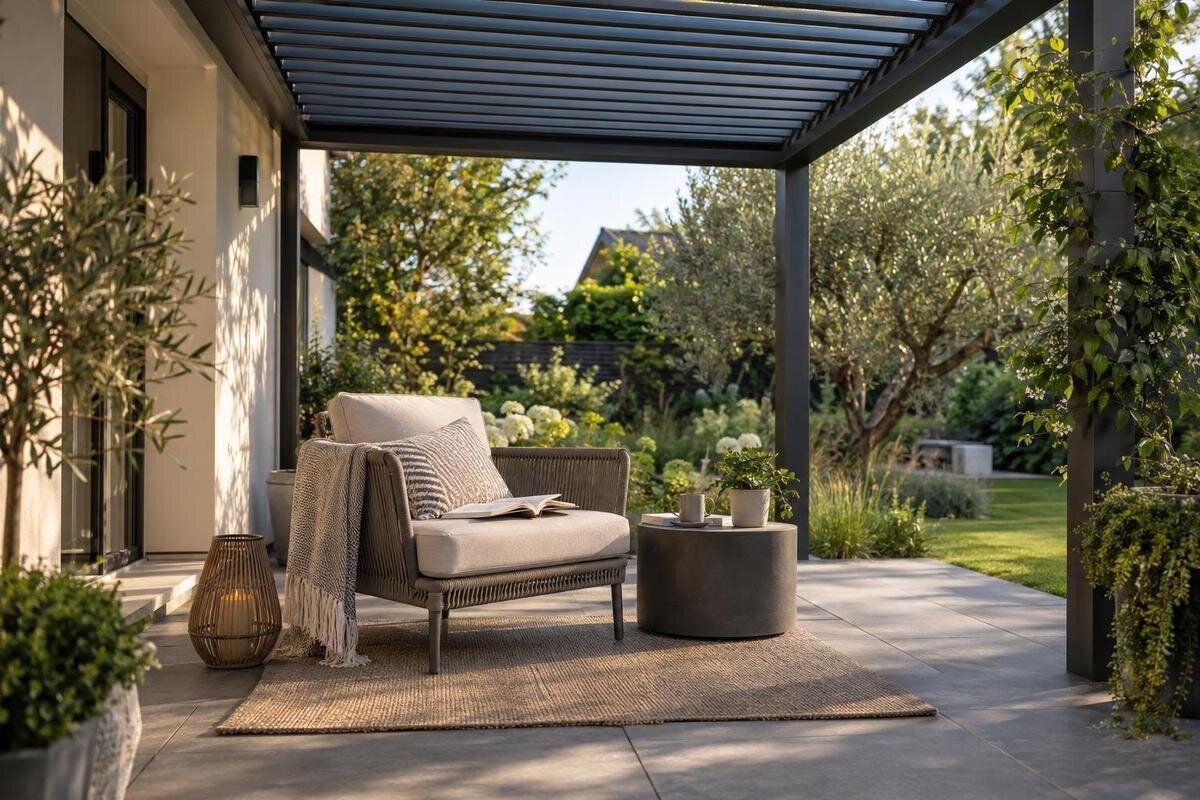
A pergola reading corner is more than a chair under an overhead structure: it is a measured place where you can sit comfortably, see the page clearly and reach what you need without blocking the deck. Its success depends on when you read, how the sun moves across the site, the chair’s full footprint and the level of shelter the chosen pergola actually provides. Plan the seat, light, circulation and book storage together, then test the arrangement at full size before choosing a configuration. The aim is a calm, practical place to read, rather than furniture squeezed into whatever space remains.
Space for your reading routine
Begin with the reading habit rather than the pergola dimensions. Note whether the space is for one reader or two, whether reading happens at lunchtime or after work, and which things normally come with you: a book, a cup, glasses, a footstool or a blanket. Decide whether you want a generous lounge chair, an upright armchair or a simpler outdoor chair; each has a different footprint and needs room when occupied. If two people may use the space, decide whether they need separate seats or a shared table. A short visit may need only a small side table, while a longer session may call for a place to rest your feet and put the book down without reaching across the seat.
Draw a rough concept plan using the dimensions of the furniture you are likely to use. Include the space taken by a reclined backrest, a pulled-out footstool and the route around the seat. Measure the furniture rather than estimating from a product photograph, and mark fixed posts, walls and doors on the sketch. The Bloomcabin Bioclimatic Pergola listing gives an area range of 9 to 24 m², which is useful for an initial catalogue comparison. Check the exact configuration against your measured layout: the area range alone does not tell you whether your chair, table and clear route will fit.
Follow the shade at your usual reading times
Visit the proposed spot at the times you are most likely to read, not just when you happen to be planning. Check where the sun falls on the seat, the book and any table at lunchtime, late afternoon and the time when natural light begins to fade. An overhead structure may reduce sun from above, but open sides can still leave the chair exposed to low-angle light. The shadow also moves through the day and across the seasons, so one observation is not a reliable picture of every reading session. If practical, repeat the check on different days and note whether the seat is shaded, dappled or directly sunny.
Use those observations to place the chair instead of assuming the middle of the pergola is the best spot. A small shift may move the page out of direct sun while keeping the seat shaded. If you are considering an attached layout, the wall, doors and orientation also affect where you can sit and how daylight reaches you. When comparing the Bloomcabin Wall-Mounted Pergola with your proposed layout, assess the chair position on site and check the selected configuration. Keep the layout flexible enough to move the seat if its best position changes through the year.
Chair comfort and placement
Sit in the chair before deciding where it goes. Try the posture you actually use to read: leaning back with a paperback, sitting upright with a larger book or using a tablet that needs a steadier angle. Check that you can rest your elbows, support your feet if you want to, and put the book down without twisting past a table edge. A low lounge chair may be relaxing but could put the page at an awkward angle for you; a more upright seat may suit a shorter visit. These are personal preferences, so test the furniture rather than choosing by appearance alone.
Mark the chair at its fullest footprint, including the space behind it if it reclines and the room needed to get in and out. Put a small table on the side that is easiest to reach, where a drink and book can sit without taking over the walking route. If there is a footstool, place it where you will actually use it rather than tucking it away for the photograph. When comparing the Bloomcabin Pergola listing with your plan, check the exact model dimensions against the furniture you have measured. Include the table and footstool in the arrangement you assess, not just the chair.
Clear routes around the seating
Size the route as carefully as the seating area. Draw the path from the house or garden entrance to the chair and table, and check whether another person can pass without asking the reader to move each time. Measure the swing of doors and account for steps, planters, posts and existing furniture. Keep the footstool area separate from the main route. A chair that fits on a bare plan may become awkward when someone sits down, reaches for a book or moves the seat to follow the shade. Rather than relying on one standard clearance, mark a route that works for the people using the space and the way they carry items through it.
Test the route with the furniture in place and in use. Pull the chair out, sit down, stand up, reach for the table and walk past the occupied seat. If a door opens beside the pergola, include its full swing; on a deck, account for fixed rails, steps or changes in level. When assessing the regular Bloomcabin Pergola option, check where the posts would sit in relation to your walking route, using the exact dimensions of the configuration you are considering. Leave the route clear if you later add a cushion box or another chair.

Manage daylight and glare on the page
Natural light can make a reading spot inviting, but a bright patch behind the page may make it harder to look comfortably at the text. Sit in the intended place with a real book and check the page at the time you expect to use it. Try turning the chair so sunlight comes from the side rather than shining into your eyes or straight onto glossy paper. Notice reflections from a pale deck, glass doors or a nearby wall as well as the sun itself. What works with printed pages may feel different with a screen, so include the device you actually use in the test.
Pay attention to the difference between a bright garden and a deeply shaded seat. If the contrast is strong, shifting the chair or using gentle, indirect light later in the day may make the transition less stark. Assess the shade at your site alongside the configuration details on the Bioclimatic Pergola product page. The useful comparison is how the proposed arrangement relates to the light you observe from the chair. If glare remains, test a movable chair position before fixing the whole layout around one sunny hour.
Add a reading light for later in the day
Plan evening reading as a separate task from general patio lighting. A decorative glow may make the area pleasant but leave the page dim; a reading light needs to reach the book without shining into your eyes. A movable, adjustable lamp or stable portable light lets you test the best position before committing to a fixed fitting. Place the light slightly to one side of the page to reduce the chance of your hand casting a strong shadow. Check that you can switch it on and adjust it without disturbing someone sharing the space, and keep its base out of the main walking route.
Test the light after dusk as well as at twilight, when natural light is fading. Use a book with the print and finish you normally read, then try different angles to see where reflections appear. If you are considering a fixed fitting, first confirm that it is suitable for outdoor use and that the selected pergola configuration permits the intended mounting. If the Wall-Mounted Pergola listing is on your shortlist, check fixture compatibility separately rather than assuming a light can be attached wherever you want it. Have fixed electrical work assessed and carried out by a qualified electrician, and keep exposed leads away from places where people walk.
Choose a position that feels private and calm
Quiet depends partly on where the chair faces. Listen at the times you intend to read: traffic, air-conditioning units, household activity, neighbours or a busy shared path may be more noticeable at one end of the deck than another. Try sitting with your back to the main movement and facing a calmer view, without blocking a doorway or route. A visual screen can change the outlook, but it should not be treated as soundproofing. Planting may soften a view without guaranteeing that it will reduce noise, so assess the actual spot instead of assuming a barrier will resolve every disturbance.
Consider sightlines from inside the house and from nearby properties. A corner that feels private from the chair may be visible when someone walks past, so check the view both seated and standing. For a layout using Bloomcabin’s wall-mounted option, include nearby doors and windows in this assessment as well as views from the garden. Position the chair and any screen for the conditions on your site, and ask an appropriate installer about any proposed fixed element. Keep the reading area simple: avoid placing a speaker or noisy equipment beside the seat.
Keep books close and protected
Keep the current book within reach but out of the path. A narrow side table can hold a book, glasses and a drink; a small basket or box can gather several books when the corner is not in use. Choose a position that does not make you lean across a hot drink, stretch behind the chair or step over a footstool. If you use a tablet or e-reader, plan to charge and store it indoors rather than running a cable across the deck. A reading nook usually needs only a few items, so avoid adding a large shelf that takes space away from sitting and moving.
Treat books as belongings that need protection from damp, rain and dirt, even when they are under a pergola. The overhead structure may provide some shade, but it does not automatically make the area enclosed or weatherproof, and wind can carry rain through open sides. Keep books indoors between sessions or use a closed container designed for outdoor storage, following its instructions. Check the location after rain for moisture on a table or beneath a cover, and dry it before returning paper items. A fabric tote can be handy while reading, but it is not a substitute for protected storage.

Plan for wind, rain and outdoor exposure
Consider how the spot behaves in unsettled conditions before leaving furniture or accessories in place. Wind can move light items, turn pages and make a portable lamp less useful; rain may reach a chair through open sides, while protection from above depends on the overhead cover. Choose furniture and cushions with the actual exposure in mind, and decide where to bring them indoors or store them when they are not in use. Do not plan around a pergola as if it were a fully enclosed room unless the exact configuration and site conditions support that use. The reading area’s comfort depends on its exposure as well as the chair.
Check the information for the specific configuration you are considering, and ask what protection it does and does not provide. When reviewing Bloomcabin’s bioclimatic model, establish what the selected configuration offers before deciding which furnishings can remain outside. Consider how sun, wind and rain reach the space from each open side during your usual reading hours. If your plan depends on a screen, fixed light or other attachment, confirm its suitability with the supplier or a qualified installer. Keep easily damaged belongings removable.
A full-size layout test
Before ordering, mark the intended area with removable tape where the surface allows, or lay out string on the ground. Put the real chair and table inside the outline. Sit, read a few pages, turn to reach the table, stand up and walk the route as someone else would. Repeat the test when the sun is at the angle you expect to use, and check the view, glare and shade rather than relying on a sketch alone. If you cannot use the furniture itself, use boxes matching its measured width and depth, and mark the recline and footstool area separately. This is a concept test, not a construction drawing; it helps reveal awkward proportions early.
Use the trial to write down the requirements for a layout consultation: number and size of seats, table position, clear route, reading times, preferred shade, light source and storage. Compare that brief with the exact pergola footprint and configuration on offer, including anything that needs to be attached or installed. Ask for any dimensions needed to confirm the layout, and involve a qualified professional where the site, fixing or electrical details need assessment. Avoid adding features just because they appear in a catalogue image. The useful outcome is a pergola area that fits this particular routine, based on measured furniture and real tasks.
Frequently asked questions
Where should I place the chair under a pergola?
Check the spot at the times you usually read and note where the shade falls on the seat and page. Low-angle sun can still reach a chair beneath an overhead structure, so test the actual position rather than relying on a compass direction or the centre of the pergola.
Will a pergola keep books dry?
Do not assume it will. Rain can reach an open-sided area, and a pergola is not automatically an enclosed or weatherproof room. Bring books indoors between sessions or use a closed container designed for outdoor storage, following its care instructions.
What sort of light works for outdoor reading?
A movable task light is useful for testing where the beam falls and whether it causes glare or shadows on the page. Choose a light intended for outdoor use. Have a qualified electrician assess any fixed electrical work, and keep leads out of walking routes.
How much space does a pergola reading corner need?
Measure the chair in use, any recline or footstool, a side table and the route around them. A product’s stated area is a starting point for comparison, not a guarantee that your furniture and clearances will fit. Check the exact configuration dimensions against your plan.
Will a pergola make the reading area quieter?
Not necessarily. Listen at the times you plan to read and position the chair away from noticeable activity where possible. A visual screen or planting may change the view, but should not be treated as a guarantee of noise reduction or privacy.
A reading corner works when the seat stays comfortable through a real reading session, the page remains legible at the hours you use it and the essentials are close without narrowing the route. A measured furniture plan connects those everyday tasks to a pergola configuration; a full-size trial shows whether the layout feels calm and workable. Keep books and vulnerable accessories protected when the weather changes, and let the site’s actual shade and noise guide the final position.
