
Retrofitting a Pergola with Screens or Lighting
Pergola upgrades
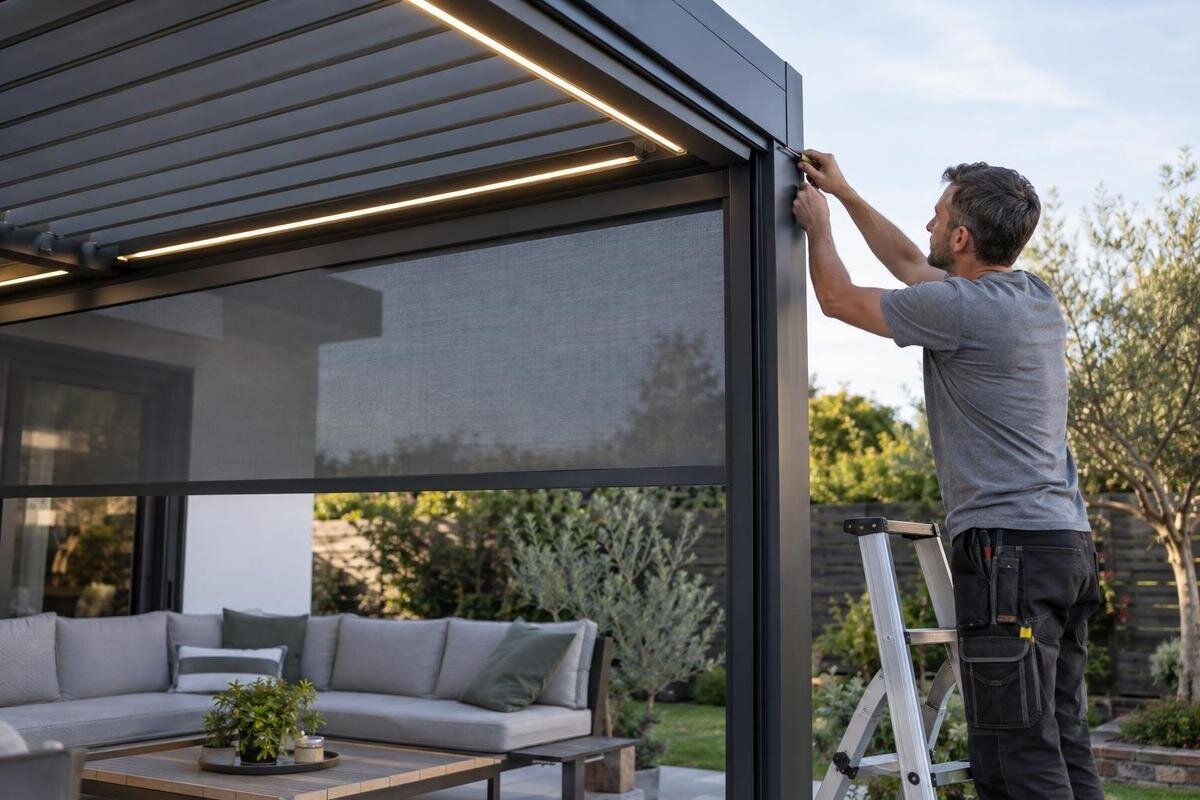
Yes, screens or lighting can sometimes be added to an existing pergola, but the word “pergola” alone says little about compatibility. A screen needs an approved way to attach and room to operate; lighting depends on the existing wiring, controls and a suitable cable route. The frame may also need assessment, and matching brackets or control parts may no longer be available. Check the exact model and manuals before ordering, then involve the right qualified trades for structural or electrical work.

Identify the installed pergola accurately
Before comparing add-ons, record the pergola’s exact model or product family, order or serial number if present, approximate installation date, supplier and installer. Check the original invoice, order confirmation, installation paperwork and manual first; a frame can look similar to another model while using a different profile, connection, controller or accessory generation. Note whether it is freestanding or attached to a building, the roof type and which sides are open, but treat those details as a description rather than a compatibility test. Record repairs, replacement controls or other changes since installation, including who carried out the work if known. If a label is hard to reach, photograph it only from a safe position; do not remove covers or access wiring just to identify the model. Make a note of accessories already fitted.
The Bloomcabin Pergola product page can help you recognise a product name, but a current listing cannot identify an older installation or establish its compatibility with accessories. Give the supplier the exact wording from your records and ask for the manual covering that generation. Describe the assembly as it stands, including the roof, posts or wall connection, existing side components and controls. If you have only an approximate name, say so; a confident guess may lead to the wrong parts being considered. Ask what further identification is needed if your records are incomplete, and keep the confirmed model details with your upgrade enquiry.
Decide what a screen needs to do
Decide what the screen needs to do before choosing a fabric or mechanism. Specify whether you are considering a fixed panel, a retractable screen or another format; which side it would cover; how much of the opening it should span; and whether it must clear a doorway, window, step or furniture. Privacy, shade, visibility and airflow can point to different screen materials and arrangements, so colour alone is not a useful compatibility criterion. A panel may also change wind exposure around the pergola, depending on its design and position. Check the accessory’s stated use and the pergola maker’s guidance rather than assuming that a generic outdoor blind or mesh is suitable. Note whether the roof or screen needs to move while the other is in use.
Plan the full operating space, not just the opening width. A cassette, side track, handle and lower edge need clearance, and a screen must not obstruct entry, seating, an existing light, a window opening or access for cleaning. Note paving levels and any threshold or step, and identify where the panel would stop when open and closed. Ask the supplier which dimensions it needs, and from which reference points, before ordering; an approximate opening measurement may not be the required finished size. If your records identify a bioclimatic model, refer to the Bloomcabin Bioclimatic Pergola page when describing the product family. Include the proposed side and screen type so the supplier can assess the particular arrangement rather than screens in general.
Confirm the screen’s fixing points
A compatible screen needs more than an opening of the right size: its mounting method must match the frame and the manufacturer’s approved fixing points. Ask whether the proposed system uses a post, beam, dedicated accessory channel or separate support, and whether the brackets and fasteners are specified for that exact model and generation. Do not assume a flat-looking surface can be drilled or that a clamp will suit the profile. Unapproved holes, altered fasteners or improvised braces can damage parts, interfere with movement or create a structural concern. If the installation requires new penetrations or changes to the frame, get model-specific instructions and have the work assessed by an appropriate pergola installer or structural professional before it begins.
Ask the supplier or original installer to identify the permitted attachment locations, required kit and clearances in the matching manual or a written compatibility response. For a unit identified as a Bloomcabin Wall-Mounted Pergola, include details of the existing wall connection in the enquiry; a freestanding installation needs its own support assessment. The condition and exact construction of the installed unit matter alongside the accessory’s fixing method. If a post, beam, wall connection or base shows movement, deformation or damage, pause the upgrade and have it assessed first. An accessory should not be used to cover a defect or act as an improvised brace.
Check the existing provision for lighting
First establish whether lighting provision was included when the pergola was installed. Look for paperwork referring to lighting, visible prepared connection points, existing fittings or controls, but do not infer that an unused cable or nearby outdoor power point is intended for new lights. Find the original electrical and pergola documentation and note what equipment is present without opening enclosures. Ask who installed it and whether wiring, controllers or fittings have been changed since. A light may physically attach to a beam and still be incompatible with the available supply, control arrangement or other equipment; confirm the system as a whole rather than treating the fitting as a stand-alone purchase. Keep a record of visible labels and fittings.
Before choosing a fitting, explain to a qualified electrician and the pergola supplier where you want the light, how you want it controlled and whether it would sit near a moving part. They can check the existing supply, control compatibility, suitability of components for an outdoor location, cable protection and servicing access against the exact product documentation. Use a qualified electrician for new wiring or changes to existing wiring; do not splice, extend or test a circuit yourself. Avoid drilling, concealing a cable or ordering a controller until the permitted route and connection details have been confirmed. If the system includes a controller or power unit that is no longer available, ask whether an approved matched replacement exists.

Plan cable access and maintenance
Map the proposed cable route from each fitting to the supply point on a simple sketch or annotated photo. Mark beams, corners, joints, wall crossings, covers and moving components the route would pass; the purpose is to show the electrician what needs checking, not to prescribe electrical work. A line that looks tidy from below might cross a moving mechanism, sit behind an inaccessible cover or leave a connection exposed. The manufacturer and electrician need to confirm the permitted route and protection for the actual system. Note whether each fitting can be reached later for servicing, and whether people, furniture or a retractable screen could catch the cable. Do not dismantle the pergola to see what is behind a panel.
The lighting layout can affect the scope of work: a concealed route may require different access from a surface-mounted one, and a route that crosses a wall or another part of the building needs its own assessment. List the positions and controls you want before asking for a quote, then let the electrician identify any unknowns on site. Do not choose a route solely to hide a cable, or tuck wiring behind trim or a screen cassette without an approved detail. Keep future maintenance in view, particularly if a fitting sits above a moving or difficult-to-reach section. This helps avoid agreeing to a layout on appearance alone when it may be impractical to service.
Match every component to the pergola
Treat each proposed upgrade as a set of matched components, not a single accessory. For a screen, confirm the screen model and size, the side and opening it suits, the track or cassette, brackets, fasteners and any operating or control parts. For lighting, confirm the fitting, its mounting hardware, power and control components, and any required cable or connector set. Ask which items are supplied as a kit, which must remain from the original pergola and whether all pieces work together. A shared brand name, similar appearance or matching colour does not prove compatibility. If a part is updated, request its exact reference and confirmation that it supersedes the original for your exact pergola, not just that it looks close.
Record the answers against the pergola model and generation: approved accessory, intended location, mounting position, companion parts, required trade work and any exclusions. If you are discussing the Bioclimatic Pergola product listing, distinguish its product name from the exact accessory and component references in the quote. Ask the supplier to separate what is confirmed from what still needs a site visit, electrician or structural assessment. This record makes quotes easier to compare and helps prevent a kit arriving with a track but no compatible brackets, or lights without a suitable control component. Keep the reference numbers together so substitutions can be checked against the agreed set.
Check the manual and parts availability
Gather the original manual, technical drawing, invoice, order confirmation and service history before asking about a retrofit. These records may identify the installed version and accessory references; send the document name or revision if one is shown, and ask for material that matches your unit rather than a similar product range. If the paperwork is missing, collect the evidence you can safely obtain: a full view of the pergola, close-ups of labels and visible joints, and photos of existing controls with covers closed. Mark the proposed screen position on a copy of a photo and identify desired light locations, but do not edit the image in a way that could hide dimensions or components. Clear, unaltered photos help the supplier ask for the right follow-up information.
Some accessory parts, rails, brackets or control components may be discontinued. Ask whether the exact item is still supplied, has an approved successor or is no longer available; availability and compatibility are separate questions. When referring to the Wall-Mounted Pergola product listing, provide the older unit’s details as well, so the enquiry does not default to components for the current range. For a successor part, ask for its reference, confirmation that it suits your model generation and any companion parts or changes it requires. Do not cut, drill or adapt a lookalike part because its appearance or approximate size seems right. If there is no supported alternative, discuss a redesigned upgrade or replacement.
Agree who will assess and install the upgrade
Agree who is responsible for each check before work is quoted. A screen may involve the accessory supplier and pergola installer, with a structural professional where the proposed attachment or changed exposure needs assessment; lighting also involves a qualified electrician. Ask who will confirm compatibility, frame condition, fixing specifications, cable route, control integration, installation and testing. Not every quote includes all of these tasks. If the person recommending an upgrade has not seen the model records or inspected the site, ask what the recommendation is based on and which assumptions remain. Clear responsibilities help prevent one contractor relying on a structural or electrical decision that nobody has actually made.
Make sure the quote identifies who supplies the components and who installs them, particularly when those are different businesses. Ask who will resolve an unexpected mismatch before work continues and who will provide the installation and testing records. If an alternative quote covers a complete product from the Bloomcabin Pergola range, keep those responsibilities separate from the retrofit proposal. A replacement quote should identify who removes the old structure, what can remain and who handles the transition. For either option, keep the agreed component references and installation scope together rather than relying on a product name alone to describe the work.
Compare the retrofit with a replacement
Compare the whole job, not just the accessory price. Include confirmed part availability, brackets or track, electrical work, a site assessment, access equipment, finishing, control integration and future servicing where applicable. A low-cost screen or light may not make a low-cost project if the frame needs modification or the cable route is uncertain. Ask for an itemised quote that distinguishes confirmed work from provisional assumptions and says what could change after inspection. If you plan screens and lighting together, have the supplier and relevant trades check whether their positions and routes can coexist before either is ordered. This makes the comparison about the finished scope rather than the price of one component.
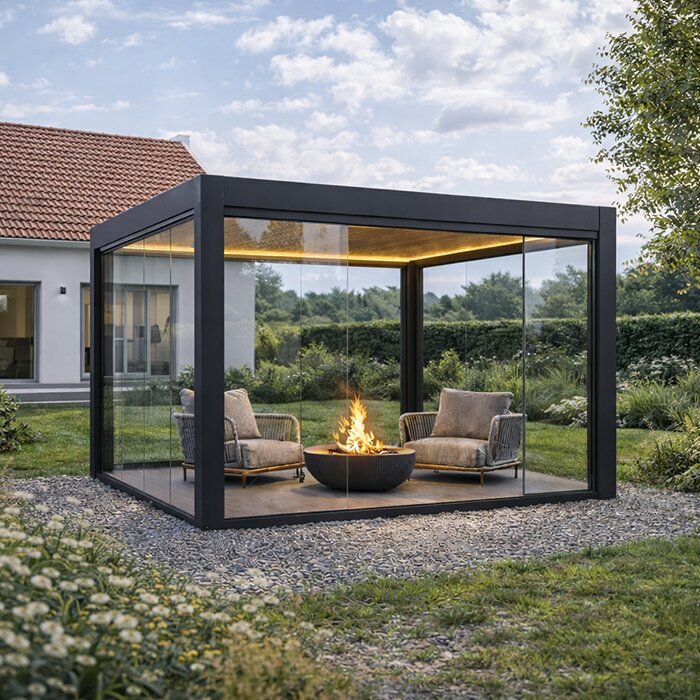
The comparison should also make clear whether the retrofit is feasible. An unknown attachment point, unavailable essential component or unresolved wiring or support question leaves part of the proposed job uncertain. Ask for a supported redesign or a replacement option rather than pricing an improvised fit. If the Bloomcabin Bioclimatic Pergola product page is part of that comparison, assess the proposed new unit separately from the existing one. Its bases, wall connections, wiring and accessories cannot be treated as interchangeable merely because the products look similar. Compare the complete documented scope of each option, including what would be retained and what would change.
Prepare a useful compatibility enquiry
Make the enquiry answerable in one message. Include the model or product family, order or serial number if available, approximate installation date, invoice or manual, and wide and close-up photos taken from safe positions. Mark the side for a screen, the approximate opening and the intended operating method; note each light location and preferred control. For existing electrical equipment, photograph visible fittings and labels only, leaving covers closed. Mention repairs or alterations and clearly state what you do not know. Ask the supplier to confirm the approved accessory and exact part references, matching brackets or controls, mounting positions, electrical assessment, professional work required and whether all components remain available.
If you are also considering a new pergola, separate that question from whether accessories fit your existing one. Use Bloomcabin’s Pergola product page to identify the product you want quoted, while keeping the retrofit enquiry tied to the old unit’s details. Ask for a reply that addresses screens and lighting separately, with exact part references and any outstanding site checks. Keep replies, quotes and photos together, and make sure later revisions clearly replace earlier proposals. This gives the installer or electrician a consistent record to work from and makes it easier to see whether the final order matches the arrangement that was assessed.
Frequently asked questions
Will a standard outdoor screen fit any pergola?
No. The screen, fixing method, dimensions and operating clearance need to suit the exact pergola model and generation. Ask the supplier to confirm the match rather than relying on appearance or approximate measurements.
Can I add lighting if the pergola has no existing wiring?
Possibly, but a new cable route and supply may be needed. Have a qualified electrician assess the proposed setup and check it against the pergola documentation. A nearby power point does not confirm compatibility.
Could a screen affect the pergola structure?
It can change how the pergola is exposed to wind and adds a new attachment to the frame. Ask the supplier or installer to confirm the approved fixing method; get a suitable structural assessment if the support or exposure needs review.
What if the original screen or lighting part has been discontinued?
Ask whether an approved successor is confirmed for your exact model and whether it needs matching companion parts. If there is no supported match, discuss a redesign or replacement rather than adapting a similar-looking part.
What information should I send with a compatibility enquiry?
Include the model details, installation date if known, manual or invoice, clear photos, the proposed screen position and lighting locations, and details of visible controls. Leave electrical covers closed and note any previous changes.
A retrofit is worth pursuing only when the pergola’s identity, approved fixing method and electrical arrangements can be verified for the proposed components. Exact manuals, part references and clear photographs give a supplier and the relevant installer or electrician something concrete to assess. If the match or a required part cannot be confirmed, consider a supported redesign or replacement rather than improvising.
