
Privacy Planning: Hedges or Pergola Screens?
Pergola privacy planning
Choosing between a hedge and a pergola screen comes down to what you want to hide, when you need cover and how much room you can give it. A hedge may screen a longer boundary and soften the garden, but it needs planting space and time to fill in; its cover can change through the seasons. A compatible screen can address a selected view as soon as it is installed, but covers only the part of the pergola where it sits. Map the sightline before weighing the trade-offs.
Before you choose 1
Draw the sightline before choosing a barrier
Privacy is rarely all-or-nothing. It may be a neighbour’s kitchen window facing a dining seat, a path with a clear view of the lounge, or one boundary angle exposing the terrace. Sketch the pergola, boundary, nearby windows and usual seating. Mark where an observer might stand and draw a line to the place you want to shield from view. This shows whether a short barrier beside one chair, a screen across an edge or planting along a longer run is worth considering. Note entry routes and the garden or gate views you want to keep, rather than treating every boundary as equally exposed.
Check the sketch from several positions: sit at the table, stand at the entry, and look from the house as well as the garden. A panel can block a direct view but leave a diagonal view around its end; a hedge may cover a broad stretch yet leave a low gap while young or after pruning. Judge upper-storey windows separately, since a boundary hedge may not reach that sightline. A simple plan and side elevation are more useful than deciding from a front-on product image. Record the view that matters most, then use the same viewpoint when assessing both options.
Measure the space a hedge will occupy
A hedge takes ground along its length, and its eventual width matters more than the neat row of small plants on planting day. Allow for growth on both sides and enough access to trim without leaning over a seat or blocking a route. Measure from the boundary to nearby paving, steps, doors or paths that need to stay clear. A hedge placed too close can narrow circulation as it fills out; one set well back may miss the sightline you want to interrupt. Ask a knowledgeable nursery or horticulturist about the selected plant’s mature width and recommended spacing. The answer depends on the species and site, so there is no universal bed width.
Check soil conditions, existing plants, roots, underground services and maintenance access before settling the planting line. Don’t size the bed from the current pot or a generic hedge diagram: the space depends on the plant and site. A pergola screen places the barrier at the structure, but the pergola and its side configuration still need a clear, accessible position. Use the Bloomcabin Pergola model page when comparing the structure’s footprint with the proposed planting bed. Draw both options to the same scale, including the space needed to reach the hedge for trimming and to access the pergola sides.
Before you choose 2
Plan for the time a hedge needs to fill in
A newly planted hedge will not provide mature privacy straight away. The time needed to form useful cover depends on the species, plant size at purchase, growing conditions and care; small plants and larger established specimens will not follow the same timetable. Healthy growth does not automatically mean dense foliage at the height you need. Gaps can remain between plants or lower down, so assess the full viewing line, not just the expected top height. Ask a local nursery or horticulturist about likely growth habit and spacing on your site, and treat published growth figures as estimates rather than promises.
If privacy is needed from the first day of using the pergola, decide what will cover the interim period. An existing fence or a suitable, approved side screen may help with one exposed view while planting establishes; don’t assume a screen can be fitted to every model. For a wall-adjacent layout, use the Wall-Mounted Pergola model page to identify the structure when asking about available side accessories. Keep the timing of the two options separate: installing the pergola does not make a young hedge dense, and ordering a pergola does not necessarily include the screen needed for immediate cover.
Allow for seasonal changes in hedge cover
Seasonal foliage can change how much of a hedge you see through. Evergreen plants generally retain leaves, while deciduous choices lose them for part of the year; other species may have thinner cover at certain points in their cycle. That matters if a neighbouring window or path is most exposed in winter, or if you use the pergola most when the hedge is less dense. Check the plant’s leaf habit and cover at the height you need, and ask whether the site may affect its growth. Don’t assume that a label such as evergreen means an opaque screen.
Consider pruning as well as seasonal leaf changes. A hedge can be shaped, but cutting it back to control its width may also open a view; a period of regrowth can leave temporary gaps. Choose a plant whose mature form, leaf habit and maintenance suit the job, rather than one selected only for colour or a photograph. If possible, inspect mature examples in more than one season or ask a nursery how the chosen species changes through the year. Compare the view at the time privacy matters most, not only on planting day.
Before you choose 3
What a pergola screen can provide straight away
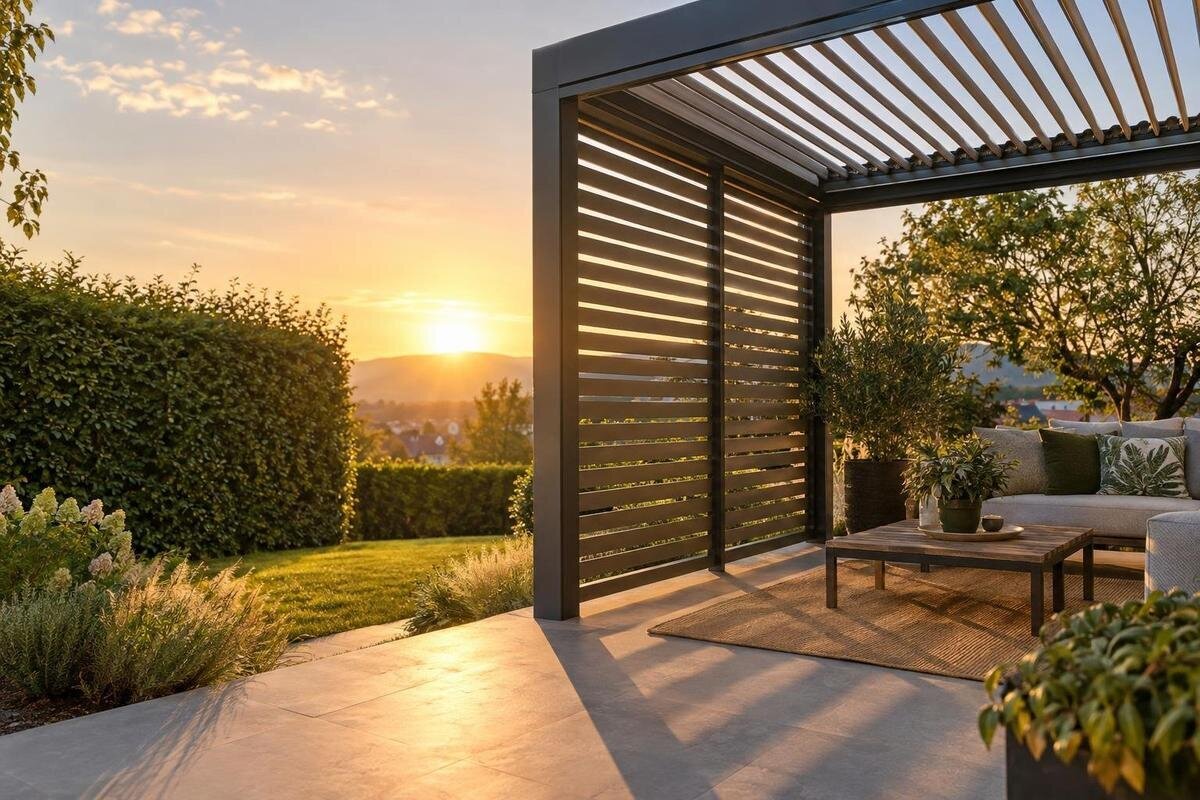
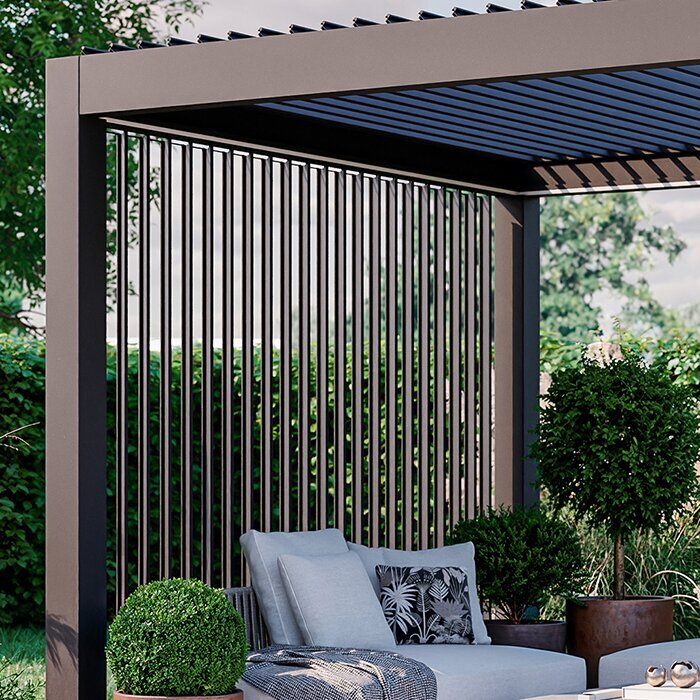
An installed screen can offer cover as soon as it is in place, without waiting for a plant to grow. Its effect is specific to the area it occupies: where its surface crosses a sightline, it can interrupt the view; beyond an edge, above it or through an open area, the view may remain. That makes a screen worth considering when the concern is one side of a pergola rather than a whole boundary. It does not provide privacy in every direction. For model identification, review the Bioclimatic Pergola listing and ask which approved side configuration, if any, suits that exact model.
Before comparing options, write down what the screen needs to do: hide a seated person from one window, reduce a direct view from a path, or screen more of the terrace. Check the proposed side, height and extent against those sightlines. Ask the supplier to identify the exact accessory, its approved model pairing, mounting requirements and care guidance. A generic panel or fabric that looks similar is not evidence that it can be attached to the pergola. If a third-party screen is suggested, seek confirmation from the relevant product supplier or a qualified installer before planning around it. Check whether the proposed screen is included or supplied separately.
Screen only the sides that need privacy
Where the pergola model supports it, a screen plan need not cover every side. Screening only the exposed angle can preserve a garden outlook, leave an entry clear and help the seating area feel open. A short panel may suit one direct view, while a longer run may be needed where several seats face the same boundary; the extent depends on the sightlines, not a standard layout. If you are considering the Bloomcabin Wall-Mounted Pergola model page, mark the proposed screened side in relation to the house, seating and garden. That layout gives your accessory enquiry a specific purpose.
Mark doors, steps, furniture and the route in and out before settling the screen position. Allow people to pass, move chairs and reach areas that need routine care. If privacy is needed from two directions, assess each line separately: extending a barrier around a corner may solve one view and unnecessarily obscure another. Keep the entrance in mind, too; a screen across the most convenient approach can make the space awkward to use. Ask for a drawing or clear description of the proposed side configuration so its coverage, open sides and access points can be considered together.
Before you choose 4
Balance screening with light and outlook
A screen changes what is seen from inside the pergola as well as what a neighbour can see in. A dense, opaque barrier may interrupt more direct views, but it can also hide a garden feature and reduce daylight arriving from that side. A more open surface may preserve some outlook while leaving some visibility; results depend on the screen design, angle and light. Don’t assume that every screen has the same transparency or shading effect. Ask for the screen’s specifications and, where possible, assess a sample or full-size mock-up from your normal seat.
Consider how the view changes at different times, especially if the sun moves across the open side or the outlook matters in particular months. Judge the trade-off on site rather than relying on a photograph taken in different conditions. When reviewing the regular Bloomcabin Pergola listing, distinguish the structure from any screening option you are considering: the model name alone does not describe visibility through an accessory. Compare the proposed screen from both sides, using the same seat and viewing angle each time. Decide whether keeping an open view or reducing visibility matters more there; planting elsewhere may offer greenery without closing the outlook.
Test the proposed height and coverage
Test the proposed barrier at the actual location before committing to a planting line or screen size. On a sketch, mark the observer’s position and the point you want hidden, then see where the sightline crosses the proposed barrier. On site, use a temporary outline or have someone hold a plain panel at the proposed position, where it can be done safely. Check from the regular seat, standing positions, the entry and the house. This won’t reproduce every screen material, but it can show whether the proposed height and length cover the important angle or leave an obvious gap.
Check the ends, top and bottom as well as the centre of the proposed barrier. A viewpoint above the pergola may still see into it; a low gap or an exposed end can leave another angle open. A hedge’s edges also change as it grows and is trimmed, so consider its mature outline and its cover while establishing. For a layout based on Bloomcabin’s Bioclimatic Pergola product page, use the proposed screen’s actual dimensions in your sketch rather than estimating them from a product image. Record any remaining gaps so you can compare the hedge and screen against the same privacy requirement.
Before you choose 5
Compare ongoing care for plants and screens
Hedges and screens have different recurring jobs. Plants may need watering while they establish and regular pruning to maintain their shape and keep paths clear; care depends on the species, climate and site. Include the time, tools and access needed for these tasks in your decision, not just the initial planting. If pruning would mean stepping into a narrow passage or reaching across a seat, reconsider the planting line. A hedge that is difficult to reach can be hard to keep at the height and density you planned. Ask about realistic maintenance for the chosen plant before buying.
A screen also needs the supplier’s care and operating guidance, particularly if the selected accessory moves or has specific cleaning requirements. Leave access to inspect and clean it, and establish how it is meant to be used rather than modifying it yourself. If your comparison involves the listing for Bloomcabin’s wall-mounted pergola, request care information for the proposed accessory as well as the structure. Consider whether furniture would need moving each time you clean the screen, just as you would assess access for pruning a hedge. Compare the recurring tasks over a year, not only the initial planting or installation work.
Combine planting and screening when their roles differ
A combined approach can suit a garden with an immediate, specific privacy problem and a broader planting goal. A compatible screen on the exposed side can address a particular sightline when installed, while a hedge elsewhere may soften a longer boundary as it establishes. This can avoid planting a continuous row solely to block one neighbour’s view, or screening every side when you want an open outlook. The mix is not automatically the best choice: plants still need space and time, and the screen configuration must be confirmed. Give each element a clear role rather than relying on a young hedge to provide full cover.
Draw both elements together, including the hedge’s mature width, access routes, pergola footprint, openings and the angles from which privacy matters. Keep plants clear of any screen operation and maintenance areas, and don’t train growth onto the pergola unless the supplier confirms that the structure is designed for that use. If the product page for the Bloomcabin Bioclimatic Pergola is your model reference, label the proposed screen and planting separately on the plan. Check how the arrangement works both while the hedge is young and once it reaches the intended size, so the immediate privacy solution leaves room for the planting to develop.
Frequently asked questions
Which provides privacy sooner: a hedge or a pergola screen?
A suitable screen can interrupt its intended sightline as soon as it is installed, but only across the area it covers. A hedge needs time to establish, and its growth and density depend on the plant and site. If you need cover straight away, plan for the period before a new hedge fills in.
How much space should I allow for a hedge?
There is no single clearance that suits every hedge. Allow for the selected plant’s mature width, recommended spacing and access for pruning. Also consider paths, paving, nearby plants and underground services. A local nursery or horticulturist can advise on the plant and growing conditions you have in mind.
Will a pergola screen block every view?
Not necessarily. It may interrupt one direct view while leaving another open above, around an end or at an angle. Seated, standing and elevated viewpoints can differ. Check the proposed position at the site and confirm the screen’s dimensions and compatibility with the exact pergola model.
Can I plant a hedge beside a pergola?
Potentially, but plan for mature growth, pruning access and clearance around the structure and any screen. The right planting distance depends on the plant and site. Don’t train a climber onto the pergola unless the supplier confirms that the structure is designed for that use.
Can I use a hedge and a screen together?
Yes. A compatible screen can address a specific view straight away, while a hedge can provide a broader planted boundary as it establishes. Draw both into the plan, including the hedge’s mature width and access needs, and confirm that the screen is approved for the exact pergola.
A hedge suits a plan with room for its mature width and time for a living screen to develop and change through the seasons. A compatible pergola screen suits a particular angle that needs cover sooner and can be addressed with a defined barrier. Some gardens benefit from both: planting can serve a broader boundary while a screen covers the exposed seat. A sightline drawing, mature-plant dimensions and confirmed accessory compatibility make the choice clearer.
