
Plan realistic greenhouse yields per square metre
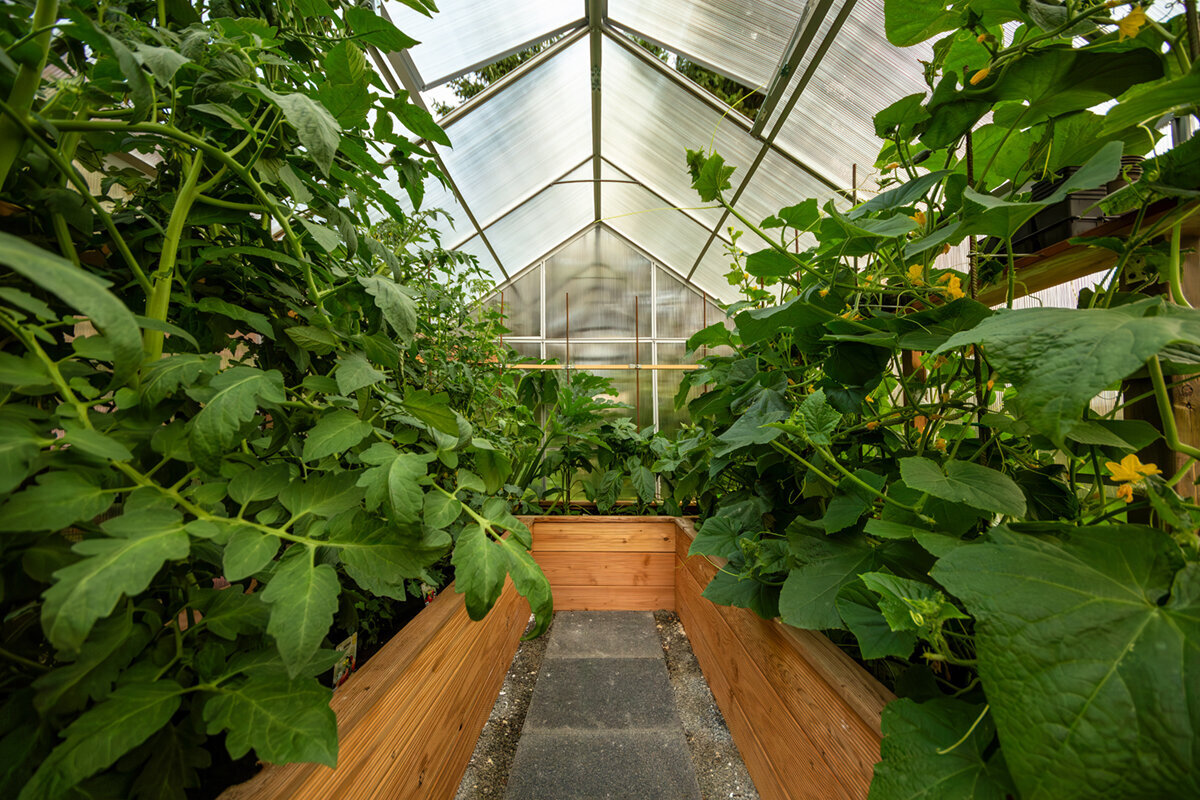
A greenhouse extends the growing season and gives warmth-loving crops a sheltered setting. Floor area alone, however, does not determine the eventual harvest. A densely planted bed can look productive initially, yet poor airflow, shading and difficult care can have the opposite effect. Realistic planning starts with conditions at your site.
Space used over many months is especially valuable. Early lettuces may be harvested before tomatoes need their place; in late summer, follow-up sowings or hardy autumn crops can follow. This time-based view turns a greenhouse from a summer tomato patch into a versatile growing space with clear transitions.
Plan not only beds, but access, water points and working routines. When plants are easy to reach, you inspect them more often and harvest on time. Greenhouse yield per square metre is therefore a practical planning question: which crops suit your routine, your cooking and the available light?
Step 1: Starting point
Assess growing area, not floor area
For a sound plan, separate external dimensions, circulation space and the actual crop area. Doors need room to open, a path prevents trampling damage, and plants at the sides should remain reachable without straining. These areas are not wasted: they make care, watering and harvesting reliably possible. Draw beds and paths to the same scale before choosing seeds or seedlings.
Height also affects how productively a site can be used. Tall crops need support and must not permanently shade smaller plants. Use vertical levels deliberately, for example for climbing vegetables, while low crops should stand only where they receive enough light. Clear zoning keeps the space calm and functional. Review your sketch from the perspective of daily work: where can you put a watering can, secateurs or harvest basket without blocking the path? A clear routine prevents beds being tended from one side only because it is convenient. For tall crops, include tying, side-shoot removal and harvesting when drawing the plan.
Measure the reachable internal bed areas and allow for door openings, water containers and room for harvest baskets.
Reserve edge areas for low crops that are quick to harvest, rather than filling them with plants that are difficult to reach.
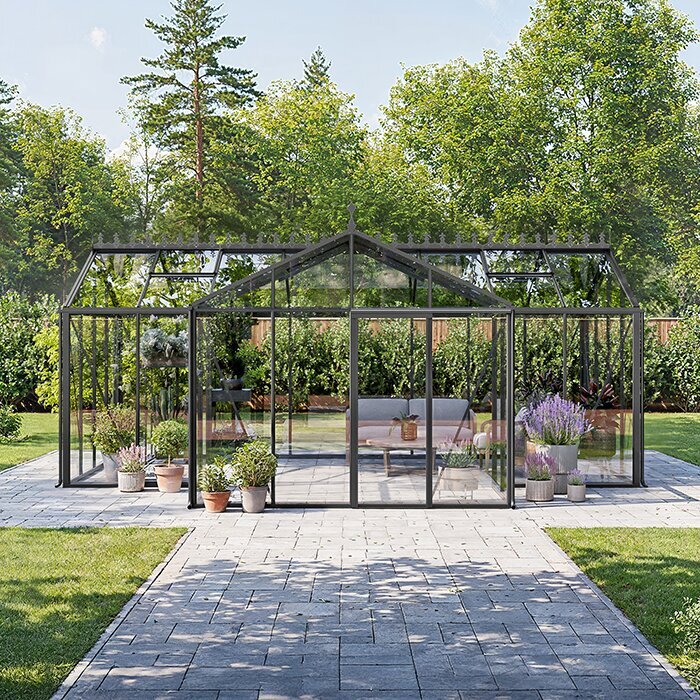
For a self-contained growing space, a standard Classic greenhouse offers a clear basis for beds, paths and seasonal crop changes.
Step 2: Read the light
Understand site as a yield factor
Light helps determine which crops are worthwhile in a greenhouse. Over several days, observe when neighbouring buildings, trees or fences cast shade. Light shade can be welcome in summer, whereas in lower-light months it may noticeably slow growth. Also note which side receives the strongest sun, so tall plants do not dominate smaller crops.
Orientation alone cannot replace observing the site. Reflections, seasonal foliage and distance from walls alter the microclimate. A position beside a house wall can behave differently from a freestanding spot, perhaps through stored warmth or reduced air movement. Base crop choices and planting times on these observable conditions, not an idealised scheme. Watch not only direct sun, but also the duration and position of shaded areas. A space may be bright in the morning yet substantially cooler in the afternoon because of a building. These differences are useful when matched with suitable crops. Keep notes throughout the season, as light changes with the sun’s position and surrounding foliage.
Before the first season, keep a simple light record for morning, midday and afternoon at several times.
Reserve the brightest areas for crops with high light needs and use calmer zones flexibly.
Where an existing wall suits the plan, a large regular lean-to greenhouse can incorporate the building’s light conditions into your space layout.
Step 3: Crop selection
Select plants by use and season
A strong practical yield is not necessarily the largest quantity harvested, but the vegetables you actually use. Tomatoes, cucumbers, capsicums, aubergines, lettuces, herbs and seedlings all have different needs for warmth, room and care. Begin with a few crops that appear regularly in your kitchen. This lets you learn how your greenhouse responds without overloading the space.
Combinations work especially well when growth speed and final size fit together. Fast-growing leafy crops can use gaps at the start of a season before larger plants need the room. Avoid combinations that later compete for light and air. Write down an end date or possible follow-up date for each crop; this makes available space visible through the year. Also consider the rhythm of your kitchen. Those harvesting small amounts often benefit from accessible herbs and leafy vegetables. Crops for preserving or larger harvests may also be worthwhile, but commonly need more uninterrupted space. A clear focus makes care easier and prevents conflicting requirements from clashing in a small area.
Prioritise crops you eat often rather than filling every spare corner with rarely used varieties.
Combine short early crops with later main crops, but clear transition areas promptly and consistently.
For a flexible mix of main and secondary crops, a Classic greenhouse for a standard garden can be planned with clear bed zones and a manageable number of plants.
Step 4: Allow space
Plant spacing protects productivity
Planting too closely is one of the most common reasons for disappointing results. Leaves dry more slowly after watering, disease checks become harder and fruit is less accessible. Follow the spacing guidance for the variety and consider its mature width. A bed that first appears empty is often exactly the room plants will later need.
Not every crop uses the ground in the same way. Climbing plants need height and secure support, while bushy varieties need more side clearance. Low lettuces or herbs can stand temporarily among young main crops, but must move before competition develops. Treat this interplanting as temporary use from the outset, not permanent crowding. During the season, check whether the original spacing still works. Some plants grow more strongly than expected or lean towards the light. Remove ageing leaves only when needed and tie climbing shoots early, keeping paths and neighbouring plants clear. This preserves the intended structure even when the greenhouse fills quickly in summer.
Mark planting positions with canes or string before planting, so spacing remains visible even with a full tray of plants.
Consider eventual leaf growth and harvest reach, not only the size of young plants.
Anyone wanting orderly rows and tying options beside the house will find a full-size regular lean-to greenhouse a suitable setting for airy plant spacing.
Step 5: Manage the climate
Balance water, air and warmth
Productivity also depends on daily routines. Water according to need at the root zone and avoid leaves remaining wet for long periods. Check soil moisture before watering again, as the surface and root zone can feel different. Mulch, suitable containers or a well-considered bed structure can help maintain more even moisture, but do not replace checking.
Ventilation is not an afterthought; it is part of crop management. On warm days, the air can heat rapidly, while at night and in changeable weather openings need attention again. Watch for condensation, leaf condition and how the temperature feels inside. Good air movement supports a more balanced environment, but does not replace suitable spacing or regular checks. Water consistently rather than applying the greatest possible volume. Different containers, soil areas and crop stages dry at different speeds. A brief look at the root zone and plant condition gives better guidance than a fixed routine. Anyone noticing change early can adjust care before stress builds over time.
Combine daily watering with a short inspection for wilted leaves, pests, ripe fruit and ventilation needs.
Adjust water quantity to weather, stage of growth and growing medium rather than following a rigid calendar.
For gardeners wishing to organise care routes compactly, a standard Classic greenhouse creates a clearly structured setting for beds and crop checks.
Step 6: Use time well
Keep space active with crop succession
The most productive space is not necessarily filled throughout the year, but timed sensibly. Start hardy early crops when conditions suit them, and keep a defined handover date clear for warmth-loving main crops. After the main harvest, leafy vegetables, herbs or green manure can use the space. Which sequence succeeds depends on your site and available care time.
A planting calendar prevents conflicts before they arise. Record sowing, planting, expected clearing and possible follow-on crops in a table or annual plan. Leave buffers for delayed growth, holidays or weather periods. The plan is not a rigid programme, but a tool for recognising empty spaces and bottlenecks early. For every follow-on crop, consider preparing the bed too. Plant debris, roots and, where needed, supports must be removed so the new crop can begin with enough room. A brief note of the actual clearing date shows which sequences worked well after the season. This helps create follow-on plans that fit your personal time budget.
Set a desired clearing date for each crop so later plants are not suddenly left without space.
Keep compost, containers and seed ready during crop changes to use vacant beds promptly and well.
For staggered early and follow-on crops beside a building, a full-size regular lean-to greenhouse can offer accessible space for clear seasonal sequences.
Step 7: Guide the harvest
Harvest regularly and use observations
Harvesting is an active part of space planning. For many fruiting vegetables, regular picking encourages continued fruit formation, while overlooked fruit can burden the plant. Harvest at the appropriate stage of ripeness and schedule regular inspection days. This keeps you informed and helps you spot early when a crop needs more room, water or support.
Keep a simple garden diary. Record not only quantity, but also planting date, variety, difficulties and your satisfaction with the result. After one season, you will know far more clearly which crops make sense in your space. These personal observations are more valuable for the next plan than general record figures from entirely different conditions. Keep notes close to the greenhouse or in an easily accessible digital list. Add observations promptly, as small details are quickly forgotten after a few weeks. Photos of beds can also help comparison: they show when plants became crowded, which areas stayed empty and how the layout changed during the season.
Check plants several times a week during the main season so ripe fruit and emerging problems do not go unnoticed.
Assess each crop by flavour, harvest period and care effort, not solely by weight or number of pieces.
Those who want to observe and harvest crops close to daily life can plan a Classic greenhouse as a standard model as a clear centrepiece of the gardening season.
Step 8: Take stock
Improve your own benchmark each year
At season’s end, an honest review is worthwhile. Which areas stayed empty too long, which plants stood too close, and which harvests were most appreciated? Separate the causes: an unsuitable site, late planting or an unsuitable variety each call for different adjustments. Change only a few points in the following year so it remains clear what actually worked better.
Equipment and greenhouse design should also fit your routine. Check whether you have enough working room, reachable growing areas and sensible proximity to water or the kitchen. If a greenhouse is planned beside a building, construction requirements, drainage and boundary distances need individual assessment. If unsure, ask the relevant council and include current product documents in your decision. Do not judge the season only by a total quantity. A crop can be especially valuable despite a modest harvest because it was easy to grow and often reached the table. Conversely, a plant taking a great deal of room may demand considerable attention. Use this review to align next season’s space plan more closely with usefulness, care effort and your actual habits.
Compare your notes at the end of the season and choose no more than two specific improvements for the next planting.
Check local requirements early for any building project rather than relying on blanket claims in online forums.
If your garden routine points to a building-adjacent solution, consider a full-size regular lean-to greenhouse and the relevant local conditions for that project.
Comparison
Which space strategy suits your growing?
The right strategy depends less on an abstract yield figure than on your priorities. This overview helps you match crop mix, care effort and space use deliberately.
| Strategy | Suitable for | Space allocation and guidance |
|---|---|---|
| A few main crops | Tomatoes, cucumbers or capsicums | Allow generous spacing, clear climbing zones and comfortable harvest paths. |
| Staggered mixed planting | Lettuces, herbs and fruiting vegetables | Use time-limited gaps; set handover dates for main crops in writing. |
| Sowing and propagation | Seedlings and early batches | Provide benches or work surfaces and allow for plants moving later. |
| Season extension | Early and late leafy crops | Watch weather, choose hardy varieties and reserve empty beds for follow-on crops. |
| Harvesting for everyday use | Frequently used vegetables | Limit crop numbers, keep inspection routes short and record ripening times clearly. |
Create a planting plan in five steps
A simple plan before the season prevents many space problems. Work from the available area through crop choice to review, rather than placing plants wherever there happens to be room.
01
Sketch the interior
Draw beds, paths, the door area and water access. Mark particularly bright, shadier or difficult-to-reach zones too.
02
Prioritise crops
Choose vegetables you genuinely use first. Add herbs, lettuces or experimental varieties only afterwards for spare areas.
03
Add mature sizes
Place plants according to the room they need when mature. Plan supports and access for care and harvest at once.
04
Schedule crop succession
Arrange early, main and follow-on crops over time. Note possible clearing dates and deliberately retain buffers for delays.
05
Document results
Record what worked after each season. This leads to realistic decisions on varieties, spacing and the next space layout.
Checklist for realistic yield expectations
Work through these points before planting and throughout the season. They help you plan usable space clearly and base decisions on your real conditions.
01. I have recorded plantable bed area separately from necessary paths.
02. I understand site light conditions at different times of day.
03. I choose crops by what I use, not only visual variety.
04. I allow for each plant’s mature size when planting.
05. I have arranged tall, low and climbing crops sensibly.
06. I plan open transitions between early, summer and late crops.
07. I regularly check water needs, humidity, plant condition and ripe harvests.
08. I record successes and difficulties for next season’s planning.
Frequently asked questions about greenhouse yields
How do I calculate greenhouse yield per square metre?
First record only the area that can actually be planted, then document each crop’s harvest through the season. A useful review also considers whether you used the vegetables and how much care they required. Compare your own results over several seasons instead of treating a general figure as a target.
Does planting more densely automatically increase yield?
No. Plants set too closely compete for light, water and nutrients; leaves also dry poorly and care becomes harder. Follow variety guidance and its mature size. Free space makes airflow, inspection and harvesting easier, often resulting in more sensible use of the area.
Which crops make especially good use of a greenhouse?
That depends on your site and kitchen. Warmth-loving fruiting vegetables, early lettuces, herbs and seedlings can use different time windows. Crops that you harvest regularly and can care for well are particularly worthwhile. Choose by flavour, effort and your greenhouse conditions, not supposed record yields.
Should I keep every area permanently planted?
Not necessarily. Open transitions make crop changes easier, prevent crowding and give you flexibility when growth is delayed. Plan early and follow-on crops deliberately instead of permanently overfilling beds. A temporarily empty area can be more important for soil care, resowing or clearing old plants than one extra plant.
How does a planting calendar help with space planning?
A calendar shows when crops need space and when they release it. Record sowing, planting, expected harvest and clearing. This prevents main crops competing with late plants. After the season, compare the calendar with your notes and improve the sequence for the coming year.
Do I need to consider building requirements for a greenhouse?
Requirements vary with the site, size, design and local rules. Check your proposal early with your council, especially for a greenhouse beside a building. A building-consent exemption does not settle resource consent; boundaries, drainage, site coverage, yards and district-plan controls may still require project-specific assessment before work begins.
Plan the right greenhouse
Productivity starts with a suitable plan
Greenhouse yield per square metre is not a promise, but the result of many manageable decisions. When you consider light, paths, plant spacing and crop succession from the start, you create an area that is pleasant to tend and suits everyday garden life.
Begin with a manageable crop mix, document the first season and develop your plan step by step. Each observation then becomes a practical improvement, turning available space into a well-used place for vegetables, herbs and your own experience.
Discover greenhouse solutions that suit your space layout, crops and everyday garden routine.
