
A Second-Hand Pergola: Parts and Relocation Risks
Pergola buying guide
A second-hand pergola can look ready to go, yet relocating it is more than shifting a frame from one property to another. Fasteners, brackets, seals, controls, paperwork or parts of the roof assembly may be missing, and components can be damaged during dismantling or storage. Even a complete kit that worked at its previous site may not suit the new ground, building or exposure. Before paying, confirm exactly what is included, whether the structure can be identified and assessed, and what the new site will require. This guide focuses on evidence to gather before purchase, rather than relying on a seller’s description or a low asking price.

Before you buy 1
Compare the asking price with the full relocation cost
Treat the asking price as only one line in the total. Allow for dismantling, lifting, transport, unloading, storage, replacement parts, inspection and reinstallation, as well as any work needed at the receiving site. Establish whether the seller expects you to remove the pergola and exactly what that involves. A price may not include labour or equipment, delivery, manuals, controls or accessories. Get each inclusion stated in writing rather than assuming the structure is a complete package. A pergola offered as seen may have no usable inventory, while one that looks inexpensive can still need several separately sourced components.
Build a preliminary budget from written estimates, not a rough percentage of the purchase price. Ask about collection arrangements, and get a transport provider or installer to assess the actual items and access route if the job is complex. Compare the complete cost with a new option on the same basis. The Bloomcabin Pergola listing gives an area range of 9 to 24 m²; that does not establish the used unit’s dimensions, inclusions or relocation cost. Use a new-product comparison to clarify what you are comparing, not to fill gaps in the seller’s information.
Ask for the original paperwork and exact model details
Request the original order confirmation or invoice, an itemised contract or inclusions list, assembly instructions, a parts schedule and dimensioned drawings. If the pergola has electrical or moving components, ask for the relevant operating documents as well. Record the make, model, version and any serial or order number shown on the paperwork or labels. Ask about repairs, replacements or changes made since installation. A clear photo of the assembled structure will not reveal hidden fixings, optional components or its exact configuration; documents provide the references needed to check those details.
Check that the names and identifiers agree across documents, labels and physical pieces. A general brand name may cover several versions, so do not assume a part from a similar-looking model will fit. If the seller describes the pergola as wall-mounted or freestanding, look for drawings and instructions that match that arrangement. The Bloomcabin Wall-Mounted Pergola page identifies a current product by name, but it cannot authenticate a second-hand unit or replace its original drawings. Ask the original maker or supplier whether the exact version can be identified and whether relevant records or replacement parts are available.
Before you buy 2
Match every part to the original kit list
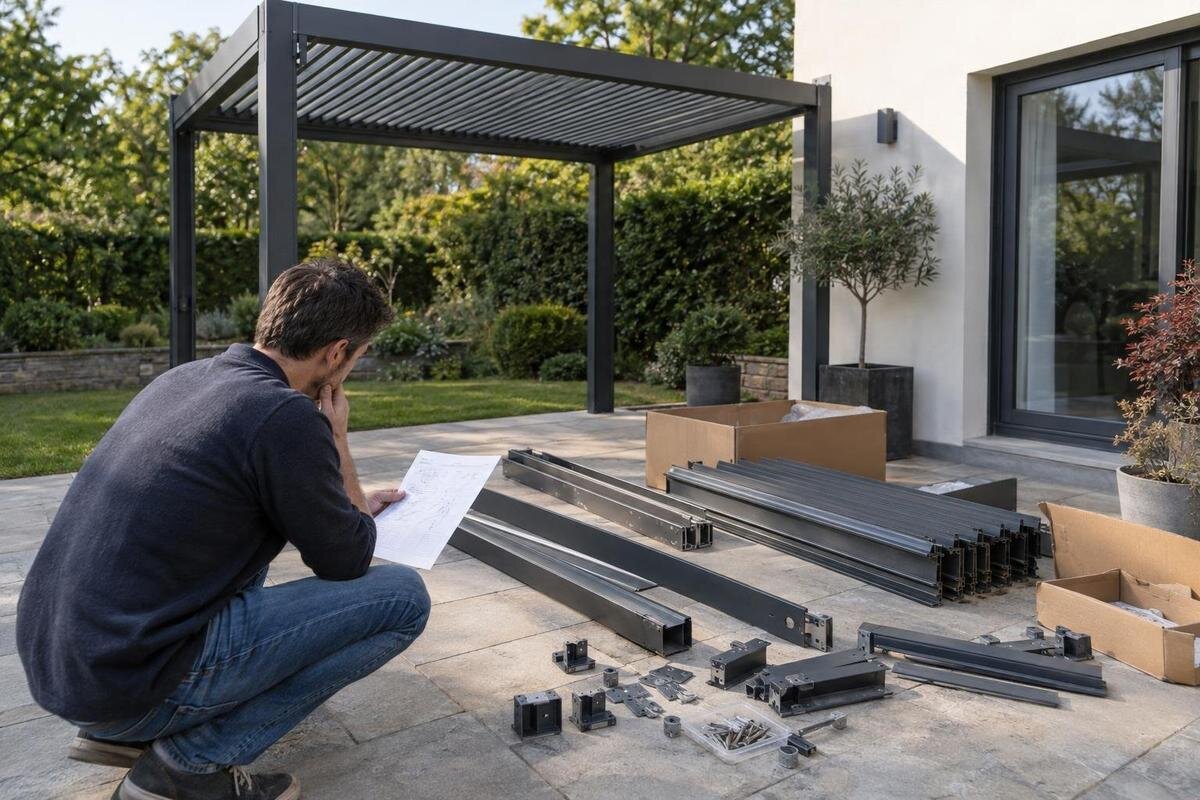
Make a component-by-component inventory while the seller can still show where the parts came from. Start with the original schedule and mark each line present, missing or unverified. Record quantities and part numbers rather than ticking off broad groups such as “frame” or “hardware”. Check structural members, connection pieces, fixings, brackets, covers, seals, drainage parts and accessories against the documents, where listed. Include items that are stored separately or already packed. Keep labels with their parts and photograph each group beside the relevant schedule entry. A kit can look complete in a pile while a specific connector or fixing is missing.
If the original schedule is unavailable, ask the maker or a qualified installer to identify what can be confirmed from the model and drawings; do not create a replacement list from a photograph. Separate confirmed items from assumptions. Before relying on a missing part being replaceable, get its correct reference, compatibility, availability and cost confirmed. When comparing the used kit with the Bloomcabin Pergola product page, keep the seller’s inventory separate from the new product’s stated inclusions. Record any agreed replacement parts, quantities and responsibilities before committing, including which items the seller will supply and which you would need to obtain separately.
Inspect for damage that could affect reuse
Inspect each component in good light, as far as practical, before dismantling or collection. Look for bent or twisted members, dents near joints, cracks, splits where applicable, damaged fixing holes, corrosion on metal parts, flaking finishes, water staining and signs of impact or repair. Pay particular attention to connection points and edges that may be hidden once the pergola is assembled. Ask where and how long the parts have been stored. Photograph concerns beside a label or other reference and note which part they affect. A fresh coat of paint or sealant may make a repair harder to assess; it does not prove that the part beneath is sound.
Separate cosmetic wear from questions about assembly, movement, drainage or support, but do not dismiss a concern based on a quick visual check. A part that looks straight while loose may not align when assembled, and surface condition cannot reveal every hidden defect. Ask a qualified installer or engineer to assess damage that could affect reuse before purchase. Avoid forcing joints together or loading components to test them. If you are also considering the Bloomcabin Bioclimatic Pergola listing, keep that comparison separate from the condition assessment: identify the used unit’s exact model and record its defects rather than judging it by resemblance to a new product.

Before you buy 3
Plan dismantling, transport and storage
Agree who will dismantle the pergola and what that work includes before setting a collection date. Ask whether assembly or removal instructions are available, and make sure each piece can be matched to the drawings once separated. Photograph connections, labels and the order of components before they are removed. Mark repeated-looking members discreetly and bag fasteners by location, with labels that stay with the right items. Do not cut, bend or force joined parts to speed up removal. If a component is unstable, heavy, elevated or connected to a power supply, have an appropriately qualified person manage the relevant work. A rushed dismantle can leave a potentially usable kit incomplete.
Plan transport and storage around the actual component lengths, handling needs and the maker’s instructions. Secure items so they cannot shift or rub together, and avoid stacking them in a way that could bend or crush them. Keep small accessories and fasteners in labelled containers. At collection, reconcile the packed items against the inventory and photograph any discrepancy or new damage before they leave the seller’s property. If the parts will be stored before installation, follow the maker’s guidance rather than guessing how they should be positioned or protected. Include the time and effort for dismantling and handling in your cost estimate; they are part of the relocation, not incidental details.
Check the new site’s footprint and attachment points
Measure the proposed area using the drawings or the assembled structure, not an approximate description in an advert. Confirm the overall length, width and height, support positions, wall connection line and any projections. Check headroom and access around doors, windows, paths, gates, drains and service routes. Note ground levels and the surface at each support point. Record the measurements and orientation on a simple site plan, then compare them with the pergola’s documents. A structure that fitted its former patio may not fit a different space, even if the overall area looks similar.
Clarify whether the pergola is freestanding or designed to connect to a wall. A wall-mounted structure needs a compatible attachment location and supporting building; do not assume it can be converted to freestanding or that old anchors can be reused. When comparing a used structure with a wall-mounted pergola option, consider the attachment arrangement as well as the footprint. Ask a qualified builder or structural professional to assess the proposed attachment and any modifications, using the used unit’s drawings and fixing details. Check drainage and nearby services with the relevant trades so the layout works at the actual site.
Before you buy 4
Get structural and local approval questions checked
The original base or wall connection is part of the installation history, not proof that the same supports will work at the new address. Ground conditions, existing surfaces, attachment points and exposure can differ. Old anchors may be damaged, incomplete or incompatible with the new arrangement. A seller’s recollection of how the pergola was installed is not a substitute for its drawings or a site-specific assessment. Give a qualified structural professional or experienced installer the plans, photographs, inventory, repair history and proposed location. Ask them to identify unresolved questions about support, condition and changes that could affect the original design. Do not calculate a new support detail from general online advice.
Check the approval position for the proposed site rather than relying on paperwork from the old one. Ask your local council or a suitably qualified building professional whether a building consent or other approval may apply to this pergola, property and work. The answer needs to be checked against the specific proposal, so do not treat this article as legal advice. If insurance conditions, property covenants or a landlord’s permission could be relevant, verify them with the responsible party. Keep written replies with the drawings and agreed scope. A seller saying that the pergola was approved does not establish what was approved, where, or whether that resolves questions about a different site.
Check moving parts, controls and accessories
Make a separate list of any moving or powered features and accessories actually included. Record their make, model or identifying labels, along with any remote controls, keys, manuals, wiring documents or other parts supplied with them. Do not assume an accessory shown in a photo or mentioned in conversation is included in the sale. Ask the seller to demonstrate operation using the manufacturer’s instructions, if it can be done safely. If it cannot be demonstrated, record it as untested rather than working. A working control at the old site also does not establish that the whole system is complete or will suit the new installation.
For powered equipment, controls or wiring, have a qualified electrician or appropriate technician assess what can be reused and what work is needed. Ask whether relevant replacement parts and technical information can be identified before you commit. If you compare the offer with the Bioclimatic Pergola product page, compare the stated inclusions rather than assuming the same accessories come with both products. Keep the used-kit inventory precise: list each accessory as included, missing, untested or excluded, and retain any identifying labels. This separates questions about what you will receive from questions about whether it works, making omissions easier to resolve before reinstallation.

Before you buy 5
Set a realistic budget and record the sale details
Bring the estimates together in one budget and check where the quoted scopes overlap or leave gaps. For example, establish whether unloading is covered by the transport estimate or needs a separate arrangement, and whether an installer’s estimate includes replacement parts or only labour. Note what each estimate excludes and who is responsible for that work. Add any specialist work or local advice identified during your checks. If a major cost cannot yet be assessed, keep it visible as an unresolved item rather than assuming it will be minor. This gives you a clearer comparison than adding figures without checking what each one covers.
Before payment or collection, get a written record that identifies the pergola, the parts and accessories included, known damage, missing items, agreed replacement parts and collection arrangements. Clarify who is responsible for dismantling and handling, and keep copies of the inventory and condition photographs. If you explore a new alternative through the current Bloomcabin Pergola page, compare its written specifications and inclusions with the used offer and obtain a quote for the configuration you are considering. Keep the product purchase and site-work costs clear in both comparisons. If the seller will not clarify what is included or put important statements in writing, pause before committing.
Decide whether this particular pergola is worth moving
A used pergola is a more credible prospect when its model and configuration are identifiable, the parts can be reconciled with a schedule, its condition has been recorded and the new-site questions have been addressed. For any gaps, write down what must still be confirmed, who will confirm it and what information they need. Do not treat an unresolved fixing, missing component or untested control as a small task for installation day. If a specialist review is needed, obtain it before purchase where possible, while the seller can still answer questions and show the original installation.
Pause or walk away if the model cannot be identified, essential parts cannot be sourced, significant damage is unexplained, or the site and support questions remain unanswered. Distinguish a confirmed replacement with a known cost from an unresolved problem that could change the whole purchase decision. If a new wall-mounted configuration is another possibility, use the Bloomcabin Wall-Mounted Pergola product page to explore that alternative, then compare its proposed configuration with your measured site information and written inclusions. Choose between the offers on the basis of what each would require to become a usable installation, not simply the seller’s price or the appearance of completeness.
Frequently asked questions
What documents should I ask for before buying a used pergola?
Ask for the original order or invoice, an itemised inclusions list, the exact model and version, assembly instructions, a parts schedule and dimensioned drawings. If the pergola has powered or moving components, request the relevant operating documents too. Check that identifiers on the paperwork match the labels and parts.
Can I reuse the old fixings and anchors?
Do not assume they are suitable. They may be missing, damaged or incompatible with the new support surface. Have the exact fixings and proposed installation assessed by a qualified professional, and confirm what replacements are needed before agreeing on the purchase.
How can I tell if all the parts are included?
Use the original parts schedule to check each item and quantity. Mark parts as present, missing or unverified, and photograph them with their labels. If the schedule is unavailable, ask the maker or a qualified installer what can be identified; confirm any replacement parts and their compatibility before paying.
Does approval from the old property cover the new installation?
Do not assume it does. Ask your local council or a suitably qualified building professional whether consent or another approval may apply to the proposed pergola and site. Check any relevant insurance or property requirements with the responsible party as well.
Is a used pergola worthwhile if some parts are missing?
It may be, but only if the missing items are identified and their correct replacements, availability and cost are confirmed. Add those costs to dismantling, transport, assessment and reinstallation. If important parts or the new-site suitability remain uncertain, the apparent saving may not be worth the risk.
A second-hand pergola is worth considering when the documents and physical kit tell the same story, its condition is understood and the receiving site has been properly assessed. Treat unidentified parts, unpriced replacements and unresolved site questions as decisions to settle before purchase, not as small details for installation day. If the evidence and full relocation scope do not add up, keep looking or compare a newly configured alternative.
