
How Much Will It Cost to Heat Pergola Seating?
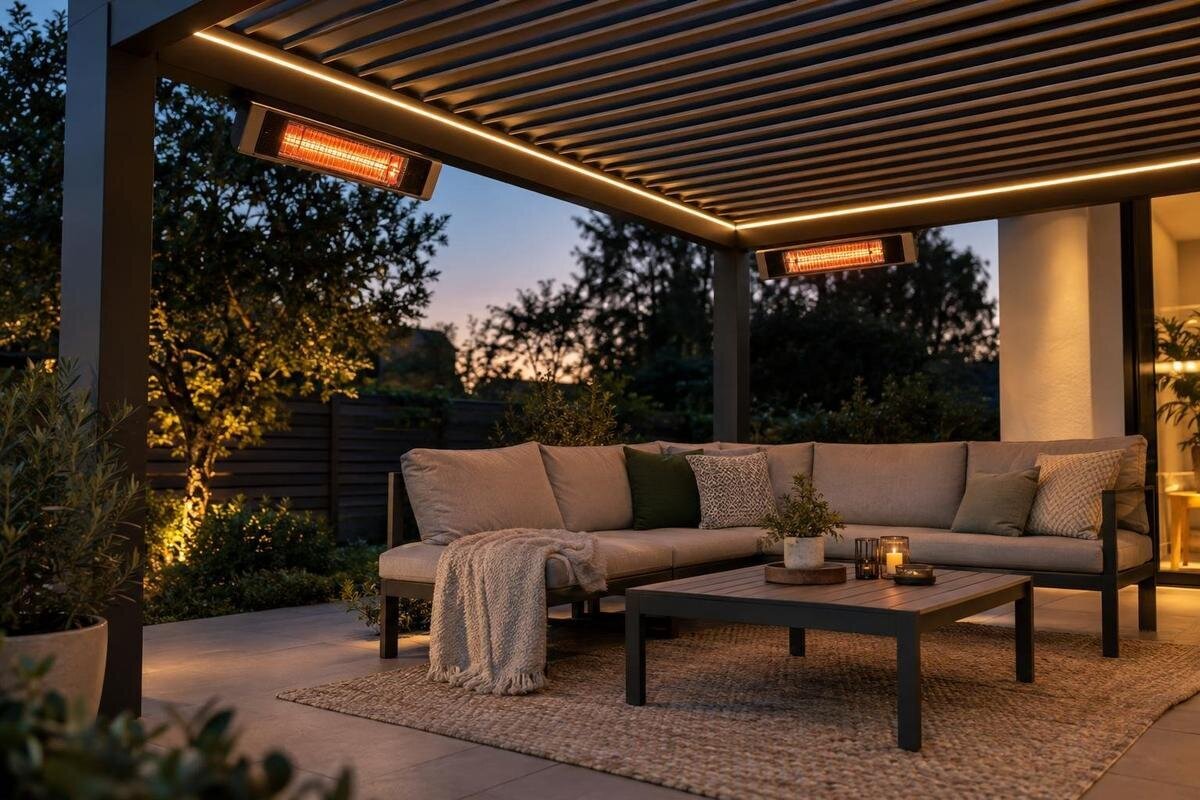
Pergola heating costs
Heating a pergola seating area raises two separate questions: how much electricity the heater uses, and whether its warmth reaches people comfortably in an open space. The first can be estimated from the heater’s rated electrical input, its operating hours and the rate on your power plan. The second depends on the heater type, where people sit, wind exposure and how much of the area is enclosed. Use the calculation below to build a realistic budget, not to promise a particular air temperature.

The basic formula for electric-heater running costs
Calculate electricity cost in three stages: watts ÷ 1,000 = kilowatts; kilowatts × operating hours = kilowatt-hours (kWh); kWh × the applicable rate = estimated energy cost. A heater rated at 2,000 W is 2 kW. If it draws its full rated input for three hours, it uses 6 kWh. At an illustrative rate of NZ$0.30 per kWh, that is 6 × $0.30 = NZ$1.80. This rate is an example, not a claim about a current New Zealand tariff. Replace it with the rate that applies on your own plan. Keep the units beside each figure: kW describes the electrical input, while kWh describes the energy used over time. Confusing the two can make an hourly estimate look like a total for the evening.
This is the variable electricity cost attributable to the heater’s use, not a forecast of your whole power bill. If there are two electric heaters, calculate each separately and add the kWh. Two 1.5 kW units running together for two hours at full input use 1.5 × 2 × 2 = 6 kWh. If the units have different ratings or run for different lengths of time, calculate each period before combining it. The number of seats does not multiply the power draw; the number of heaters and their operating hours do.
Find the heater’s electrical input
Look for the electrical input in watts (W) or kilowatts (kW) on the heater’s rating plate or in its exact manual. Check whether the figure applies to one heater or to a combined system. To convert watts, divide by 1,000: 1,500 W becomes 1.5 kW. If the heater has selectable levels, use the input stated for the level you expect to use. If the documentation gives several figures, keep them as separate estimates rather than presenting the maximum as typical use. Electrical input is the useful figure for estimating electricity consumption.
A pergola’s area is not an electrical rating. The Bloomcabin Pergola product page lists an area range of 9 to 24 m², but those square metres do not say how many watts a heater needs or how many seats it will warm. Record the exact structure and heater model, keeping the pergola dimensions and heater input in separate parts of your notes. If a proposal names the pergola but describes the heater only as an optional extra, the electricity estimate is still missing its main input. Leave that figure open until the proposed unit is identified rather than borrowing a rating from another heater. This keeps an incomplete quote from becoming a misleadingly precise running-cost estimate.
Use the unit rate on your power plan
Use the variable rate that applies when the heater is running. Your plan or bill may show different prices by time period or a separate rate for particular usage; if so, don’t apply one average to all hours unless it reflects your actual schedule. For a straightforward estimate, read the price per kWh in dollars. If it is shown in cents, convert it: 32 cents per kWh is NZ$0.32/kWh. Use figures on the same basis as your bill and current plan, rather than a headline average that combines different kinds of use.
If the heater will run across different rate periods, split the calculation. For example, one hour using 2 kW at an assumed 28 cents/kWh costs NZ$0.56; another hour at 40 cents/kWh costs NZ$0.80, for NZ$1.36 across the two hours. These prices are illustrative only. Check which rate applies during your planned sessions; a cheaper period matters only if your use falls within it. Don’t add a daily fixed charge to each heating session: this calculation estimates the cost of extra kWh, not standing charges.
Estimate hours of use realistically
Base the estimate on the time the heater will actually be on, rather than the length of the whole evening or the number of weeks you hope to use the pergola. Include any preheating time and any period when the heater stays on after people leave the seating area. For example, a 2 kW heater used for two hours on four evenings a week for four weeks uses 64 kWh. At an illustrative NZ$0.30/kWh, that comes to NZ$19.20 for this 28-day scenario. Use your own planned sessions and rate to make the calculation relevant.
If you are budgeting around the Bloomcabin Bioclimatic Pergola, estimate how often you will use its seating area rather than deriving a monthly cost from its size. Write down a typical week and a busier week, including the number of evenings and hours per session. A low-use, usual-use and high-use estimate is more informative than one precise-looking monthly figure. For occasional entertaining, distinguish regular evenings from longer gatherings instead of assuming every session lasts the same time. You might record two short weekday sessions and one longer weekend session, then add their operating hours. Also distinguish time spent outside with the heater off from time when it is running. Keep these assumptions beside the total so you can change the schedule without having to reconstruct the calculation.

Radiant warmth is different from air temperature
A radiant electric heater transfers energy to people and surfaces in its path. Someone who receives that warmth may feel more comfortable even though the air around the seating area remains cool. In an open pergola, air can move freely, so a heater’s running cost does not tell you that the whole space will reach a particular temperature. The calculation answers how much electricity a given input and run time use; it does not measure how much warmth reaches each person.
When considering the bioclimatic pergola listing, assess the running-cost estimate separately from the proposed heater’s ability to warm the occupied seats. Comfort depends on the heater type and its documented performance as well as the seating layout and exposure. Ask for the exact heater model and use its manual for the relevant performance and operating information. Two proposals with the same electrical input and operating hours produce the same calculated energy use, but that alone does not establish that people will experience the same warmth. Conversely, a lower running-cost figure may simply assume fewer hours rather than better comfort. In your comparison, record the energy assumptions alongside the intended seating arrangement so neither price nor a temperature claim substitutes for the other.
Base the plan on occupied seating, not just floor area
Sketch where people are likely to sit and which seats will be occupied at the same time. A pergola may have more floor area than the group needs to keep comfortable, or it may have separate seating spots used at different times. This affects whether you would operate one heater or several, and for how long. The energy calculation remains based on each unit’s input and run time; it is not a rule that watts should increase in direct proportion to every square metre of floor area.
When using the Bloomcabin Pergola range as a reference for a project, compare the actual seating plan with the heater’s documented coverage rather than treating the pergola footprint as heated area. Ask whoever is specifying the equipment to identify the proposed heater and its rated input for that layout. If the plan includes separate dining and lounge areas, record whether both will be occupied together or one after the other. For example, two 1.5 kW heaters operating together for two hours use 6 kWh; operating each for one hour uses 3 kWh in total. This compares operating schedules, not whether either arrangement will provide sufficient warmth. A larger structure does not, by itself, establish that a particular heater is suitable, nor does a smaller one confirm that one unit will reach every seat.
Compare heater settings on the same basis
Compare options using their electrical input at the setting you expect to use and the same number of hours. For instance, a documented 1 kW setting running for three hours uses 3 kWh; a 2 kW setting for the same time uses 6 kWh. Multiply each result by the same applicable rate to compare the energy cost. Labels such as low, medium or boost are not enough for a calculation unless the manufacturer provides the corresponding input. Include the number of units and whether they run together or at different times.
If a heater cycles off under a thermostat, multiplying its full rated input by every elapsed hour gives a full-power estimate, not necessarily its actual consumption. Don’t apply an arbitrary percentage to guess how much less it will use; actual cycling depends on the equipment and conditions. For a quote involving the bioclimatic pergola product details, ask for the heater model and input figures for the settings being compared. If you expect to change settings during a session, calculate each period separately. One hour at a documented 2 kW setting followed by two hours at 1 kW totals 4 kWh, compared with 6 kWh for three hours at 2 kW. Keep an assumed setting schedule clearly labelled as an estimate, particularly if you do not yet know which level will feel comfortable.
Allow for wind and changes in exposure
Wind and open sides affect how warm the seating area feels, even though they do not change the arithmetic of kW × hours × rate. On a breezy evening, people may use the area for less time, move seats, or want the heater on for longer. Those choices change the estimated hours, while the same rated input still gives the same full-power energy calculation. Make separate use estimates for the conditions in which you expect to sit outside rather than adding an unverified percentage to the electricity cost.
A wall-mounted structure should not automatically be treated as an enclosed or insulated room. When considering the Bloomcabin Wall-Mounted Pergola, describe the actual seating area’s exposure rather than assuming the model name establishes how sheltered it will be. Screens or other changes may alter exposure, but don’t assume they will reduce running costs by a set amount. Instead, keep the electricity rate and heater input unchanged when comparing possible operating times. A two-hour session and a three-hour session can be compared directly without assigning a speculative saving to shelter. Label them as alternative use patterns, not predictions of how people will respond to the weather. If changes affect the heater’s surroundings, check the exact heater instructions and have relevant compatibility or mounting questions confirmed before relying on that layout.

Keep installation costs separate from energy use
Running cost covers electricity used while the heater operates. Keep one-off costs, such as the heater itself and any electrical or installation work, as separate lines in your budget. You can add those items when comparing total project cost, but mixing them into an evening or monthly energy estimate makes it harder to see what use will cost. Ask for any quote to distinguish the equipment, installation and expected electricity assumptions, without treating an unverified running-cost estimate as a fixed charge.
Before choosing equipment, have a qualified electrician assess the proposed electrical supply and any outdoor electrical requirements. Use the exact heater manual for exposure limits and clearances, and obtain documented approval for the intended mounting point. The wall-mounted model page identifies a structure, not a permitted attachment point for a heater. Don’t assume a pergola frame or wall can support a particular unit; that needs to be confirmed for the specific heater and structure by the appropriate professional.
Comparing and updating your heating budget
For each option, record the heater model, rated electrical input, number of units, expected hours per session, sessions per week and the rate used. Calculate kWh first, then the energy cost. Put competing proposals on the same basis: compare an evening with an evening, or the same number of weeks with the same number of weeks. If one quote assumes two hours per session and another assumes four, their totals do not yet show which option costs less to run under comparable use. Keep installation costs in a separate column. Where a quote gives only a monthly cost, ask for the input, hours and rate behind it before using that figure in your comparison.
If the plan uses the regular pergola listing as its structure reference, record the selected configuration and seating layout alongside the proposed heater details. Once you begin using the space, note the operating time and settings for a few sessions, including occasions when you switch the heater off while staying outside. Compare those notes with the original estimate to see whether the difference comes from longer sessions, more frequent use or a different setting. Update the assumption that changed rather than adjusting the final dollar figure without explanation. Use appliance-specific consumption information only where it is reliable and appropriate; a whole-house bill may include many other loads. Date your estimate and note the tariff used so a later comparison does not confuse changed habits with a changed electricity price.
Frequently asked questions
Does a 2 kW heater use 2 kWh every hour?
It uses 2 kWh for each hour it draws its full 2 kW input. If it has a lower setting or cycles off under a thermostat, its average consumption may be less. Use the manual’s input figures and treat full-power running as a separate, higher-use estimate.
How much does a 2 kW heater cost for an evening?
Multiply 2 kW by the hours it runs, then by your rate per kWh. For three hours at an illustrative NZ$0.30/kWh, the estimate is 2 × 3 × $0.30 = NZ$1.80. Use your own plan’s rate; this example is not a current tariff.
Can I use the pergola’s floor area to choose a heater?
Not on its own. Floor area does not state a heater’s electrical input or how much warmth reaches the seats. Base the plan on the occupied layout and the heater’s documented specifications, with compatibility and mounting checked for the exact structure.
Should preheating time be included?
Yes. Count every hour the heater is on, including any time before people sit down and after they leave. If you are unsure how long you will use it, calculate separate shorter and longer sessions rather than assuming a single pattern.
Does the estimate include installation costs or predict air temperature?
No. The calculation estimates electricity use only; show any purchase, electrical or installation costs separately. It also cannot predict air temperature or comfort. Radiant warmth may reach people in its path while the surrounding air in an open pergola remains cool.
Treat the electricity calculation and the comfort check as related but separate parts of the decision. A useful estimate begins with documented heater input, realistic operating hours and the rate that applies; a useful seating plan then considers whether that warmth reaches the people using the space. Write down your assumptions and compare a quieter week with a busier one. That makes it easier to understand the likely running cost without mistaking an illustrative figure for a guarantee of warmth.
