
Buying a Pergola for Your Poolside Terrace
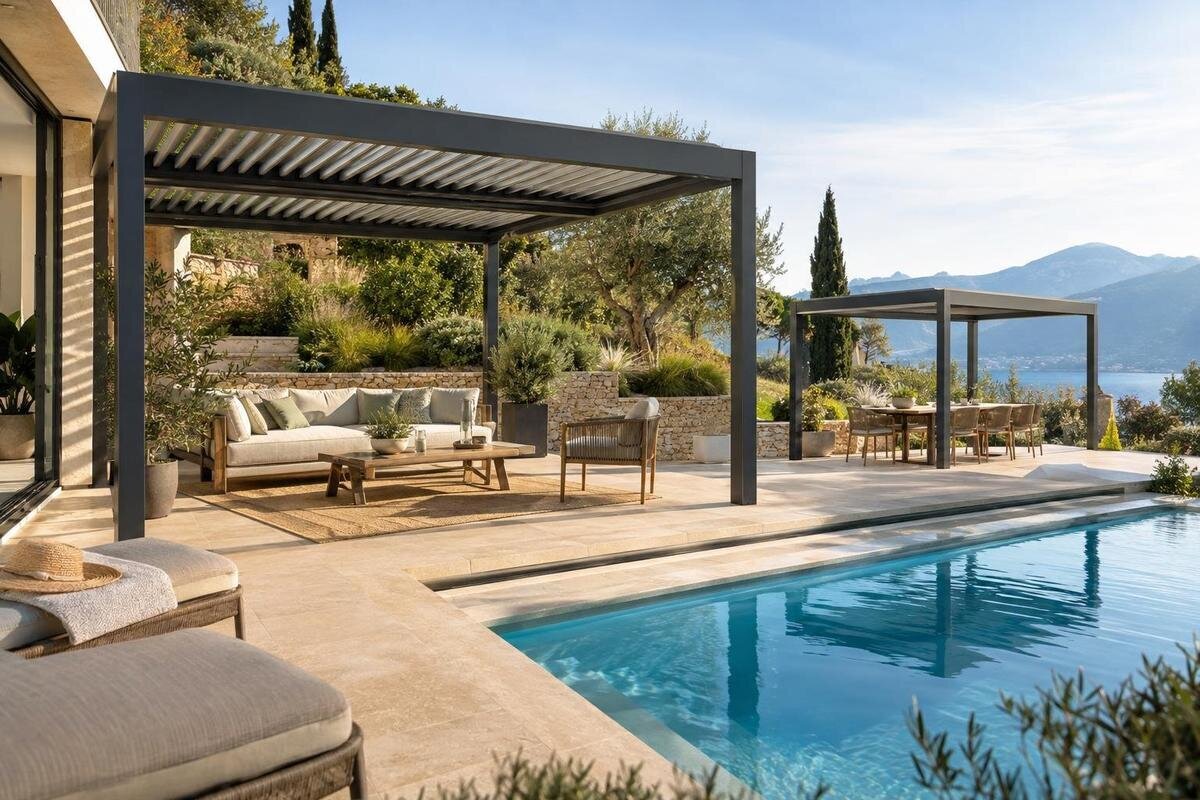
Poolside pergola buying guide
A pergola changes more than the look of a swimming-pool terrace: its posts and overhead structure occupy deck space used for loungers, routes to the water, cleaning, and everyday movement. A sound purchase decision begins with that layout, then tests shade, dimensions, materials, installation requirements, and ordering details against how the terrace is actually used. Poolside conditions bring extra questions: sun moves across the deck, splashes and pool-care products may reach nearby surfaces, and clear access remains important. This guide helps you compare options without assuming that a product photo proves a particular fit, shade level, or compatibility with your pool area.
Map the Pool Terrace Before Choosing a Location
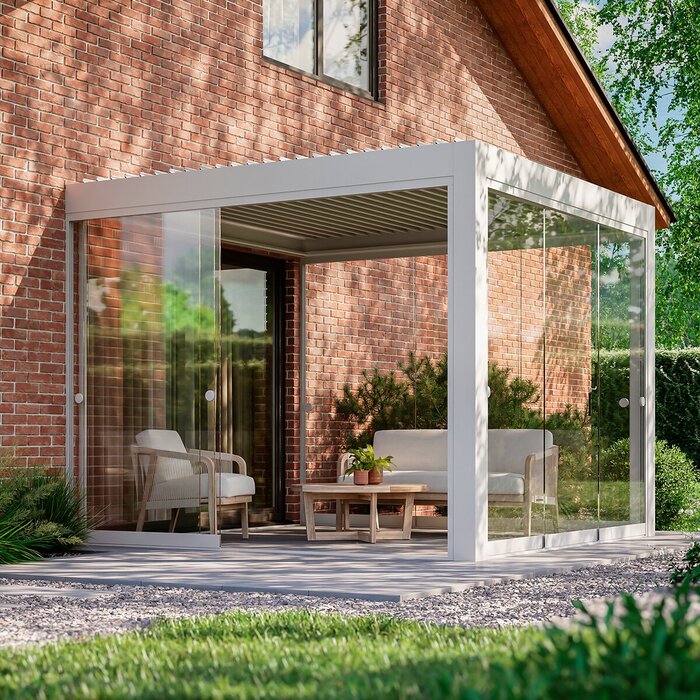
Before comparing styles, make a simple plan of the terrace. Mark the pool edge, steps or ladder, gates, house doors, deck drains, and any pool-care equipment that needs access. Add fixed features such as posts, fences, low walls, and raised planters. This inventory shows which parts of the deck are genuinely available; an empty-looking corner in a photo may sit on a route you use every day. Include the paths people take with towels, where they set down wet items, and the direction cleaning tools or a pool cover move. Measure the usable area only after those fixed and moving parts are shown.
Then mark the activities you want the pergola to serve. A dining table, loungers, and a place to sit facing the water use space differently, so note which items matter most and when each area is occupied. Keep the route between the house and pool entry visible in the sketch, and allow for chairs to be pulled out rather than tucking everything against a post. If you store seasonal furniture or operate a pool cover, outline the space those routines need too. This creates a practical shopping brief: what needs shade, what must remain reachable, and where posts might fit.
Choose a Position Based on Sun and Sightlines
Observe the sun at the hours when the terrace is busy, rather than choosing a position solely because it is closest to the pool. Note where shade falls in the morning, around midday, and in late afternoon on several clear days; walls, trees, and rooflines can alter the pattern, and the sun's angle changes through the year. Photos from the same viewpoint or a simple sketch can reveal whether the hoped-for shaded area is a dining spot, loungers, or the path along the water. Use these observations to define the pergola's job. A location that works for a lunchtime table may not shade an evening chair.
Also consider how an overhead structure will affect sightlines and access. A pergola between seating and the water may cover the place where people sit, yet its posts can interrupt a view or narrow the route; a position farther back can shift shade away from the seating. Consider this pergola option only after marking its proposed footprint on your plan, not from a lifestyle image alone. Check any published overall dimensions against the clear deck area, and ask for them if they are not provided. Consider the view from seated and standing positions, while keeping a clear route to the pool, doors, and service points.
Size the Footprint Around Furniture and Walkways
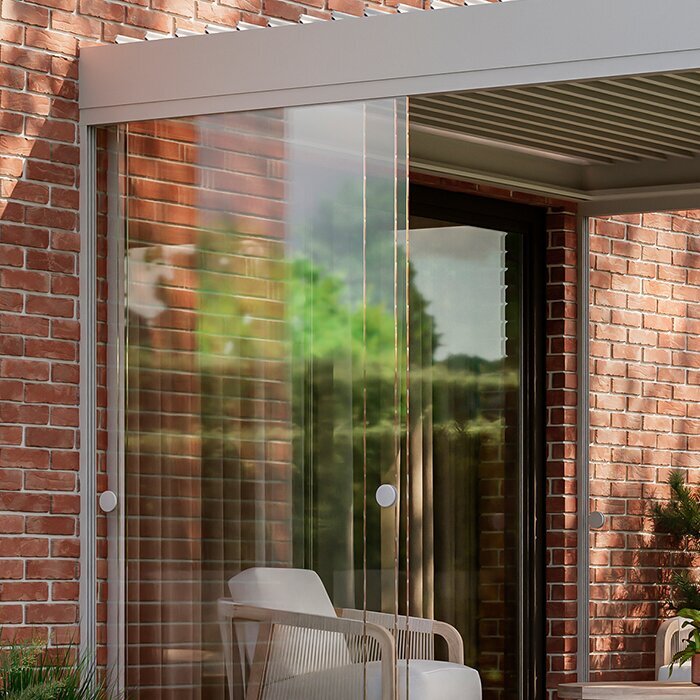
Use the overall footprint from product documentation, if provided, and request a dimensioned drawing when it is not. Include the posts and any roof overhang rather than treating the advertised shaded area as the space the structure occupies. Supports determine where furniture and people can pass, even when the roof extends beyond them. Compare the footprint with the usable deck measured in your plan. Check the drawing's orientation so its length and width line up with the terrace, and confirm whether a published measurement is overall or post-to-post; those describe different things when you are planning around an obstacle.
Allow for furniture in use, not just pushed into place. Pull dining chairs back from the table, extend a recliner, and leave room for someone to pass without stepping toward the pool edge or weaving around a post. Consider this pergola only when its documented measurements can be compared with those clearances. On a scaled plan, draw the posts before adding furniture; on the deck, use movable markers to test the outline when the area is clear and the markers cannot become a trip hazard. Repeat the test with your largest planned furniture item. This can expose a footprint that looked generous on a screen but crowds the terrace in use.
Match the Roof Design to the Shade You Expect
Pergola roofs do not all create the same kind of shade. Open rafters, slatted or adjustable tops, fabric covers, and more continuous roof panels can differ in how much sky they leave visible and how sunlight passes through. Treat these as design questions to verify for the particular listing, not assumed features of every pergola. If consistent shade over one seating area matters, ask what the specific roof configuration provides and whether published information describes shade coverage or only the structure's dimensions. Check how shade might change as the sun moves instead of interpreting a single overhead photograph as a promise of coverage throughout the day.
Match the roof to the hours and purpose you identified. Low-angle morning or evening sun can enter from the side, while light reflected off water may make a shaded seat feel brighter than expected; the roof's direction and height matter alongside its top. Check whether openings can be adjusted, if that matters to you, and what the documented open or closed positions are. Use this pergola listing to compare the stated configuration and instructions; do not infer full shade, rain protection, or adjustability from a product name or photograph. If your priority is shade over a table, assess that table's exact position rather than the broad area beneath the structure.
Compare Materials for Poolside Exposure
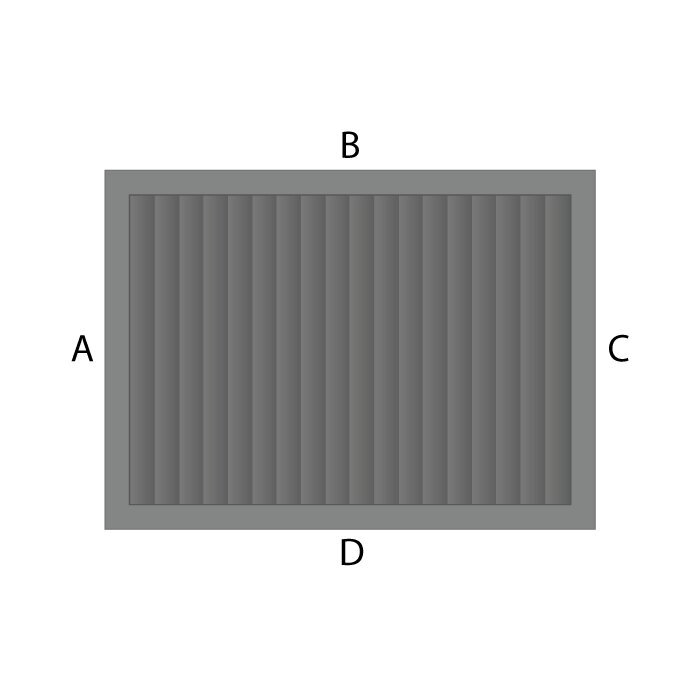
Poolside exposure brings practical questions: splashes, damp towels, sunscreen, cleaning products, and pool-treatment residue may reach nearby surfaces. In coastal settings, salt can be another exposure to discuss. Before choosing wood, aluminum, steel, or another frame material, find out exactly what the listing names for the frame and finish. A broad label such as outdoor does not answer every question about repeated moisture or contact with pool chemicals. Ask the manufacturer which cleaners and exposures the finish is intended to tolerate, and whether its guidance changes for a saltwater pool or a covered deck. Pool-care routines differ, so your own conditions matter.
Compare upkeep as part of the purchase, not as an afterthought. For wood, ask what maintenance the stated species and finish require; for metal, ask how the actual coating is cared for and what to do if it is scratched. For any material, check the fasteners and replacement-part information, and ask whether routine rinsing or periodic refinishing is specified. Those details vary by product, so do not assume that frames with the same broad material name have identical care needs. The Bloomcabin pergola listing can be one comparison point, but poolside suitability depends on verified material and care information, if available. Favor instructions you can realistically follow over a finish described only in general terms.
Confirm the Deck and Installation Method
The visible surface does not tell you everything about what lies beneath it. A terrace may be paving, pavers, a deck, or a slab, and a level-looking surface does not by itself prove that a particular pergola can be anchored there. Establish what the site is made of and whether a pool shell, buried line, drainage channel, or existing waterproofing could be affected before settling on post locations. Pavers may need a different assessment from a solid slab. If the structure attaches to a building, verify that the selected configuration is designed for that arrangement rather than assuming any pergola can be wall-mounted.
Before purchase, compare the installation method in the manufacturer's instructions with your actual site and ask a qualified pergola installer to confirm substrate suitability, anchoring, clearances, and any preparation that may be needed. Do not estimate structural capacity from appearance or use a generic fixing plan to fill gaps in product information. The product page for another pergola option can sit on your shortlist while you request documentation relevant to installation; a model name or image alone cannot establish what mounting it supports. If local placement or pool-area requirements may apply, verify them with the appropriate local professional or authority before ordering. Keep the answers with the product paperwork.
Review Weather Exposure and Roof Drainage
Think about wind and changing weather at the exact location. An open terrace may be more exposed than the yard around the house, while walls or trees can alter local conditions; neither a sheltered-looking photo nor a neighbor's structure establishes what your site can handle. Read the manufacturer's stated wind or weather limitations, if available, and have an installer assess any uncertainty rather than judging strength by weight or appearance. If the pergola has a cover or movable roof elements, follow the operating and care instructions supplied for that design. Nearby trees can shed leaves or debris, which may affect how often an overhead surface needs cleaning. If snow or ice is relevant at your site, ask how the documentation addresses it.
Rain management matters too. Find out whether the chosen roof sheds water toward a deck route, the pool, a door, or equipment, and ask how drainage is intended to work; a roof can change where water lands even if it does not make the surrounding terrace dry. Also note whether runoff could reach a doorway or walkway. Compare available documentation for the additional pergola listing with the site's exposure and drainage plan. Confirm which weather conditions the manufacturer addresses and what, if anything, must be adjusted or removed before severe weather. Do not assume an open or adjustable design can stay in any position in every forecast; the instructions for the exact product govern.
Keep Pool Access and Equipment Routes Clear
Preserve easy access to the pool as well as to equipment used to care for it. Keep the route between the house, pool entry, gates, and usual seating direct, and avoid placing a post where people naturally walk with wet feet or carry bulky items. Mark pump and filter access, skimmers, drains, cover tracks, and removable panels on your plan; the relevant equipment varies by pool, but every service point needs to remain reachable. Check where maintenance personnel need to stand or open a panel, not only where equipment sits. Confirm that removable equipment can still be taken out without moving a post.
Think through what happens when chairs are occupied and when a cover or cleaning equipment is being used. The view across the water may be part of the terrace's appeal, so check sightlines from the main seating and from windows before fixing a location. Review the view from the places you actually use, not only from the yard entrance. When reviewing another pergola product page, compare its verified footprint with both the pool deck and service areas; the link is a shortlist reference, not evidence that a particular placement will suit your site. If equipment access or the pool boundary is unclear, ask the pool professional to review the proposed layout before ordering.
Verify Dimensions and Ordering Details
Before checkout, confirm the dimensions in writing and check what they measure: post centers, outside edges, roof dimensions, and overall height are not interchangeable. Match the drawing's orientation to your plan, and ask whether any listed overhang is included in the measurement. Confirm what comes in the package, what mounting hardware or preparation is excluded, whether assembly is expected, and whether installation service is offered or arranged separately. These are questions for the seller or manufacturer, not details to infer from a photograph. Save the product drawing and the instructions that apply to the item you are ordering, and confirm the measurement units used.
Review the ordering terms that affect your project: delivery access for the packaged item, the lead time shown at the time of purchase, return conditions, and how missing or damaged parts are handled. No particular carrier, schedule, or service should be assumed. If a listing leaves a key point unclear, get the response before committing and save the product drawing and installation instructions. Ask who handles assembly questions after delivery if that is not stated. Use a further pergola listing as a comparison only after checking the same size, setup, and order details against other choices; any listed price does not substitute for a like-for-like review.
Set Priorities for the Final Comparison
To make the final comparison, separate requirements from preferences. Requirements might include fitting the measured footprint, keeping service access clear, and having manufacturer information that answers installation and pool-exposure questions. Preferences might be a particular visual profile, the amount of open sky overhead, or how the structure relates to the house. This distinction prevents an attractive style detail from distracting from a placement problem and makes it easier to reject options that cannot be verified for your site. Put each requirement beside its supporting information rather than relying on memory when product pages look similar. Treat any unanswered must-have as a real gap in the decision.
Review the shortlist on one plan showing the pergola, posts, furniture, circulation, sun direction, and equipment. Then compare the same evidence for each candidate: documented overall dimensions, roof arrangement, material and care guidance, installation requirements, and order terms. Include the time and effort required to keep the structure in good condition. If a critical detail remains unknown, pause and request clarification instead of filling the gap with an assumption. Consider whether the layout will still work when furniture changes or seasonal items are stored. A suitable poolside pergola is one whose footprint and documented use make sense for your deck while leaving the pool and its maintenance routines straightforward.
Frequently Asked Questions
Where should a pergola go on a pool terrace?
Begin with the seating or dining area you most want shaded, then check the sun at the hours you use the terrace. Keep posts clear of regular routes to the pool, gates, doors, and equipment. There is no universal best position: the deck layout, views, and site-specific installation requirements all affect the fit.
How do I choose the right pergola size?
Compare the documented overall footprint, not only the area a listing describes as shaded. Include the posts, any roof overhang, and room for furniture in use. Test the outline on a scaled plan or mark it safely on the deck, and ask the seller to clarify measurement orientation or definitions that are not clear.
Will a pergola provide full shade?
That depends on the roof design, its openings or spacing, the sun's angle, and the pergola's orientation. Open or slatted tops may let light through, and low-angle sun can enter from the side. Ask for product-specific shade information rather than judging coverage from a photograph.
Which pergola material is best near a swimming pool?
There is no single best choice without knowing the frame, finish, pool conditions, and maintenance you can manage. Confirm the listed materials, finish and care instructions, plus any guidance about repeated splashes, cleaning products, or coastal salt. Ask the manufacturer for poolside-use information if it is not provided.
What should I verify before ordering?
Confirm the overall dimensions and orientation, roof configuration, frame and finish, installation method, anchoring guidance, package contents, and assembly responsibilities. Review delivery access and the seller's current terms as well. For a site-specific installation, consult a qualified installer before ordering and check any applicable local requirements with the relevant authority.
Buying for a pool terrace means balancing shade with the deck's everyday circulation. Let the measured layout rule out footprints that crowd pool access or equipment, then compare roof coverage, poolside care, installation documentation, and order terms among the remaining candidates. When a critical fact about a listing or the site cannot be confirmed, treat it as unresolved rather than filling it in from a photo. The right choice is one you can place and maintain without compromising how you use the water-side space.
