
Can You Use a Pergola in Winter? Snow, Wind & Cold Guide | Bloomcabin USA
Short answer
A pergola can be used in winter — but winter use is about shelter and correct operation, not pretending the structure is an indoor room.
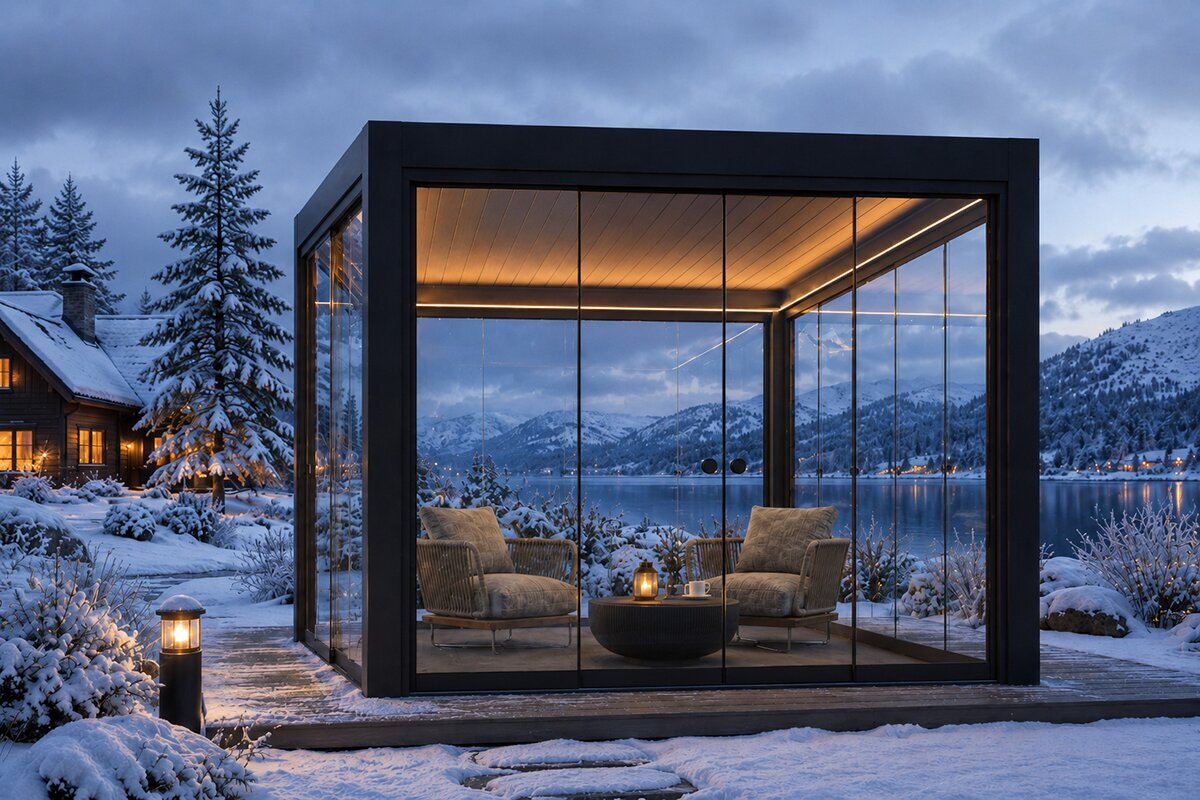
A winter pergola can provide a calmer place to sit outside on bright cold days, reduce direct wind around the seating area and create a more protected transition between the house and yard. With suitable side protection, lighting and a roof system designed for the pergola, the usable outdoor season can extend well beyond summer.
What you should not assume is that every pergola can be treated the same way in snow, ice or severe wind. Snow depth, snow density, drifting, freezing rain and wind exposure vary enormously across the United States. The correct winter position of roof components, acceptable snow conditions and any required snow management must come from the documentation for the exact pergola model.
This matters especially with a bioclimatic louvered roof. Adjustable louvers are a moving mechanical system. If they are frozen in place, covered in ice or otherwise obstructed, they should not be forced to move. A motor is not a tool for breaking ice loose.
Bloomcabin offers several aluminum pergola concepts for the U.S. market. Compare the Bioclimatic Aluminum Pergola, the standard Bloomcabin Pergola and the Lean-To Pergola before deciding how much seasonal flexibility your patio really needs.
Winter mindset
Think of winter as a different operating season, not simply a colder version of summer.
In summer, the pergola is often managed for shade, ventilation and rain. In winter, the priorities shift toward snow, ice, drainage, wind and protecting moving parts from being operated while frozen.
That does not mean the pergola becomes unusable. It means the user has to understand that weather itself becomes part of the operating procedure.
A bright 35°F winter day in Virginia, a 20°F day in Minnesota and a heavy wet-snow event in the Northeast are very different environments. The pergola may look identical, but the weather acting on it is not.
The safest general rule is simple: use the structure according to the exact product instructions and never improvise around snow or ice. If the roof mechanism is obstructed, stop and clear the condition only in the manner permitted by the product guidance.
Winter priority 01Protect moving parts from forced operation
Winter priority 02Keep water paths open
Winter priority 03Follow model-specific snow and wind limits
Snow on a pergola
The question is not “Can aluminum handle snow?” The real question is “What snow condition is this exact pergola designed and instructed to handle?”
Snow is not a single, predictable material. A few inches of light powder can weigh very differently from a shallow layer of saturated wet snow. Wind can also create drifts that concentrate snow in one area instead of distributing it evenly.
That is why generic internet rules about a certain number of inches are not reliable enough for winter pergola decisions. The correct information is the snow guidance for the specific structure and the local design conditions for the property.
If snow begins accumulating, do not assume that the roof should be repositioned unless the product instructions explicitly say so. With a motorized louvered roof, changing the louver angle while snow or ice is present may create additional mechanical resistance.
Do not use the roof motor to test whether frozen louvers will move. If they are iced or frozen, leave them until the obstruction can be handled safely and in accordance with the product instructions.
Heavy snow should also not be removed with aggressive tools that could scratch coatings, dent profiles, damage seals or place a person in an unsafe position. Snow-management methods should follow the pergola documentation and general safe winter-maintenance practice.
The property itself influences accumulation. A roof near a taller wall can experience drifting. Trees can shade one part of the structure so snow remains there longer. A sunny south-facing side may melt quickly while the north side stays frozen.
Snow also creates a water-management issue when temperatures rise. Several inches of accumulated snow can become a concentrated volume of meltwater. The drainage path has to work even when the ground nearby is frozen or partly blocked by snowbanks.
For that reason, fall maintenance matters before snow ever arrives. Clearing leaves and debris from roof channels and discharge areas gives meltwater a better path when winter temperatures fluctuate.
If your region experiences regular significant snowfall, snow should be part of the purchasing conversation from the beginning. Pergola selection, site exposure, foundation and intended winter operation should be considered together rather than after installation.
The useful principle is conservative: if the actual snow condition is outside what you clearly understand from the model documentation, stop using assumptions and verify the correct procedure before operating the roof or attempting maintenance.
Ice + freezing rain
Ice is often a bigger mechanical problem than cold air itself.
Aluminum being cold is not the same thing as a moving component being frozen. A louver, hinge, track or drainage path can be physically locked by ice even when the surrounding temperature begins to rise.
Freezing rain is particularly important because it can create a thin bonded layer over multiple moving components. The roof may look almost clear from below while joints or edges remain frozen. That is another reason not to judge readiness only by appearance.
If a moving element resists normal operation, stop. The correct response is not additional motor force. Mechanical resistance may indicate ice, debris or another obstruction that needs to be addressed first.
Ice can also form where water exits the pergola. A discharge point that is harmless in summer may create a slippery patch on a winter walkway. Ideally, water should leave the structure in a location where repeated freeze-thaw cycles do not create a hazard next to steps or doors.
Sliding glass tracks deserve similar care. Water, snow or slush entering the lower track may freeze. Keep the track clean and do not force glass panels if ice prevents free movement.
One of the best winter habits is simply waiting for conditions to become appropriate before moving mechanisms. A pergola is not made safer by forcing it to operate while frozen.
Louvered roof in winter
A bioclimatic roof is adjustable — but winter is when “adjustable” must be used with the most discipline.
During warm seasons, moving the louvers several times a day may be completely normal. In winter, the roof condition should be checked before every operation whenever freezing weather, snow or ice is possible.
Snow or ice can bridge between louvers, collect at edges or freeze at pivot points. Even a small frozen connection can make a motorized system behave differently from normal.
Follow the model’s instructions for winter louver position and snow conditions. Do not assume that the position preferred for summer rain is automatically the right position for snow.
If the system has been sitting through a freeze, visually inspect it before operation. Confirm that no obvious snowbank, ice strip, branch or other obstruction is present.
The roof drainage channels should be clear before freeze-thaw periods. Meltwater that cannot escape may refreeze in a different location and create additional blockage.
If you are deciding whether an adjustable roof is worthwhile for your patio, read the Bioclimatic vs Standard Pergola guide. Winter is one of the seasons where understanding the operating differences matters most.
Wind in winter
Cold wind is often what makes a winter patio feel unusable long before the temperature itself becomes extreme.
A sunny 40°F day can feel surprisingly comfortable in a sheltered spot and surprisingly harsh in a steady wind. This is where side protection can have a large effect on perceived comfort.
Glass walls, fixed panels or selected side screens can reduce wind at seating height. They do not heat the air, but they reduce the continuous removal of the thin warm air layer around people and surfaces.
The same glass wall that improves winter comfort also increases the surface presented to wind. On exposed properties, the final side-wall configuration must therefore be treated as part of the structural project, not merely as a comfort accessory.
Winter storms may also bring stronger gusts than the conditions under which the patio is normally used. Follow the usage guidance for screens, sliding glass and roof components during severe weather.
Secure loose patio furniture before major storms. Even a well-anchored pergola can be damaged by a chair, planter or other object blown into glass or roof components.
A good winter layout often protects one or two dominant wind directions rather than closing every side. This preserves ventilation and keeps the pergola clearly connected to the outdoors.
Glass walls in winter
Glass can make winter use much more comfortable — but it does not turn the pergola into an insulated room.
A glass wall works in winter mainly by reducing wind and lateral weather. Clear glass allows sunlight and views to remain while creating a calmer microclimate around the seating area.
Sliding glass adds flexibility. On a cold but bright day, close the windward side. If the sun becomes strong and the space warms, open the leeward panels to restore airflow.
Fixed glass makes sense on a side that is consistently exposed and does not need to be used as a pathway. A fixed short side combined with sliding glass toward the yard can be more practical than full enclosure.
Condensation can occur on cold glass when moist air is present. This is normal. Ventilation helps the surface dry and reduces the feeling of a sealed space.
Snow or ice can collect at the lower track of sliding panels. Keep the track clear and never force panels through frozen debris or ice.
If you add portable heating to an outdoor area, the heater’s manufacturer instructions and clearances govern its use. Never assume an enclosed glass pergola is equivalent to an indoor room for heater selection or combustion safety.
USA winter strategy
Winter pergola use in Miami is not the same subject as winter pergola use in Minneapolis.
NortheastSnow, freezing rain and repeated freeze-thaw cycles make drainage and model-specific snow guidance central to winter operation.
Upper MidwestVery low temperatures and substantial snowfall mean moving parts should be treated conservatively and ice obstruction taken seriously.
Mid-AtlanticFrequent freeze-thaw cycles can make drainage and refreezing near tracks or walkways more relevant than long-term deep snow.
SoutheastWinter use is often realistic on many days, with wind and rain protection more important than snow management in lower-elevation areas.
FloridaCold-weather snow concerns are minimal in most locations; winter value is more about rain, wind and comfortable shade during the mild season.
Mountain WestElevation can mean heavy snow, intense sun and large temperature swings. Local snow and wind conditions deserve careful project-specific consideration.
Pacific NorthwestAt lower elevations, rain and damp freeze-thaw conditions can matter more often than deep snow; mountain areas are a separate category.
CaliforniaCoastal and lowland winter use can be extensive, while Sierra and mountain properties require a completely different snow-focused approach.
Foundation + frost
Winter performance starts below the visible pergola.
A pergola can have excellent aluminum profiles and still perform poorly if its foundation or surrounding patio moves excessively. Freeze-thaw action, frost-sensitive soils, drainage and local footing requirements all influence long-term geometry.
This is particularly important with sliding glass. A track that remains perfectly aligned through summer may be affected if adjacent paving heaves or settles. The structural support and the decorative patio surface should not be confused.
A patio slab, paver field or deck is not automatically the correct load path for pergola posts. The foundation must suit the structure, the site and applicable local requirements.
Use the Pergola Foundation Guide as a starting point, then verify the actual design for your location. Winter regions make good drainage and stable support especially valuable.
If the pergola is installed above a garage, roof deck or waterproofed occupied space, winter water management becomes even more sensitive because anchoring and waterproofing details have to work together.
The cleanest winter-ready installations are usually the ones where foundation, drainage, electrical routes and final pergola configuration were coordinated before the patio surface was finished.
Drainage + freeze-thaw
The most annoying winter problem may be water that drains correctly at noon and freezes in the wrong place at night.
Winter weather often cycles around the freezing point. Snow melts during a sunny afternoon, flows through the pergola drainage path and then freezes again after sunset.
That means the discharge location matters. Water should not repeatedly cross steps, a doorway route or a sliding-glass track where refreezing creates either a hazard or a mechanical obstruction.
Keep roof channels, gutters and outlets free of leaves before winter. A blocked outlet can cause water to back up and refreeze somewhere the system was not designed to hold it.
Do not forget the ground around the pergola. Snow piled against a post base or glass track can melt directly into the system even if the roof drainage itself is perfectly clear.
During spring thaw, inspect whether the winter changed the surrounding grade. Plowed snow, ice and soil movement can alter the way water approaches the pergola.
Three winter modes
Winter does not mean one permanent pergola setting.
01
Cold + sunny
Use wind protection to create a calmer seating area while following the roof’s approved operating condition for the weather.
02
Snow + freezing
Prioritize product guidance, keep drains clear and do not force any moving component that may be frozen or obstructed.
03
Thaw + wet
Watch meltwater, reopen ventilation when appropriate and inspect tracks, paving and drainage before the next freeze.
Winter maintenance checklist
The easiest winter problems are the ones prevented before the first freeze.
01. Clean roof drainage before freezing weatherLeaves and seeds that are harmless in September can become frozen blockages in January.
02. Keep sliding tracks clearRemove grit, leaves, slush and ice before operating panels.
03. Do not force frozen louversResistance is a reason to stop, not to use more motor force.
04. Manage snow according to the model instructionsDo not rely on generic depth rules from unrelated pergolas.
05. Watch discharge pointsMeltwater should not create ice at doors, steps or the glass-track zone.
06. Secure furniture before stormsProtect glass and roof components from impact by windblown objects.
07. Inspect after major freeze-thaw eventsCheck paving, tracks, drainage and post surroundings for change.
08. Do a full spring opening testOnce conditions are appropriate, run moving components through normal operation and check that everything feels consistent.
Spring inspection
Winter ends with one of the most useful maintenance moments of the year.
When freezing weather has passed and the pergola is free of snow and ice, inspect the system before returning to normal high-frequency operation.
Look at roof channels, louver edges, sliding-glass tracks, visible fasteners, post surroundings and patio levels. The goal is not to perform a structural engineering inspection yourself; it is to notice obvious changes early.
Move sliding glass through its full normal range and confirm that panels do not suddenly bind. If the track has changed because adjacent paving moved, correct the source rather than continually forcing the panel.
Test the roof mechanism only when it is clear of frozen obstruction and conditions are appropriate under the product guidance. Normal operation should feel normal; unusual resistance deserves attention.
Spring is also a good time to revisit the patio layout. Plants grow, new furniture appears and drainage patterns can change. Make sure nothing now interferes with moving panels or roof components.
Attached vs freestanding in winter
A pergola beside the house and a pergola in the middle of the yard experience winter differently.
An attached or Lean-To pergola benefits from the house as one side of the outdoor room, but that relationship creates additional winter details: roof drainage near the building, snow drifting against walls, door thresholds and ice near the main exit.
A freestanding pergola may have more wind exposure because it lacks the shelter of the house. On the other hand, it may be easier to direct drainage and snow away from doors and occupied spaces.
If this decision is still open in your project, the Lean-To vs Freestanding Pergola guide explains the broader placement tradeoffs.
For either configuration, winter design should follow the complete site: where snow tends to drift, where water can freeze, where the dominant wind arrives and how people move between the house and the sheltered area.
Bloomcabin USA / Continue planning
Winter performance begins with choosing the right pergola for your climate and installing it on the right foundation.
Adjustable roofBioclimatic Aluminum Pergola →
FreestandingStandard Aluminum Pergola →
Wall-mountedLean-To Pergola →
DimensionsPergola Size Guide →
FoundationPergola Foundation Guide →
QuestionsAluminum Pergola FAQ →
FAQ
Winter pergola questions
Can a pergola stay outside all winter?
An outdoor pergola is intended to remain installed, but winter operation and snow conditions must follow the documentation for the exact model and the local site.
Can I use a pergola while it is snowing?
That depends on the model, snow condition and operating instructions. Do not rely on generic rules or force moving components during snow or ice.
Should I move the louvers when snow is on the roof?
Only according to the instructions for that pergola. If snow or ice obstructs movement, do not operate the mechanism by force.
Can frozen louvers be opened with the motor?
Do not use the motor to break frozen or iced components loose. Resistance is a reason to stop and address the obstruction safely.
Do glass walls make a pergola usable in winter?
They can reduce wind significantly and make many cold sunny days more comfortable, but they do not create an insulated indoor room.
What is the biggest winter maintenance task?
Keeping drainage and moving tracks free from leaves, slush, snow and ice is one of the most important recurring tasks.
Can I use a heater under a pergola in winter?
Only use heating equipment according to the heater manufacturer’s instructions, clearances and ventilation requirements. A pergola is an outdoor space.
What should I check in spring?
Drainage, tracks, surrounding paving, visible fasteners and normal movement of panels or roof components once all snow and ice are gone.
Winter-ready thinking
Use the pergola in winter — but let the product limits, snow, ice and real weather decide how it should be operated.
A well-planned aluminum pergola can remain a valuable outdoor space through much of the year. Winter success comes from correct model selection, stable foundations, clear drainage, disciplined operation and understanding that moving parts should never be forced through frozen conditions.
View Bioclimatic Pergola Explore Bloomcabin USAUSA winter-use note: This article provides general planning and maintenance guidance, not engineering specifications. Snow, wind, ice, foundation and operating limits vary by pergola model and location. Always follow the exact Bloomcabin model documentation and applicable local requirements. Do not operate moving components if snow, ice or another obstruction prevents normal free movement.
