



How to Prepare Your Patio for a Pergola Installation
A practical pre-installation guide for planning your patio the right way before adding a pergola, including layout, placement, furniture space, drainage, surface preparation, and how to choose the right Bloomcabin pergola type for your outdoor space.
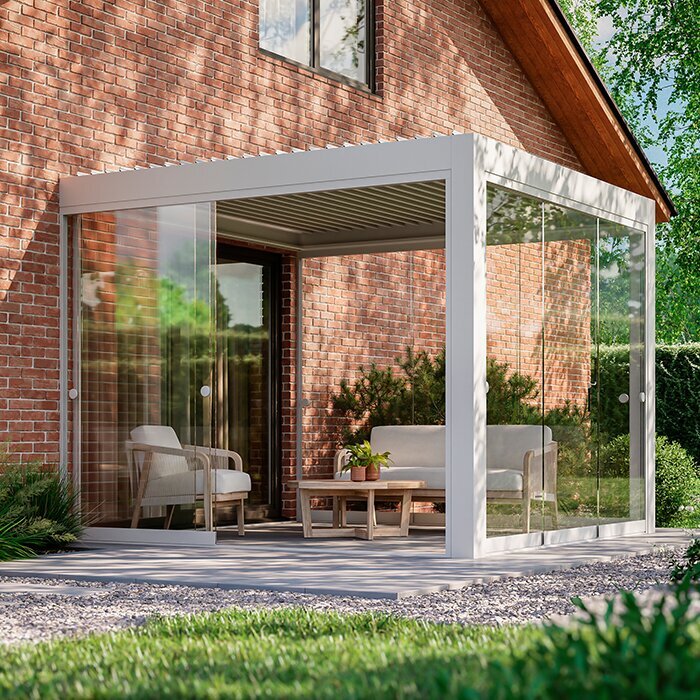
Preparing your patio for a pergola installation is one of the most important steps in the whole project. Many homeowners spend a lot of time comparing pergola types, sizes, and designs, but the final result often depends just as much on what happens before the pergola is ever installed.
A pergola can look beautiful on a product page and still feel wrong once it is placed on the patio. That usually does not happen because the pergola itself is a bad choice. It happens because the patio was not fully prepared for the way the pergola will actually be used.
That is why planning matters. Good preparation helps the pergola look better, fit better, function better, and feel more natural as part of your outdoor space. Poor preparation usually leads to the same kinds of problems: awkward placement, crowded furniture layouts, uncomfortable walking space, or a pergola that feels disconnected from the rest of the patio.
Bloomcabin offers three pergola directions for the US market: the standard Bloomcabin Pergola, the Bloomcabin Lean-To Pergola, and the Bloomcabin Bioclimatic Aluminum Pergola. Across the US pergola pages, Bloomcabin highlights aluminum construction, integrated gutter drainage, multiple RAL color options, sizes from 97 to 258 square feet, and a 12-year extended warranty. The lean-to model is positioned as a wall-mounted patio solution, while the bioclimatic model adds adjustable louvers, automation options, and upgrade possibilities such as screens, lighting, side panels, and glass walls.
This article focuses on one practical question: what should you prepare before installation so the pergola works well from the beginning?
If you are still deciding between pergola types in general, it helps to read How to Choose the Right Aluminum Pergola for Your Patio. If you are comparing comfort level and feature depth, Bioclimatic Pergola vs Standard Pergola: Which One Should You Choose? is an important next step. If you are deciding between patio layouts, Lean-To or Freestanding Pergola? is directly relevant. And if size is still part of the decision, What Size Pergola Do You Need for Your Patio? should be part of your planning process too. The existing Frequently Asked Questions About Aluminum Pergolas article is also useful for warranty, maintenance, drainage, and model-level questions.
Why patio preparation matters more than people expect
A pergola does not exist in isolation. It changes how the whole patio functions.
Once installed, the pergola defines space, affects circulation, changes furniture placement, influences how open or enclosed the patio feels, and shapes how the outdoor area connects to the house. That is why preparation is not just about “where to put it.” It is about making sure the pergola supports the way you actually want to live outside.
A well-prepared patio usually creates a result that feels intentional. The pergola sits in the right place. The furniture arrangement feels natural. Walking paths remain comfortable. The structure relates well to the house, doors, windows, and overall layout. A poorly prepared patio can still end up with a structurally correct installation, but the finished space may not feel as useful or as refined as it could have. That same planning logic already appears in Bloomcabin’s US guide, which says installation projects usually go more smoothly when location, surface, and the intended function of the finished space are considered early.
Start with the purpose of the pergola
Before measuring anything, it helps to answer a very simple question:
What do you want the pergola to do?
That question sounds obvious, but it changes everything.
Some homeowners want a pergola mainly for shade and visual improvement. Others want an outdoor dining zone. Others want a patio lounge. Others want a more premium outdoor room with a stronger sense of structure and comfort.
If the pergola is mainly for occasional seating, the preparation may be more flexible. If it needs to support a full dining area, regular entertaining, or more advanced use, then layout planning becomes much more important.
This is also where your earlier article cluster becomes useful. The broad guide helps with the overall decision. The size article helps you avoid choosing a pergola that is too small or too large. The lean-to vs freestanding article helps clarify whether the pergola should be tied directly to the house or placed more independently. And the bioclimatic vs standard comparison helps when the patio needs more comfort, adjustability, or upgrade options.
In other words, before installation planning begins, it helps to be clear about whether the pergola is meant to create:
- a simple seating zone,
- a dining area,
- a mixed-use outdoor living space,
- or a more premium patio setup.
The clearer that answer is, the easier the preparation becomes.
Think carefully about the exact location
One of the most important pre-installation decisions is the exact pergola position.
A pergola that is placed just a little too close to the house, too far from the door, too near a boundary, or too tightly into an existing patio layout can make the whole space feel less natural. That is why the correct location should be chosen based on use, not just empty floor area.
If you are planning a lean-to pergola, the relationship to the house becomes even more important. Bloomcabin’s wall-mounted pergola page presents this model as a solution attached directly to the building, especially suited to patios, balconies, and relaxation areas adjacent to the home. It emphasizes that the structure is designed to blend with the architecture and use outdoor space efficiently.
That means you should think about:
- how the pergola lines up with the house,
- where the doors are,
- how people move from indoors to outdoors,
- and whether the pergola should sit centrally or more to one side.
If you are preparing for a freestanding pergola, you have more freedom in placement, but that also means more responsibility. The pergola needs to define the patio clearly, not float in an awkward location. A freestanding pergola should feel like it belongs exactly where it is placed.
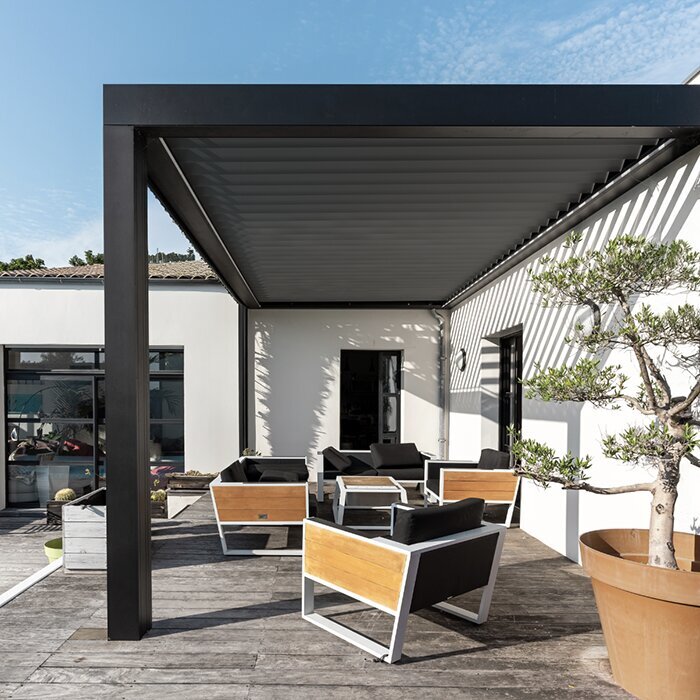
Measure the patio with real use in mind
One of the most common planning mistakes is measuring only the empty patio.
A pergola project should be measured around real use, not just available concrete or paving.
That means asking:
- how much room the pergola itself will take,
- how much room furniture will take,
- how much space people need to walk,
- and how open or enclosed the final patio should feel.
Bloomcabin’s US pergola range covers sizes from 97 to 258 square feet, so there is a meaningful difference between the smallest and largest layouts. That size range is one reason pre-installation planning matters so much. The structure has to feel balanced not only with the patio, but also with the furniture arrangement and the overall scale of the house.
This is also why the size guide matters before installation, not after. It helps answer whether the pergola should mainly cover:
- a compact seating area,
- a dining table,
- a lounge area,
- or multiple functions together.
A practical rule is this: when measuring, do not just think about what fits. Think about what will still feel comfortable once the pergola is fully in use.
Check the patio surface and base conditions
A pergola is only as strong and stable as the surface it sits on.
Before installation, it is important to think about the actual patio base. The location may look perfect visually, but if the surface is uneven, not well planned, or simply not the area where the pergola should logically sit, the project becomes harder.
Bloomcabin’s pergola pages emphasize heavy-duty aluminum profiles, long-term durability, and stable structure. That means the supporting patio area should be treated with the same seriousness. A pergola is not just garden décor. It is a real architectural element.
This preparation step is less about making the patio look ready and more about making it function well:
- is the location level,
- is the pergola positioned on the part of the patio that makes the most sense,
- and will the final structure feel stable and intentional there?
Even when the installation itself is handled well, poor patio preparation usually shows in the final user experience.
Think about water flow and drainage before installation
This is one of the most overlooked planning details.
Bloomcabin highlights integrated gutter systems and efficient rainwater drainage across its standard and lean-to pergola pages. That is a useful feature, but it still makes sense to think ahead about how the pergola interacts with the patio area around it.
Before installation, it helps to think about:
- where water should be directed,
- how the pergola relates to the slope of the patio,
- whether there are any low spots nearby,
- and whether the pergola location supports a clean, practical overall setup.
This is especially important for homeowners who want the pergola to feel like a permanent, refined part of the outdoor space. The better the drainage planning, the cleaner the finished result usually feels.
Plan walking space, not just furniture space
Another major mistake is planning only around the furniture footprint.
A patio may technically fit a pergola and a dining set, but still feel awkward if people cannot move comfortably around the chairs, table, or lounge arrangement.
This is why good pergola preparation includes thinking about circulation:
- where will people enter the pergola zone,
- how will they move around it,
- and how much open space should remain around the furniture?
If the pergola is being attached to the home, walking paths between the doors and the patio seating become especially important. If it is freestanding, the pergola should still be easy to approach from the house and from the rest of the backyard.
A pergola should make movement feel more natural, not more restricted.
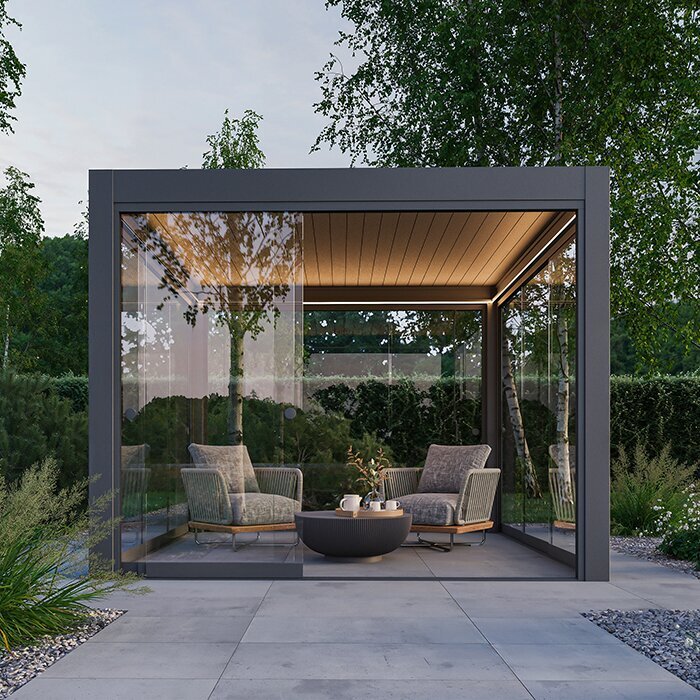
Prepare for how the pergola connects visually to the home
A pergola is a structural upgrade, but it is also a design decision.
Bloomcabin’s US pergola pages emphasize clean modern design, aluminum construction, and multiple RAL color options for matching the structure to the home and surrounding environment. The lean-to page especially stresses that the wall-mounted version is meant to blend with the building’s architecture.
That means preparation is not only about measurements. It is also about composition.
Before installation, it helps to stand back and think about:
- how the pergola lines up with the house,
- whether it looks centered or intentionally offset,
- whether it visually belongs to the patio,
- and whether the final result will feel like an upgrade to the whole home, not just a structure dropped into the yard.
This is one reason lean-to vs freestanding matters so much before installation. That article is not just a style comparison. It is really a patio layout and visual integration decision.
Think ahead about accessories and upgrades
Preparation should also take future use into account.
Bloomcabin’s bioclimatic pergola page highlights optional sun-shading screens, integrated LED lighting, side panels, glass walls, and automated controls. That matters before installation because the patio should be planned with the intended level of use in mind.
If you think you may eventually want:
- more privacy,
- built-in lighting,
- side protection,
- or a more enclosed outdoor living setup,
it makes sense to plan the pergola location and patio layout accordingly from the start.
This does not mean every buyer needs a bioclimatic pergola. It means the preparation process should be honest about the kind of outdoor experience you really want. That is exactly why the bioclimatic vs standard article belongs in this planning conversation too.
Know the difference between preparing for lean-to, freestanding, and bioclimatic models
Not every pergola project should be prepared in exactly the same way.
A lean-to pergola requires more attention to the relationship with the house. Door alignment, proximity to the building, and architectural integration matter more. Bloomcabin’s lean-to page presents this model as wall-mounted, directly extending the outdoor living space from the home.
A freestanding pergola requires more attention to overall patio zoning. Since it is not anchored visually by the house in the same way, the pergola has to define its own place in the layout. The patio should feel planned around it.
A bioclimatic pergola may require the most forward-thinking preparation, because buyers choosing that model often want a more advanced patio experience. The Bloomcabin bioclimatic page positions it around adjustable louvers, automation, and expanded upgrade options, which means the patio should be planned as a more complete outdoor living environment.
So the preparation process should always reflect the pergola type you are actually considering.
Common patio-preparation mistakes
The most common mistake is preparing only for installation day instead of preparing for everyday life after installation.
Other common mistakes include:
- choosing the pergola location before thinking about furniture,
- measuring only the empty patio,
- forgetting walking space,
- not thinking about how the pergola relates to the house,
- ignoring water flow and drainage,
- and treating all pergola types as if they fit the patio in the same way.
Another common mistake is assuming the pergola itself will “fix” a weak patio layout. In reality, a pergola usually makes the layout more defined. If the patio plan is awkward before installation, the pergola may make that awkwardness more visible, not less.
Questions to ask before ordering
Before moving forward with installation, these are some of the most useful questions to answer:
- What will the pergola mainly be used for?
- Which pergola type actually fits the patio best?
- What size leaves enough room for furniture and movement?
- Should the pergola sit directly next to the house or more independently?
- Will the patio likely stay open, or do you want to plan for a more premium setup later?
- Does the pergola location feel natural from both inside and outside the home?
- Is the patio area prepared in a way that supports a stable, clean, long-term result?
If you can answer those questions clearly, the installation process becomes much easier to get right.
Frequently asked questions
Do I need to know the pergola size before thinking about installation?
Yes. Size affects furniture layout, walking space, overall patio balance, and the final feeling of the outdoor area. That is why the pergola size guide should be part of the preparation process, not something you think about afterward.
Should I decide between lean-to and freestanding before preparing the patio?
Yes. That decision changes where the pergola should sit, how it relates to the house, and how the patio functions afterward.
Does the pergola type affect how I should prepare the space?
Yes. A lean-to pergola needs stronger architectural alignment with the house. A freestanding pergola needs stronger layout planning on the patio itself. A bioclimatic pergola often benefits from more forward planning if you want a higher-comfort outdoor setup.
Should I think about drainage before installation?
Yes. Since Bloomcabin pergolas include integrated gutter systems, it still makes sense to think ahead about how the pergola interacts with the patio area and surrounding water flow.
What is the smartest way to prepare my patio before buying a pergola?
The smartest approach is to define the intended use first, confirm the pergola type second, choose the right size third, and only then finalize the exact installation layout.
Final thought
A pergola installation starts long before the pergola arrives.
The best pergola projects are usually not the ones where the structure is simply placed onto an empty patio. They are the ones where the patio has been prepared with clear thinking from the start.
When the space is prepared properly, the pergola looks better, works better, and feels like it truly belongs. The layout is easier. The movement is easier. The furniture fits better. The whole outdoor area becomes more enjoyable.
And that is really the goal of preparation — not just to get the pergola installed, but to make sure the finished patio feels right every day.
View Freestanding Pergola View Lean-To Pergola View Bioclimatic Pergola
