
How to Grow Coriander / Cilantro in a Greenhouse
Bloomcabin growing notes · United States
How to Grow Coriander / Cilantro in a Greenhouse
One brisk annual; two very different endings. Keep it cool and cut it young for vivid, leafy cilantro. Let it rise, flower and dry for coriander whose perfume belongs in the spice drawer.
The green harvest
Cilantro is the fast, fresh side.
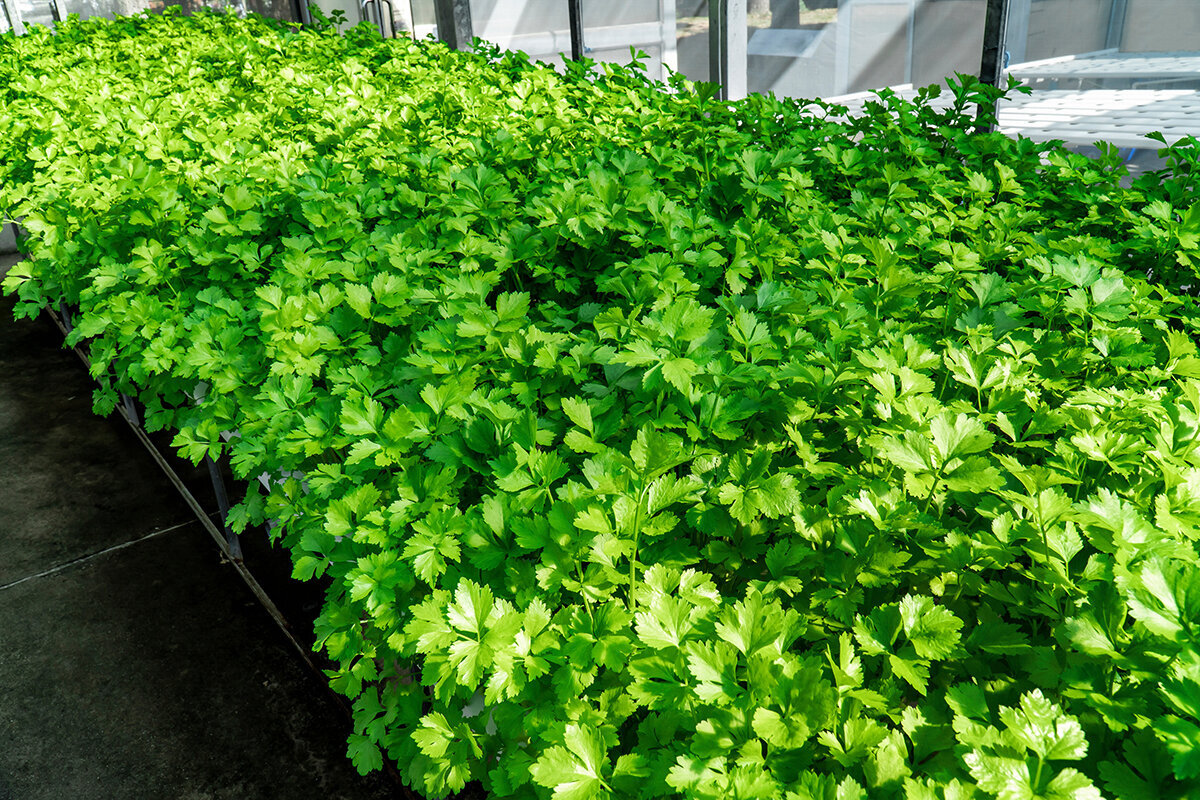
Cilantro is Coriandrum sativum harvested for its soft, divided leaves and tender stems. In a greenhouse it is wonderfully immediate: direct-sow a small patch, wait for a compact rosette, then snip only what will be used that day. Its flavor is brightest before cooking, drying or long refrigerator storage can dull it.
- Goal: repeated cuts of leafy growth.
- Best habit: close sowing and short, overlapping runs.
- Temperature priority: prevent hot root zones and stagnant air.
- Crop rhythm: usually a matter of weeks, not a season-long plant.
The spice harvest
Coriander is the slow, toasted side.
Coriander is the same plant allowed to extend upward, make pale umbels, and ripen round seed. Its foliage becomes finer and the kitchen purpose changes. Instead of fighting the flower stems, you give a few plants elbow room, protect their seed heads from shattering, and finish them dry.
- Goal: aromatic, fully mature seed.
- Best habit: wider plants with unhurried airflow.
- Temperature priority: normal warmth is acceptable once seed is the aim.
- Crop rhythm: one complete life cycle.
Leaf route
Cut young.→
Seed route
Let it rise.That separation is the essential greenhouse decision. A cilantro bed can be harvested densely; a coriander patch cannot. Trying to make both outcomes from every plant often leaves the gardener with too few leaves early and too little seed later. Divide the bench, bed or trough deliberately—even a narrow, labeled strip is enough. Keep the leaf patch moving with small repeat sowings, while a separate seed patch receives wider spacing and is left untouched once flowering begins.
Before the first green
Sow for the crop you actually want.
Direct sowing is usually the cleanest route because cilantro forms a taproot and resents unnecessary disturbance. Use fresh seed, a fine, free-draining mix or well-prepared bed, and a shallow depth. If using cells, move seedlings while very young and keep the root ball intact.
01
Choose seed with an ending in mind
For leaves, look for cultivars described as slow-bolting or suited to leaf harvest; names such as ‘Leisure,’ ‘Slow Bolt,’ ‘Delfino’ and ‘Calypso’ are commonly marketed for that purpose. For seed, ordinary coriander varieties are suitable, so select for flavor, reliable seed source and the scale of plant you can accommodate. “Slow bolt” means more leafy time—not immunity to high heat.
02
Use a shallow, firm sowing line
Sow about 1/4 to 1/2 inch deep. Cover evenly, press the surface lightly for seed-to-mix contact, then water with a fine rose or gentle mist so seed is not washed into clumps. In a greenhouse bed, make short rows across the narrow dimension; it is easier to water, cut and clear one row at a time.
03
Space leaves and seed heads differently
For a leafy cilantro stand, sow fairly closely and thin toward roughly 2 inches between plants. For coriander seed, thin to about 8 to 10 inches. The wider seed spacing gives each plant light around the crown and room for branching flower stems. Keep rows around 15 inches apart where access allows.
04
Wait without flooding
Germination can take around three weeks, especially when the medium is cool. The surface should remain evenly moist, not saturated. A clear cover may be useful only until emergence if the greenhouse is dry; remove it promptly so seedlings do not sit in still, humid air. Label every sowing with date and intended harvest: leaf or seed.
The greenhouse paradox
Give cilantro light—without letting heat write the ending.
Greenhouse protection is useful because it buffers cold nights and driving rain, but its warmth can hurry cilantro into flowering. This is a cool-season herb. In practical terms, aim for bright conditions with a modest daytime climate, dependable ventilation and a root zone that does not repeatedly overheat. A greenhouse thermometer at crop level, rather than an optimistic glance through the door, is the useful tool here.
Light
Give plants a bright position. During hot months, use gentle afternoon shade rather than depriving the crop of all morning sun. Stretching toward a dim corner makes weak, pale stems.
Temperature
For leaf crops, a comfortable target is roughly 55–70°F by day, with cooler nights. When the root zone approaches 75°F, the tendency to bolt increases sharply.
Airflow
Open roof vents and doors early on warm days, then use a small circulation fan if the greenhouse has dead corners. Air movement is crop care, not an optional accessory.
Water
Water the medium, preferably early in the day. Leaves should dry before evening. Constantly wet surfaces plus still air invite disease and softer growth.
Bolting anatomy escalation
The leaf window, in five signals
01Rosette
Cut now
Cut now
02Central lift
Harvest
Harvest
03Fine foliage
Choose
Choose
04Umbels
Commit
Commit
05Seed set
Dry
Dry
Read the stages, then act. A low, rounded rosette is the prime cutting stage. When the center begins to lift, harvest generously but leave the crown intact. Narrower, feathery foliage signals that the plant is redirecting energy upward. Once branching flower stems and umbels appear, decide whether to remove them for a little more leaf time or retain the plants for coriander. Green seed heads later turn tan and brown; at that point leaf harvest is finished and seed finishing begins. Bolting is not caused by one mistake alone: long days, heat, dry-root stress, severe crowding and ordinary plant maturity all contribute. Vent sooner, shade harsh afternoon exposure lightly, water before plants wilt, harvest on schedule, and sow the replacement crop before the existing one is exhausted.
A fresh patch is the real insurance
Plant a braid, not a single event.
One generous sowing creates one generous glut. Small repeats every two to three weeks create the useful rhythm: baby leaves, full leaves, a replacement patch coming on, and one deliberate group left for seed.
Example seasonMarAprMayJunJulAug
Batch A · leafsow + baby leaf
Batch B · leaffull-leaf cuts
Batch C · leafsow + baby leaf
Batch D · leaffull-leaf cuts
Reserved patch · seedflower, ripen, dry
Baby-leaf / replacement windowFull-leaf cutting windowSeed crop, intentionally retained
This calendar is a pattern, not a promise. In northern interiors, it may start later without heat; in the South and Southwest, it is often most productive from fall through spring, with a summer pause or a heavily shaded micro-season. In a heated, lighted greenhouse, calendar dates become less important than measured conditions and the plant’s growth rate.
Leaf harvest
Cut with enough restraint for one more flush.
Turquoise marks show productive cuts. The red line marks the plant’s recovery point.
Three ways to harvest well
- Selective cut: take outer stems first, leaving the center to unfold. This is best for a few handfuls at a time.
- Light row cut: shear a dense young row above the growing point, leaving a short leafy base. It is fast and tidy, but only works when plants are vigorous.
- Never crown-shear: a hard cut at soil level ends the crop. That is fine when clearing a spent patch, not when expecting regrowth.
Flavor-preservation rail: harvest in the cool part of the day; rinse only just before use when possible; refrigerate stems loosely wrapped with a little moisture; and freeze extra cilantro as a chopped herb rather than trying to dry it for peak flavor.
A thoughtful greenhouse layout makes this easier. Keep cilantro near the door-side edge or at the front of a bench so it is genuinely convenient to cut. For bed dimensions, circulation and clean watering routines, see Bloomcabin’s greenhouse setup guide for layout, planting and care.
The warm, dry ending
Let a chosen patch flower. Then become patient.
Once you elect seed harvest, stop taking meaningful leaf cuts. The plant will make airy, flat-topped umbels of white to pale pink flowers and then green, round fruits. In an enclosed greenhouse, pollination can still occur through air movement and visiting insects, but a gentle daily brush through the flowering stems can help where the space is very sealed. Keep ventilation generous so foliage and heads dry quickly after watering.
01Green
02Changing
03Partial dry
04Bag dry
05Clean + store
- Green: fresh seed is still filling and has not developed the dry, finished spice character. Leave it on the plant.
- Changing: watch for heads shifting from green toward straw and tan. Maturity is uneven, especially in a warm greenhouse, so inspect regularly.
- Partial dry: when most heads are tan to light brown, cut entire stems in the cool morning before seed drops freely.
- Bag dry: suspend stems upside down in a clean paper bag or breathable enclosure in a warm, dry, well-ventilated place. The bag catches seed as it sheds.
- Clean + store: when fully dry, rub heads gently, separate chaff, and keep the seed in an airtight jar away from heat and direct light.
Do not wait for every head to turn dark brown on the plant. In a warm greenhouse, the earliest heads may shatter while the latest are still green. Cut when the majority is changing color, then let the finish happen under cover.
Correct without drama
Common greenhouse problems, read as cause and response.
Plants bolt at 5–6 inches tall
Likely cause: hot root zone, sudden heat spikes, dry stress, or a planting held too long before cutting.
Response: open vents sooner, shade the most intense afternoon exposure, water before wilting, and sow a new batch immediately. Removing one early flower stem may gain a little time, but replacement sowing is more reliable than rescue.
Pale, weak, stretched leaves
Likely cause: insufficient light, crowded plants, or overwatering that limits root function.
Response: move containers into brighter greenhouse real estate, thin dense stands, and let the top layer begin to dry between waterings. Feed lightly only after the environment is corrected; excess fertilizer can make fast but insipid growth.
Yellow lower leaves and a tired crown
Likely cause: saturated media, low oxygen around roots, or an old crop moving naturally toward flowering.
Response: check drainage holes and the bed’s texture, reduce watering frequency, and clear aging plants rather than forcing them into another cycle. Use a fresh sowing for the next harvest window.
Aphids collect on tender tips
Likely cause: soft, lush growth plus a protected greenhouse environment where pests establish unnoticed.
Response: inspect undersides of leaves twice weekly, isolate heavily infested plants, rinse small colonies off with water, and improve airflow. Yellow sticky cards can monitor winged arrivals, but they do not replace scouting. If a pesticide is considered, choose only a product labeled for edible herbs and follow its label exactly.
Seedlings collapse at the soil line
Likely cause: damping off encouraged by overwatering, stale mix, poor sanitation or still humid air.
Response: discard affected seedlings, sanitize trays, start again in fresh medium, sow less densely and water at the medium rather than constantly wetting foliage. Avoid closing the greenhouse damp at night.
United States timing adaptations
Use the greenhouse to soften your climate—not to ignore it.
Cilantro’s calendar changes radically across the country. The structure gives you control, but it does not remove the plant’s preference for cool, bright weather. Let local heat, night temperatures and solar intensity set the pace.
North & high elevations
Start direct sowing in late winter or early spring once the greenhouse bed is workable. Spring and fall are your long leaf seasons. On cold nights, protect young seedlings; for winter harvests, expect slower growth unless supplemental heat and light are available.
Mid-Atlantic & Midwest
Lean into early spring and late summer through fall. In June through August, keep leaf crops near vents, use shade cloth as needed, and sow at short intervals. An unheated greenhouse can be hotter than outdoors in the afternoon, so do not treat it as automatic summer protection.
South, Gulf & Southwest
Make fall, winter and early spring your cilantro season. Summer leaf production is possible only with serious ventilation, shade and close attention to root moisture; often, it is smarter to pause and restart as daytime heat eases. Seed crops can dry beautifully in a protected, airy space.
For seasonal reset routines, cleaning and early planting decisions, read the Bloomcabin spring greenhouse guide for US gardeners. During dry spells, pair cilantro’s preference for even moisture with a low-waste routine from our water-wise greenhouse gardening guide.
Questions from the herb bench
Coriander / cilantro greenhouse FAQ
Can cilantro grow year-round in a greenhouse?
In many US climates, it can be grown over a much longer period than outdoors, but “year-round” depends on winter light, overnight temperature and summer heat management. In a cold, unheated greenhouse it will slow sharply in winter; in a hot greenhouse it may bolt fast in summer. Treat it as a succession crop rather than a permanent plant.
How long does cilantro take to germinate?
Allow roughly two to three weeks under suitable conditions. Cool media can slow emergence. Keep the medium evenly moist, never waterlogged, and avoid repeatedly digging for seed; uneven germination is common when depth or moisture varies.
Should I split coriander seed before planting?
You may gently crush the round seed so it separates into its natural halves, but it is not essential. The bigger gains come from fresh seed, even depth, careful moisture and a loose sowing mix. Do not grind seed into fragments.
What size container does cilantro need?
Use a container with drainage and enough depth for the root system—around 8 to 10 inches deep is a comfortable minimum for a small planting. A wider trough is often more useful than many tiny pots because it supports a short row and makes succession sowing easy to organize.
Can I grow cilantro beside tomatoes?
Yes, but site it for its own climate. Tomato zones are often the brightest and hottest part of a summer greenhouse, which can push cilantro to bolt. Place cilantro at the cooler edge of the tomato area, near airflow but not in a drying draft, and keep its sowings young.
When is coriander seed ready to harvest?
Harvest when most seed heads have shifted from green to tan or light brown and feel dry rather than soft. Cut stems before the earliest heads scatter seed, then finish drying the crop in a paper bag or other breathable container.
Sources & further reading
Practical references behind this guide
- Utah State University Extension — Cilantro/Coriander in the Garden: planting depth, leaf and seed spacing, bolting, watering and seed drying guidance.
- University of Maryland Extension — Cilantro/Coriander: the plant’s dual leaf-and-seed use, succession sowing and warm-weather bolting notes.
- Penn State Extension — Growing Herbs Indoors: light, temperature, humidity and circulation principles relevant to protected herb production.
- University of Maryland Extension — Growing Vegetables in Containers and Salad Tables: container culture and root-moisture considerations for herbs including cilantro.
- Penn State Extension — Assessing the Risk of Disease in Greenhouses: greenhouse sanitation, ventilation, irrigation and disease-risk practices.
- University of Maryland Extension — Aphids in Home Gardens: scouting, stress reduction and non-chemical first responses for aphids.
Growing recommendations should be adjusted for your greenhouse, cultivar and local conditions. For a broader view of configurations suited to your planting ambition, browse Bloomcabin greenhouses and conservatories.
Leaf route
Choose freshness.
Set aside a shallow row, sow again before the current patch peaks, and make the first cut part of dinner—not a chore delayed until bolting.
Seed route
Choose spice.
Give a few plants room to rise, let the umbels dry with composure, and keep a jar of your own coriander where the kitchen catches the afternoon light.
