
Choosing a Small Wooden Garden Shed on Black Friday: Practical Layouts
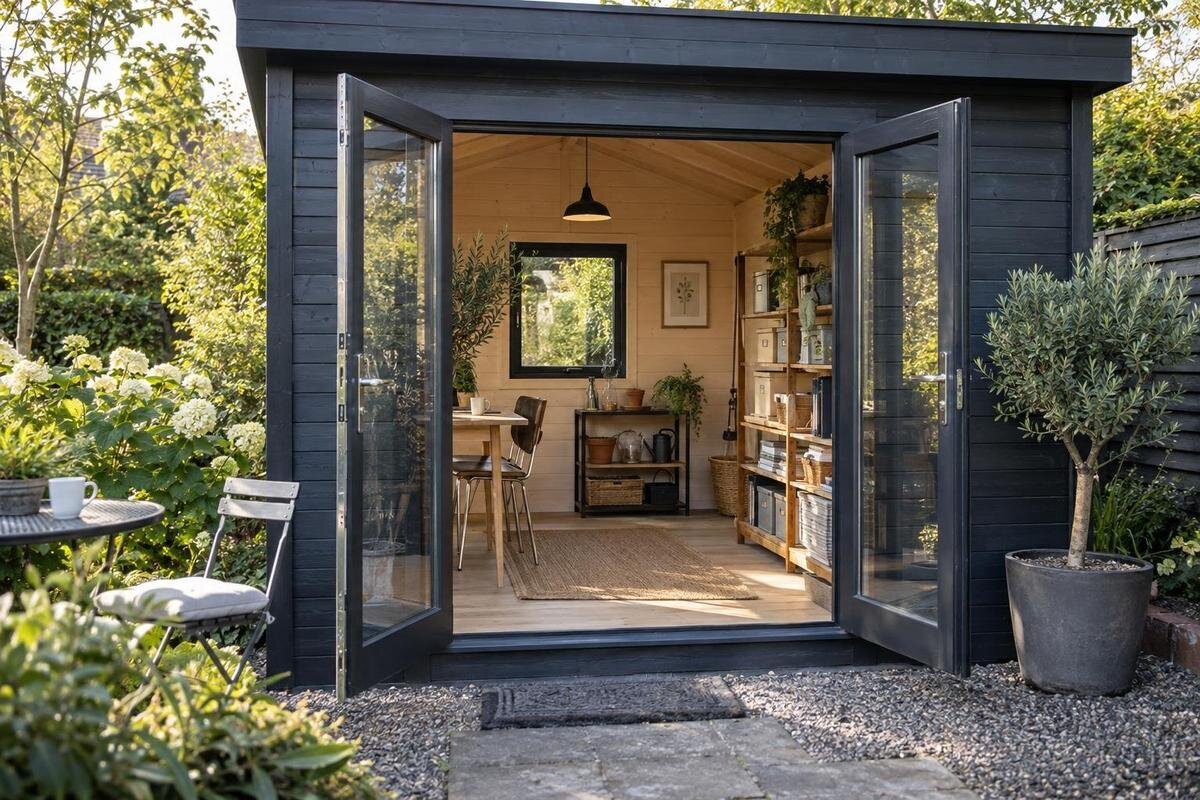
Garden shed buying guide
If you’re planning to buy a small wooden garden shed on Black Friday, a headline price and an attractive product photo are poor ways to judge whether the layout will work. A few centimetres at the doorway, a door that opens into a narrow path or a long tool that only fits in one orientation can change what you can store and how easily you can reach it. Start with your own items and the space available in the garden, then compare each exact listing’s dimensions, access and stated contents. This guide focuses on practical layouts; a seasonal promotion does not, by itself, confirm that a shed suits your site.
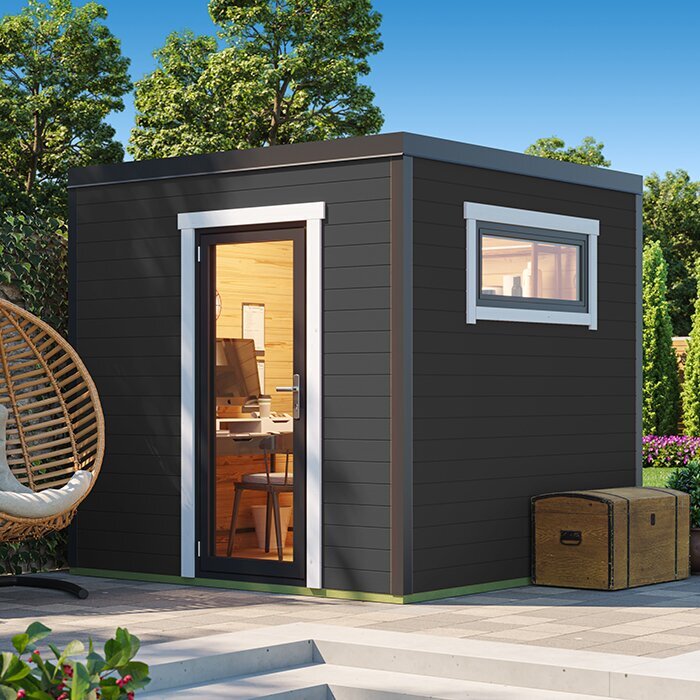
List the items the shed must hold
Before opening product pages, make a short inventory of what the shed must hold. Record each item’s longest length, widest point and height, and note whether it stays assembled, folds away or has handles that add to its size. Include awkward pieces that are easy to forget, such as long-handled tools, a hose reel or a folded ladder, if they are part of your actual storage plan. Add containers and seasonal equipment too; several boxes can occupy a useful strip of floor even when each one looks small. Measure the belongings you own rather than relying on a broad category such as “garden tools”.
Separate items used often from belongings that can sit further back, and sketch a rough zone for each group. Keep a clear route from the doorway to the things you take out most often; a shed can hold everything on paper and still be awkward to use. Leave room to turn or lift items instead of drawing them edge to edge. When comparing listings, use the Verdana 1 garden shed listing as one page in your shortlist and record only measurements stated for that exact model. Its name and photograph do not establish capacity.
Compare usable dimensions, not only the footprint
An outside width and depth describe the ground area a structure may occupy; they do not automatically tell you how much room is usable inside. Internal floor dimensions, wall thickness, corner framing and a sloping roof can affect where items fit, while the doorway can limit what you can carry in. Check whether each measurement is internal, external or overall, and whether it includes projections if these are listed. It is also worth confirming which side a plan labels as the width, particularly if the entrance is on another side. If the Garden Shed Verdana 2 product page does not make the measurements clear, ask before comparing them with another model.
Draw the footprint to scale on squared paper, or mark it out in the garden, then place your measured items on the plan. A long object might fit along one wall but leave too little room for a shelf or a clear route to the door. Do not choose on floor area alone: the proportions matter, and two sheds with similar outside dimensions can offer different ways to arrange belongings. If the listing gives only an overall size, do not treat that as an internal measurement. Get the usable dimensions you need before deciding that a layout works.
Check the doorway and the door’s operating space
Measure the clear opening rather than the outside of the frame. The largest item has to pass through the narrowest point, including any handles or wheels, and the opening height matters as well as the width. Compare those figures with the position in which you can actually carry the item. A shed may have enough floor area yet still be unsuitable if its main item cannot enter or be turned just inside. Use written dimensions or a current plan to check the details; assess the Durano garden shed listing on information stated for that model, not assumptions based on its name or photograph.
Check how the door operates and what space it uses. If a model has hinged doors, allow for their opening movement; if it has sliding doors, check the clearance needed to operate them as described by the manufacturer. Consider a nearby fence, wall, tree or narrow path, as well as where you will stand while carrying items in and out. A doorway that opens onto an obstacle can make everyday access frustrating. If the entrance position or door movement is not clear in the listing, ask before you settle on a place for the shed.
Measure the garden site around the shed
Measure the actual patch where the shed will stand, not just the gap between two visible obstacles. Check the full outside dimensions stated for the model and look for any listed roof projections or overhangs. Note nearby taps, drains, trees, walls and paths, and leave enough room to reach the structure for normal access and upkeep. A plan that only just fits between boundaries may be impractical if the door needs space to open or the building needs to be approached from another side. Compare your site sketch with the Veltor 1 product page using its stated dimensions; do not infer a footprint from a product image.
Pay attention to the ground and the route to the proposed position. Check the manufacturer’s instructions for base requirements rather than assuming that every surface is suitable. If the site is uneven, sloping or close to drainage, get appropriate professional advice instead of trying to solve a foundation issue by guesswork. Also check any relevant property or complex requirements before committing to a location. These checks are about confirming that the chosen layout can be placed and accessed as intended, not about calculating or building a base yourself.
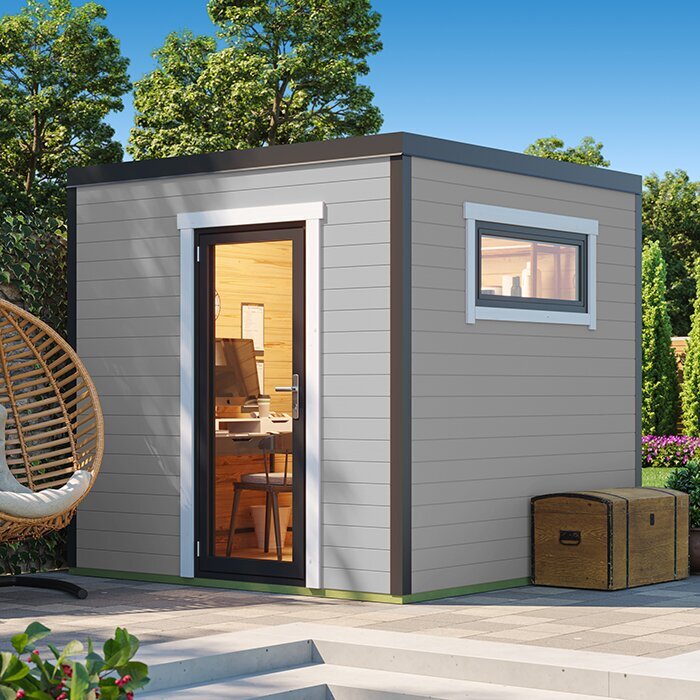
Plan shelves without blocking access
A simple storage sketch can show whether shelving will help or merely take up space. Put bulky items that need floor space in their likely positions first, then mark shelves or containers around them. Frequently used belongings are usually easier to reach near the entrance, while less-used items can go further back if they remain accessible. Note shelf depth as well as width: a deep shelf can take away the room needed to turn or lift another item. Use the Orello garden shed page as a listing to assess against your own sketch, and do not assume that shelving shown in a photograph is included.
Think about how you will reach items above or behind others, rather than planning storage as a set of full boxes. Leave a clear strip for movement, and avoid putting a fixed shelf where it obstructs the door or the path to a long tool. If you want to attach storage to the walls, check the product instructions for permitted fixings and any relevant limits; do not assume that a timber wall can support any fitting or load. Where the listing does not answer your question, ask before ordering. Freestanding storage can be easier to rearrange, but it still needs a place in the measured plan.
Decide whether it is storage or a work area
A shed used only for storage has different layout demands from one where you plan to work regularly. A bench, space to stand and room to handle tools all take up floor area, even when the bench is not in use. Draw those features in before judging whether a compact footprint is enough, and check that the doorway still gives access to stored items. If the main purpose is occasional repairs or potting, list the surfaces and equipment you will actually need rather than assuming the shed can serve every purpose. Review the Modano 1 garden shed page for stated details only; do not infer a working layout from its model name or image.
If a work area matters, look for clear information about the interior dimensions and any listed windows, glazing or ventilation features that relate to your plans. Check what is included and what would require a change to the structure. Do not assume that electrical fittings, lighting or power are provided, or that alterations are automatically suitable. For work that needs services or a substantial modification, get advice from a qualified professional before purchase. If the listing does not give the information you need, treat that as an unanswered question rather than filling the gap with assumptions.
Check the timber details and kit contents
For a wooden shed, read what the listing says about the timber, surface treatment and care. These details help you understand what you are buying and what the manufacturer expects for ongoing upkeep. Do not infer the wood type, finish or treatment from a photograph or a general product description. Look for product-specific guidance on the intended care and any treatment that may be needed, and ask if those points are missing. Apply the same questions when reviewing the Wooden Garden Tool Shed M listing; the model name alone does not tell you what timber or finish is supplied.
Check the stated contents for the exact model and configuration. A staged photograph may show accessories or finishes that are not part of the kit, so look for written confirmation of items such as a floor, roof covering, fixings, glazing or storage accessories where these matter to your plan. Also read the assembly and maintenance information before deciding whether the shed matches your expectations. If the listing is unclear about an essential component, ask the seller to confirm it in writing. Comparing the contents as well as the layout prevents a visual impression from standing in for a clear description.
Plan the route for delivery and assembly
A shed can fit its final position and still be difficult to get there. Measure the route from the delivery point to the site, including gates, narrow turns, steps and changes in level. Check package dimensions if they are provided; if they are not, ask what information is available before ordering. Think about where components could be placed temporarily without blocking a path. When reviewing the Wooden Garden Tool Shed S page, use the stated delivery and package information if available, rather than assuming that the kit will pass through your access route.
Allow for the space needed to assemble the kit, not only the finished footprint. Check the manufacturer’s instructions for the assembly process, tools or help required, and whether the stated package includes the components you expect. Do not assume that assembly is included or that every part can be carried through a narrow gate just because the completed shed fits beyond it. If you have limited space to prepare components, account for that before choosing a model. Confirm any unclear delivery or assembly arrangements from the current listing or seller; do not base the plan on a guess.
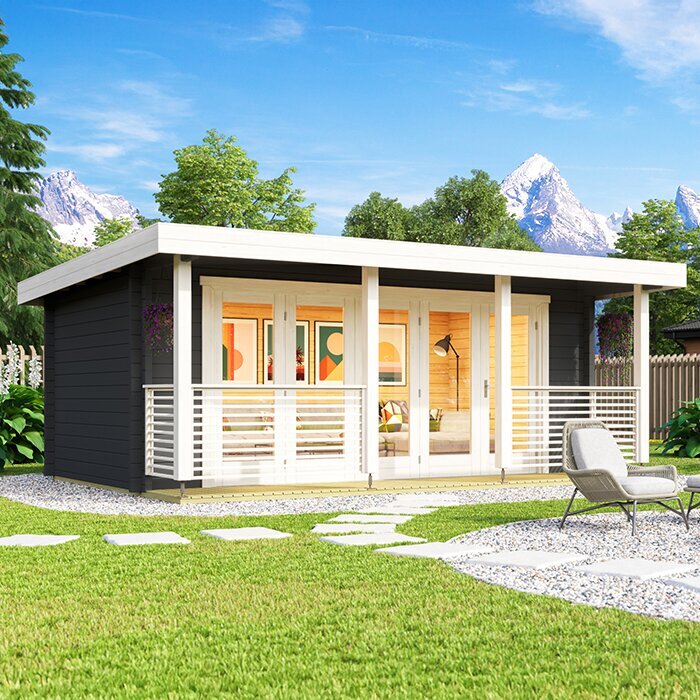
Compare Black Friday listings on the same basis
When several listings catch your eye, put the same layout checks beside each one: exact model, outside dimensions, usable internal space, doorway, door movement and stated contents. Mark each essential requirement as confirmed, not confirmed or unsuitable. This makes it easier to see whether a lower advertised price is attached to a layout that actually works for you. Keep optional features separate from essentials, so an appealing image or extra description does not distract from the size and access you need. Compare like with like, using only information shown for the exact model or confirmed by the seller.
A Black Friday label does not tell you whether a particular configuration suits your garden, or which details apply to it. Check the current price and any stated offer conditions for the exact listing before ordering, and make sure you are comparing the same model and included items. If a page shows several variants, confirm which one the promotion refers to instead of relying on a shared image or general heading. Do not let urgent wording push you into guessing about a critical measurement. If important layout information is missing or inconsistent, pause and ask for clarification.
Test the layout before placing an order
Mark the shed’s stated outside footprint in the garden with string, removable chalk or another temporary marker. Show where the entrance sits and, if the door type is known, mark the space its operation requires. Walk the approach with the largest item you plan to store, and check for obstacles that were easy to miss on a screen. This quick test helps you judge the relationship between the shed, the path and nearby features. It cannot replace the product’s written dimensions, but it can reveal when a seemingly suitable position leaves too little room to move.
Then use a scale drawing to place each stored item, shelf and work surface, leaving the access route visible. Ask whether you could remove a frequently used item without first shifting everything else, and whether the main item can be carried through the entrance in its planned position. If the layout only works by leaving out belongings you intend to keep, revise the list or consider another arrangement before ordering. Finally, match the exact model and configuration in your notes to the current listing. A clear fit is a better reason to choose a small shed than a promotional image or name.
Frequently asked questions
How do I choose the right size small wooden garden shed?
Measure the largest items you plan to store, including handles or wheels, and note how much space you need to reach them. Then compare those measurements with the shed’s stated internal dimensions and clear doorway size. Also check that its full outside footprint fits the garden site.
Are the outside dimensions enough to compare layouts?
No. Outside dimensions help you check the space the shed may occupy, but they do not show the usable floor area or whether your belongings will pass through the doorway. Check what each measurement refers to, and look for a plan or written details if the distinction is unclear.
What should I compare on Black Friday?
Compare the exact model and configuration against your layout requirements: overall dimensions, usable interior space, doorway, door operation and stated kit contents. Check the price and any offer terms shown for that specific listing. A promotional label or product photo does not confirm that the shed will fit.
Can I use a small garden shed as a work area?
Possibly, but do not assume that a shed intended for storage will suit regular work. Allow for a bench, standing space, tools and access, then check the product information for relevant dimensions, light and ventilation details. Ask a qualified professional about any planned services or substantial alterations.
How can I check whether a shed will fit through my garden gate?
Measure the narrowest points along the route, including the gate, turns and any steps or changes in level. Check the delivery or package dimensions if provided, and ask the seller if they are not. The shed’s own doorway size does not tell you whether its parts can reach the site.
The most practical small wooden shed is the one that fits the things you genuinely need to store, leaves room to reach them and suits the available garden site. Measure the belongings, doorway and route; test the footprint outdoors; and check the details stated for the exact model. When comparing Black Friday listings, let those layout requirements guide the shortlist. If a candidate only works by ignoring an access problem or an unanswered measurement, take time to clarify it before placing an order.
