
Buying a Garden Shed for a Long, Narrow Garden
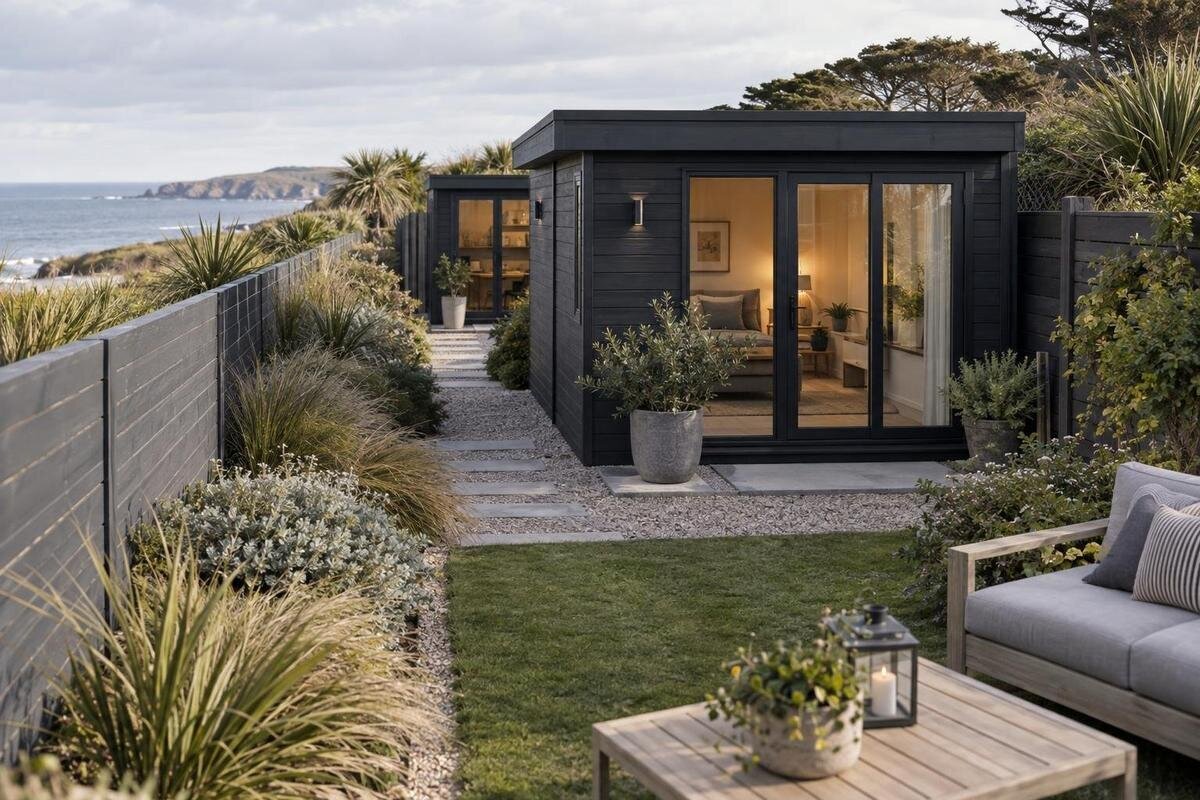
Garden shed buying guide
Shopping for a garden shed in a long, narrow garden is a space-planning decision as much as a storage choice. A shed may fit within the overall length yet make the route through the garden awkward, or offer less usable space than its footprint suggests. Measure the narrowest part of the site, plan the door and access, then compare those limits with the items you want to store.
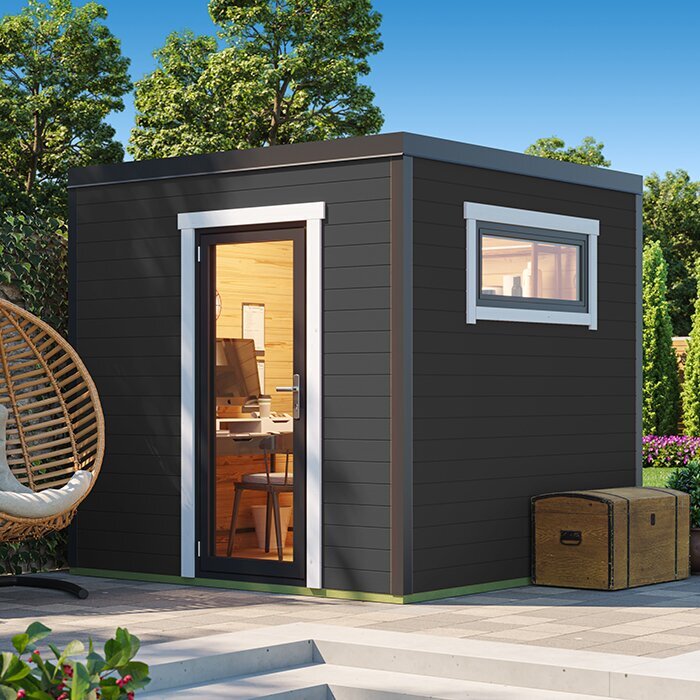
Buyer checklist 1
Measure the usable strip of the garden
Begin by drawing the garden as it is, rather than treating its full length as a possible shed site. Mark the house, boundary fences, existing paths, gates, planted areas, steps and anything that cannot easily move. Then mark the strip where a shed might sit and the clear route from the entrance to that position. In a narrow plot, an obstruction can pinch the usable width at a key point, while an area that looks generous at one end may narrow elsewhere. This first sketch need not be to scale; it separates the garden’s overall dimensions from the ground a shed could occupy without taking over space used for other purposes. If you want to keep a growing area or seating spot, mark that too.
Measure at several points along the possible location: the narrowest width, available length and any change in shape or level. Note fixed features such as an outdoor tap, drain cover, utility cabinet, gate swing or mature planting; do not assume these can be moved to improve the fit. Also mark where you want to walk, carry equipment, tend plants or sit. Those uses compete for the same strip of ground, so a shed can fit on paper and still leave no convenient way past it. Draw a walking line on the sketch and note the clear space you want to retain for normal use. That gives you a better comparison basis than one length-and-width figure.
Check the footprint and the route to the site
Measure the proposed site in consistent metric units and check its narrowest points, not only the width at the entrance. Record the boundaries and fixed obstacles that constrain the position, along with the usable length between them. A product page may show several dimensions, so confirm whether each figure refers to external size, floor footprint, base dimensions or another measurement. Include a roof edge or projection only when the listing states its size or the supplier confirms it. Do not estimate scale from a photograph: perspective and nearby objects can be misleading. If an important measurement is missing, ask for it before treating that listing as a possible fit.
The route to the position needs its own measurements. Check the narrowest gate opening, turns, steps and overhead obstructions between the likely delivery point and the site. If components must pass through a doorway or side passage, ask whether package dimensions are available where they affect access; if assembly happens on site, confirm what working area is needed. The Verdana 1 garden shed listing can form one row in your comparison, but its name and image do not establish a fit. Note the measurements you still need instead of filling gaps by guesswork, and have key details confirmed before ordering.
Buyer checklist 2
Set shed dimensions from your storage list
Write an inventory of what needs to go inside, then measure the largest items and the space needed to handle them. Include the length of long-handled tools, the widest point of any equipment and the room needed to lift or turn an item at the doorway. Group contents by how often you use them; a shed for seasonal storage may be arranged differently from one opened several times a week. Separate essentials from items you might store one day. This prevents a larger footprint from becoming the default and helps you see whether the interior can hold your actual mix of belongings, rather than an idealised load that stacks neatly in a drawing.
Plan the storage arrangement before selecting dimensions. Sketch where long items would stand, where smaller tools could go and whether bulky belongings need floor space that cannot be shared. If several items must come out in sequence, consider whether one will block access to another. Allow enough room for practical handling, but do not choose a larger shed on the strength of a vague future possibility if it takes over the garden’s only clear passage. Compare a listing such as the Verdana 2 garden shed listing using confirmed measurements and the same storage list as every other option; the model name alone does not indicate how much it holds.
Match the doorway to the available clearance
Door position can make an otherwise suitable footprint awkward. Mark the doorway on your site plan in the position shown for the specific shed, then check the clear opening and how the door moves. An outward-opening door needs space in front; an inward-opening leaf uses some of the interior. Other designs may use a different opening arrangement, but check the product information rather than assuming how a door works. Consider whether you can stand comfortably at the entrance, bring in the largest item and turn it into the storage space without colliding with a fence or the garden path.
Look for a dimensioned plan or written description of the opening position and clear width, and ask if either is unclear. On a narrow strip, a doorway at one end may work differently from one along a side, but do not assume that you can choose or change its orientation. Check the Durano garden shed listing against the arrangement stated in its product information, not just a thumbnail. Compare the doorway with your site sketch and the items you intend to move through it. A layout that requires the door to open into a fence, planting bed or route you need to keep clear is not a practical fit.
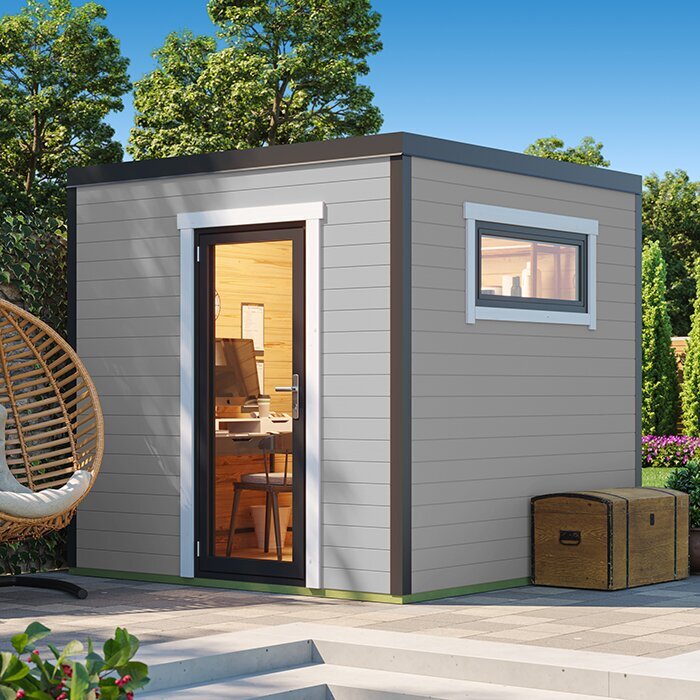
Buyer checklist 3
Keep a practical path through the garden
Plan the everyday route from the garden entrance to the shed as well as the route used for delivery. In a long plot, putting the shed at the far end may mean a longer walk each time you need something; placing it beside an existing path may narrow the space used for other garden activities. Draw the path separately from the shed footprint, and consider where you might need to turn, pause or put down a carried item. A line on a plan can look clear while being awkward in use, especially if a gate or another feature interrupts it.
Think about access to the rest of the garden too. You may want to reach planting areas, a washing line or outdoor seating without walking around the shed or squeezing past an open door. There is no standard path width that works for every garden, so use the measurements and the way you move through the space. If a side route matters, include it in your plan before comparing footprints. The Veltor 1 garden shed listing can be assessed against that same plan; check its stated dimensions and layout rather than assuming its name says anything about how it will fit.
Plan how the interior will be used
An external footprint is not the same as usable storage space. Check internal width and length, door opening and interior height where those details are provided. Roof shape, framing or internal supports may affect how much floor or wall space is available, but rely on a drawing or written specification rather than guessing from a photo. Consider whether a long item can rest along a wall without blocking the doorway, and whether you can reach belongings at the far end. If a listing gives only external measurements, treat the missing interior dimensions as an open question before comparing it with a shed that has more detail.
Sketch the interior using confirmed measurements and mark the storage zones. Keep items used often within easy reach, and decide where bulky or long objects could go without blocking access to everything behind them. If you plan to add shelves or hooks, check whether they are included and whether the supplier’s information confirms they are suitable for that model; do not assume fittings come with the shed. Use the Orello 1 garden shed listing as a page to inspect for published internal details, not as a substitute for measurements. Styled images can help with appearance, but they do not show whether your own contents will fit.
Buyer checklist 4
Confirm the site and base requirements
Once you have marked a possible position, look at the surface and ground as well as the outline. Note uneven areas, slope, soft ground, places where water collects or paving that changes level, since these can affect the preparation needed. Whether an existing surface is suitable depends on the shed’s installation requirements; do not assume it is ready because it appears flat. Check the product information for base dimensions and preparation details, and ask the supplier or a qualified installer if the site is uneven or those requirements are unclear. Any work needed may affect the position you choose or the overall purchase cost.
Check the space around the proposed base as well. The installation instructions may call for room to assemble or maintain the shed, while fences, overhanging branches and existing structures can limit access. Ask what clearance is needed instead of choosing a number by guesswork. If you rent, share a property or live under managed-site rules, check any relevant conditions with the owner or responsible body before ordering. The Modano 1 garden shed listing is another page to check against its own published installation information, not a substitute for confirming those details.
Include delivery and assembly in the purchase
Treat delivery arrangements and the full project cost as part of the purchase, not as details to sort out after choosing a footprint. Ask where delivery ends, whether the components can reach the site through your gate and who is responsible for moving them from there. Request a breakdown of the shed, delivery, assembly, site preparation and any accessories or finishing work you intend to include. Do not assume a displayed price covers every item or service; check what each quote includes. A clear comparison of total costs is only useful when the options cover the same work and components.
Read the assembly requirements and care guidance before ordering. Check whether assembly is included or arranged separately, what preparation is expected from you and whether the instructions identify tools or working space you need to plan for. Also look for written information about routine maintenance, materials and any relevant warranty terms; do not infer these details from a model name or photograph. With the Wooden Garden Tool Shed M listing, use the written specifications and guidance to confirm size, finish and what is included rather than relying on the label alone.
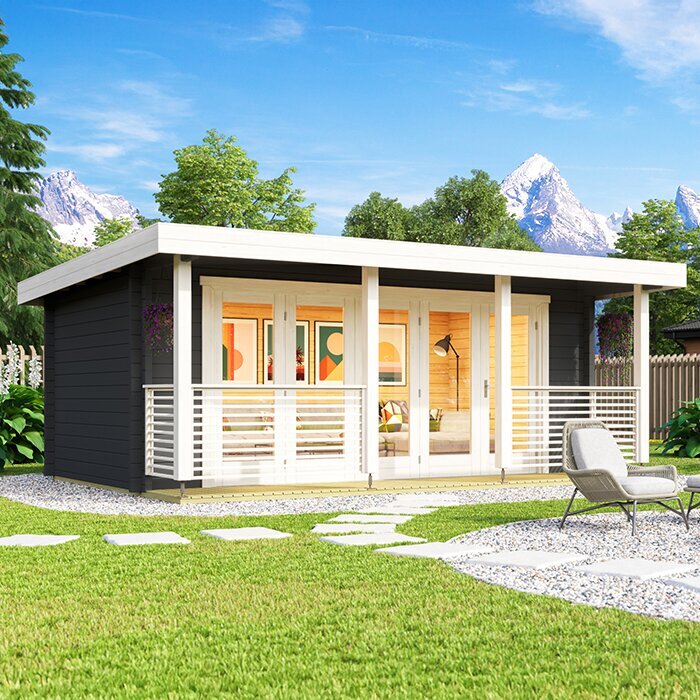
Buyer checklist 5
Compare listings on the same basis
A simple comparison table makes differences easier to spot. Give each listing a row and record external width, length and height, internal dimensions, door position, clear opening, base requirements, included items, assembly arrangements and delivery details. Use the same units and measurement definitions throughout. Leave a cell blank when the information is missing instead of filling it from a photo or a model number. This makes it easier to see whether a longer, narrower footprint genuinely suits your site, or whether another layout offers access that better matches your storage list.
Compare written quotes and ordering terms as well as dimensions. Check what is included, what could add to the total cost and what the terms say about changes, cancellation or returns before committing. The Wooden Garden Tool Shed S listing can be entered in the same table, but its model name is not evidence of its measurements or capacity. Apply the same questions to every option, including any listing that appears to be a close fit at first glance. If a key figure or term is unclear, keep it marked as unconfirmed until you receive an answer.
Test the layout before placing the order
Before ordering, transfer the proposed outer footprint to a sketch of the actual site or mark it on the ground with removable markers. Include the doorway and its opening space, the route you want to keep clear and any access needed for installation. Check the fit at the narrowest points rather than looking only at the overall length. This simple visual check can reveal that a wall blocks a path, a door faces the wrong way or a stored item would have to pass through a tight turn. It is a way to test your plan, not a replacement for the product’s installation requirements.
Walk through ordinary tasks in your mind: bringing in the largest item, putting it away, taking it out again and reaching the parts of the garden you still use. Check that the storage layout does not depend on moving several other items every time. Then review the confirmed dimensions, delivery and assembly arrangements, site preparation and ordering terms together. If the shed fits only by giving up an access route you need, reconsider the position or the storage brief instead of relying on an estimate. A practical choice should work both on the plan and in the routine of your garden.
Frequently asked questions
Which measurements matter most for a garden shed in a narrow garden?
Measure the narrowest usable width, the available length and the route to the site. Compare them with the shed’s stated outer dimensions, door opening and installation requirements. Measuring only at the garden entrance can miss a pinch point farther down.
Should I choose the longest shed that fits?
Not automatically. A longer footprint can reduce the usable path or leave the far end hard to reach. Compare internal dimensions and storage access as well as external length, and check that the doorway and everyday route remain practical.
How much clearance should I leave around a shed?
There is no single clearance that suits every shed and site. Follow the product’s installation and maintenance instructions, account for door movement and access, and ask the supplier or a qualified installer if the ground or boundaries make the fit uncertain.
Can I rely on a product photo to judge whether a shed will fit?
No. A photo can show the appearance, but perspective and staging do not establish scale, interior space or door clearance. Use dimensioned drawings or written specifications, and request any measurements you need that are missing.
What should I confirm before ordering?
Confirm the outer and internal dimensions, door position and opening, base requirements, delivery access, assembly arrangements, what is included, care guidance and the ordering terms. Keep unanswered details separate from confirmed measurements before committing.
For a long, narrow garden, a shed needs to fit the usable strip without making its doorway or the route past it awkward. Compare confirmed outer dimensions with the storage space you can actually use, and factor in the site, delivery and assembly requirements before choosing. The most suitable option is the one that accommodates your belongings while leaving the garden practical to move through.
