
Buying a 44 mm Wooden Garden Shed: What the Wall Thickness Means
Garden shed buying guide
A 44 mm wall measurement can help narrow down a wooden garden shed, but it is not a stand-alone grade for quality or a promise of how the building will perform. It tells you about one stated dimension of the wall construction; it does not, by itself, settle questions about usable space, weather exposure, comfort, maintenance or what arrives with the order. The useful comparison is the wall detail alongside the shed’s overall design and your intended use. This guide explains what to verify before treating 44 mm as the right specification for your plans.
01
What the 44 mm measurement describes
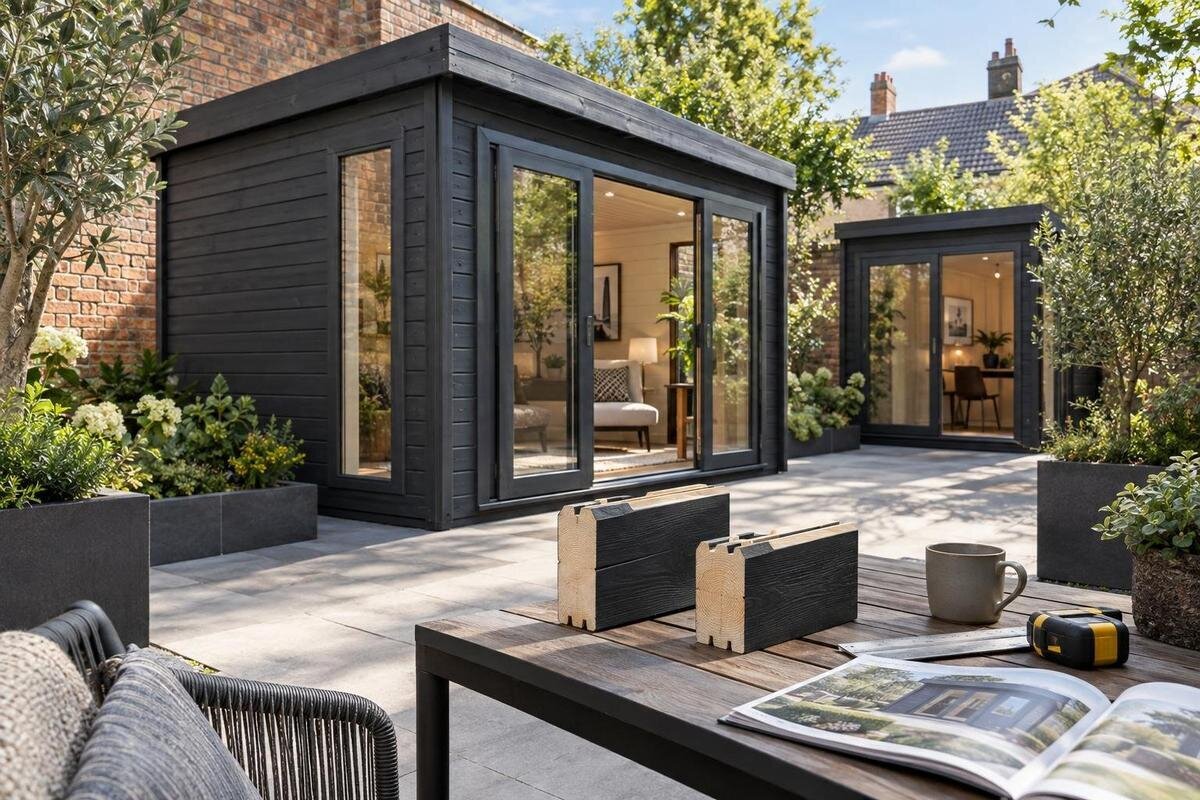
A 44 mm wall measurement in a garden shed listing is a linear dimension of the wall component the seller is describing. It is not the shed’s floor area or external footprint, and it does not tell you the thickness of the roof, floor or door. Nor is it automatically a measurement of every part of a finished wall: a wall may be made up of profiles, panels and joints, and the wording could refer to one element rather than the whole assembly. Treat the figure as one stated fact about the wall, not a summary of the building.
Look for a drawing or written specification that says exactly where the 44 mm applies. Check whether it is a nominal or finished dimension, whether it applies around the full perimeter, and whether the construction is consistent at corners and openings. A drawing may distinguish an individual profile from the completed wall assembly; that distinction matters when comparing models. If the diagram and description use different terms, ask which measurement is intended. For a particular option, such as the Verdana 1 garden shed listing, use its own product information to confirm the wall details rather than assuming it has 44 mm walls.
Match the wall specification to how you will use the shed
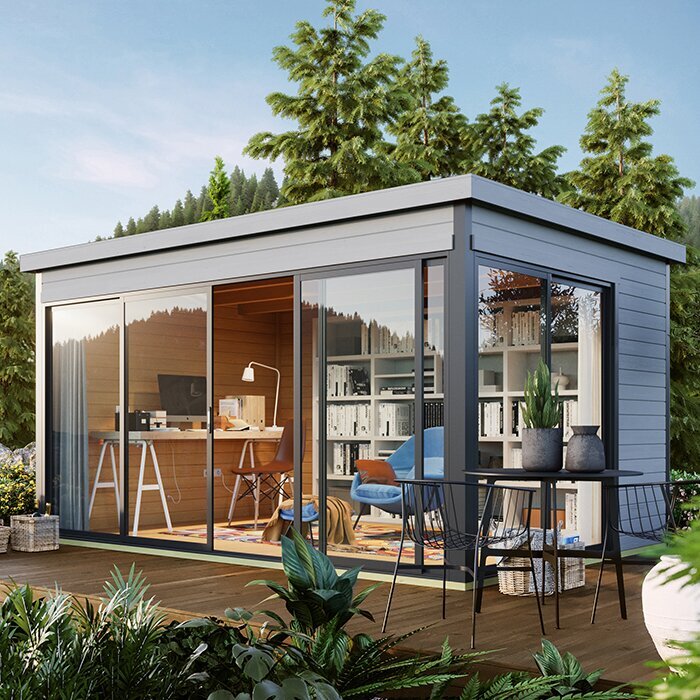
Your intended use determines which other details deserve as much attention as wall thickness. For a shed used mainly to store garden tools or outdoor equipment, access, usable floor area and storage layout may be more immediate questions. Measure the largest items you expect to store, including the route through the doorway, and allow for shelves or a work surface if you plan to add them. Make a note of tall or awkward items too; a large floor area is not enough if they cannot pass through the entrance. Check that the floor and base arrangements suit the intended contents, since the wall figure says nothing about either.
Regular use as a work area raises different questions. Wall thickness alone does not establish insulation, ventilation, daylight or temperature stability, and it cannot promise comfortable conditions through changing weather. Those considerations depend on other parts of the design and on how the building is finished and installed. Think about how many hours you expect to spend inside and what features that use requires. Compare the stated information and any available drawings for each model, including the Verdana 2 garden shed page, rather than assuming similarly named options share a construction or suit the same purpose.
02
Read the rest of the timber-wall specification
Two walls described as 44 mm need not be alike in every respect. The measurement does not state the timber species or grade, the profile shape, how the corners join, how openings are framed or whether the timber has a treatment or finish. These details help explain what is actually offered; they also prevent you from treating thickness as a shortcut for joinery quality or service life. If the wording is vague, check whether it describes a solid timber profile, cladding or another part of the wall. Look for a component list, technical drawing and clear construction description for the exact model, and mark anything missing as unknown in your comparison.
Ask how the wall elements connect, what is included to complete the wall and whether the same construction is used on each side. Timber can respond to changes in moisture, so the manufacturer’s assembly and care guidance matters; do not assume a coating is included or choose a treatment without checking the instructions. Find out whether any lining or trim forms part of the finished wall, and whether inside and outside faces receive the same treatment. For any option, including the Durano garden shed page, confirm these points in the information for that model instead of transferring a finish or construction detail from another shed.
Check the shed against its site and weather exposure
Wall thickness alone is not a weather rating. Rain entry and exposure depend on the whole building, including the roof, wall joints, door and window openings, base and installation. A 44 mm figure cannot tell you how a model will perform in a windy, wet or very sunny position, or whether it suits a particular site. Look for explicit product information about the conditions and installation limits that matter for your garden. Do not read a promise of weather resistance into a millimetre measurement when the product details do not make that claim.
Consider the actual position where the shed would stand: slope and drainage, nearby trees, sun exposure, wind, rainfall and, where relevant, coastal conditions can all affect the questions to ask. Do not assume that any wooden shed can sit on any surface or that thicker walls remove the need for a suitable base and fixing approach. If the site is exposed, or the requirements for a base or anchoring are unclear, ask a qualified installer or building professional to assess the conditions. A listing such as the Veltor 1 garden shed page still needs to be considered in relation to its intended location.
03
Compare wall thicknesses on a like-for-like basis
Comparing wall measurements is useful only when the figures refer to comparable construction. A second model may list a different thickness, but first check whether both measurements describe the same wall component and use the same method. A larger figure is not automatically better value for your purpose if the size, layout, access or other construction details do not work for you. Equally, 44 mm is not inherently suitable or unsuitable without knowing how and where the shed will be used. If you are weighing 44 mm against a thicker option, the extra millimetres alone do not establish insulation, weather performance or service life.
Compare the dimensions, profile, roof, floor, openings, finish and site information alongside each wall figure. If one listing leaves a point unclear, record the question and seek a model-specific answer before comparing it with another option. You can include the Orello 1 product page in a side-by-side comparison, but use only the wall details actually stated for that model. A higher measurement is useful information; it is not a substitute for understanding the construction or deciding whether the complete shed suits your plans.
Check usable dimensions and access
Wall thickness matters when you are checking space, but it must be read alongside the plan. If a quoted footprint is external, the usable area inside will be smaller; the precise difference depends on how the dimensions are taken and how the wall is built. Look for both external and internal measurements rather than subtracting a guessed amount from the outside dimensions. Check the usable floor area against the items you will store, the space needed to move around and any shelving or bench you expect to install. Consider whether storage along the walls will leave enough room for the way you intend to use the shed.
Check the doorway’s clear width and height, its position and the room needed to open it. Compare those measurements with the route from your garden and the largest objects that must pass through. Note the shed’s overall height and the space needed around it for assembly and future care. Use drawings to understand the layout where they are available; a product image may not show scale. For a specific option such as the Modano 1 garden shed page, confirm the stated internal and external measurements for that model instead of relying on a similar-looking shed.
04
Understand the finish and ongoing care
A wall measurement does not say whether the timber is supplied treated, painted, sealed or ready for a finish you choose. Find out what finish, if any, is included, whether parts need protection after assembly and what care the manufacturer recommends. These answers affect the work involved as well as how you plan to look after the shed. Avoid relying on broad wording such as solid timber or premium if it does not explain the treatment and upkeep. Ask for product-specific instructions, including what is recommended for exposed surfaces and the edges around doors or windows. If a warranty or care promise is offered, read any conditions that apply.
Consider whether the ongoing care is realistic for the location and use you have planned. A shed exposed to strong sun or frequent rain may raise different maintenance questions from one in a sheltered position, but the answer should come from the manufacturer’s guidance for that product, not from the 44 mm figure. Check what the instructions say about the inside and outside faces, and whether maintenance needs to be repeated. Keep the care information with your order documents. For example, use the Wooden Garden Tool Shed M listing only for the construction and care details stated for that model, not as a guide to another shed.
Confirm what the order includes
Before placing an order, confirm exactly what the package includes. Do not assume that a floor, roof covering, hardware, glazing, finish or assembly service is part of the purchase unless the item-specific information says so. Check the component list against the drawings and ask whether any items need to be sourced separately. Clarify what the seller means by a complete shed, particularly if the wording does not distinguish the building itself from optional extras. This information affects planning for the base, installation and comparisons between models; the wall-thickness figure cannot answer package questions.
Check the ordering logistics as well: delivery area, access to the unloading point, how the pack is delivered and who handles assembly. Ask what to do if components arrive damaged or are missing, and confirm lead times, returns and after-sales support directly. Keep the selected model name, quoted specification and any written answers together so you can compare the order confirmation with the information you relied on. Check model-specific details on the Wooden Garden Tool Shed S page rather than carrying pack contents or delivery conditions over from another listing.
05
Compare the complete purchase, not just the walls
Judge value across the whole purchase rather than treating wall thickness as a quality score. Compare the quoted price of each shortlisted shed with any work or items that may sit outside it: preparing a suitable base, arranging assembly, adding a finish if needed or buying components not included. These are possible costs to verify, not automatic extras; the product information or a written quote should make their status clear. Remember to consider the time involved in ongoing care as well. If the 44 mm model costs more than an alternative, ask which differences are documented and whether they matter for your intended use.
A compact comparison sheet can stop the most visible specification from dominating. Give each model a line for its stated wall measurement and definition, dimensions, material and joinery details, roof and floor, openings, finish, site requirements, included parts, delivery and assembly. Mark each point as confirmed, unclear or not relevant to your use. This makes gaps visible and helps you ask precise questions. It also shows when a larger wall number is distracting from an unsuitable layout or an unverified installation detail, and makes it easier to explain the choice to anyone helping you plan the purchase.
Decide whether 44 mm belongs on your shortlist
Treat 44 mm as a useful filter, not a final verdict. It may belong on a shortlist if the seller defines the wall measurement clearly, the shed offers the space and access you need, and the rest of the specification addresses your use and site. If the product information gives only a number, ask for construction details, dimensions, care information and relevant installation guidance before deciding. A missing detail does not prove that the shed is unsuitable, but it does mean the wall thickness cannot fill that gap. If the decision rests solely on those two digits, you need more information.
If your plans depend on particular weather performance, regular indoor comfort, security or support for heavy contents, ask for evidence about that requirement specifically; 44 mm alone cannot establish it. Keep questions about the product separate from questions about the site: the manufacturer can clarify the stated construction, while a qualified professional can assess site conditions, foundations or fixing design. Where that assessment could affect which shed you choose, resolve it before ordering. Once the wall measurement and the rest of the model-specific information align with your intended use, you can judge the shed as a complete product rather than accepting or rejecting it on one dimension.
Frequently asked questions
What does 44 mm mean on a wooden garden shed?
It is the stated thickness of the wall element or profile, as defined in the product information. It does not describe the shed’s footprint, usable floor area or the thickness of every part of the building. Check whether the measurement is nominal or finished, and which parts of the walls it applies to.
Do 44 mm walls make a garden shed insulated?
No. Wall thickness alone does not establish insulation or overall thermal performance. The roof, floor, doors, windows, ventilation, gaps and installation also affect how the building performs. If you intend to spend regular time inside, look for product-specific information about those features instead of assuming that thicker timber will make the shed comfortable.
Are 44 mm walls suitable for storing garden tools?
That depends on the shed’s complete design and your storage needs. Check the usable floor area, doorway, floor and base arrangements, as well as where larger or awkward items will go. A 44 mm wall measurement does not tell you the floor’s capacity or how much equipment will fit.
Does a 44 mm wall specification guarantee weather resistance?
No. The measurement alone is not a weather rating. Roof details, wall joints, openings, the base and installation all matter, as does the position where the shed will stand. Ask for information about the particular model and site; seek advice from a qualified professional if exposure or anchoring requirements are unclear.
Should I always choose thicker garden shed walls?
Not automatically. Compare wall figures only when they describe the same part of the construction, then consider dimensions, layout, finish, site requirements and your intended use. A higher number does not by itself prove better insulation, weather performance or value. The right choice depends on the full specification, not one measurement.
The 44 mm figure is useful when it is clearly defined and matched to a particular need. Pair it with the full wall and roof details, usable dimensions, site requirements, care information and exact order scope. If those checks support your planned storage or other use, the measurement can help confirm a shortlist; if it is the only detail available, it cannot carry the buying decision. Choose the shed whose complete specification makes sense for your garden and the way you intend to use it.
