
Buying a Garden Shed for Family Games and Entertainment
Buying guide
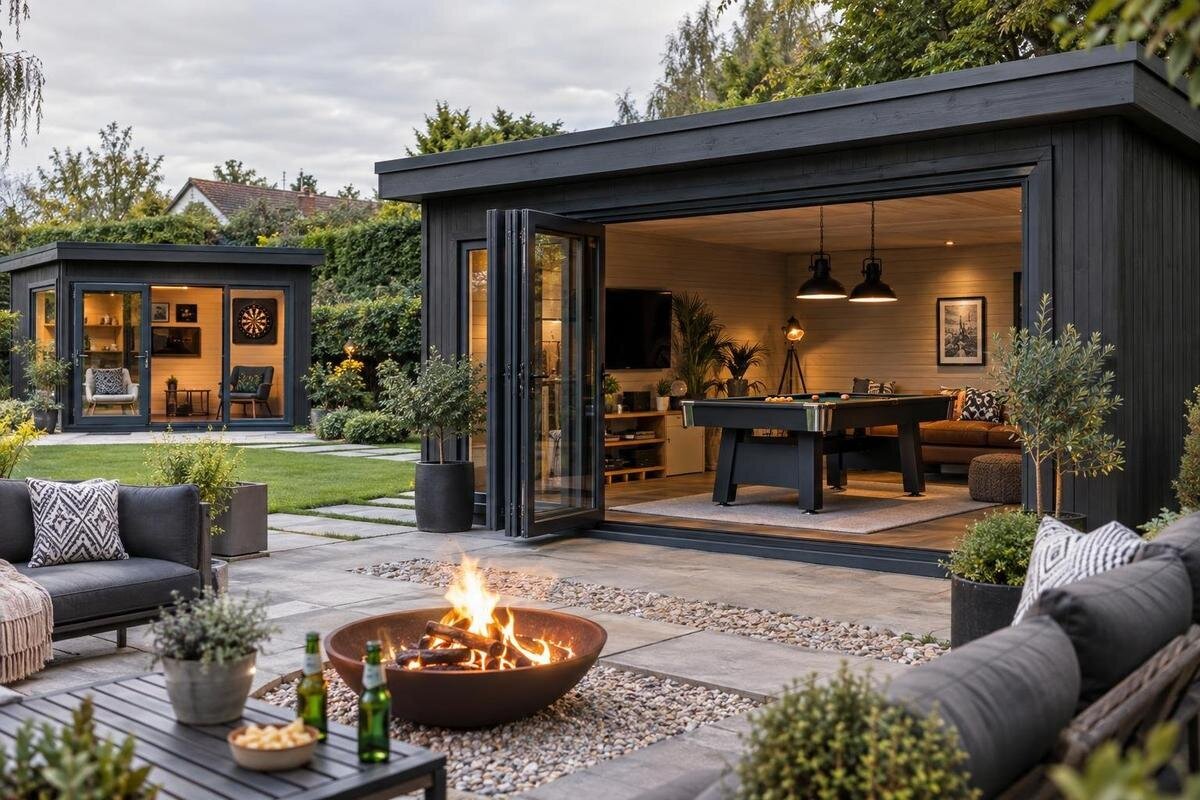
Buying a garden shed for family games and entertainment is less about choosing the biggest footprint and more about making sure people can play, move around and put equipment away without the room feeling cramped. Start with the games your household actually enjoys, how many people usually join in and whether the shed will be used occasionally or throughout the year. Then compare clear floor space, door access, storage, comfort, site preparation and the terms of ordering. Those checks help you shortlist a garden shed that supports shared time at home instead of relying on a product name or photograph to tell you how it will work.
Set the brief around games and shared time
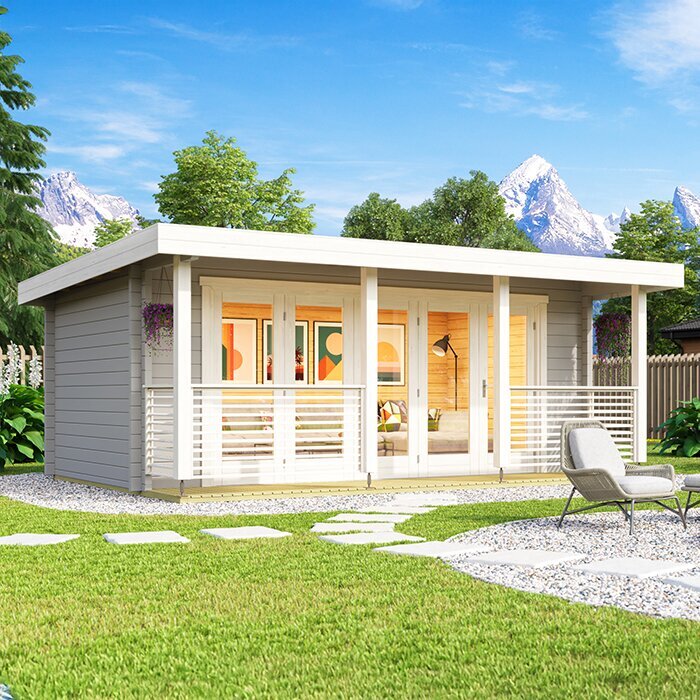
A family games space can mean a board-game table for four, cards with a changing number of players, a puzzle left out between sessions, or several activities in rotation. Each use claims space differently. List the games your household expects to play most often, the usual number of people and anything that needs to stay set up. A puzzle packed away after each visit needs a different arrangement from a game left on the table all week. Treat a larger gathering as a separate requirement: decide whether it must happen indoors, rather than sizing the whole building around an occasional peak. Note whether sessions will be brief or long enough to need a comfortable place to sit.
Set boundaries around the room’s job. Decide whether it is mainly for games or must also store garden tools, sports equipment, seasonal items or general household overflow. Every extra use takes floor area and can add clutter to a shared activity. Give the game layout first claim on the floor, then list only the storage that genuinely belongs there. Ask household members what makes a session work: enough elbow room, a quiet place for a puzzle, seating for visiting friends or a clear view of the board. Those specifics are more useful than a broad brief such as a family space. If another activity will be the main use, reconsider the brief instead of trying to make one room do everything.
Measure usable room and garden space
Before comparing catalogue sizes, mark out the proposed footprint in the garden with string or removable markers. On paper, place your actual table, chairs and storage within the outline. External measurements do not tell you the clear floor area on their own: wall thickness, interior fittings and door position all affect the layout. Check both outside and inside dimensions where they are supplied, as well as the usable doorway width and internal height. A candidate such as the Verdana 1 garden shed listing belongs on the shortlist only after its stated measurements have been compared with your plan; the name alone says nothing about usable game space. If measurements are missing, request them rather than estimating from the product image.
Allow room for people, not only furniture. Mark a chair in its pulled-back position, then leave a route for someone to pass without brushing a seated player or blocking the way out. Check the space taken by an open door or window, not just its closed position. Outside, account for the building’s full footprint, installation access and any space needed to maintain it; do not assume a tight gap is workable because the floor plan fits. Measure the route from the gate to the proposed site, too. If the ground, slope or drainage raises questions, ask an installer or other qualified local professional what preparation the selected building requires.
Plan around tables, chairs and play space
Size the room around the most demanding activity you expect to use regularly, rather than the smallest game in the cupboard. For table games, note the tabletop dimensions, number of chairs and how far players need to pull them back. For games that need an open area, draw that clear zone separately and check whether a table or storage unit would interrupt it. Compare the plan with the exact measurements on a product page; the Verdana 2 garden shed listing is a page to assess, not evidence of a particular floor area. If figures or a dimensioned plan are missing, ask the seller before deciding. Check internal height as well if an activity involves standing or moving around.
Plan one main arrangement and one realistic alternative. A folding table or chairs that can be moved may help a room serve different games, but only if there is somewhere sensible to store them and the changeover is easy enough for the family to repeat. Keep a clear route from the door to every seat, and avoid making access depend on moving a bulky item. If two groups might play at once, consider sound and visibility as well as floor space: a crowded table can make a small room less sociable rather than more flexible. A scale drawing, or removable tape on an existing floor, can reveal an awkward layout before you order furniture or a shed.
Check the entrance and route to the shed
Check how the entrance works with the layout. The clear opening, door position and opening direction can determine whether a table can be carried in, whether a chair sits behind the door and whether late arrivals cross the game area. Do not assume these details from a photograph; look for them in the specification or request a dimensioned drawing. When assessing the Durano garden shed listing, verify the opening and interior information for that exact option rather than reading anything into its catalogue name. Measure large items at their widest point and confirm that they can reach the site and pass through the opening.
Think through how people will approach the shed with a board or game pieces, and how they will leave when the room is occupied. A door opening onto a busy path, a narrow passage or a step can change everyday use; walk the intended route with the household and note any tight turns or level changes. Keep the entrance, threshold and route out clear of stored boxes and spare chairs. If children will use the space, consider whether adults can see and reach the play area without climbing over furniture. Ask the supplier or installer about access constraints that could affect delivery or assembly, not only those inside the finished building.
Keep game storage out of circulation
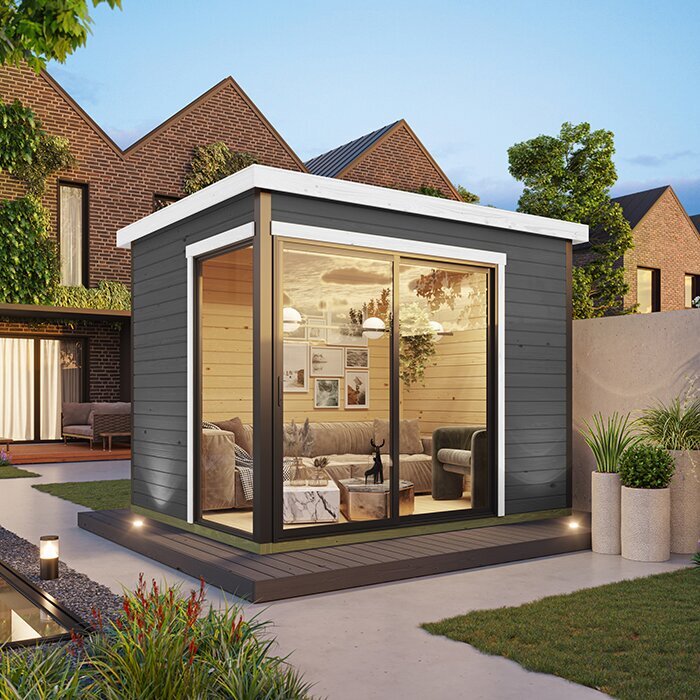
Storage should make it easier to start a game, not turn the shed into a storeroom. Make an inventory of what will live there: board-game boxes, cards, score pads, pencils, puzzles, spare chairs and perhaps a portable table. Note the size of these items and whether you want quick access or can keep them in a closed container. Then leave the centre of the floor free for the chosen activity. When comparing the Veltor 1 listing, check whether its product details specify storage or interior features; if they do not, plan for separate furniture instead of assuming shelves or cupboards are included.
Choose the storage arrangement before finalising the shed size. A low cabinet may keep small pieces within reach but still occupy floor area; wall-mounted storage preserves floor space only if the wall and fixings are suitable for that use. Ask the supplier or a qualified installer before attaching a loaded unit, and keep frequently used games accessible to the people who will play. Lidded boxes can help organise small components, but keep them away from the doorway. If garden tools or other bulky equipment must share the room, define a separate storage zone and check that it does not compromise seating, movement or the family’s ability to pack away.
Compare light, airflow and privacy
Comfort matters when games last longer than a quick visit. Study the proposed site at the times your family is likely to use the room: note direct sun, shade, glare, privacy and exposure to rain or wind. A window can bring in daylight, but its position may put reflections on a board; openable glazing may affect air movement, but details vary by design. Do not infer window type, glazing or door arrangement from a product image or model name. For the Orello garden shed listing, look for the exact stated openings and options, and ask the seller if those details are not clear.
Ask how the selected building is intended to be ventilated, and whether its openings suit conditions at your site; avoid treating an enclosed garden shed as a climate-controlled room. If afternoon sun is a problem, compare practical shade and orientation options with an installer, without assuming a nearby tree will provide reliable cover all year. Consider privacy if the shed faces neighbours or a shared boundary, and make sure the lighting plan suits the way people will use the space. If you want electrical lighting or other powered equipment, have the installation assessed by a qualified electrician; do not base the purchase on an assumed supply or an improvised cable arrangement.
Check site preparation and ongoing care
Read the construction and care information as part of the buying decision. Check what materials, finishes, floor and roof components are actually specified, what arrives untreated or needs further work, and what maintenance the seller recommends. A timber appearance or a product name is not enough to establish treatment, weather resistance or what is included. The Modano garden shed listing can be assessed in the same way as any other candidate: use the written details for the exact configuration, and request clarification where a point affects your intended use. Ask which parts need upkeep and what the supplier recommends rather than guessing from a photograph.
Site conditions also matter for a room kept for games. Look at water run-off, ground firmness, shade, nearby trees and access to the proposed base; conditions differ from one garden to another, so there is no universal foundation choice to assume. Ask the supplier what site preparation the product requires, then have a qualified installer or relevant professional assess the ground and base if you are unsure. Confirm that the building’s stated use, construction and installation requirements suit the location you have selected. The aim is to choose for a garden setting, not to assume a garden shed will perform like a different kind of building.
Confirm delivery and assembly access
Delivery and assembly can decide whether a suitable-looking shed is practical to order. Measure the gate, side passage, corners, overhead clearance and route to the site, and note any steps or restricted turning space. Compare those measurements with the supplier’s package or component dimensions, not only the finished building’s footprint; ask for the information if it is not listed. For the wooden garden tool shed M listing, treat the catalogue wording as a name, then confirm its actual dimensions, contents and stated use before including it in a games-room shortlist. Check whether unloading and assembly are included or separately arranged, and who is responsible for preparing the site.
Before confirming an order, ask what preparation the building needs, whether a base or floor is supplied, and which tasks remain with you or an installer. Request a written breakdown of delivery, unloading, assembly and any site work so you can compare like with like; do not treat a building price as the full cost of a usable games room. If access is tight, send the route measurements to the supplier or installer and get an answer before delivery. Have an appropriately qualified person check for buried services before ground work, and confirm any property-specific requirements that apply to your site. These questions are easier to resolve before a purchase than when parts arrive.
Compare full costs and order terms
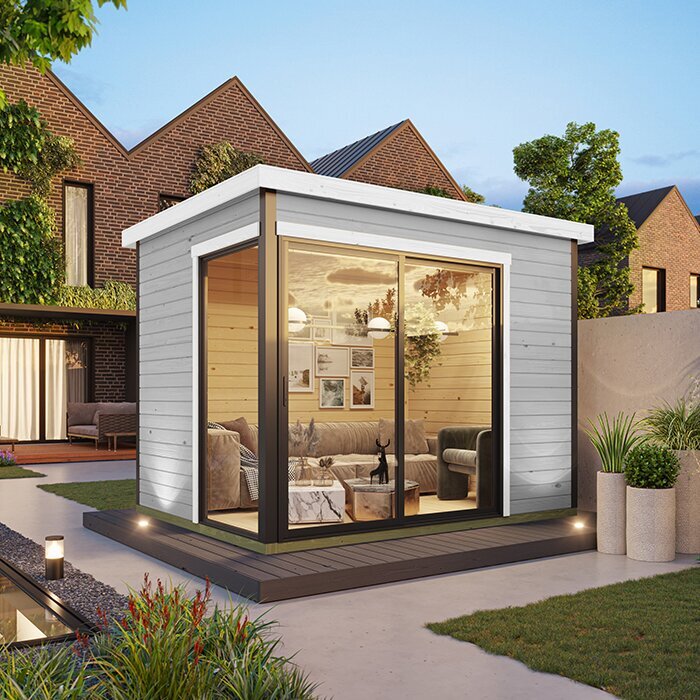
Compare total costs, not just the displayed price. Add the shed, site preparation, any base or flooring not included, delivery, assembly, interior storage, chairs or table and any professionally installed lighting you need. Ask what is included in the quoted configuration and whether optional components change the total; do not assume an image shows everything supplied. Build a comparison table using the same categories for each candidate. An itemised quote makes it easier to see whether an initial figure leaves out work essential for your planned use, without assuming that a more expensive option is automatically better.
Check the conditions that affect the purchase as carefully as the layout: stated dimensions, specified materials and finish, included components, assembly arrangements, maintenance, availability, delivery terms and the seller’s returns or cancellation terms. These can differ by product and order, so read the current information rather than relying on a model code or an old note. The wooden garden tool shed S listing is another catalogue page to evaluate from its own written details; the letter in a name is not proof of its size or suitability for family games. Compare the same facts across your shortlist, and ask for missing information in writing.
Rehearse the layout before ordering
Do a final rehearsal before paying. Mark the proposed building footprint, place scaled outlines for the table and chairs, and walk the route from the entrance to each seat and storage point. Ask the household to check whether the usual number of players can sit comfortably, whether someone can pass without interrupting play and whether the room still works when a door is open. Match every measurement to the exact listing and selected configuration. If the plan relies on furniture being folded, moved or stacked after every game, try that sequence at home; a layout that only works on paper may quickly become frustrating.
Then make a written order checklist: model name and configuration, dimensions, openings, included floor or other components, preparation requirements, delivery route, assembly responsibilities and total quoted cost. Resolve uncertainty that could change whether the games fit or the shed can be installed. Choose a compact option only if it leaves usable circulation and storage as well as room for regular activities. Equally, do not pay for extra space without a purpose. A clear brief and confirmed details turn a family wish list into a considered purchase instead of relying on a catalogue name to make the decision.
Frequently asked questions
How do I estimate the right garden shed size for family games?
Start with the largest game set-up you use regularly: the table, chairs pulled out, players and a clear route to the entrance. Draw it to scale and compare it with the listed internal dimensions, not only the outside footprint. Add any storage that will stay in the room, then test the arrangement with markers in the garden. There is no useful people-per-square-metre rule without knowing the games and furniture.
Can a garden shed fit both board games and active games?
It may, if the clear area needed for each activity fits without blocking seats, storage or the entrance. Draw the largest regular layout first, then check whether furniture can be moved and stored easily between uses. If an activity involves throwing or fast movement, assess whether the actual room is suitable rather than assuming an ordinary garden shed will work.
Is a larger garden shed always better for family entertainment?
Not automatically. Extra floor area can give people more room to move, but it may also add cost, use more garden space and require additional site preparation. Base the choice on the regular activities and their layout. A larger option is worth considering if it solves a real space problem, not simply because occasional visitors might join in.
What should I check for light and ventilation?
Consider the site’s sun, shade, glare and privacy at the times the family is likely to use the room. Check the exact details of any openings and ask the seller how the building is intended to be ventilated. If you want electrical lighting, have the installation assessed by a qualified electrician rather than assuming a power supply or arrangement will be suitable.
Can I use a garden tool shed as a family games room?
Only if the exact product’s stated use, dimensions, layout and installation requirements match your plans. A catalogue name does not establish how much usable space there is or whether the building suits regular family use. Check the written details and ask the seller about anything unclear before ordering; do not assume a storage-oriented listing will work as an entertainment room.
The right garden shed for family games is the one whose verified layout suits your household’s usual activities, keeps game pieces organised and can be installed at the chosen site. Let the room plan and confirmed product details guide the order, rather than the model name or a photograph. When the everyday game set-up, access and preparation all fit, the shed is more likely to become a place the family uses together instead of storage that has displaced the garden.
