
Buying a Garden Shed for Occasional Guests: What to Check Before Ordering
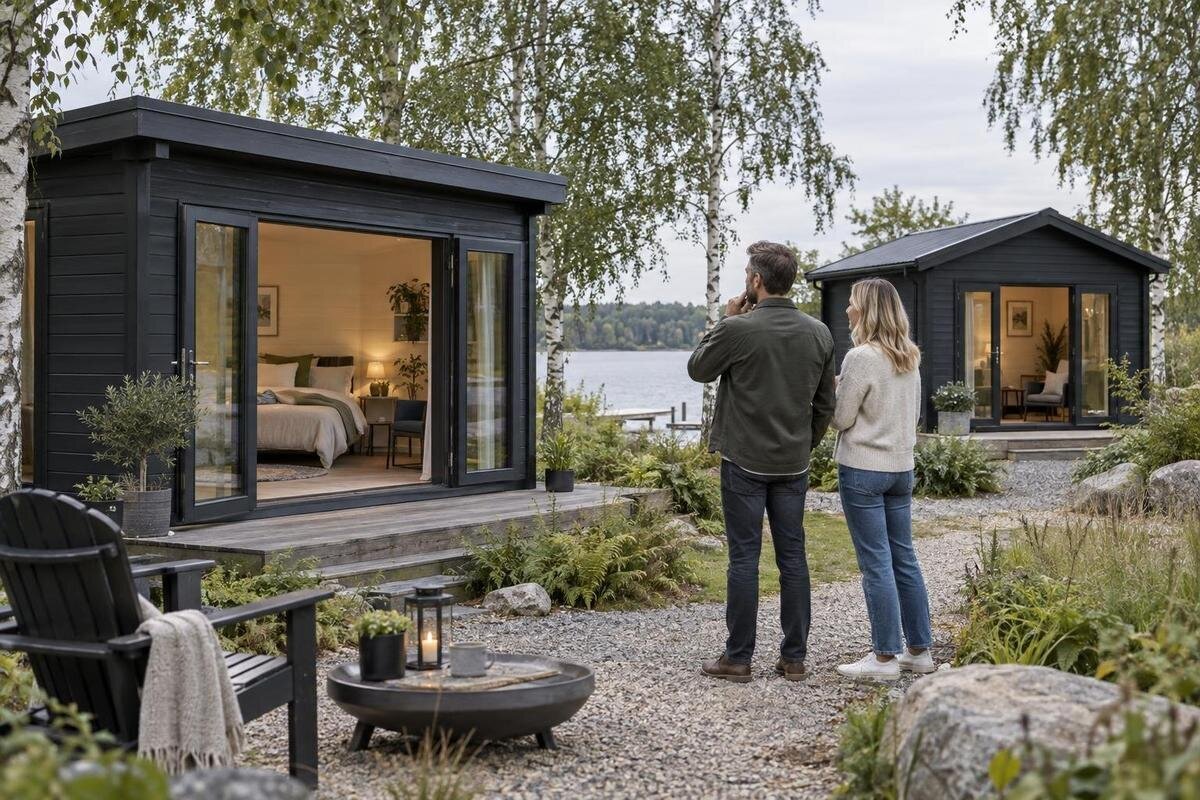
Garden shed buying guide
Choosing a garden shed for occasional guest stays takes more than checking whether a bed will fit. A storage building is not automatically designed or approved for people to sleep in, and a product photograph cannot confirm insulation, ventilation or services. Before ordering, define how guests will use it, verify the building’s intended use and any local requirements, then check the usable layout, site access and exactly what the price and installation cover.
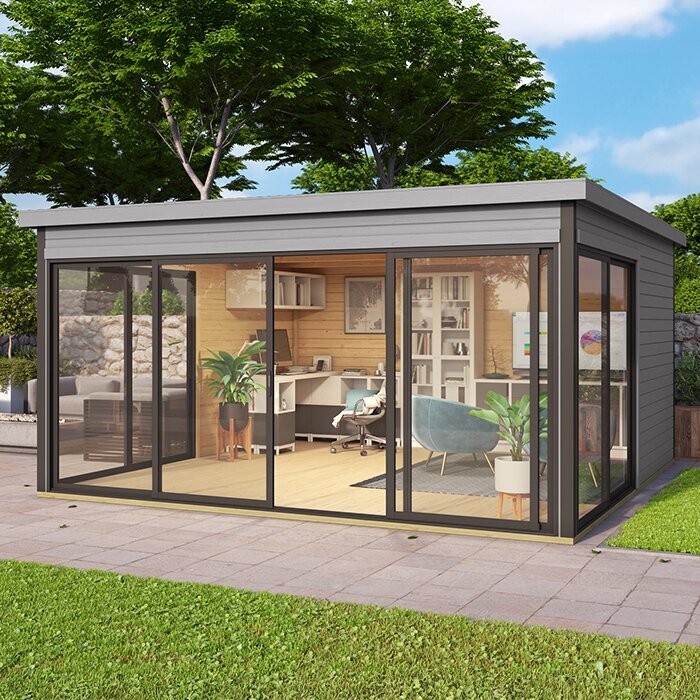
What to check before buying 1
Confirm that overnight use is appropriate
Garden sheds are often described or pictured as places for tools and equipment, while an overnight guest needs a room designed for people to occupy. Those are not interchangeable uses. Even a stay that happens only now and then involves sleeping, moving about in low light and leaving the building safely. A label such as garden house or a product photo showing furniture is not proof of suitability. The name wooden garden tool shed M identifies a listing; it does not establish that the building is suitable for guest accommodation. Putting a mattress inside changes the furnishings, not the building’s intended design.
Ask the supplier, in writing, whether the exact model and configuration are intended for overnight guest use and what documentation supports that answer. Separately contact the municipality or a suitably qualified local building professional to learn which approvals and site requirements apply to your property and proposed use. Treat these as two checks: a supplier’s description cannot settle local requirements, and local approval does not prove that a particular building performs as needed. Share the intended location, number of guests and any plans to add services when asking; a general answer may not cover your exact proposal. If the intended use cannot be confirmed, consider a purpose-designed guest structure or another accommodation plan rather than assuming a storage shed can be adapted.
Define the type of stay and guest capacity
Occasional can mean one visitor for a night, relatives for a weekend, or repeated stays during part of the year. Write down the likely maximum number of guests, the length and season of stays, and what they will need to bring. Decide whether the building is only for sleeping or also for dressing, sitting, storing luggage or using a desk. Note whether guests may include children or someone who needs more room to move, without assuming a layout will suit every person. Include everyday routines such as changing clothes and keeping bedding dry. Defining the use now helps you choose on more than outside appearance or a vague idea of floor area.
Measure the usable interior, not just the outside footprint. Ask which published dimensions are external and which are clear internal measurements, and whether fixed elements are included. Walls, door recesses and fitted items can affect where a bed and belongings will go. Sketch the room to scale, mark the bed, bags and any furniture, and leave a clear route to the exit. Check an actual mattress and frame size rather than relying on a generic bed symbol. A page such as the Verdana 1 garden shed listing may sit on your shortlist, but record only dimensions the seller publishes or confirms. If the space must serve more than one purpose, draw both arrangements and note what would need to be moved between daytime and bedtime.
What to check before buying 2
Plan the usable floor layout
An overall floor-area figure does not show how conveniently the room works. Place the bed on the plan first, then test the route from the entrance to both sides of it, the space to change clothes, and the position of bags or a chair. Include the full bed frame, not only the mattress, and allow for drawers or cupboard doors that need to open. Check whether furniture blocks the entrance, a window, a ventilation opening or a practical place for a light switch. If two people will share the space, consider whether one can move without making the other climb over the bed. A drawing can reveal awkward corners that a floor-area total hides.
Request a dimensioned floor plan for the exact version on offer, including internal wall positions, door swing, threshold and window locations. Confirm the clear width and height of the entrance and whether its opening direction or fittings affect access. Think about bringing the bed into the room: a mattress and a rigid bed frame may have different access requirements. Before ordering, mark a scaled plan on the ground or use removable tape to test furniture positions. If reviewing the Verdana 2 garden shed page, treat images as illustrations unless the seller supplies measurements for the selected configuration. Ask whether any proposed change to a door or window would alter the plan or usable wall space.
Ask about insulation and weather protection
Guest comfort depends on the building’s actual construction and the conditions at your site, not on its style or name. Ask whether the walls, roof and floor have insulation, and request details for each element; a statement about one part does not describe the whole room. Check what the seller says about weather sealing, glazing and intended conditions of use, and whether those details apply to the exact model and options you plan to order. Do not infer thermal performance from a thick-looking wall, timber appearance or attractive interior image. If documentation gives only a material or thickness, ask what that information means for the completed building.
Consider the site’s sun exposure, shade, wind and rain during the times guests are likely to stay. A building that feels comfortable during a short daytime visit may feel different when occupied overnight. Ask whether insulation or lining can be added without affecting the intended use, and have a qualified professional assess proposed changes where appropriate; do not assume a storage model can be upgraded safely by adding layers. When comparing the Orello 1 garden shed listing, use only information explicitly supplied and request clarification on missing construction or weather details. Ask whether the stated specification changes with optional doors, windows or floor components, and keep the seller’s answer with your notes.
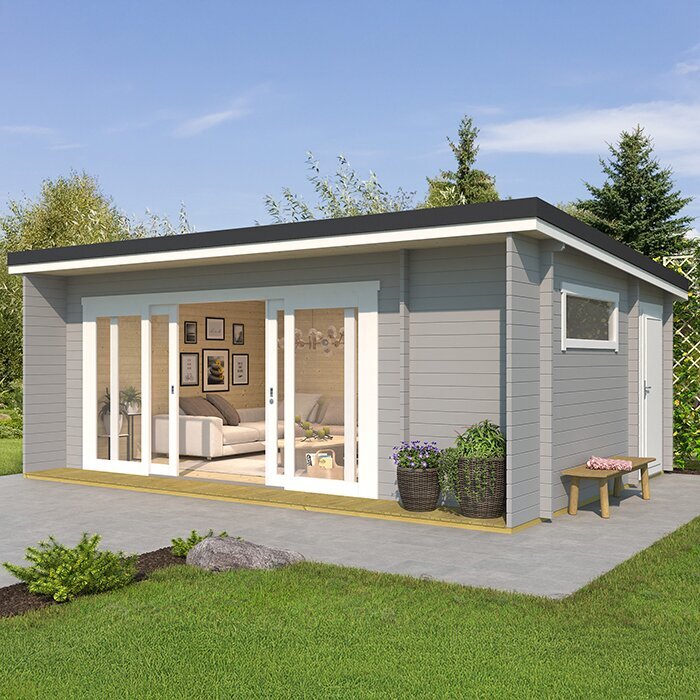
What to check before buying 3
Check ventilation and condensation control
Ventilation deserves its own check; it is not the same as insulation or a window appearing in a photograph. Ask what openings are included, which actually open, and how fresh air is expected to circulate while guests are sleeping. If windows can be opened, confirm the available opening and any stated limits for use in rain or when the room is unattended. A small enclosed space can feel stuffy, while wet towels, bedding or clothing add moisture; ask how the manufacturer addresses condensation and what day-to-day airing is expected. Do not guess at airflow from an image. If more than one guest is likely, mention that when requesting guidance.
Check that ventilation arrangements can be used without sacrificing privacy or creating an access concern, and ask whether curtains or furniture could block openings. Find out whether the chosen configuration changes the position of windows or vents, and whether screens or covers are included or separately specified. A page such as the Modano 1 garden shed listing identifies a model, but does not by itself confirm a window type, airflow or condensation performance. Ask the seller to confirm relevant details for the version being quoted. Do not rely on later modifications without checking that they suit the structure. If appropriate ventilation is essential but cannot be confirmed, reconsider whether the building suits the intended stay.
Balance daylight with privacy
Think about daylight and sightlines at the actual site. A window that brightens the room may also face a neighbour’s home, a shared path or an area where people gather; a product image cannot reproduce those angles. Mark the intended bed and changing area on the floor plan, then check what can be seen from outside at different times of day. Ask what window coverings, if any, are included, and whether curtains or blinds can be fitted without interfering with a door or opening. If guests will use the building after dark, decide how they can control indoor light without leaving the room exposed. Make privacy part of the layout, not an accessory to consider after the bed is installed.
Note how direct sun, glare and surrounding shade could affect the room at the times you expect it to be used. Ask about the exact glazing and door details rather than assuming all models use the same arrangement; do not infer safety, sound reduction or thermal properties from the appearance of glass. When comparing the Durano garden shed listing, use only door or window details confirmed in its product information, and ask whether privacy measures or shading are included or need to be planned separately. A site sketch showing nearby windows, boundaries and planting can help the supplier or installer answer questions about sightlines and placement.
What to check before buying 4
Plan for bathrooms and other services
Decide before purchase whether guests will use bathroom and cooking facilities in the main home or need anything at the garden building. A toilet, shower, basin, water supply, drainage, sockets or lighting should not be assumed to come with a shed. If facilities are elsewhere, consider the route between buildings at night, including its surface, distance, lighting and exposure to weather. If you want a chair or small table as well as a bed, revisit the floor plan rather than treating services as a separate afterthought. Write down who will use the room and what they will need to do there; each extra function affects layout and installation planning. Do not call it self-contained unless those provisions are part of the confirmed plan.
For planned plumbing, electrical work, heating or another fixed service, ask the supplier what the structure is designed to accommodate and consult suitably qualified local tradespeople before ordering. They can assess the proposed work and requirements that apply to the property; avoid relying on generic advice or attempting a retrofit from a photograph. Request a written list of included fittings, pre-installed provisions and exclusions, then account separately for items that are not supplied. A listing such as the Veltor 1 garden shed page should be read alongside explicit inclusion details; its model name alone does not confirm any service, wiring or bathroom provision. Also confirm who would coordinate separate contractors and how that affects delivery and assembly.
Check site access, delivery and installation
Check that both the chosen position and the route to it will work. Measure the narrowest gate, bends in the path, overhead clearance and any low branches or fixed structures, then share those details and site photographs with the seller. Ask how the building is delivered, where unloading takes place, whether a vehicle or equipment needs access, and what clearance an assembly team requires. A clear garden footprint is not enough if the package cannot reach it or installers cannot work around it. Allow space for opening doors and future access to maintain the exterior, using the supplier’s guidance for the selected model. Do not assume a difficult access route can be managed after purchase.
Ask for written requirements for the base or foundation, the degree of site preparation expected and who carries it out. Ground that is uneven, sloped, soft or affected by runoff should be assessed by the installer or a qualified building professional; do not work out a structural solution from a generic diagram or assume what a shed needs. Confirm whether the order includes assembly, fixing, waste removal and preparatory work, or whether these must be arranged separately. If the supplier needs more site details before confirming the installation plan, provide them before placing the order. Ask who is responsible if the prepared site does not meet the stated requirements.
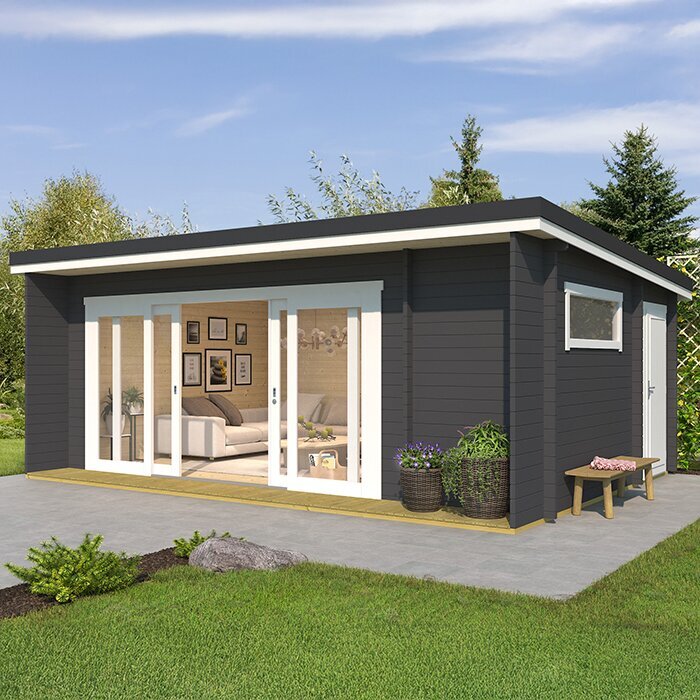
What to check before buying 5
Read the specification and order scope
Compare the written specification for each shortlisted model, not just its title or promotional images. Ask for the exact model and variant, external and clear internal dimensions, maximum height, door opening, materials and finish, floor arrangement, glazing, ventilation and insulation details, and any drawings or assembly instructions. Treat a detail that is not stated as unknown; do not fill gaps using the model name, URL, photographs or a similar product. Ask the seller to confirm that the offered configuration is suitable for the intended overnight use, and whether optional changes affect that confirmation. Keep different versions separate in your notes, as a changed opening or floor can alter clearances.
Check exactly what the order includes: the structure, floor, hardware, glazing, finish or treatment, delivery, unloading, assembly, and any services or fittings. Request an itemised quotation that identifies exclusions and responsibilities rather than assuming a picture shows everything supplied. For example, the wooden garden tool shed S listing is identifiable by its product name, but that name cannot establish its full specification or suitability for a guest stay. Read the seller’s payment, change, cancellation and support terms before committing, and keep the quotation, drawings and written answers together. If a feature matters to your guest plan, make sure it appears in the documents for the exact model you are ordering.
Compare the final options on confirmed details
Before submitting an order, make a short record for each option. Note whether overnight use is confirmed, whether you have obtained local advice, the usable interior layout, ventilation and weather information, privacy, required services, delivery route, site preparation and installation scope. Mark each item as documented, confirmed by a relevant professional or still unresolved. This makes gaps visible and prevents assumptions about one model being carried over to another. Set your non-negotiables first: a building that cannot be confirmed for its intended use should not remain on the shortlist simply because it fits the garden. Keep site notes and measurements beside the product information for a fair comparison.
Check that the quotation names the exact model and options, records agreed delivery and installation arrangements, and matches the specification you reviewed. If a design change is proposed, ask whether it affects usable space, ventilation, services or the supplier’s statement about intended use; revisit site and approval questions where necessary. Keep important replies in writing so you have a clear record of what was confirmed. If an essential answer is missing, pause rather than expecting to resolve it once the building arrives. You can compare viable options on layout, appearance and cost without letting an unknown become a hidden condition.
Frequently asked questions
Can any garden shed be used for occasional guest stays?
No. A garden shed is not automatically intended for people to sleep in. Confirm the exact model’s intended use with the supplier, ask for supporting documentation, and check with your municipality or a qualified local building professional what requirements apply to your property and plans.
How do I work out the right size for a garden shed for guests?
Plan around the clear internal space, not just the outside footprint. Mark the bed, frame, luggage and any other furniture on a measured floor plan, then check that guests can move around and reach the exit without moving everything out of the way.
Does a garden shed for guests need insulation?
That depends on the building, site and times of year it will be used. Ask about the walls, roof and floor separately, and check the stated weather performance. Consider ventilation as well; a model name or wall thickness alone does not tell you how comfortable the finished room will be.
Can I add a bathroom or electrical fittings later?
Do not assume that a storage shed can accommodate services or a later alteration. Ask the supplier what the structure is designed to support and speak to suitably qualified local tradespeople about the proposed work. Check feasibility and scope before ordering, rather than after delivery.
What should I check about delivery and installation?
Measure the access route, including gates, turns and overhead clearance. Confirm the delivery and unloading arrangements, assembly access, base or foundation requirements, site preparation and what installation work is included. Ask who is responsible for any work that is listed as excluded.
The central buying decision is whether the selected garden shed is documented for the way guests will actually use it. A workable plan also needs measured clearances, a credible answer on weather protection and ventilation, and delivery and service arrangements that match the site. If those details cannot be confirmed before ordering, consider a different structure or another guest arrangement rather than relying on assumptions.
