
Cloudy Hot Tub Water: Common Causes and What to Check
Hot tub water care
Cloudy hot tub water is a visible change, not a diagnosis. Recent use, a water-care change, the fill water, or filtration and circulation may all be relevant, and more than one factor can contribute. Record what changed, assess water-care results using the exact test and product instructions, and check the manual for the specific tub. Resist the urge to add a clearing product based on appearance alone: the aim is to narrow down a cause without treating a guess as fact.
What the appearance of hot tub water tells you
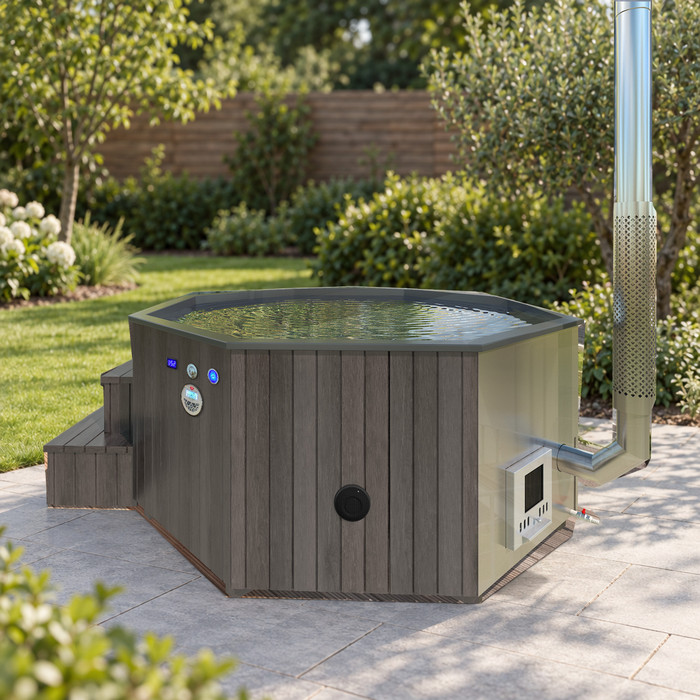
Cloudiness is a visual description, not a diagnosis. The water may look evenly hazy, contain fine specks or show a film at the surface; those observations help you describe the change but do not identify what is suspended or dissolved. Lighting, reflections and moving water can also affect how obvious the haze appears. Note whether the whole tub seems affected or only one area, and whether the appearance is uniform or patchy. If you compare it over time, try to observe it under similar conditions. A photograph can track a visible change, but cannot identify a chemical or establish water quality.
Cloudy water is not automatically unsafe, and clear water is not proof that it meets water-care requirements. Appearance cannot tell you whether all required readings are in the specified range, whether a test has been performed correctly or whether a water-care product is compatible with your setup. Keep what you see separate from what a test says. A clear patch in one area does not establish that the rest of the tub meets its requirements either. Use the exact model manual and current product label to interpret readings and use conditions; if a result is missing or unclear, ask for clarification instead of treating appearance as a green light or a treatment instruction.
Common causes of cloudy hot tub water
Possible causes include material introduced during bathing, such as traces of body products, perspiration, dirt or fibres. If you notice cloudiness after use, that timing makes recent use worth reviewing, but it does not prove that a particular person or product caused the change. A new toiletry, debris from outside or an unrelated maintenance event may coincide. Note what happened rather than choosing one explanation. If haze repeatedly appears after a similar event, that pattern is a useful lead for troubleshooting, not a diagnosis and not a reason to change treatment without checking the relevant instructions.
Other possibilities include water-care readings outside the stated range, fine particles, minerals associated with fill or top-up water, or filtration and circulation that are not working as intended. More than one factor can be present. A pale or grey appearance does not identify a mineral, a specific water-care product or a faulty component, and the same cause may not explain every episode. An unusual source-water change or an unrecorded top-up may be relevant, so note it without assuming it is responsible. Treat these possibilities as categories to investigate against your records and the current manual, not as instructions to add a particular product.
Review recent use and maintenance history
Write down when the haze began and what occurred beforehand: a bathing session, a refill or top-up, a change in a water-care product, filter care, or a change noticed in circulation. Include whether the cloudiness appeared suddenly or gradually, whether it changed later and whether it returned after seeming to clear. These details can help separate a one-off event from a recurring pattern. Note whether the change was visible before or after a test, too. Describe what you saw rather than writing only that the water looked bad, and do not assume the event closest to the change is automatically the cause.
Compare your notes with the maintenance record and with what the manufacturer actually asks you to do. Record product names and dates, plus any test results as shown by the kit; mark anything you cannot confirm as unknown. Keep the model name with these records so that advice can be matched to the right tub. For a Cove 2 hot tub, use the matching manufacturer instructions rather than a general tip for another model. If several products have been used, list them separately instead of grouping them under a vague description such as water-care chemicals. Distinguish work you carried out yourself from work recorded by a service provider.
Read water-care results in context
Use a test kit and method allowed by the instructions for your hot tub and water-care products. Follow the kit’s directions for taking and reading a sample; do not fill a gap with a method found for a different product or system. Compare every reading the manual says to monitor, rather than treating one number as the whole story. The manual may identify the relevant testing method and the readings to check. Required parameters and acceptable ranges depend on the particular care system, so an article cannot safely supply a universal target. Check the current instructions that came with the tub and products, especially if the care system has changed since the last test.
Consider the results alongside the timeline. A change after topping up or adding a product is information to report, not permission to correct a number without the label’s guidance. Note the date, result and test-kit name so advice can be based on the same method; if results were taken at different times, record that as well. Owners of a Haven 6 hot tub should use the applicable manual and product labels for target readings, rather than assuming that advice for another model applies. If results conflict with what you see, ask how to verify them rather than selecting the one that seems most reassuring.
Check filtration and circulation
Filtration and circulation can influence how fine material is handled, but cloudiness on its own does not show that a filter has failed. Check the care history against the model’s instructions and use only the owner-accessible inspection points the manual identifies. A filter may need attention, may be incorrectly seated, or may be undamaged and not the source at all; these are possibilities, not conclusions. Avoid removing components or trying an improvised rinse or cleaner. The correct access, cleaning and replacement method is specific to the equipment and must come from the manufacturer. A recent service or cleaning does not, by itself, prove the filter is compatible or that it was handled according to the right instructions.
Notice whether circulation seems different from its usual state and whether a display shows an alert, but do not diagnose the cause from either observation. Check the guide for the meaning of an indicator and for what owners may inspect. Do not open equipment panels, alter settings or force a filter into place to test a theory. When enquiring about a Fjord 8 hot tub, ask which filtration and circulation checks are intended for the owner and which require service support. Describe any change precisely, including when you first noticed it, rather than labelling it a fault unless the manufacturer’s guidance identifies it as one.
Make sure the test result is usable
A surprising test result needs a validity check before it becomes a treatment decision. Confirm from the test kit’s current directions that it is intended for the water-care system you use, and check its stated storage, expiry and reading requirements. Do not assume that a strip, reagent or colour chart designed for another system will answer the same question. Check the kit’s own interpretation instructions rather than relying on the package colour or a result remembered from another test. If you are unsure how the sample should be taken or when the result should be read, use the kit instructions or ask its supplier; do not improvise.
Keep the test result and visual observation as separate records, especially when they seem to disagree. Write down the reading exactly as reported, the time and the kit used; do not convert it into a dose or treatment unless the product directions tell you how. If you are choosing an Aurora 10 hot tub, ask how to identify a suitable test kit and where to get help interpreting its results. For an existing tub, have the kit packaging or instructions available when seeking clarification. Explain whether the problem is reading the test itself or understanding what the result means for your water-care system.
Avoid changing treatments by guesswork
A product intended to clear water is not a universal answer: cloudiness may have several causes, and an unsuitable addition can make later readings or troubleshooting harder. Do not infer that you need more of the last product or try a new one because the water looks milky. Check the possible cause, the full product label and the manual together before considering any adjustment. Advice copied from another spa, a swimming pool, a forum or a previous water-care system may not apply to your setup. Using several products without a clear record can also make it harder to tell which change mattered. Where the instructions leave a question unanswered, ask the manufacturer or supplier rather than combining recommendations.
Before buying or applying a product, confirm that its stated use is compatible with the exact tub and water-care system. Read the current label for its intended use, warnings and instructions; do not improvise a dose or assume products can be used together. Tell the adviser what has already been added, including full product names, so the sequence can be considered. When buying a Bloomcabin Hot Tub Cove 2, ask how compatible maintenance supplies are identified before purchasing them alongside the tub. Keep the original product information available rather than relying on a shortened name, particularly if you are considering replacing something you have used before.
When to ask for advice
Ask for advice when cloudiness persists or returns despite completing checks as directed, when readings cannot be interpreted, or when you cannot match a product or filter instruction to your model. Contact the tub supplier, manufacturer or a water-care professional able to review the exact model and the labels involved. A display warning or a noticeable change in circulation is also worth mentioning separately. Do not open equipment or attempt a repair because the water looks cloudy; that symptom alone does not identify an equipment fault or authorise a service procedure. Follow any use restrictions stated in the applicable manufacturer instructions, even if the water later looks clearer.
For any decision about using the tub, follow the current manufacturer instructions and the conditions on the water-care products in use. If you cannot establish whether those conditions are met, do not let a clearer-looking surface settle the question; ask the relevant adviser to clarify the readings or instructions first. If you are considering a Bloomcabin hot tub Haven 6, ask who would handle this sort of water-care enquiry after purchase. Find out whether that contact can help with both the tub’s instructions and questions about the care products. A photograph may supplement a description of cloudiness, but it cannot replace test results.
What to tell a water-care adviser
Give the adviser a concise account of the problem rather than presenting a guess as the cause. Begin with the exact model, when the cloudiness started and whether it has persisted or returned. Then provide your use and maintenance notes, test results and product names in date order. Separate observations from interpretations: saying that circulation looked different is more precise than saying that a pump caused the haze. Identify any gaps in the record, including approximate dates or a product whose name you cannot confirm. This lets the adviser distinguish what is known from what still needs checking without having to untangle assumptions.
Ask focused questions about the unresolved issue: which manual applies, whether the test kit is suitable, which filter-care instructions are relevant, or whether a recent product change affects the advice. For a Bloomcabin Hot Tub Fjord 8, give the full model name and ask the adviser to confirm that the guidance applies to that model and your care system. Before ending the conversation, make sure you understand the recommended action, any conditions attached to it and where to find the current instructions. Keep that reference with your notes so you can distinguish the advice given for this episode from general guidance if cloudiness returns.
Water-care support to check before buying
Consider water-care support alongside the tub itself. Before buying, ask where you can obtain the current owner’s manual and whether troubleshooting can be directed to someone who can identify the exact model and care system. Find out what information they need for a cloudiness enquiry, how compatible test kits and maintenance supplies are identified, and who can clarify conflicting instructions. Ask whether the guidance is model-specific and where it is kept, rather than assuming that a product description includes care advice. Clear access to instructions makes it easier to investigate a change in appearance later without relying on guesswork.
Ask which filter or other maintenance parts are confirmed for the model, how to find the appropriate care instructions and whether recommended test products are available from local suppliers. Check current compatibility and availability rather than assuming. Ongoing costs depend on the test products and water-care supplies used, replacement parts required and the price of any professional help. For a Bloomcabin hot tub Aurora 10 enquiry, request current prices and a list of compatible items if you need to compare budgets. Keep these ownership questions separate from the appearance of the tub: neither a model name nor a product photograph shows how a future episode of cloudiness should be investigated.
Frequently asked questions
Does cloudy water automatically mean the hot tub is unsafe to use?
No. Cloudiness alone cannot confirm whether water is safe or unsafe, and clear water is not proof that it meets water-care requirements. Use the readings and use conditions specified for your exact hot tub and products. If you cannot interpret them, ask for advice rather than relying on appearance.
Should I add a clarifier when the water looks cloudy?
Not on appearance alone. Cloudiness can have several causes, and a product that suits one water-care system may not suit another. Check the product label and your tub’s current instructions, and confirm compatibility before considering any treatment. Do not guess a dose.
Could the filter be causing cloudy water?
Filtration or circulation may be a factor, but haze does not prove that the filter has failed. Check the maintenance record and follow the manual for any owner checks. If the filter or circulation seems different from normal and the instructions do not explain what to do, contact the supplier.
Why did the water become cloudy after people used the tub?
Bathing can introduce traces of body products, perspiration, dirt or fibres, so the timing is worth noting. It is a clue, not proof of the cause. Review the relevant water-care readings and filtration history before deciding whether any action is needed.
Should I drain and refill the hot tub to clear the water?
There is no universal answer based on cloudiness alone. A water change is not a guaranteed fix for every cause, and the correct advice depends on the tub and care products. Check the current manufacturer instructions or ask a water-care adviser whether a water change is appropriate for the issue you have identified.
Investigating cloudy water means bringing together what you can see, the water-care readings and the recent history of the tub. None of these tells the whole story on its own. Use the applicable instructions to interpret the findings, and seek clarification where they leave a question unanswered. A useful outcome is not simply water that looks clearer, but an understanding of what was checked and why any recommended action applies to your tub.
