
Condensation in a Garden Shed: Causes and Practical Remedies
Garden shed guide
Condensation in a garden shed can leave tools, boxes and other stored belongings damp, but droplets are not always a sign of a leak. They form when moisture-laden air cools on a surface; rainwater entering through a joint or dampness at the base needs a different response. Before choosing a remedy or ordering a garden house, identify the source, consider how air moves through the space and verify the details the product listing actually confirms.

01
Why condensation forms in a garden shed
Air contains water vapour even when the shed looks dry. If moist air touches a cooler roof underside, wall, window or tool, it cools; when it can no longer keep all that vapour invisible, droplets form on the surface. That is condensation. It begins inside the shed, so a wet patch does not automatically mean rain has penetrated the structure. A thin film may be easy to miss until it gathers into beads or transfers to cardboard, fabric or other stored belongings.
Temperature changes create the conditions for this to happen. An unheated garden shed can cool after sunset and warm again later, while its surfaces may change temperature faster than the air or contents. A surface can be colder than the air in the middle of the shed, so droplets may appear even when the space does not feel particularly cold. The amount depends on the weather, the shed’s position and construction, airflow and what is stored inside. More space alone does not remove water vapour, and a new garden shed is not automatically free of condensation. Treat this as a moisture-management question as well as a product choice.
How to tell condensation from a leak or ground moisture
Look at where and when the water appears before choosing a remedy. Condensation may show as fine droplets across a broad cool surface, such as the inside of a roof or window, and may lessen as the shed warms. A leak more often leaves a localised track near a joint, roof edge or opening, particularly after rain. Neither pattern proves the cause: wind-driven rain can enter in more than one place, and condensation can gather at a single cold spot. Note the location and whether the surface is wet after rainfall, overnight or during a dry spell. A record over several days is more useful than a guess based on one damp morning.
Water at the floor or lower wall needs its own check. Wet ground beside the shed, roof runoff splashing against a wall, water entering at a threshold or a wet item put away can all leave dampness low down. Compare conditions after rain and in dry weather, and note whether the moisture is on the inner face or coming through a seam. Avoid climbing onto a roof or dismantling panels to investigate. If you are considering a replacement while identifying the cause, use the Verdana 1 garden shed listing to review stated details, not as evidence that a particular model prevents condensation. Confirm the current specifications and opening arrangements before deciding.
02
Find the moisture sources and consider what you will store
Make a short list of what enters the shed and when. Wet spades, garden tools, hoses, muddy footwear, cut vegetation, damp cardboard and soil from potting work all bring water inside; an open watering can or container can add moisture too. Wet clothing and freshly cleaned equipment may contribute if you use the space after rain. This does not mean every damp item will cause a problem, but repeated storage of wet items can keep the air moist after other surfaces have dried. The source may be occasional, such as a spill, or part of a routine that repeats each time equipment is put away.
Separate wet gear from dry belongings and let dripping items dry before storing them where possible. Empty open containers, clear wet leaves and spills, and avoid leaving soggy packaging on the floor. Consider whether paper, fabric, photographs, electronics or other moisture-sensitive possessions need a drier location or suitable sealed storage; contents should be dry before a box is closed. When estimating capacity, compare the Verdana 2 garden shed listing with your actual items and the usable dimensions in its current details. A model name alone cannot tell you whether wet and dry equipment can be kept apart.
When ventilation can help manage moisture
Ventilation helps by replacing moist indoor air with outdoor air, but it is not a guaranteed cure. It is most useful when outside conditions allow the shed to dry; opening a door in rain or very damp weather may bring in more moisture or simply fail to help. When conditions are dry, opening an available door or window for a period can clear damp air. Keep supplied vents clear and do not block them with shelving, boxes or stored equipment. Air needs a route through the space: one opening obstructed by contents may do little for a crowded corner, even if the rest of the shed feels fresh.
When shopping, verify which openings are included and whether they are fixed or operable rather than inferring this from photographs or a model name. Ask how the stated openings are intended to be used and whether any additional parts are optional. The Durano garden shed listing is a place to inspect published information, but its name does not confirm its ventilation arrangement. Do not cut a new opening or seal existing gaps without checking the maker’s guidance or getting suitable professional advice; an improvised change could create a rain-entry or moisture issue. Also consider whether you can use the openings without leaving the shed exposed to rain or unsecured.

03
Check rainwater paths, the base and the site
Before attributing dampness to poor airflow, check how rainwater behaves around the structure. After rain, look from ground level for water gathering beside the base, roof runoff splashing against a wall, a wet strip below a joint or water tracking under a doorway. A roof or wall leak needs attention at its entry point; airing the interior may dry the surface temporarily but will not stop water coming in. Note whether one area stays wet after the surrounding ground dries. If the pattern points to drainage or a damaged component, use the supplier’s maintenance advice or ask a qualified installer or building professional to assess it.
Consider the base and surrounding site before placing an order, not after a damp patch appears. Follow the product’s stated base-preparation and assembly requirements, and confirm whether a floor is included or needs a separate arrangement. Do not assume a cover, liner or extra seal is a harmless shortcut; it may conflict with the intended assembly or trap moisture. Ask what surface and clearances are required at your chosen site. Treat the Veltor 1 garden shed listing as information to verify against its actual instructions, not as a promise about how it handles wet ground. If managing water at the site requires substantial changes, get appropriate advice before proceeding.
Read the material and maintenance information
Construction material and finish affect care, but no material label by itself guarantees a dry interior. Condensation still depends on moisture in the air, surface temperature and airflow. Read the product information for the actual wall, roof and floor materials, then look for instructions on treatment, cleaning, drying and ongoing maintenance. If a listing describes timber, ask whether it arrives treated, which surfaces need finishing and what preparation or maintenance the supplier specifies. Do not infer treatment from a word in a product name or assume a coating can replace ventilation or fix water ingress.
Any added lining, coating or sealant should be compatible with the product and its assembly instructions; get confirmation before applying one, especially to enclosed surfaces where it could change how moisture dries. Insulation is not an automatic condensation cure: it can alter surface temperatures, and the full wall or roof build-up affects where moisture may collect. Review the documented care requirements for the Orello garden shed listing if you are comparing it, and ask the seller to clarify anything not stated. Find out how to clean and inspect the structure over time rather than relying on a photograph or an assumed material specification.
04
Understand what glazing and openings do
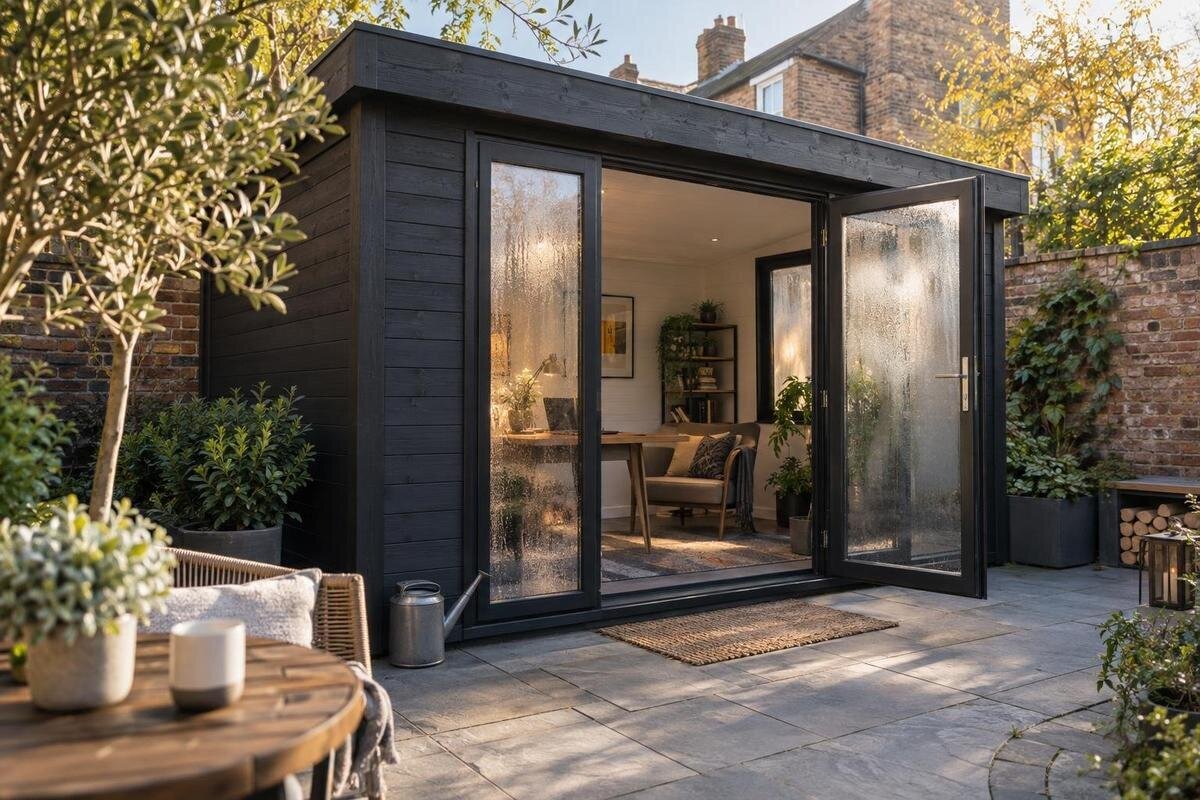
Where a shed has a glazed panel, water on the room-facing surface can be condensation just as it is on a wall: the glass may be cooler than humid indoor air. Wipe an accessible inside surface and note whether it returns as the shed cools. Droplets on an outside face are exposed to outdoor conditions and do not, by themselves, show that water is entering the shed. If moisture is between sealed layers, behind a frame or otherwise inaccessible, do not take the panel apart; contact the supplier or a qualified glazier to identify what is happening.
Glazing is a separate purchase decision from ventilation. A clear panel does not necessarily open, and a door or window shown in a photograph may not be included in the version you order. Check the current specification for the number and type of panes, operating parts, seals and optional extras; if a particular detail affects how you will manage air, ask for confirmation. When reviewing the Modano garden shed listing, rely on its stated configuration, not the model name. Whether an opening is operable also affects how you can air the shed and access surfaces for cleaning, so confirm those details before comparing alternatives.
Plan the storage layout to allow air movement
The interior layout can either leave surfaces exposed to moving air or create pockets where dampness lingers. Avoid pushing boxes tightly against the walls and roof; leave space around belongings and keep vents and access points unobstructed. Cardboard resting on a damp floor can absorb water, so put clean, dry goods on suitable shelving where the design allows and inspect the underside of containers. Set wet tools aside to dry instead of closing them immediately into a crowded corner. These changes are reversible and can help show whether the problem improves without altering the shed.
Plan the arrangement against measured items, not an estimated capacity. Check the usable floor dimensions and door opening, and allow room to carry bulky equipment in and out. Confirm that shelving will not cover an opening or press stored belongings against a wall. A compact arrangement may hold the same items but make air movement and inspection harder. Use the Garden Tool Shed M listing to check published measurements and included features, then compare them with your own sketch. The product name alone does not establish storage capacity, construction or whether the layout suits your contents.

05
Confirm the details before placing an order
Base your decision on the exact product variant and its written information. Confirm overall and usable dimensions, door clearance, any stated roof overhang, whether a floor is included, the number and type of openings, materials, finish and any parts supplied separately. Check that the details refer to the item you are ordering rather than a similar image or family name. If managing condensation is a priority, ask specifically what ventilation is built in and what maintenance the maker requires. Do not treat broad phrases such as weather-resistant or ventilated as proof that moisture cannot form.
Clarify the practical parts of ordering too: what is included in delivery, what site preparation is expected, whether assembly is included or arranged separately, how the structure must be cared for and how to obtain replacement parts. Read the applicable terms for any warranty or service rather than assuming one applies. Keep written answers to questions that affect your choice. The Garden Tool Shed S listing can be compared on these points, but its name is not a specification; use the current product page and confirmation from the seller before placing an order.
Practical remedies for an existing garden shed
For an existing shed, use a simple sequence: remove wet or moisture-sensitive belongings, wipe accessible droplets, deal with wet gear and containers, then ventilate when outdoor conditions are suitable. Give surfaces time to dry and note whether water returns, where it appears and after what conditions. A small moisture absorber may help with a limited amount of residual humidity if used according to its maker’s directions, but it will need checking or replacing and cannot stop a leak or continuing wet source. Avoid relying on an absorber alone to mask a recurring problem.
If condensation persists after likely sources are removed and the space is being aired appropriately, revisit the roof, walls, base and storage layout. If water enters after rain, a component stays wet or damage is developing, consult the product supplier, installer or a suitably qualified professional. Keep vulnerable belongings somewhere dry until the cause is understood. For a new purchase, use the same checks before ordering: identify the moisture risk, read the exact specifications and choose a structure whose documented arrangement matches the intended storage, rather than expecting a model name or single added feature to solve the problem.
Frequently asked questions
Why is my garden shed damp in the morning?
Surfaces can cool overnight while the air inside still contains moisture. That moisture may form droplets on the roof, walls, windows or stored items. If dampness appears in one spot after rain, or at the base, look for water entering from outside as well.
Can ventilation alone prevent condensation?
Ventilation can help remove moist air, particularly when outdoor conditions allow the shed to dry. It will not stop a leak, water pooling around the base or moisture brought in on wet equipment. Keep openings clear and consider how the space is used.
Is condensation on a shed window a leak?
Droplets on the inside face of a window can be condensation from humid air meeting cooler glass. Water on the outside face does not by itself show that rain is getting in. If moisture is trapped between layers or is inaccessible, ask the supplier or a qualified glazier.
Will a moisture absorber fix a damp shed?
It may help manage a limited amount of residual moisture when used as directed, but it cannot stop water entering or remove an ongoing source such as wet gear. Check and replace it as its manufacturer instructs, and investigate recurring dampness.
What should I confirm before ordering a garden shed?
Check the exact model’s dimensions, included floor and openings, material and maintenance information, base requirements, delivery and assembly arrangements. If ventilation matters to your choice, ask what openings are actually included rather than relying on photographs or the model name.
The most useful response to condensation is to identify its source before changing the shed or buying a remedy. Reduce moisture brought in on wet items, allow air to move through the space when conditions suit, and investigate signs of water entering from outside. If you are ordering a garden shed, base the decision on its documented openings, materials, care and site requirements—not assumptions drawn from its name or images.
