
Garden Shed Doors That Stick: Seasonal Movement and Adjustment
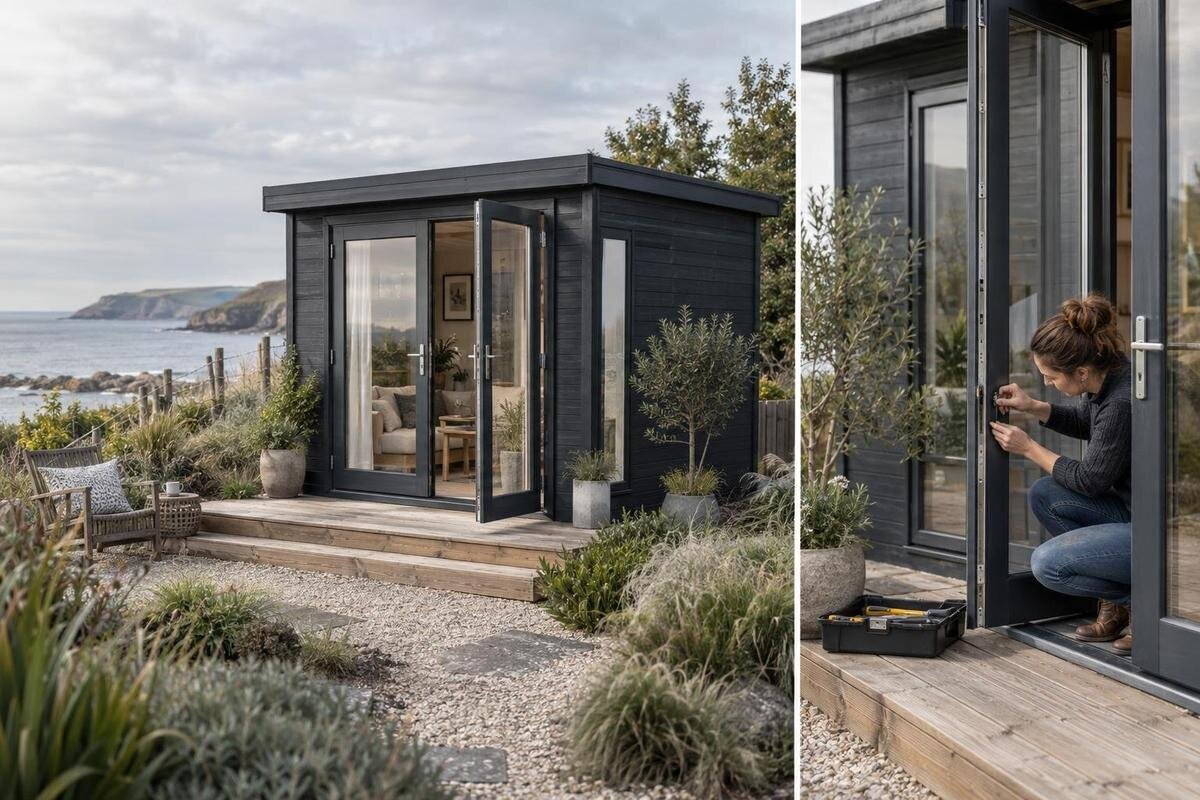
Garden-shed ownership
A garden-shed door that sticks after a change in weather can tempt you to push harder or trim an edge. Neither is a reliable first response. The catch may come from moisture-related movement in timber, but loose hinge fixings, a shifted frame, a latch out of line or something obstructing the doorway can feel similar. Find where resistance begins, inspect the door and its surroundings, then make only an adjustment supported by the shed maker's instructions. A brief record of when the problem appears can help distinguish a seasonal pattern from a fault that needs repair.

Why garden-shed doors stick as seasons change
Timber can take up or lose moisture as conditions change, and a door leaf and its frame may not respond in exactly the same way. That can alter the small clearances around the door, especially where parts are exposed differently. A door may feel tighter after a wet spell, during a dry period or as temperatures shift. This is one explanation for garden-shed door sticking, not a universal diagnosis: sheds differ in materials and construction, and a door's behaviour also depends on its condition and installation.
Seasonal timing is useful, but it is only one clue. A door that rubs at the same edge during a particular weather pattern may be reacting to movement; a new catch after a knock, repeated slamming or work around the shed suggests other possibilities. Loose hinge fixings, a shifted frame or a latch out of line can feel similar. Note when the problem started and whether it changes as conditions change. If it persists in different weather or gets worse, inspect the hardware and structure rather than assuming it will pass with the season.
Find the exact point of contact
Clear the approach, then try opening and closing the door slowly with a light hand. Do not shoulder it, yank the handle or slam it to make it close. Notice whether resistance begins while the door is moving, only near the end of its travel, or when the latch engages. Look along the top, bottom and sides for a narrow gap, fresh scuffs, polished spots or paint rubbed from an edge. The location of a mark is more useful than a general impression that the door feels tight. Keep fingers clear of the hinge side, and do not inspect a loose door without support.
Make a note or take a photograph before touching any fixings; it can help if you need a repairer or are comparing a replacement. If you are considering another shed, ask how its door is fitted, what clearance it needs and whether owner-adjustment instructions are available. The Verdana 1 garden-shed page gives you a specific model to ask about, but its name does not establish the door arrangement or adjustment method. Confirm those details for the exact product rather than assuming they match your current shed.
Read the gaps and check the frame
With the door closed, look at the gaps around it and note whether they are roughly even or taper towards one corner. A gap that narrows gradually along one side points to a different issue from a single scrape at the bottom edge. Look at the frame as well: do the side members appear straight, are the corners and joints intact, and does the doorway seem to have changed shape? Check that nothing loose or trapped at the threshold is touching the door. One mark alone cannot tell you whether the frame has moved, so compare the door, frame and opening together.
If the whole frame appears out of line, a hinge adjustment may hide the symptom without correcting its cause. Do not lift, pack or re-level a structure by trial and error; a competent installer can assess movement in the base and frame. When ordering a new shed, ask for the exact model's site-preparation, base and assembly guidance before choosing a location. The Verdana 2 garden-shed page is a model reference for that enquiry, not evidence of any particular base design. Ask the supplier or installer to confirm the requirements for the product you are considering.
Inspect the hinges and their fixings
With the door safely supported, inspect the visible hinges and their attachment points. Look for a screw that has backed out, a hinge plate that shifts as the door moves, a bent-looking part, corrosion or timber that appears crushed or split around a fixing. If another person moves the door slowly while you watch, both of you should keep clear of pinch points and stop if the door feels unstable. A screw that spins without tightening or a hinge pulled away from the frame is not a cue to drive in a larger screw at random. The timber or hardware may need a proper repair.
Do not assume every hinge offers the same adjustment, or that the door should be moved by loosening all its fixings. A hinge can carry significant weight; taking it apart may let the door drop or twist. Follow the product instructions, and leave the work to a competent person if the door is heavy, unstable or difficult to support. If you are comparing a replacement, ask what hardware is supplied, which parts can be adjusted and where to get the correct instructions. The Durano model page identifies a product for that enquiry; verify the details with the supplier instead of inferring them from the name.

Make small, instruction-led adjustments
Adjust only after locating the catch and finding a clear instruction for the actual hinge or fitting. Photograph its original position, then change one thing at a time and keep each movement small. Use the right tool and a controlled hand; do not force a screw that resists or keep turning once a fixing is secure. If the instructions describe an adjustment screw, use only the specified method. Do not loosen several hinges together, remove a hinge or try to hold a heavy door in position alone. If the instructions are missing, contact the supplier or a repairer rather than experimenting.
After each permitted change, close the door slowly and observe the same point you noted earlier. Check whether the gap is more even and whether the latch meets its catch without pressure; a smoother swing is not enough if the door still fails to close securely. If rubbing moves to another edge, the adjustment may be masking a frame issue. Do not plane the door, enlarge holes, bend metal or add improvised packing as a first fix. For a product you may buy, ask what adjustments are allowed: the Veltor 1 model page is a reference for the enquiry, not an adjustment guide.
Separate latch trouble from rubbing
If the door swings freely but resists only as the latch reaches its receiver, the latch alignment may be the issue rather than the door edge. Check whether the latch meets the opening cleanly when the door is in its natural position. A loose handle, catch or mounting screw can also make operation feel stiff. Do not pull hard on the handle or move the receiver plate straight away. If the door has sagged or the frame has shifted, relocating the latch could conceal the misalignment and leave the main problem unresolved. Note what happens at the moment the latch engages.
Check whether a seal, stop or loose piece around the edge is folded, displaced or trapped, but do not remove it to create extra space. The correct position of these parts varies by design, so follow the maker's guidance before moving or replacing a fitting. For a new shed, ask for model-specific information about its latch and any replacement hardware. The Orello 1 model page is a reference for those questions; confirm what is actually supplied and supported before you order.
Know when to stop and call a repairer
Stop and contact a competent repairer or installer if the door is sagging markedly, a hinge is pulling out, the frame is visibly moving or the gap is changing sharply. The same applies if timber around the fixings is damaged, the door cannot be held safely or a small adjustment made according to the instructions has not helped. A door that no longer latches can leave the shed unsecured, so do not keep forcing it shut as a workaround. Explain where it catches, when it occurs and what you have checked; that information helps distinguish a hinge fault from movement in the frame or base.
Some problems need a repair to the frame or its support, not another turn of a screw. An on-site assessment is the safer way to separate them. If a repair quote leads you to consider replacing the shed, ask about assembly guidance, door adjustments and how to obtain matching hardware for the exact model. The Modano 1 garden-shed page can identify the product you are asking about, but the model name alone does not confirm service, parts or instructions. Get those points answered before deciding on replacement based only on the door.
Recheck after the weather changes
Once an adjustment made according to the instructions has helped, check the door over normal use rather than repeatedly changing it. Note the date, which edge caught, the weather conditions in broad terms and what was adjusted. If the gap changes, a photograph from the same position makes it easier to compare. After a noticeable shift between wetter and drier or warmer and cooler conditions, check the movement and latch again without forcing either. If the same catch returns, your notes make the pattern easier to explain. If a new point begins rubbing, revisit the inspection instead of repeating the previous adjustment.
Keep product instructions with your notes, including the model identity and fitting details, so you can ask a supplier or repairer a precise question. If comparing a new shed, include the availability of clear maintenance and adjustment guidance in your enquiry. The garden tool shed M model page can identify the product you mean, but do not assume a listing contains every care instruction or that another model uses the same hardware. Use the instructions for the exact model once confirmed.

Reduce avoidable strain around the doorway
Everyday use can add strain to a door that already has little clearance. Keep the floor and approach clear so stored items do not press against the inside of the door or obstruct its path. Avoid slamming it, hanging weight from it or bracing it open against a gust unless the shed's instructions allow that use. Use the intended catch or stay if one is supplied; an improvised prop may push the door or frame out of line. These habits will not correct a shifted structure, but they can prevent knocks from being mistaken for seasonal movement.
Before ordering a replacement, consider the route to the doorway and the space needed to open it fully, not just where the shed will sit when closed. Confirm the stated opening arrangement, clear opening dimensions and site or assembly requirements for the exact model; photographs and a product name are not enough to plan access. The garden tool shed S model page is one product reference for those questions. Check the supplier's confirmed details against the intended position and the way you need to use the shed.
Decide whether repair or replacement makes sense
A local rub mark, secure hinges, a sound frame and a door that responds to a permitted small adjustment may point to a repairable alignment issue. Repeated sticking does not automatically mean the shed must be replaced, but do not dismiss it as weather if it keeps worsening, returns after correction or comes with movement in the frame. Consider the whole pattern: where the door catches, whether the latch works, the condition of the fixings and whether the structure stays stable. A competent repairer can help assess a problem that goes beyond the hardware.
If replacement is the practical choice, compare confirmed door details rather than relying on broad labels: how the door moves, the opening available for stored items, what adjustment instructions are supplied and what hardware or parts can be obtained. Check site-preparation and assembly information before ordering, and allow for the door's full opening path at the chosen position. Ask the supplier to clarify anything missing from the product page. The aim is not to buy a shed that never moves with the seasons, but to understand its installation, fittings and adjustment process well enough to manage ordinary changes without forcing the door.
Frequently asked questions
Why does my garden-shed door stick only when the weather changes?
In a timber shed, changes in moisture can alter how the door and frame fit. The timing is a clue, not proof: loose hinges, a shifted frame, a latch problem or an obstruction can cause similar resistance.
Should I adjust the hinge or the latch first?
If the door catches along an edge as it moves, inspect the hinges and frame first. If it swings freely but resists when the catch engages, check the latch. Look for frame movement before changing either fitting, and follow the maker's instructions.
Can I plane or sand the edge of a sticking shed door?
Do not remove material as a first response. A seasonal change in clearance may reverse, and trimming can leave a larger gap or damage the finish. Find the cause first and ask a competent repairer if the door or frame appears distorted.
What if tightening a hinge screw does not help?
Do not keep tightening it or replace it with a larger screw at random. A fixing that spins may indicate damaged timber or hardware, and the door may need support during repair. Stop if the door is unstable and have the attachment assessed.
Will a door adjustment last all year?
Not necessarily. If movement in the door or frame is related to changing moisture, the clearance may shift again. Check it gently after notable weather changes, keep a brief record and repeat an adjustment only if the instructions support it and the cause is clear.
Seasonal timing gives useful evidence, but the point of contact and the condition of the frame, hinges and latch determine what to do. A gentle inspection, an instruction-led adjustment and a later check are safer than pushing harder or trimming timber. If the frame moves, the hardware will not hold or the door remains unsafe, stop and seek a competent repair rather than treating every recurrence as a hinge problem.
