
Greenhouse or cold frame: two ways to extend your garden season
Bloomcabin garden knowledge / season extension
Greenhouse or cold frame: two ways to extend your garden season
Both capture light. A cold frame keeps warmth close to the soil, while a greenhouse creates walk-in airspace for plants, work and longer crops. The larger option is not automatically better. The key question is how much of the garden season you want to manage.
Cold frameGround-level warmth
GreenhouseWalk-in growing space
The real questionHow much season?
01 / The starting point
Decide how much climate control you need.
Cold frames and greenhouses can extend a growing season, but neither is a weatherproof promise. Both use solar energy, shelter plants from wind and soften the transition between outdoor weather and cultivation. Their different dimensions change almost everything: how quickly air warms, how fast it cools after sunset, which plants fit, how you water and how closely you need to manage conditions.
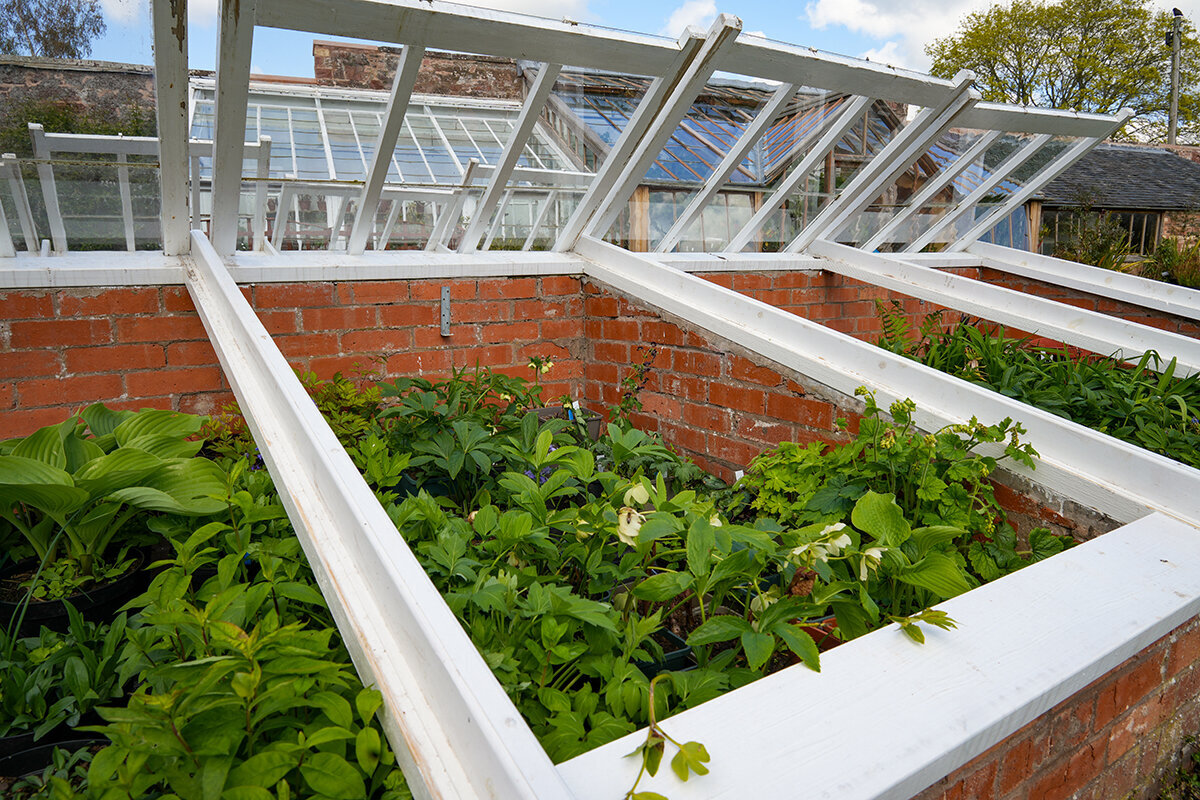
Think of a cold frame as a transparent lid over a clearly defined piece of garden. It sits close to the ground, is normally unheated and works especially well for cool-season crops, hardening off young plants and short periods of protection. You step into a greenhouse instead. Its height and larger air volume make room for benches, seed trays, taller crops, tools, airflow and a more organised routine.
For first attempts with lettuce, radishes, spinach or a gentler move from a windowsill to the garden, a cold frame is highly focused. Anyone raising many seedlings, tending tomatoes and cucumbers for months, or wanting to work among plants in changeable weather will find a different level of gardening infrastructure in a greenhouse.
Greenhouse / the taller definition
A transparent structure with enough height for a manageable working climate.
A garden greenhouse is an enclosed, walk-in growing space with a transparent skin, a door and usually roof ventilation. It may be unheated, heated occasionally or climate-managed technically. The important difference is not glass or plastic alone, but usable interior volume. Warm air can rise, people can move about, and propagation benches, shelving, watering and tall plants can be arranged practically.
Cold frame / the low definition
A shallow box with a transparent, usually opening cover.
A cold frame sits directly on soil, on a garden bed or as a cover for a raised bed. Its sides may be timber, masonry, metal or durable panels, with a transparent lid above. It is normally unheated and ventilated manually or with an automatic opener. Its low height concentrates solar warmth near the soil and young plants. Further basics are available in the German LWG guide to small greenhouses It discusses siting, foundations, ventilation and practical working routes.
Retail names can overlap. A heated cold frame is sometimes called a hotbed; a polytunnel, by contrast, covers a row or larger ground area. For a home-garden decision, a simple test is usually enough: if you lift a lid from outside, you are using a cold-frame principle. If you open a door and move inside the protected area, it is a greenhouse.
Enclosed does not automatically mean frost-free. An unheated greenhouse and a cold frame both depend on sun, stored soil warmth, insulation, wind, ventilation and the severity of the night. Without extra protection, neither should be treated as reliable winter accommodation for frost-sensitive crops.
02 / Climate in a cold frame
LOW
Warmth stays close to the ground.
A cold frame connects directly to the bed beneath it. Light passes through the cover and warms air, soil, containers and plants during the day, while the closed structure also slows wind. Because the air volume is small, conditions change quickly. A bright but cool spring day may already require ventilation, while a clear night can remove stored warmth rapidly.
What a cold frame is particularly good for
Its strength lies in a few clearly defined jobs. You can sow hardy leafy vegetables earlier, carry salad crops further into autumn, protect individual plants from cold wind or gradually introduce indoor-raised seedlings to real sun and fluctuating outdoor temperatures. Crops grow directly in the soil or stand in trays and pots. Open the cover in good time on warm, sunny days.Notes on mini greenhouses and raised-bed covers The German LWG guide describes small protected spaces and the ergonomic benefits of a raised-bed cover.
- Well suited Cut-and-come lettuce, spinach, rocket, Asian greens, radishes, early kohlrabi, hardy herbs, brassica seedlings and trays for hardening off.
- Daily routine Check the forecast, open the lid before heat builds up, monitor substrate moisture and close the cold frame again before evening cooling.
- Structural limit Plant height and reach remain limited. Crops that need tying in, frequent picking or permanent tall growth soon outgrow the useful space.
- Design value A simply edged cold frame can blend into a raised bed or vegetable garden without looking like another building.
03 / Climate in a greenhouse
A greenhouse gives plants and people more room to develop.
Height is not merely an architectural luxury. It creates a larger airspace, keeps foliage away from the roof and gives warm air room to rise before leaving through roof vents. It also enables a complete growing system: raised benches for seed trays, shelves for supplies, a clear path, supports for tomatoes and cucumbers, and a door through which soil, pots and harvest baskets can be carried.
That does not make a greenhouse effortless. A larger transparent enclosure absorbs substantial solar energy on bright days and also presents more surface for heat loss at night. Ventilation, shade, watering, hygiene and seasonal rearranging are therefore part of its operation. Even when outdoor air is cool, direct sun can overheat the interior. Consistent ventilation throughout the growing season matters more than trapping warmth for as long as possible.German LWG notes on raising successful seedlings They help place the light and temperature needs of sensitive species in realistic context.
For ambitious home gardeners, the benefit is range. A well-sited greenhouse can support propagation, carry sensitive crops through unsettled spring weather, grow tomatoes and cucumbers in summer with steady ventilation, and extend herbs or leafy vegetables into autumn. The Classic aluminium greenhouse turns this useful workroom into a durable aluminium structure with selectable dimensions, ventilation options and glazing suited to its intended use.
04 / Heat behaviour without false certainty
Both collect sun. They handle it differently.
A useful comparison is not a promised temperature increase. What matters is how light, air, soil warmth, moisture and ventilation move through each structure, and how quickly cloud, wind or nightfall change the climate that has developed.
Cold frame
Solar warmth at soil level
Greenhouse
Walk-in volume above the garden
Light entersSoil storesLid vents
Light entersAir risesRoof vents
How a cold frame behaves
Light reaches a small transparent surface and warms air, plants and soil. Much of this useful warmth remains close to the bed. When the lid is lifted or propped open, heat can escape immediately: simple, but dependent on attention and sometimes abrupt. The small air volume cools quickly after sunset. Soil, stones or containers of water may soften fluctuations, but they do not remove the risk of damaging cold.
How a greenhouse behaves
Light passes through a larger transparent shell and warms plants, benches, ground surfaces, containers and air. Warm air tends to collect higher up, while the interior also offers more room for airflow and adequate plant spacing. Roof vents, a door, opposing openings and shade help with management. Heat gained by day still falls at night. An unheated greenhouse protects plants, but is not automatically warm enough for every crop or every South African region.
Measure climate at plant height Place a reliable thermometer where crops are growing rather than trusting how warm it feels when you walk in. Heat stress, night cold, high humidity or dry substrate can harm plants before a brief inspection reveals the problem. A German garden academy also notes that ventilation can matter more than heating and that temperatures above 25 °C can impair growth and yield.Explore the garden year, cold frames and ventilation This German resource sets seasonal jobs and active climate management in vegetable growing into context.
05 / Crops and growing duration
Choose according to what you want to grow, and for how long.
A cold frame favours low plants and short transitions. A greenhouse earns its footprint when height, quantity, staggered sowings or a longer cropping period become important. Neither replaces an open bed, but both can add useful weeks to it.
- — Cold frame: A dependable place for lettuce, radishes, spinach, rocket, hardy seedlings and seed trays moving gradually from the house into the garden.
- — Cold frame: A considered finish for nearly harvest-ready leafy crops in autumn, not a place to force strong new growth during the darkest weeks.
- — Greenhouse: A propagation room for several trays, where pricking out, labelling, watering, potting on and temporary storage happen at comfortable height.
- — Greenhouse: The better option for tied tomatoes, cucumbers, aubergines and larger container plants, provided light, temperature, watering and air exchange meet their needs.
- — Both: A sheltered place where young plants can gradually adapt to sun, wind and changeable spring conditions before planting out.
- — Neither alone: A substitute for appropriate varieties, site-suitable planting times and regular crop checks.German NRW plant-protection guidance uses whitefly as an example of why ventilation, shading and plant health need to be considered together.
06 / Access shapes the habit
Daily movements are fundamentally different.
A cold frame asks you to kneel, bend over a low edge, lift the lid and reach to the back of the bed. With a small area and short checks, this closeness can be appealing. Mobility, back comfort, safe lifting and everyday work with seed trays still belong in the decision. A heavy transparent lid can be awkward in wind and become very hot after full sun.
Most greenhouse work happens standing up. Benches reduce repeated bending, a central path makes carrying watering cans and crates easier, and roof vents release heat without exposing the entire crop area. In return, there is a broader routine: operate doors and windows, check water, shade, clean glazing, tie plants in and watch closely for pests or disease in an enclosed growing space.
↘EnterWalk inside or work outside.
↑ReachBench height or rear bed edge.
⌒VentilateRoof vent or raised lid.
≋WaterMonitor systematically or precisely.
□OrganiseRoom care or bed care.
Practical consequence: A greenhouse can be planned around standing, carrying, setting things down and turning with a crate in hand. For a cold frame, a width reachable from the side, a secure lid support and enough opening space are decisive. A raised-bed cover can improve working height. If frequent kneeling or lifting is uncomfortable, this operational difference often matters more than the purchase price alone.
07 / Space, wind, anchoring, durability
Plan for light, safe access and the real weather in your garden.
A cold frame can stand beside the vegetable garden or finish a raised bed. It needs sun in the seasons when it is to work, a firm level base, free drainage and enough room to open the cover safely. Buildings, tall hedges and trees should not cast deep shade during important spring and autumn hours. Also check that the lid can be handled safely in wind and that you can reach the whole crop area comfortably.
A greenhouse deserves slower site planning. Measure not only its footprint, but also door clearance, paths, water access, roof drainage, distance from trees and room to move a wheelbarrow. Observe sun and prevailing wind over time. An exposed coastal site has different demands from a protected urban garden, a highveld site with winter frost or a subtropical garden. For a permanent structure, foundations, anchoring and assembly to the manufacturer’s instructions are not minor details.
For a high-quality, durable structure, choose a model and anchoring arrangement suited to the site. Clarify assembly requirements and local conditions early. The Classic aluminium greenhouse overview is a useful starting point for comparing dimensions, construction and spatial possibilities for your garden.
08 / A garden year where you live
A seasonal sequence, not a promise of year-round tomatoes.
Growing windows differ greatly between the Cape, Highveld, coastal and subtropical regions. Read the following sequence as a set of tasks, not as fixed dates. Local frost, available light, variety choice and weather on your property can shift every phase.
Late winterStart and protect
Early springHarden off and ventilate
Late springPlant out and train
SummerShade and water
Autumn / early winterHarvest and protect
In late winter, a greenhouse can organise propagation where light, temperature and ventilation are sufficient. On favourable days, a cold frame can wake hardy leafy crops or hold cold-tolerant seedlings. In early spring, harden seedlings off gradually and ventilate generously in sun. Meanwhile, the greenhouse provides room for pricking out, potting on and protecting sensitive plants on unsettled nights.
In summer, a cold frame with its lid permanently open can serve as a bed or temporary seedling station. In a greenhouse, air exchange, shading and even watering need particular attention. In autumn, the low box suits ripening salads and hardy leafy vegetables on cool nights. A greenhouse can extend herbs and vegetables, shelter selected containers and receive new seed trays. The combination is often compelling: raise plants under cover, grow outside, then protect the late harvest close to the ground.
09 / Cost is only one kind of commitment
Maintenance effort belongs in your budget too.
A cold frame can be a manageable and highly useful garden project. It needs less material, has a restrained visual presence and brings limited maintenance. Its real cost is attention precisely when weather changes quickly. During a bright spring week, the better cold frame belongs to the person who ventilates in time each morning and closes it again in the evening.
A greenhouse needs more planning and a higher initial investment, but gathers many garden jobs in one place. Accessories, supply and long-term care gain importance: gutters, glazing cleaning, window openers, shelving, shading, drip irrigation and, where needed, heating or air circulation must suit actual use.
- Cold-frame care Check hinges, lid supports, seals and glazing; remove leaves and debris safely; keep mechanisms moving freely; renew substrate and remove diseased plant material consistently.
- Greenhouse care Clean glazing and drainage, inspect seals and moving parts, maintain ventilation and watering, monitor condensation and clean work surfaces hygienically between crop cycles.
- Assess energy realistically An unheated greenhouse is not a heated winter house. If you want to add warmth, clarify energy demand, running costs and crop aims before choosing plants or equipment.
- Ways to expand Cold frames can be repeated on several beds as demand grows. A greenhouse develops more inside: benches, shelves, drip irrigation, shading and thoughtful propagation routines can be added step by step.
10 / The decision
Choose for your everyday garden life, not an abstract ideal.
Use this comparison as a decision aid, not a ranking. A cold frame is not an inferior greenhouse, but a precise response to a smaller task. A greenhouse is not automatically the more advanced choice. It becomes right when working height, crop diversity, crop duration and repeated use genuinely justify a permanent transparent enclosure.
| Decision factor | A cold frame is especially suitable when … | A greenhouse is especially suitable when … |
|---|---|---|
| Crop goal | You want lettuce, radishes, hardy seedlings and a compact station for hardening off. | You want to raise many plants, grow tall crops, house containers or tend several crop types in parallel. |
| Available space | You have room the size of a bed, but do not want another walk-in structure in the garden. | You have room for the structure, access paths, workspace and a site with useful spring and autumn sun. |
| Access and posture | Kneeling, bending and safely lifting a lid are comfortable, and visits will be brief. | You want to work standing up, carry crates and reach plants on benches or from several sides. |
| Climate management | You prefer a simple routine of lid, thermometer and moisture checks for a small area. | You are ready to manage ventilation, watering, humidity, shading and plant spacing regularly in a larger interior. |
| Permanence | You seek a low, integrated garden feature that is relatively easy to adapt or move. | You want a durable design anchor and the basis for a lasting growing system. |
| Future development | You may later add another box to a different bed as your needs grow. | You expect your gardening practice to become more varied and want to organise that development spatially from the start. |
Choose a cold frame
When protection should stay targeted.
You mainly need a ground-level protected zone for lettuce, young plants and seasonal transitions, with a small footprint and direct connection to the bed.
Choose a greenhouse
When the growing room itself brings joy.
You want standing-height work, organised propagation areas, tall plants, more capacity and a structure that can develop with serious garden plans. Discover the Classic aluminium greenhouse as a high-quality starting point for a lasting, walk-in growing space.
Choose both
When each structure has its own job.
Use the greenhouse for propagation, tall summer crops and organised workflows. The cold frame by the vegetable bed can then serve for hardening off, cool-season leafy crops and targeted protection in transition periods.
11 / Frequently asked questions
Small questions with big consequences for the season.
Is a cold frame essentially a small greenhouse?
In everyday language it can be described that way, because both use transparent surfaces and capture solar warmth. For practical garden planning, however, the difference is considerable: a cold frame is a shallow, low structure operated from outside. A greenhouse is an enclosed walk-in growing space with substantially greater air volume, more plant height and broader working possibilities.
Does a cold frame keep plants alive safely in frost?
It can protect cold-tolerant crops from wind, rain and brief cold, but it does not guarantee frost-free conditions. The result depends on plant type, how well the lid closes, sunlight, wind, soil moisture, night minimum temperature and extra covering. Even with cool outdoor air, ventilate on sunny days so damaging heat does not build up.
Does an unheated greenhouse extend the garden season?
Yes. It provides shelter, a more manageable propagation area and longer transition periods in spring and autumn. It still follows outdoor weather and available daylight. Winter growing for sensitive plants may require heating, additional light, careful ventilation and a realistic assessment of ongoing costs.
What is the best first use for a cold frame?
Hardening off young plants is a useful and relatively manageable start. Begin with hardy lettuces or brassica seedlings, watch the ventilation pattern and use a thermometer. Once you know how your cold frame responds to sun, wind and clear nights, you can add early and late salad crops.
What should I consider when choosing a greenhouse?
Start with the site and the crops you want. Then allow enough workroom for paths, benches, watering and ventilation. Square metres alone are not enough: door access, roof vents, glazing, anchoring, drainage, local wind conditions and everyday access determine long-term satisfaction. The aluminium greenhouse overview shows how the walk-in growing-space idea can scale from compact to more generous garden formats.
Sources and further information
Practical knowledge for better planning.
The German horticultural resources support ventilation, propagation, crop management and plant health; the Cape Town guide supports municipal approval checks. Adapt general advice to your site, weather and local requirements.
More from Bloomcabin: Greenhouses and conservatories · Bloomcabin blog · Classic aluminium greenhouse
- Bavarian State Institute for Viticulture and Horticulture – Small greenhouses
- LWG – Urban gardening: mini greenhouse and raised-bed cover
- LWG – Raise seedlings yourself or buy them?
- LWG – Vegetables through the garden year: seasonal work and cold frames
- North Rhine-Westphalia Chamber of Agriculture – Whitefly in small greenhouses
- City of Cape Town – Guide to minor works
Compact aluminium mini greenhousesCompact aluminium mini greenhouses
Classic aluminium greenhouseClassic aluminium greenhouse
Bloomcabin / plan with purpose
Choose how much of the garden season you want to step into.
Compare dimensions, site requirements, construction and the crops that truly shape your garden before planning your next protected growing space.
