
Grey mould rarely starts with the whole greenhouse.
Plant health / South Africa
Grey mould rarely starts with the whole greenhouse.
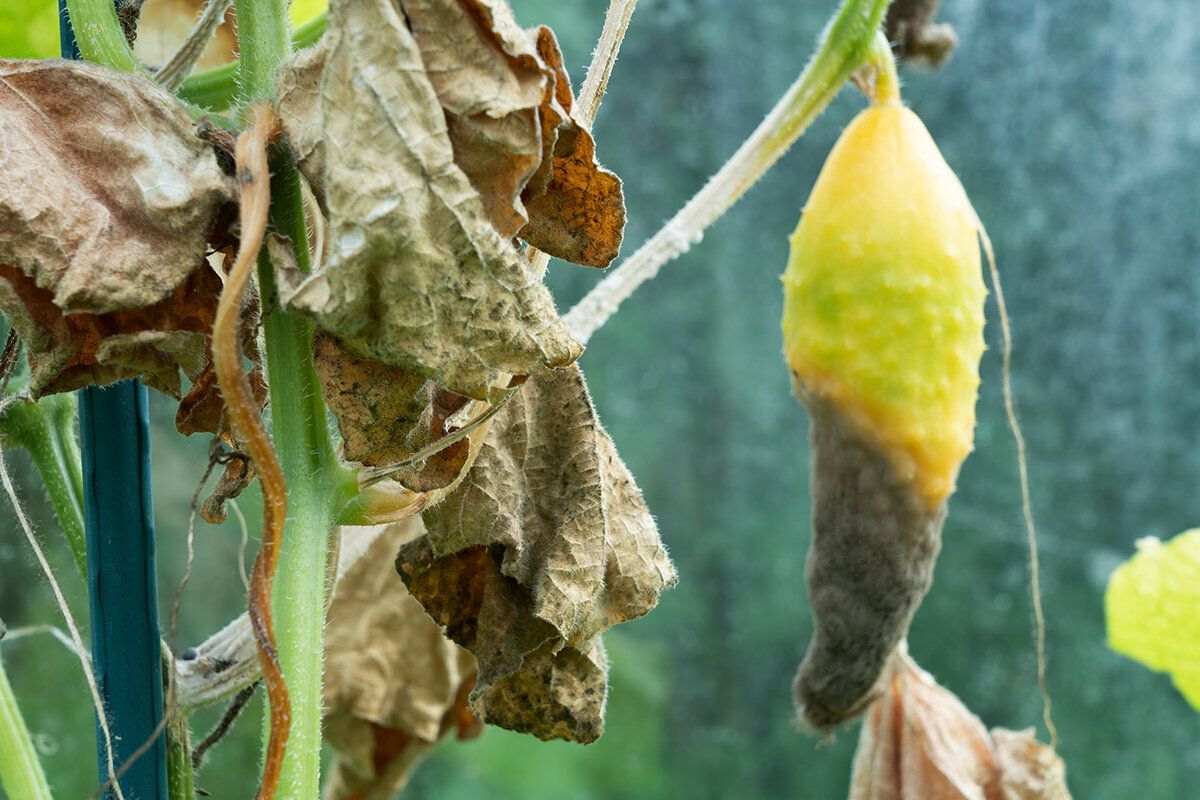
Botrytis often finds what is overlooked first: a spent flower in a leaf axil, a damaged stem, wet leaves touching, or a rotting young fruit. After cool, damp nights, these small weak points can become a starting point.
Botrytis cinerea is widespread. When spores meet susceptible tissue and prolonged surface wetness, the familiar grey spore growth can appear quickly. The useful response is not hurried spraying, but a calm sequence: assess the symptom, contain it, remove material, dry the crop, then improve prevention.
Tonight’s principle: Do not leave dead, damaged or wet material between plants while the greenhouse cools down.
First response / act before diagnosis becomes a debate
Move calmly. Remove precisely.
A fluffy coating does not automatically prove Botrytis. Tissue with typical grey spores, soft collapse or an advancing lesion should still be handled carefully. An open basket, vigorous shaking or washing down can spread spores and infected particles around the greenhouse.
- 01
Pause routine work.
Do not keep pruning, harvesting or brushing through neighbouring plants before dealing with the suspicious area. - 02
Bag it at the plant.
Place a bag or sealable container beside the plant before cutting. Move infected material enclosed, not exposed. - 03
Remove visibly infected tissue completely.
Use clean, sharp tools and carefully cut away the flower, fruit or leaf, including soft collapsed areas. - 04
Read the surroundings, not only the lesion.
Look for condensation, wet foliage, still air, tight leaf contact and plant debris on benches and floors.
A sound structure with accessible ventilation and clear working routes is offered by the Classic aluminium greenhouse. Daily crop care remains decisive: you should be able to inspect plants closely, clean surfaces easily and respond to weather changes without moving every plant.
Identification / do not call every coating Botrytis
Read the pattern first, then respond.
Grey mould often appears as a dusty, fluffy grey to grey-brown coating on affected flowers, leaves, stems or fruit. From a distance, normal ageing, other moulds, cold damage and root-related wilt can look equally worrying. Consider the tissue, its position and the recent climate together.
More typical of grey mould
Fine grey, lightly dusty spores on soft or dead tissue; browning flowers; lesions beginning at an old flower, wound or damaged fruit; or a stem area where a leaf, clip or petal remained damp for some time.
Grey spores are a strong indication, especially where infection begins on ageing tissue and moisture has persisted. They do not replace careful assessment of the whole picture.
Collapse without visible fluff
Watery brown or pale-brown tissue can occur before Botrytis visibly produces spores. It can also indicate another rot, mechanical injury, cold damage, root trouble or bacterial disease. Check whether the crown, roots, leaf margins or only one wound are affected.
If valuable plants, young plants or food crops are affected, isolate the suspect plant and seek professional advice or plant diagnosis for unclear or recurring symptoms.
Normal senescence
A dry faded flower or evenly yellowing lower leaf is not automatically infected. It becomes an opportunity for Botrytis when it remains in a humid, shaded crop or sticks to fruit and leaves.
The practical distinction: remove normally ageing material during routine care. Carefully contain, bag and hygienically dispose of soft, spotted or fluffy suspect material.
Map of weak points – markers show risks, not proven infections.
1 / Spent flowers Ageing petals hold moisture against young fruit, leaves or stems.
2 / Leaf contact Closely touching leaves stay shaded and dry more slowly after watering or condensation.
3 / Pruning wounds Fresh cuts need clean work and prompt drying rather than prolonged dampness.
4 / Fruit damage Cracks, feeding damage and bruises create vulnerable areas, especially in damp weather.
5 / Plant debris Leaves, flowers and fallen fruit on benches or floors can continue producing spores close to the crop.
6 / Stem lesions Brown to pale-brown areas around wounds, clips or dying leaves should be checked promptly.
Where the fungus enters
Botrytis favours the places good greenhouse care already watches.
Botrytis colonises old, injured and dying plant tissue particularly easily. That does not make it harmless. Once established on a dead flower, wounded stem or soft fruit, spores can travel through air movement, splashing water, hands, clothing and tools.
In a home greenhouse, risks are often visible before disease is obvious. Tomato flower remains collect in leaf axils, while broad cucumber leaves overlap. Pelargoniums, fuchsias and begonias retain wilted flowers; strawberries can hold petals and ripening fruit in the same damp pocket. These are opportunities for Botrytis, not inevitable infections.
- Check after cool, overcast days. At midday the house may look fine, even though leaves and flowers were wet from evening well into morning.
- Work on healthy, dry plants first. Attend to suspect areas last, then clean hands and tools before touching healthy plants again.
- Keep floors and bench surfaces visible. Petals, leaves and spoiled fruit are immediately easier to spot on clear, clean surfaces.
The crucial interval / from evening until leaves are dry
Humidity matters. Surface wetness says more.
Relative humidity is a useful signal, but not a complete diagnosis. Risk rises when leaves, flowers and stems reach the dew point as temperatures fall and stay wet for a long time. Condensation on glazing is therefore more than a visual or housekeeping issue. It shows that moisture conditions have developed in the greenhouse and should be checked and corrected on cool plant surfaces too.
Late afternoon
Sunset
Night
Early morning
After sunrise
Water with drying time available
Water early enough for splashes and wet surfaces to dry before the evening temperature drop. Keep water at the root zone, not over leaves and flowers.
Temperature falls
Glazing, metal and plant surfaces cool quickly. Dense crops and still corners often lose warmth and air exchange first.
Condensation risk rises
Humid air meets cold surfaces. Leaves can become wet even without obvious drips or extreme daytime hygrometer readings.
Break the wet period
According to weather and equipment, use a balanced combination of gentle warmth, controlled ventilation and soft air circulation to dry plant surfaces.
Check and adjust
Inspect inside the crop, not only the glass. If it stays damp, adjust watering time, spacing, airflow or climate management.
There is no universal number of wet hours that reliably predicts infection for every crop, variety and temperature. Use this period as an observation routine: avoid a long, cool wet phase on sensitive tissue. Cornell guidance likewise highlights avoiding condensation on plant surfaces for Botrytis control.
A greenhouse with easy-to-use roof ventilation provides a good basis for daily climate control. The Classic aluminium greenhouse has roof vents; automatic window openers can support a more reliable everyday response. Weather observation and crop checks remain essential.
Spacing
Create air routes, not merely decorative gaps.
Position pots and grow bags so leaves do not permanently push into one another. Train tomatoes and cucumbers in time, remove low or diseased leaves and make space before flowering crops become a closed wall. A small circulation fan can reduce still, humid zones. It should move air gently through the crop rather than blast one plant continuously.
Watering
Water the root zone and protect the evening.
Drip irrigation, a gently directed watering can at the pot edge or other low-level methods keep foliage drier. Early watering lets unavoidable splashes dry; late watering can create a wet night. Match water volume to weather and plant demand. A humid, cloudy week needs a different rhythm from a bright, warm summer spell.
Pruning
Carry out clean work on dry crops.
Prune, pinch out and harvest where possible with dry foliage and clean, sharp tools. Avoid unnecessarily large wounds. Remove wilted flowers and yellow leaves before more extensive cutting. Where there are several plant groups, begin in the healthiest area and finish where suspect symptoms occur.
Season
Expect problems when light and drying power decline.
In South Africa, cool, wet periods can occur at different times depending on province, altitude and local weather. Monitor the actual greenhouse climate rather than copying a European calendar. During hot, bright periods, ventilation and, where needed, shading matter most; during cooler or humid spells, use controlled air exchange, circulation and modest warmth where available without chilling the crop.
For proactive climate management, consider the Classic aluminium greenhouse, particularly for its usable roof vents and the opportunity to include door opening and gentle air circulation in the daily routine.
Hygiene / the transport route matters
Do not carry the problem through the crop.
Removal works best when suspect material is contained from the moment it is found. Think of a short direct route from plant to closed waste container, not a walk through the greenhouse with an open harvest basket.
Dead flowers, diseased leaves and rotting fruit belong neither under the bench nor directly outside the greenhouse door, nor in an open compost container beside plants. They can remain a spore source.
At the plant→
Cut→
Contain→
Remove→
Reset
At the plant
Take a bag or sealable container directly to the affected plant before cutting.
This reduces handling and prevents material brushing against healthy leaves.
The cut
Remove diseased, soft or visibly sporulating tissue with a clean, sharp tool.
A clean cut is easier to monitor and avoids an unnecessarily large torn wound.
Containment
Put the material straight into the bag and close it before leaving the area.
Do not shake it, place it on a bench or carry it through the crop in an open harvest basket.
Disposal
Take waste out of the greenhouse promptly and dispose of it through available local household or municipal green-waste services.
Do not store rotting material immediately beside doors, windows or other ventilation openings.
Reset
First remove plant debris mechanically from secateurs and work surfaces. Then clean tools with a suitable product according to its instructions; clean hands or gloves before touching healthy plants again.
Physical cleaning comes first. Attached plant material can stop a cleaner or disinfectant reaching the surface reliably.
Make this sequence a weekly routine rather than saving it for outbreaks. Clear work surfaces, accessible paths and durable components make a greenhouse easier to maintain as a productive workspace. Explore the Classic aluminium greenhouse and plan its layout around how you actually grow, inspect, ventilate and clean.
Treatment / prevention after correction
Products may support control. They do not replace a clean, dry greenhouse.
When Botrytis is active, remove affected plant parts first and correct favourable conditions. Fungicides or biological plant-protection products may only be considered within an integrated approach to protect still-healthy tissue. An application cannot restore plant material that is already rotten or destroyed.
Task A
Use crop measures as the first treatment.
- Remove spent flowers, infected fruit, dead leaves and other plant debris immediately.
- Reduce surface wetness through earlier watering, controlled ventilation, suitable warmth and gentle air circulation.
- Increase plant spacing and consistently open damp, compressed areas within foliage.
- Carefully inspect neighbouring plants and the bench and floor below the affected point.
Task B
Choose plant-protection products precisely for the crop and local registration.
- Before use, verify the product’s current South African agricultural-remedy registration and authorised label for the crop, target organism, greenhouse setting and user category.
- Follow the whole label, including application, dose, protective clothing, ventilation, withholding period and permitted number of treatments.
- For repeated applications, consider resistance management and do not rely indefinitely on the same mode of action.
- Do not use a product simply because it is registered for another ornamental, vegetable crop or outdoor application.
Biological options: preventative, specific and registration-dependent.
Biological plant-protection products or antagonists can be one element in certain crops and production systems. Their value depends on the product, formulation, crop, timing, temperature, disease pressure and correct use. They are usually most useful before disease becomes well established and alongside hygiene and moisture management. “Biological” does not automatically mean a product suits every vegetable, ornamental or greenhouse crop, or is allowed for home use.
Conventional fungicides: a professional decision, not a default reaction.
Where a registered fungicide is professionally justified by crop value and ongoing pressure, selection must also account for possible resistance. Botrytis is known for resistance problems. Avoid improvised mixtures, altered doses and routine calendar treatments without a specific risk. Seek crop-specific professional advice for severe stem infection, several infection sites or recurring outbreaks.
Registration and label checks in South Africa: Verify that the product is registered through South Africa’s agricultural-remedy system, then follow its current authorised label. Confirm the crop, target organism, greenhouse setting, application, dose, protective measures, withholding period, treatment limits and any user restrictions. An overseas approval or old recommendation list does not establish South African registration.
When planning a growing space, consider window access, glazing, working routes and room for air circulation as one connected system. The Classic aluminium greenhouse combines roof ventilation with a clearly structured build, supporting an accessible, clean and considered greenhouse routine.
Recovery / check rather than hope
The crop is recovering when new sensitive tissue remains clean, plants dry reliably after watering and work surfaces stay free of fallen flowers, leaves and fruit.
During the next 72 hours
Check the original infection point and neighbouring plants daily. Remove new suspect material immediately. Look beneath leaves and into dense canopies, not only at plant parts facing the path.
During the following week
Note when condensation appears and disappears. If it regularly remains into morning, deliberately change one practical variable: watering time, spacing, airflow, or the balanced combination of warmth and ventilation.
For the next crop cycle
Choose crops and varieties suited to the available space, schedule a weekly care round and combine every harvest or pruning session with cleaning the floor, bench and work surface.
For an organised, accessible growing area, consider the Classic aluminium greenhouse. A consistent, simple routine is usually more valuable than a complicated system that is not followed reliably.
FAQ
Common questions when grey mould appears in a greenhouse.
Can I save a plant affected by Botrytis?
Often yes, provided infection is small, clearly limited and you act early. Carefully remove affected parts with clearance from visibly damaged tissue, clean the surrounding area, improve drying and watch the plant closely. With severe stem infection, multiple sites or widespread sporulation, isolation or disposal may be wiser. Infected tissue itself will not recover.
Is lower humidity enough for prevention?
No. Lower humidity can help, but surface wetness, condensation, still air, spent flowers, wounds, dense foliage and plant debris act together. The main aim is to avoid long periods when sensitive plant surfaces remain cool and wet.
Should I spray grey mould off the plant with water?
No. Washing can spread spores and prolong leaf wetness. Instead, remove and bag affected material carefully, then correct watering and climate management. Use plant-protection products only where they are registered for the specific crop, target, greenhouse use and user category.
Can infected plant material go on home compost?
For visibly fungal or sporulating material, sealed disposal through suitable local household or municipal green-waste arrangements is the more cautious option. Home compost heaps do not always reach temperatures evenly enough to destroy plant pathogens reliably. Do not carry infected material openly through the crop or store it in or directly beside the greenhouse.
Why does grey mould appear after a cold night without watering?
As temperatures fall, plant surfaces and glazing can cool to the dew point. Moisture from greenhouse air then condenses on leaves, flowers and stems even when no watering occurred. Check inside dense crops in the morning and adjust the balance of watering time, ventilation, air circulation and, where appropriate, modest warmth.
Sources and further information
Reliable guidance for diagnosis and crop-specific decisions.
Botrytis management depends on plant type, crop method, weather and a product’s current local registration. For South Africa, check the agricultural-remedy registration and authorised label. The clearly attributed foreign agency and university references below add guidance on symptoms, condensation, hygiene, disposal and integrated crop care.
More from Bloomcabin: Custom greenhouses · Smart greenhouse solutions · Premium aluminium greenhouses and conservatories
- South Africa – agricultural remedy registration
- German Environment Agency – using plant-protection products sparingly
- German Environment Agency – grey mould and disposal of infected plant material
- Cornell University Greenhouse Horticulture – Botrytis Blight
- UMass Amherst – Botrytis on greenhouse crops
- UConn Integrated Pest Management – Botrytis in greenhouses
- Penn State Extension – Grey mould on young and bedding plants
Before nightfall
Remove vulnerable tissue before dusk.
One of the most convincing greenhouse routines is also one of the most effective: leave the crop as dry, well ventilated and free of ageing material as possible, so it does not become tomorrow’s starting point for grey mould overnight.
Classic aluminium greenhouse- 01
Collect spent blooms.
Remove petals and wilted flowers before they remain in leaf axils or on fruit. - 02
Check damp inner areas.
Look into dense canopies, beneath leaves and along cold glazing, not only from the central path. - 03
Reopen air routes.
Separate touching pots, train shoots and keep routes clear for airflow and inspection. - 04
Carry waste out sealed.
Bag suspect material at the point where it is found and leave no open piles in or beside the greenhouse.
