
Hot Tub Features Worth Paying For—and Which You May Not Need
Hot tub buying guide
Hot tub feature lists can make every control, comfort detail and add-on sound essential. They are not all essential. An extra earns its price only when it improves a part of your routine enough to justify its upfront cost and any additional care or energy use. Start by picturing how often you will use the tub, what could make those sessions inconvenient, and how much ongoing upkeep you are prepared to take on. Then ask exactly what each proposed feature does, whether it is included or optional, and what it costs in the configuration being quoted. A clear benefit matters more than a longer list; a feature you rarely use can still be poor value even if it sounds impressive.
How you expect to use your hot tub
Before comparing add-ons, picture a normal week rather than an ideal holiday. How often do you expect to use the tub, at what times, and will the same people usually join? Note whether your likely pattern is a quick session after work, a planned weekend occasion or an occasional treat when friends visit. If your use changes with the seasons, include that too, but give most weight to the pattern you expect to repeat. The aim is not to predict every use exactly; it is to distinguish an extra that could improve most sessions from one you may notice only once or twice. Frequency matters, but so does what you value: less fuss, straightforward operation, a particular kind of comfort or an enjoyable visual detail.
Turn that picture into a short list of outcomes, not feature names: making operation less fiddly, supporting a personal comfort preference, or adding something you enjoy in the evening. Then connect each outcome to a specific option and consider how often its benefit would matter. When considering Cove 2, use your expected routine to guide the feature discussion rather than starting with every available add-on. Would you still value an option if it were sold on its own, without the appeal of a package? If it does not clearly support one of your priorities, a prominent place in a brochure is not a reason to pay more for it.
Convenience features and everyday tasks
An extra is easiest to justify when it removes a repeated annoyance. Describe the inconvenience in plain terms: perhaps you find an operation unclear, have to repeat a step, or know that one change would make a planned session more appealing. Then check whether the option actually changes that part of the routine. A general promise of convenience is hard to measure; a description of what you would do differently is much more useful. Ask how often the problem occurs and whether it is likely to continue. If it is rare, or can be solved without paying for an add-on, its premium may be hard to justify.
Also count any new work that comes with the apparent shortcut. Depending on what is being offered, there may be settings to learn, a separate item to clean, or replacement materials; these are possibilities to confirm, not assumptions. Ask what you would need to do, how often, and whether that task is optional or necessary to keep the feature working as described. If you are discussing Haven 6, or any other named model, have the supplier identify the exact item and what it changes in writing. This helps prevent paying twice for overlapping options or buying a convenience that trades one recurring hassle for another. A clear answer should make the benefit and any new obligation easy to compare.
Heating controls: value depends on your routine
A heating control is worth considering when it gives you a function you will use, not merely because it has more buttons or settings. If a particular control is offered, ask the supplier to show exactly what can be adjusted, whether it acts on a schedule or only when you change it, and how the chosen setting is retained. Ask how the control is operated and whether it is straightforward for the person who will use it. Those details matter because features described with similar wording can lead to different routines. Consider how often you would change a setting and whether the control would make an existing task simpler; if you cannot name when you would use it, complexity alone is not a benefit.
Do not treat a control label as proof of lower electricity use. Ask what, if anything, the option changes about how the tub is operated and request evidence for any savings claim in the quoted configuration. Actual energy use can vary with how often and when you use the tub, the weather, the equipment and its cover; your electricity tariff also affects the cost. A control cannot guarantee the same result for every owner. Keep this check proportionate: you are judging the extra, not building a whole running-cost forecast. If reviewing Fjord 8, or another listing, ask which exact heating control is available, what the price premium covers and whether any ongoing energy effect is supported by supplier information.
Comfort options are personal
Consider a comfort option for the particular difference you expect to notice, not simply for the words used to sell it. If a quote describes an extra as improving support, feel or ease of use, ask what physical part or operating feature changes. Where practical, ask to see, try or watch a demonstration of the option so you can judge whether it suits your preference. A broad description such as premium comfort does not tell you what you gain, and gives you little basis for comparing its price with a simpler configuration. The strongest case is a feature you can relate to a specific preference, not a claim that sounds universally desirable.
Think about who will use the tub and how regularly; a detail one person values may be unimportant to someone else. If more than one person has a strong preference, check that the option suits those who will use it rather than assuming a single choice works for everyone. Ask whether the extra creates a separate cleaning, care or replacement task, and factor that into your willingness to maintain it. When assessing a comfort option quoted for Aurora 10, weigh the stated benefit against the preferences of the people who will use it most often. If the description stays vague, you have little basis for deciding how much more you would be willing to pay.
Filtration and water-care features: check what they change
Filtration and water-care language can sound like a promise that ownership will involve less effort, but an add-on should be judged by its documented effect on the routine. If a filtration or water-care option is offered, ask what it does, which owner tasks it changes and which tasks remain. Do not assume that a named system removes the need for routine care, cleaning or testing; the supplier should state the relevant instructions for the exact configuration. Also ask whether the feature uses consumables or has parts that need replacing, and what those items cost and how often they are needed, if the supplier can confirm. Changing one task does not automatically remove all maintenance.
Compare that answer with what you are realistically prepared to do, not with an imagined maintenance-free routine. A feature that reduces one task but adds another may still suit you: the important distinction is whether the revised routine is more manageable for you. In a Cove 2 product enquiry, ask the supplier to compare the care routine with and without the proposed option, if one is offered. Keep equipment, ongoing supplies and owner actions separate in that comparison. This makes it easier to assess a claim of easier care without treating a change to one task as a reduction in every part of upkeep.
Lighting is worthwhile only if you value the effect
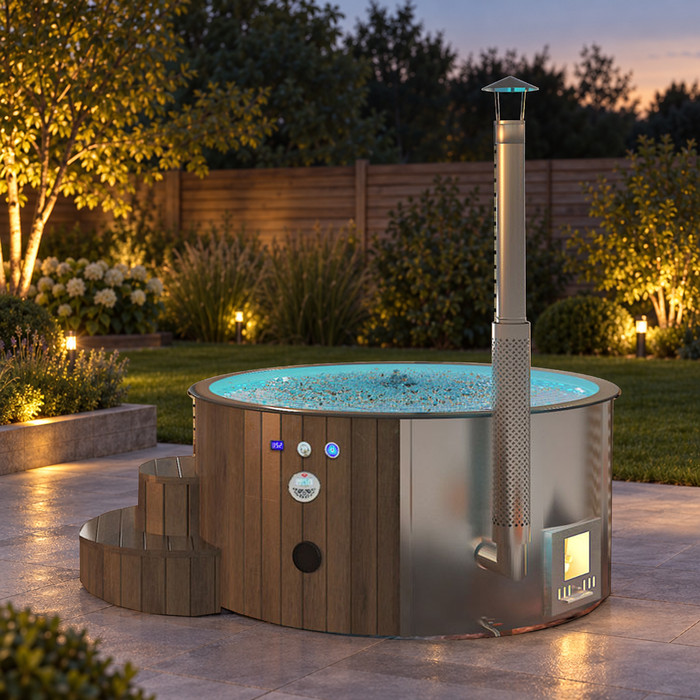
Lighting is a preference feature: its value depends on when you use the tub and what atmosphere you want, rather than being a universal need. If an option is offered, find out exactly what is illuminated or changed, which controls it has and whether those functions matter to your sessions. For someone who mainly uses the tub during daylight, an extra lighting function may have little effect on the routine; someone who often plans evening use may value the visual change. That is a personal judgement, not proof that the option is better or more useful for every buyer. Consider whether the appeal is likely to last beyond the novelty of the first few sessions.
Check the difference between the lighting shown in a photograph or display and the option being quoted. For a Bloomcabin hot tub Haven 6 quote, confirm the exact lighting function, its price and whether it brings separate controls, care tasks or ongoing costs. Then consider that option on its own merits. A modest premium is not automatically good value if you would seldom enjoy the effect, while frequent evening use may give it more personal value. There is no need to pay for an effect you like in a photograph if it does not match your planned use.
Accessories: compare each item, not just the bundle
Accessories can be easy to overbuy because a package sounds like more value than a single option. Ask for an itemised list of what the package includes, the purpose of each item, and whether it is part of the quoted price or a separate charge. A bundle is not useful just because it contains several pieces; compare it with the items you would choose individually and identify anything you would not use. If the list uses broad labels, request the actual item names and a clear explanation of their function. Do not infer inclusion from a product image, catalogue description or category heading.
Then check what ownership of each add-on involves. Ask whether it needs care, consumables, storage or replacement, and whether any part duplicates something already covered by another selected feature. An accessory that solves a repeated practical inconvenience may be worthwhile; one that adds a rarely used extra can be easy to leave out. When discussing the Bloomcabin Hot Tub Fjord 8 listing, ask for accessories in your proposed configuration to be named separately, if any are offered, and priced separately from the tub and other options. That makes the decision about each item rather than the package’s persuasive label. If you would buy only one item from a bundle, compare its separate price before treating the bundle as value.
Compare the premium with the benefit you expect
Compare the feature’s added price with the benefit you expect, using an itemised current quote rather than a generic advertised package. If an option has a once-off premium and a recurring expense, record both. Consider how often you will use it over the period you expect to own the tub and what that repeated benefit is worth to you: saved effort, more convenient operation, a preferred comfort detail or a more enjoyable setting. You do not need to put a rand value on every pleasant detail, but you should know what you are paying for and whether the premium fits the money you have set aside. A benefit used almost every session has a different case from one tied to a rare occasion.
A simple comparison can expose low-use extras: place the quoted premium alongside the number of sessions in which you expect to benefit, then ask whether the resulting cost per useful occasion feels reasonable. This is only a decision aid, not a prediction of energy use or resale value. If costs continue after purchase, add supplier-confirmed consumables or other regular charges to the comparison; do not rely on an unsupported savings promise to offset them. For Bloomcabin hot tub Aurora 10, as for any option, request the price for the exact feature and configuration. Without both a feature-level price and a clear function, you cannot judge whether its premium is worthwhile.
Check what is standard, optional or excluded
A feature may be part of one configuration, a paid selection on another, or absent from the quote altogether. Do not assume that a brochure page, display model, sample photograph or package name matches the item you are buying. Ask the supplier to mark each option as included, optional at a stated extra price, or not included, and to identify the exact configuration covered by the quote. If the seller describes something as standard, ask whether that means standard on the quoted setup or standard across every configuration; the distinction affects what you are comparing. This simple label prevents a desired extra from being mistaken for something already paid for.
Use the same format for each quote: name the feature, state whether it is included or selected as an extra, list the once-off premium and any supplier-confirmed ongoing costs, and summarise its stated function. For a feature you value, request written confirmation that the quoted version includes it; for one you do not need, make sure its price is not buried in a bundle. Keep the base configuration consistent when comparing options so an apparent price difference is not actually a different set of extras. This is a feature comparison, not a judgement based on how long either model’s list happens to be. If an item is unclear, mark it as unresolved rather than counting it as included.
Deciding which extras to keep
Before agreeing to an extra, run it through four questions: Do I expect to use or notice it regularly? Can the supplier explain its exact function? Does that function address a real preference or inconvenience? Am I willing to accept its price and any recurring care or energy implications? A clear yes to each makes a stronger case; uncertainty on one answer is a prompt to investigate that point. You can group choices mentally as worthwhile for this routine, nice to have only if the price suits, or unnecessary. Those labels are personal decisions, not a universal ranking of features. They also help prevent a package from making several separate decisions seem like one.
If several extras pass those checks but together exceed your budget, rank them by how much they would improve an ordinary session. Compare the strongest option with the next best use of the same money, rather than judging each premium in isolation. Where two options address the same inconvenience, consider whether you need both. If different household members favour different extras, give more weight to preferences that affect regular use than to occasional requests. An appealing option can still be one you leave out: choosing it means accepting both its price and the opportunity to spend that money elsewhere. The final selection should reflect your priorities, not simply everything you can justify individually.
Frequently asked questions
Which hot tub extras should I prioritise?
Prioritise an extra that solves a recurring inconvenience or supports a preference you expect to enjoy regularly. Check its exact function, price and any additional care it involves. If you cannot name when you would use it, or what it improves, it may not be worth paying for.
Will a heating control automatically reduce running costs?
No. A control’s name does not prove that it will reduce electricity use. Ask what it does, what evidence supports any savings claim and whether that claim applies to the quoted configuration. Your use, weather and equipment can affect energy use, while your electricity tariff affects what that use costs.
Does a filtration or water-care extra mean less maintenance?
Not necessarily. Ask which owner tasks it changes, which remain, and whether it involves consumables or replacement parts. Request the supplier’s care information for the exact option rather than assuming that a particular label means less work.
Is hot tub lighting worth paying extra for?
It depends on when you plan to use the tub and how much you value the effect. Confirm what the lighting option does, whether it is included or optional, and its price. If it would rarely affect your sessions, you may prefer to spend the money elsewhere.
How can I tell whether a feature is included?
Ask the supplier to mark each feature as included in the quoted configuration, optional at an extra price, or not included. Request the exact function and price in writing. Do not assume that a catalogue image, package name or model name confirms what your quote covers.
The most worthwhile extra is one you can connect to a real part of your routine: it makes a regular session more convenient, suits a preference or changes an experience in a way you will genuinely value. A long feature list is not a measure of value. When each option has a clear function, a price you can see and upkeep that suits you, it is easier to choose confidently—and to leave out the extras that do not earn their place.
