
Hot Tub Privacy Ideas for Overlooked Gardens
Garden privacy guide
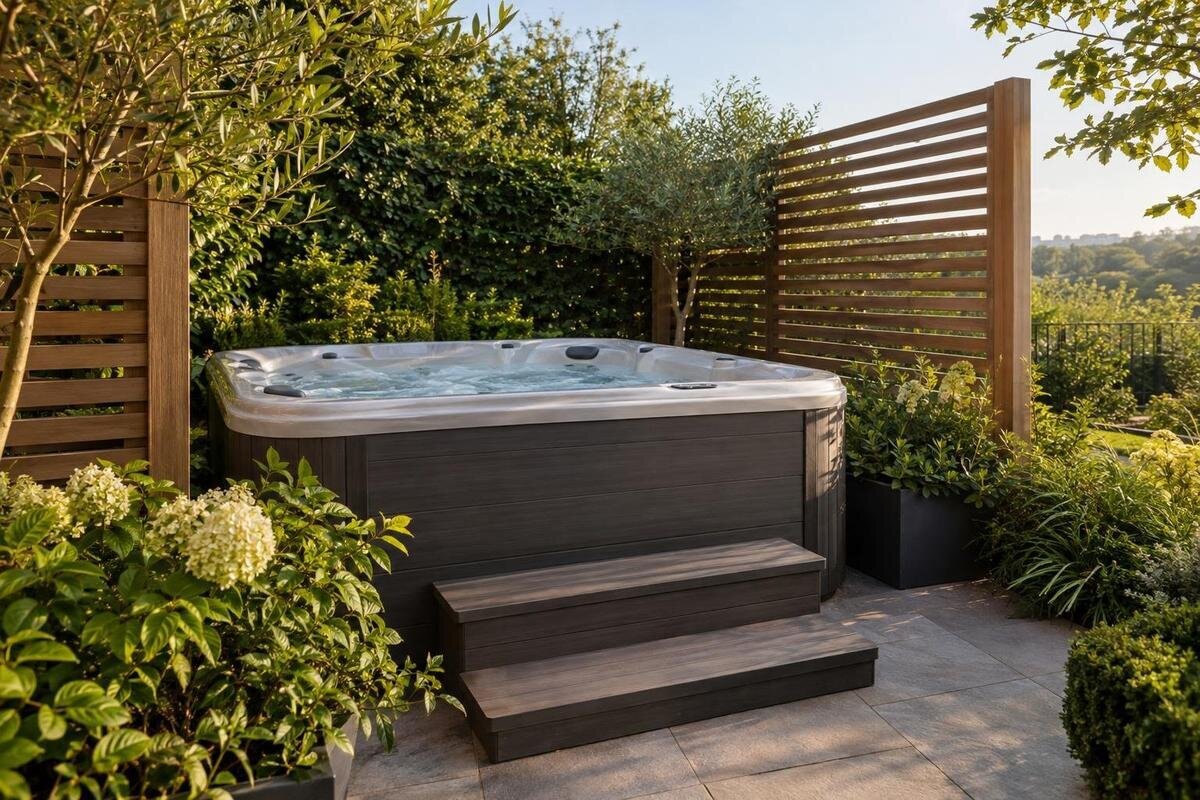
An overlooked garden does not always need a screen on every side. The uncomfortable view may come from one upstairs window, balcony or raised deck at a particular angle. Identifying that sightline first helps you choose between an existing fence, a freestanding screen, trellis or planting without unnecessarily losing daylight, airflow or an open outlook. This guide focuses on privacy around an outdoor hot tub, including views from ground level and above, evening lighting and the access that still needs to work.
Map the sightlines before choosing a screen
Begin by standing where the tub is expected to sit and looking towards each neighbouring boundary. Check the view from a seated position and while standing to enter or leave: a screen that blocks one eye line may leave another exposed. Include ground-level patios, paths and garden seating, then trace views from balconies, raised decks and upstairs windows. Notice whether the view is continuous or appears only when someone passes; those are different privacy problems. The aim is not to catalogue every window nearby, but to pinpoint which part of the tub and its approach is visible from each place. Sketch the direction rather than judging from one photograph, which can flatten distances and height differences. A checklist of the viewpoint, angle and exposed area helps avoid treating one passing glimpse as a need to enclose the whole garden.
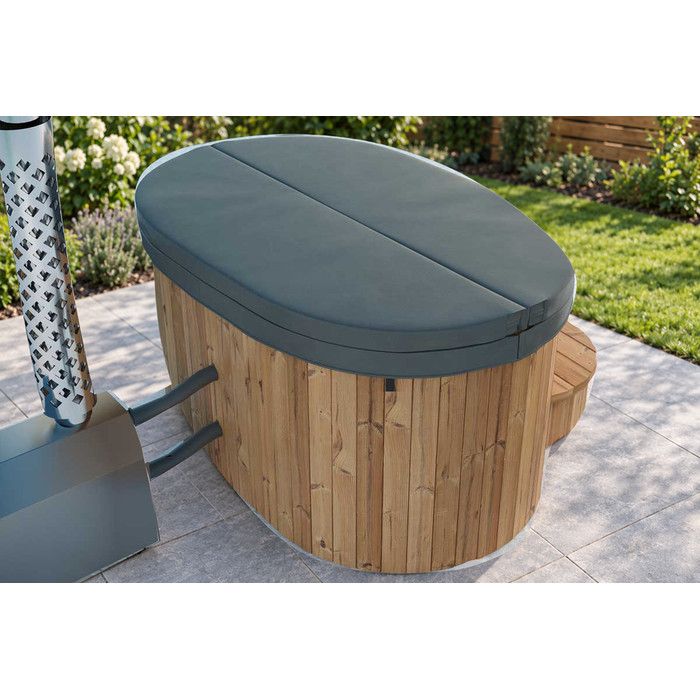
On the sketch, mark the tub's likely outline, the source of each view and the smallest area needing cover. Note whether the view is direct, diagonal or through a gap; that helps locate a barrier precisely. If the tub is still being selected, record the model you are considering, such as Bloomcabin Hot Tub Cove 2, and use its confirmed dimensions and access information to complete the plan. Once the intended position is settled, repeat the check from seated and standing viewpoints and include the route in and out, not only the tub's centre.
Check what an existing fence or wall already hides
An existing fence or wall may already block the most obvious ground-level view, so inspect it before adding anything. Follow the sightline from the intended tub position and note gates, lower sections, changes in level and gaps between boards. Then consider raised viewpoints: a barrier that screens someone looking across the garden may not block a downward view from an upstairs window. Check what can be seen through openings while seated as well as standing, since a small gap can line up with the area where privacy matters. If a section is loose, missing or damaged, repair may be more proportionate than adding a second barrier.
If the boundary nearly works, a targeted screen or planting layer inside it may be less enclosing than making the whole fence higher or more solid. Where the only problem is a gap at a gate or slatted section, note that precisely before choosing an overlay; a uniform extension may add more obstruction than needed. More opaque coverage can cut daylight, block a pleasant outlook and reduce moving air in that part of the garden; it can also change how the boundary looks from both sides. Before altering a wall or fence, confirm who is responsible for it and whether municipal or estate requirements apply. Do not assume a particular height or approval rule from general advice; ask the relevant authority or property manager about the proposed work.
Compare freestanding screens and trellis
Freestanding screens can provide immediate cover in a defined area without changing the whole boundary. A solid panel interrupts a direct sightline more reliably than an open pattern, but it also creates a stronger visual barrier and can reduce daylight or airflow on its sheltered side. The right position is usually determined by the line from the viewing point to the tub, not by a wish to hide every edge of the garden. A panel that blocks the key angle while leaving the rest of the view open may feel more proportionate than a continuous run. Judge its width and height against low and elevated views; no single standard measurement suits every garden. A panel only helps if the sightline crosses it, so placing one nearby may leave the same view open around its edge.
Slatted panels and trellis allow more light through, but their gaps matter: a pattern may screen from one angle and reveal the tub from another. Check from the neighbour-facing direction and from nearby oblique positions, especially if the panel will be seen from above. A trellis without established foliage is a visual filter, not a solid barrier; planting changes the level of cover over time. If Bloomcabin hot tub Haven 6 is on your shortlist, include its confirmed outline on the plan when comparing panel positions. Where possible, examine a sample of the screening at the relevant viewing angle rather than judging its opacity from a straight-on photograph.
Use planting with its growth and seasonal gaps in mind
Plants soften a boundary and can add privacy without making a hard wall, but their coverage changes with time. A newly planted screen may leave a clear view while it establishes; deciduous plants can open up in winter, and even evergreen foliage can have gaps. Assess the plant at the height and density it is likely to reach, not only as pictured at purchase. Look at lower growth as well as the top: a tall plant may still leave a clear line at seated eye level. Ask a local nursery about species suited to your site and how quickly they mature, since conditions vary across South African regions and individual gardens. Ask how the foliage behaves through the seasons rather than relying on a label alone.
Allow for the work as well as the look: watering while plants establish, pruning to keep the view covered, replacing failures and clearing fallen leaves all affect long-term cost. Ask how often a plant needs shaping and how its spread will affect the route or access to a screen. Foliage needs room for routine care, and dense growth can make a narrow area harder to maintain. If a seasonal gap would expose the seating area, use planting as a softer layer behind an immediate screen rather than relying on foliage alone. This approach also gives you a chance to see how much cover the plants actually provide before adding more.
Layer screens and planting where one barrier is not enough
Combining a screen with planting can solve different parts of the same problem: a panel can block the main view now, while foliage softens its appearance and fills secondary gaps as it grows. Another option is to use a screen only across the exposed angle and rely on an existing hedge or boundary elsewhere. Sketch the layers separately so that one does not hide a gap behind it when seen from a balcony or diagonal viewpoint. A simple side-view sketch can show where the screen blocks the main line and where planting would need to fill a separate gap. Aim for coverage at the actual eye line rather than stacking materials around the entire tub. Where two layers overlap, check that they do not unnecessarily close off the best outlook or make the garden feel dark.
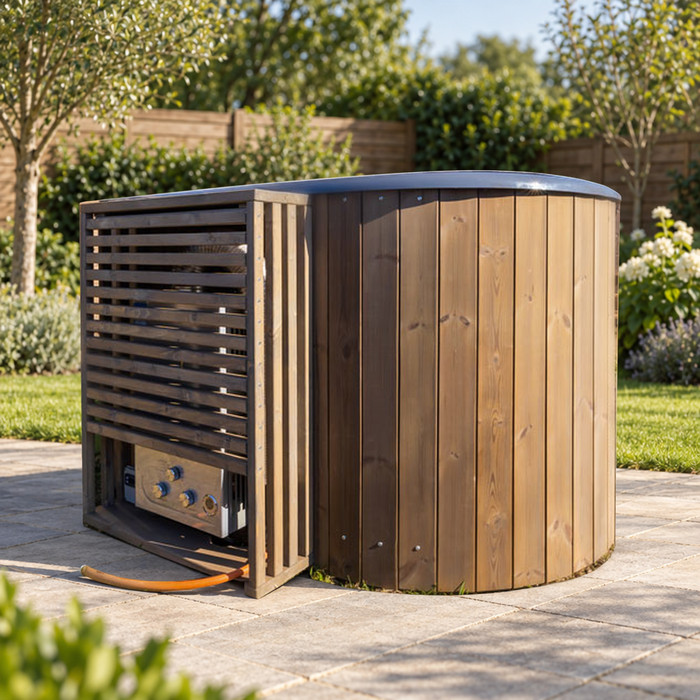
Plan the layers together: leave a clear route to enter and move around the tub, allow access for operation and servicing, and preserve the light and outlook you value. Dense planting beside an opaque panel can become too closed, while sparse trellis in front of a young hedge may still offer little privacy at first. Review the arrangement as plants mature; a barrier that is balanced now may become more solid later. If Bloomcabin Hot Tub Fjord 8 is among the options being considered, put its confirmed dimensions and access requirements on the same plan as the proposed screen and planting.
Account for upstairs views and evening lighting
An upstairs window or raised deck looks down across a garden, so a boundary fence that works at ground level may provide little cover. Identify the elevated viewpoint and the specific part of the tub visible below it. A screen can sometimes be positioned to interrupt that diagonal view without surrounding the whole area, but its effectiveness depends on height and angle; test it from more than one spot. A high viewpoint may see over a panel that looks adequate from a path, so record each view separately. Do not assume that adding height to the boundary is the only answer if it would remove much of the daylight.
Privacy also changes after dark. A brightly lit tub or path against a darker garden can make people more visible from a neighbour's window, while a light aimed at a screen may create glare or silhouettes rather than concealment. Check the view with the lighting normally used in the garden and nearby rooms; try directing light towards your own access route instead of across the boundary. Use only the light needed for the task, and do not rely on a neighbour closing curtains. If you are considering Bloomcabin hot tub Aurora 10, mark its proposed position on the lighting plan so that you can assess the tub area and approach together. Where evening exposure is the main concern, assess lighting and screening together rather than assuming a taller barrier will solve it.
Protect daylight, airflow and practical access
Effective screening is not the same as maximum screening. A full-height opaque barrier may cut the view but also remove sky from a garden-facing window, darken the seating area, restrict moving air and make the tub feel boxed in. An open trellis, angled slats or a shorter panel may preserve more daylight and outlook, although its gaps must be tested from the relevant eye lines. Consider the view from inside your home too: privacy should solve the exposed angle without turning a useful window into a blank wall. Compare a few marked positions and choose the least intrusive one that actually blocks the problem view.
Keep everyday movement and maintenance on the same drawing. A privacy panel should not obstruct the route in and out, access to controls, or the space needed to inspect and service the tub. Leave room to handle or open a cover if the selected setup includes one. Exact requirements vary by hot-tub model, so confirm them in current product information or with the supplier instead of guessing a universal clearance. For Cove 2, as with any shortlisted model, establish those requirements before choosing a fixed screen location. A panel can look right on a plan yet become inconvenient if it narrows the route or masks an access point.
Choose between a screen, planting or a combination
Choose a screen when immediate, predictable cover at a specific angle matters most and you accept its visual and upkeep requirements. Choose planting when you value a softer, changing boundary and can wait for growth while managing watering and pruning. Trellis is a middle ground only if its openness is acceptable at first or foliage can fill it over time. Compare options against the sightline map, not only product photographs: a straight-on image cannot show how the screen looks from a neighbour's raised viewpoint or whether its gaps line up with the tub. Ask how quickly the privacy problem needs to be addressed; that timing can rule out a plant-only solution.
A combined approach can spread effort over time: a screen deals with the current direct view while planting supplies a softer backdrop or later coverage. It may cost more initially and still need plant care, so list the real cost components rather than assuming one option is always cheaper. Include panels and supports, delivery or professional fitting where relevant, plant purchase, soil or containers if needed, watering, pruning and replacement. When budgeting for Haven 6, keep screening as a separate item so that you can compare the garden work independently of the tub purchase. Compare quotes on the same scope of work, including any interim cover you may need while plants establish.
Check the details before you buy or build
For a screen, confirm its usable height and width, opacity, gap pattern, suitability for outdoor use and care requirements. Assess these against the actual line of sight, including views from the side and above. For trellis, establish how much open area remains before climbing plants grow. For planting, check mature dimensions, expected growth and ongoing care with a local supplier. Compare quotations on the same basis: ask for dimensions as installed, not just the panel size, and clarify whether posts, other supports and fitting are included. Allow for possible replacement costs too. The installed result, rather than the product label, determines whether the exposed view is blocked.
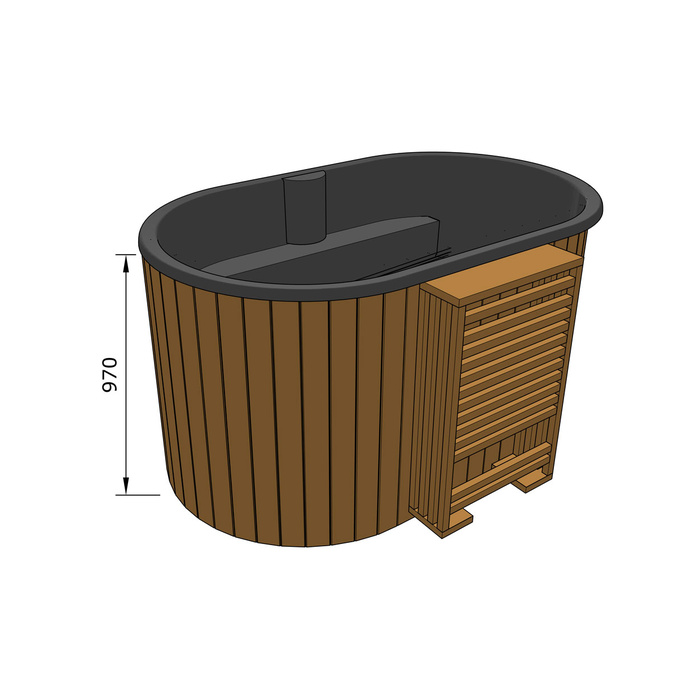
Check boundary and site constraints before a permanent change. If work affects a wall, fence or fixed screen near a boundary, confirm relevant municipal and estate requirements and clarify responsibility with the property owner or manager; requirements can depend on the place and proposal. For a shortlisted model such as Fjord 8, ask the hot-tub supplier to confirm access, servicing and any cover-operation requirements before you finalise the screening order. Where anchoring, drainage or structural concerns arise, seek advice from a suitably qualified local professional rather than improvising.
Test the view and refine the privacy plan
Before committing to a long screen or row of plants, mock up the proposed line on paper and test it from the places you identified. Ask a helper to hold a representative sample panel at the intended position while you check from seated and standing viewpoints, then look back from your own house and garden. A sketch, tape marks on the ground or a safely held sample may reveal that a shorter, angled or shifted barrier is enough. This small test can expose a missed diagonal view before you pay for materials or plants. Do not leave a loose temporary sheet or panel standing outdoors; choose a stable, supervised trial method.
Repeat the check in daylight and after dark, with the garden lighting you normally use; revisit it in a season when deciduous plants have less cover, if relevant. Confirm access and maintenance routes after marking the screen, and note which gaps still expose the area. If Aurora 10 is part of your product comparison, use its confirmed dimensions to mark the outline for the final trial. Keep a note of what remains visible and whether moving a panel or adjusting the planting would address it. Test that change before buying additional screening. The best plan blocks the particular sightline with the least loss of light, movement and garden character.
Frequently asked questions
Can an existing fence provide enough privacy for a hot tub?
It can, if it blocks the relevant views from both seated and standing positions, including those from raised windows. Check gates, gaps and changes in ground level. A fence that works at garden level may still leave a downward view from an upstairs room.
How high should a hot tub privacy screen be?
There is no single useful height for every garden. Trace the sightline from each exposed viewpoint to the area needing cover, then test a screen position against it. Check any applicable municipal or estate requirements before changing a boundary or installing a fixed screen.
Does trellis provide privacy without climbing plants?
Usually it filters a view rather than blocking it, because you can still see through the gaps. Whether that is enough depends on the viewing angle and the privacy you want. If you need immediate cover, treat trellis as a layer, not as an opaque screen.
Should I choose planting or a screen?
A screen can provide immediate cover at a known angle; planting gives a softer boundary but takes time to grow and needs ongoing care. If the view needs addressing now, a combination can provide cover while plants establish, though it may add both initial and maintenance costs.
Can garden lighting affect privacy after dark?
Yes. A brightly lit tub or path against a darker garden can make people more visible from a neighbour's window. Check the view with your usual lighting, direct lights towards your own garden where practical, and do not rely on neighbours closing their curtains.
Good privacy design is selective. Identify which views expose the tub, choose the least intrusive layer that interrupts them, and test it from the viewpoints that matter. A fence may already do most of the work; a well-placed panel, established planting or both can address the rest. Keeping daylight, access and upkeep in the same plan helps the result feel like part of the garden rather than a wall built around one feature.
