
How Many People Do You Need to Assemble a Garden Shed?
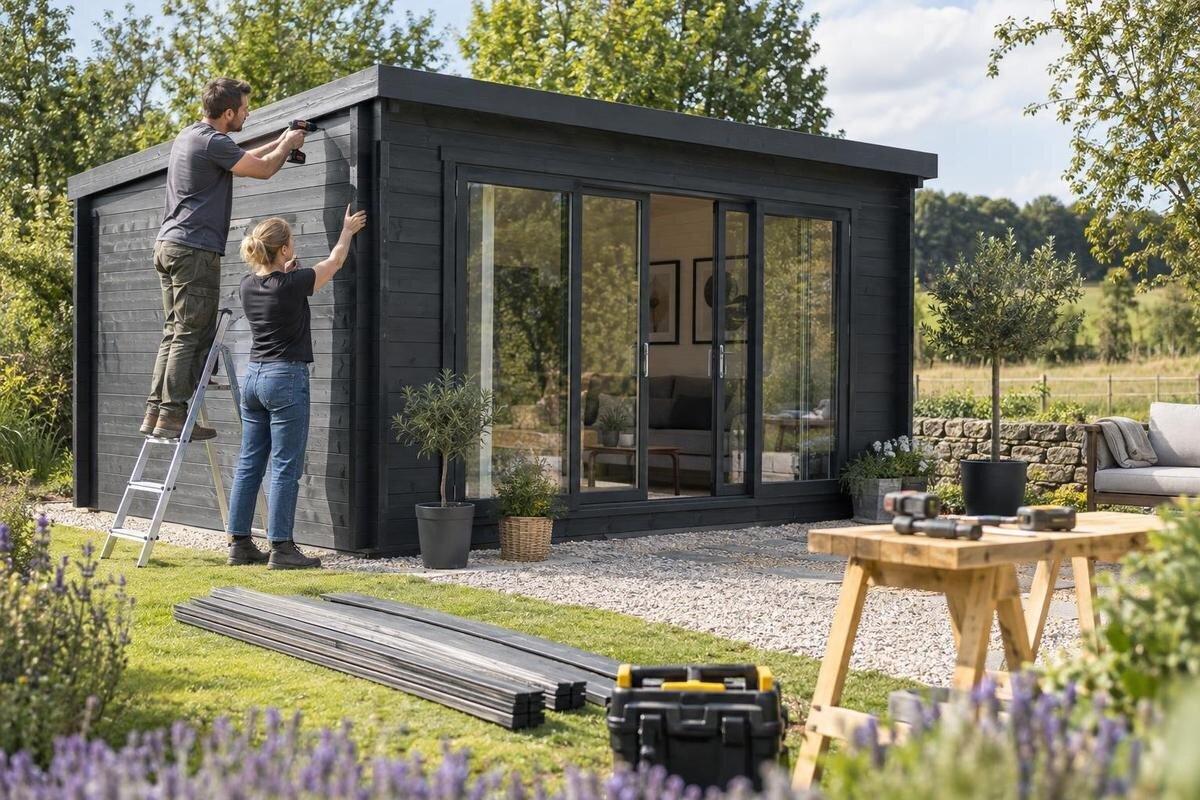
Garden shed assembly planning
Planning help for a garden shed is easier when you separate the kit's requirements from the work around it. The instructions for the exact model should guide any stated crew requirement; the access route, parts to be handled and experience of the people available shape the rest of the plan. A rule such as “two people per shed” might leave you short for one stage or leave an unnecessary crowd around the build. Use the checks below to work out a realistic number before choosing a model, setting an assembly date or arranging paid help.
01
There is no standard crew size for every garden shed
People often look for a rule such as “two people per shed”, but that is not dependable across different kits. The number depends on the instructions for the exact model, the parts that have to be positioned or held at the same time, access to the site and the experience of the people available. Products with similar descriptions may have different parts and assembly sequences, so a category label cannot give a reliable staffing figure. A name such as Verdana 1 garden shed identifies one option; it does not establish component weight, handling requirements or the number of people needed. Use the model to find its instructions, not to guess the crew.
Think about the busiest point in the assembly rather than treating the day as one continuous job. Some tasks may be done by one person, while another stage may need a second person to support or position a part as directed. Count the people who must be available at the same time, including the person leading the work. Helpers needed only to move parts may be able to leave once that task is finished; they do not automatically need to stay for every stage. Note the order of those peak-demand tasks as well. If two tasks needing assistance are scheduled close together, avoid arranging a helper to leave between them. This peak count gives a better basis for arranging help than inviting everyone for the full day or assuming that one person can do every task.
Use the instructions for the exact model
Get the assembly instructions for the exact model before setting a date or ordering additional services. Match the document to the full model name and any configuration or option in the order details; a similar-looking shed may use a different sequence. If you are comparing Verdana 2 garden shed, find its own instructions instead of carrying a headcount over from another option. Ask the seller or manufacturer whether the instructions available are the correct ones for that product. A generic video or another model's booklet may illustrate the kind of work involved, but neither should replace the model-specific directions.
Read the sequence once before you assign people. Mark any instruction that explicitly calls for more than one person, asks someone to hold or support a component, or requires another task to happen at the same time. Note whether the extra person is required for one operation or for a longer stage, and whether the lead needs to stay free to read and check the next instruction. Also identify tasks that must be completed in order, so helpers do not arrive before the work is ready for them. If a drawing, symbol or phrase is unclear, write down the page and ask a model-specific question. That gives you a dependable staffing plan and avoids reaching a particular step without the help it requires.
02
Compare kits by their handling requirements
Size alone is a poor way to estimate handling. Package dimensions, component weight, shape and assembly sequence all affect whether parts can be moved or held by one person, and those details do not follow automatically from a product name or photograph. If Durano garden shed is on your shortlist, use the exact model identity to find its own assembly and package information; do not read wording in the name as a measurement. Where the listing or manual does not explain a part's weight, dimensions or handling, ask before you choose the kit or book help.
Make the staffing question part of comparing candidate sheds. For each model, note any stated minimum crew, the steps needing simultaneous support, and the route from the unloading point to the base. Include the timing of those tasks: a brief, clearly defined request for help can be easier to arrange than an open-ended commitment. Then compare that list with the people you can realistically arrange. A candidate may not suit your plans if its instructions require help you cannot provide; you could arrange installation or compare another option. The useful comparison is not which model looks easiest, but which documented requirements you can meet safely with the people and access available.
Assembly experience matters as much as headcount
Extra people do not replace someone who can lead the assembly. One person should be able to follow the manual, identify the parts, keep track of the sequence and tell helpers what is needed next. When looking at Veltor 1 garden shed, check that model's requirements alongside the experience of your proposed team; do not infer the work from its name or appearance. If nobody is comfortable interpreting the instructions, ask for model-specific clarification or consider an experienced installer before committing to a DIY plan.
A helper can support a task the instructions call for or assist with moving parts, but should not be expected to make assembly decisions just because they are available. Give each person a clear role and make sure the lead knows who is responsible for each action. Several people trying to direct the work can slow progress and make communication harder. If the team is uncertain about how a component should be positioned or supported, pause and check the instructions rather than letting competing guesses decide.
03
Check access from the unloading point to the base
Walk the route from the point where the kit will be unloaded to the prepared base before deciding how much help is needed. Check gates and doorways, corners, steps, changes in level, soft ground, obstacles and the distance over which parts must be carried. Use package measurements from the exact product where available. A name such as Orello 1 garden shed does not reveal whether a particular package will fit through a narrow access point, so ask for the relevant dimensions if they are missing. This check can show whether moving the kit is a separate task from assembly.
Moving help and assembly help are not always the same people or needed for the same length of time. Decide where components can be set down without blocking the build area, and avoid planning a route that forces helpers to cross the work zone repeatedly. Consider whether the unloading area, route and build area can accommodate the required people without obstructing one another. Confirm that the base and working area are ready as the instructions require; a larger team cannot make an unprepared site suitable. If an installer is involved, explain access limits in advance and ask what needs clearing. Then the number arriving on the day can match both the work and the space available.
Choose a suitable day for safe handling
Consider the conditions expected when the work will take place. Wind can make some large or awkward parts harder to control, wet ground can affect footing, and poor light can make instructions or alignment harder to see. These points do not create a fixed extra-person rule; they may mean that a planned lift should be postponed or the work area improved. For Modano 1 garden shed, as for any candidate, plan from its instructions and the actual site rather than an image or assumption about the model. Check conditions again closer to the day, as a plan made well in advance may need to change.
Agree before starting that anyone can call a pause if a part cannot be controlled or the area becomes unsafe. Keep the route clear and bystanders away, and do not ask a helper to catch or steady a component in a way the instructions do not allow. Establish this before the work starts, particularly when helpers have different levels of experience. If conditions change, extra people are not a substitute for suitable handling or a safe work area. Allow time for breaks and for checking an unclear instruction; pressure to finish before a helper leaves can encourage rushed decisions. If the day is no longer suitable, rearrange the work instead.
04
Assign roles before arranging the full team
Write down roles as well as names. One person can lead through the instructions; another may be needed for a specified hold or move; a third might only be useful when parts are brought to the work area. Record the exact model, for example wooden garden tool shed M, so helpers are not working from instructions for a different kit. Tell each person when they need to be there, what they are being asked to do and who will give directions. A simple briefing can prevent two people assuming the other is taking responsibility.
Count only people who can perform separate tasks at the same time. The person reading and checking the next stage may not be free to support a part, and someone carrying a component cannot also manage a separate alignment. Do not count household members, visitors or a standby helper as part of the working team unless they have a defined role and will be present when needed. Keep people who are not involved clear of the active area, and follow any age or supervision guidance stated in the instructions. This keeps the headcount realistic rather than inflated.
Agree the team and scope with an installer
If you plan to hire an installer, confirm who provides the people to assemble the kit instead of assuming that installation is included with a product purchase. When enquiring about the wooden garden tool shed S, give the exact model name and ask whether the provider has checked its instructions. Confirm the team size they expect, whether you need to supply any help and whether everyone must remain for the full job. Ask when each person will be needed, too, so you can plan around the stages rather than only the arrival time.
Clarify the scope as well as the number of people. Assembly, preparation of the base, moving the kit from its unloading point and clearing packaging may be treated as separate tasks, so ask which are included. Ask whether the provider needs an unobstructed place to stage components while work is under way. Tell the provider about access restrictions and confirm what must be ready before the team arrives. Ask who handles a step if the manufacturer's instructions call for more assistance than expected. Agree these points in writing so the team and the work on the day match the arrangement you made.
05
Decide whether DIY assembly is realistic
DIY is realistic when the available team can meet the instructions' requirements and someone can lead without guesswork. Consider whether helpers can be there for the particular stages that need them, whether everyone is comfortable with the handling involved and whether the job can be done without rushing. A large household does not automatically make a suitable team, and a small shed is not automatically a one-person project. If the manual states a requirement that you cannot meet, resolve it before you purchase the kit or fix a DIY date.
An installer is worth considering if a required helper is unavailable, the instructions remain unclear after you ask, or your planned team cannot manage the described handling comfortably. Look for someone willing to discuss the exact model and work area, not only give a generic headcount. Ask how they will follow the supplied directions and whether they expect you to do any preparation or lifting. The decision is about matching the kit's documented requirements to real capability; adding more unbriefed people is not a reliable substitute for experience.
Confirm the number of helpers before booking a date
Before confirming a date, put the estimate in one place. Record the exact model, the correct instructions, every stated crew requirement, the stage or task where extra support is needed, the route to the base and who has each role. Your working number is the largest group needed at one time, not necessarily the number required for the whole day. Check that each named person is available for the right stage, and that the lead is not also assigned to a task that prevents them from following the sequence.
Recheck the plan if you change the model, add an option or receive different instructions; a headcount taken from a similar shed may not apply. If information that affects handling is missing, ask the seller or manufacturer before assembly and keep the answer with the model details. Confirm the same requirements with an installer if one is booked. This leaves you with a practical answer for your kit, site and team, instead of a number that sounds plausible but fails when an extra pair of hands is needed.
Frequently asked questions
How many people should I plan for?
There is no dependable number for every garden shed. Use the instructions for your exact model to identify any stated crew requirements, then count the people needed for tasks that happen at the same time. Include someone to lead and check the instructions.
Can one person assemble a garden shed?
That depends on the model and its instructions. Do not assume a shed can be assembled alone because it looks small or simple. If the instructions call for another person, arrange that help for the relevant step or ask the manufacturer for guidance before proceeding.
Is it better to have extra helpers waiting?
Not necessarily. People without a defined role can crowd the work area and make communication harder. Arrange help for the stages that need it, and keep anyone who is not working clear of the active area.
What if the instructions do not state a crew size?
Ask the seller or manufacturer for guidance tied to the exact model and the steps you are unsure about. Do not guess from a photo, a general rule or instructions for a similar shed, especially if you need to plan how parts will be handled.
What should I ask an installer?
Give the installer the exact model name and ask what team size they expect, whether you need to provide any help, and what the job includes. Also clarify access requirements and which preparation tasks are your responsibility.
The best headcount is the one that meets the exact kit's instructions and covers each task that needs help at the same time. Match the model to its manual, check the route and site, and confirm that the people assigned to the work can be there when needed. If an instruction or handling requirement remains unclear, get model-specific guidance before assembly day rather than relying on a general rule.
