
How Often Should You Repaint a Wooden Garden Shed?
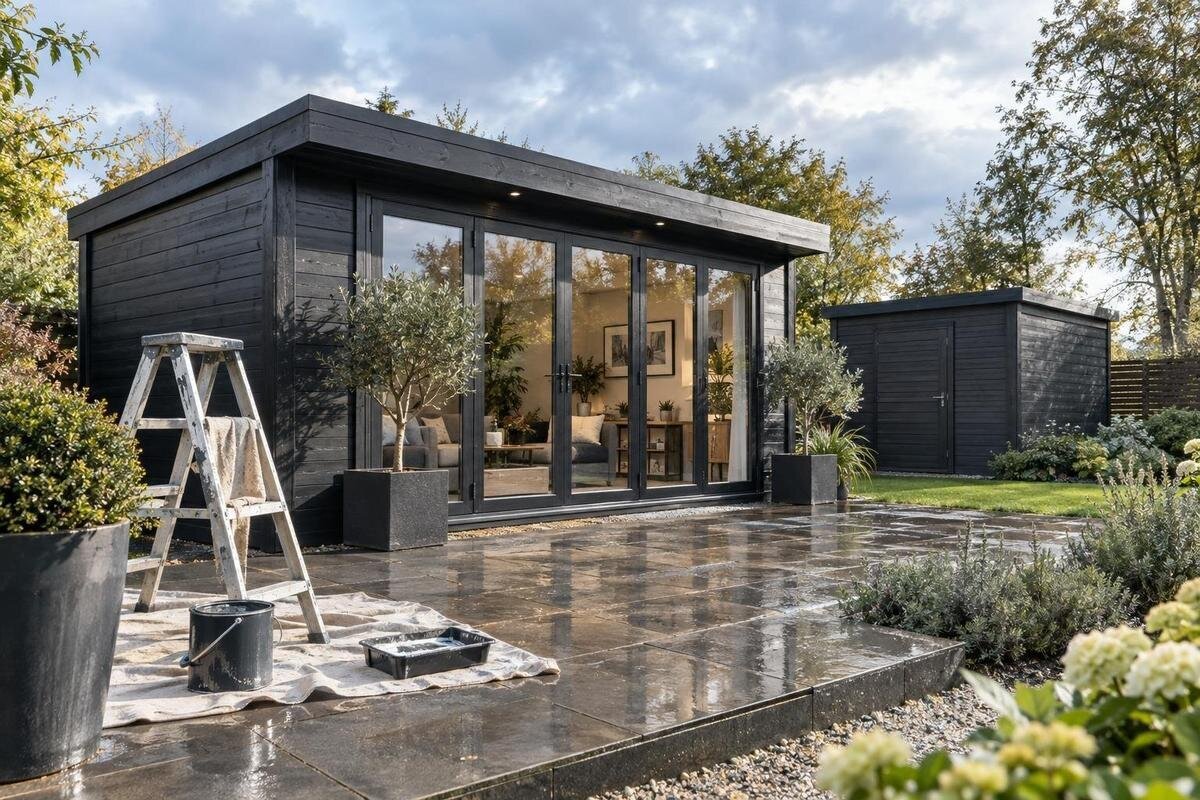
Garden shed maintenance
If you’re wondering how often to repaint a wooden garden shed, there is no dependable interval that suits every site and finish. The coating and its original instructions matter, as do exposure to strong sun, rain, wind and water splashing up from the ground. A protected wall may age differently from the one facing the weather, even on the same shed. Use a regular inspection to catch change, not a calendar date as an automatic instruction to paint. This guide explains which signs matter, how local exposure shifts the timing, and what to ask before buying a new shed.

01
There is no universal repainting timetable
Begin with the finish already on the shed: different coating systems, timber condition and application methods have different maintenance requirements. A label such as exterior paint is not a precise lifespan, and instructions for one product should not be applied to another. The original care sheet or coating manufacturer’s guidance is the strongest reference. If those details are missing, avoid inventing a repaint date from a general online rule; check the surface regularly and use visible changes alongside product advice. A calendar estimate can help with budgeting, but it is only an estimate: sheltered surfaces may stay sound longer while exposed ones need attention earlier. The useful answer is determined by the particular finish and exposure, not a guaranteed number of years.
When the shed is new, keep its exact finish and care instructions with the order documents. Ask when to make the first inspection, whether the surface needs any additional treatment on delivery, and which maintenance products are compatible. A model name or photograph does not establish those details. If you are assessing the Verdana 1 garden shed, identify that exact item when asking the supplier for its finish and repaint guidance; do not assume it has a particular coating or schedule. Having the answer recorded gives you a baseline to use when the surface changes, and prevents later confusion about whether a treatment was supplied or added.
Check the finish regularly, but do not repaint by calendar alone
Set aside a regular visual check, such as once a year, and treat it as an inspection rather than an instruction to repaint. Look at every accessible side in good daylight; check the wall facing the strongest sun or rain separately from the more sheltered faces. Inspect lower boards, corners, joints, edges around doors or windows, and roof-level details where the finish can be harder to monitor. These areas may show wear before a broad wall surface does. After exceptionally rough weather, an extra look may be sensible if you can do it safely. Stay at ground level where possible, and arrange help for any high area you cannot inspect without risk.
Take dated photographs from similar positions and note whether each face looks intact, faded, cracked, blistered, flaking or bare. Comparison shows whether a change is stable or spreading, which is more useful than relying on memory. Record which side gets the strongest sun, wind or rain; exposure often explains why wear is uneven. If you are considering the Verdana 2 garden shed, identify the exact model when requesting its finish-care guidance rather than borrowing an interval from another unit. Keep that information beside your photographs so later checks can be compared with the instructions as well as the previous year’s condition.
02
Sun exposure can make one wall age sooner
Direct sunlight often changes the most exposed face first. Ultraviolet exposure can fade colour or reduce sheen, while repeated heating and cooling can stress a finish; the exact response depends on the coating. Compare the sunny wall with shaded walls and inspect joints and edges, which can show change sooner than a large flat area. A colour that looks lighter is not, by itself, proof that the coating has failed. Look for accompanying signs such as cracking, flaking, chalking or visible timber. A change limited to one face can still justify attention even when the rest of the shed looks sound. Record it separately rather than treating the worst wall as a verdict on every side.
If you are buying, think about the shed’s eventual position before choosing by appearance alone. Ask what finish is supplied, whether it is intended for the expected exposure, and what care instructions apply; catalogue colours and photographs do not answer those questions. For the Durano spacious garden shed, refer to the exact item when requesting this information, rather than inferring a repaint interval from its online appearance. A clear answer lets you judge the maintenance commitment against the actual spot where the shed will stand. This is especially useful if the proposed location is open to direct sun for much of the day.
Rain and splashback can affect lower boards
Rain can reach a shed in more ways than falling straight onto a wall. Wind-driven showers, roof runoff, irrigation and water splashing back from hard ground may repeatedly wet particular boards or joints. Look for coating that has lifted, blistered or peeled near the base, around openings, at corners or beneath roof edges. Dark marks may be dirt or staining, so a single patch of colour is not enough to diagnose failure. The pattern matters: a streak below one point suggests checking for a local source before treating the whole surface as old paint. Note whether the same spot stays damp after surrounding areas have dried.
Do not treat paint as a repair for a leak, standing water or damaged timber. If a wet area keeps returning, identify and address the moisture source first; applying a fresh layer over active moisture can lead to repeat failure. Where wood looks soft, swollen or decayed, ask a competent professional to assess it before deciding on repainting. When planning a new shed, account for splashback and ask what placement guidance and finish care apply to the exact model. The Veltor 1 garden shed is an item you can identify in that question, not evidence that any particular site condition is suitable. This helps prevent a maintenance problem being mistaken for a paint-timing problem.

03
Wind, dust and coastal exposure can add to wear
Windy, dusty or coastal sites can call for closer attention, but none automatically sets a repainting date. Grit carried by wind may abrade an exposed surface; salt deposits can leave residue, and frequent wind-driven rain can wet the same face repeatedly. These effects vary with distance, shelter and the way the shed is positioned, so a neighbour’s experience may not match yours. Look for recurring deposits, dull patches, fine surface wear or early lifting, especially on the side most exposed to weather. A visible salt deposit is a reason to inspect, not to paint immediately. Use the coating manufacturer’s advice rather than assuming the timber needs a full repaint.
On an exposed site, check after a spell of rough weather and keep the most vulnerable face in your inspection notes. A sheltered side may look fine while a windward face is wearing, so a whole-shed average can hide a local need. If a new unit is being considered for a coastal or open position, ask the seller what finish is supplied and what maintenance guidance applies to that exposure. Use the Orello 1 garden shed page to identify the exact model in the enquiry; its name does not confirm coastal suitability or a repaint schedule. That answer is more useful than relying on generic advice.
Shade can change how a shed dries
Shade can reduce direct sun, but it does not guarantee a longer repainting interval. A wall beside a hedge, fence or other obstruction may stay damp longer after rain, while leaves and debris can obscure the lower edge. Inspect behind corners and along the shaded face as well as the wall that catches sun. The contrast can explain why one side fades and another develops lifting or staining. Avoid deciding from the shed’s overall colour: assess each face and note how quickly it dries after wet weather. If the shade is permanent, keep that area on the regular inspection list instead of assuming it is protected from weathering.
Site planning therefore matters before you order: consider whether the shed will sit in open sun, under trees or beside a boundary, and whether you can inspect its sides. Ask for care instructions that fit the model’s supplied finish, rather than assuming a shaded position means less maintenance. If you are considering the Modano 1 garden shed, identify that product when asking what maintenance information is available. The product name alone cannot establish the finish or its maintenance interval. Note any planned shade in your ownership record, then compare the same wall each year; that makes the plan reflect the actual garden rather than an assumed average.
04
Peeling, cracks and bare timber are clearer warning signs
Peeling, flaking, blistering and cracks that expose bare timber are clearer warning signs than a simple change in colour. A finish lifting at several edges or breaking into patches has lost continuity in those areas, so it merits attention rather than another year of guesswork. Powdery or chalky-looking residue can also signal a weathered coating, although dirt can look similar. View the surface in good light and compare the affected patch with adjacent timber. One small defect does not automatically mean every wall needs a complete repaint, but note its size and whether it is spreading. A photograph can help you compare the same spot at the next inspection.
Check whether the problem is only in the coating or whether the wood itself is changing. Softness, swelling, splitting or decay points to a timber or moisture issue that paint cannot correct; rapid or widespread failure may also have a cause beyond routine ageing. Do not cover those signs simply to make the shed look fresh. Have significant damage assessed and resolve the cause before settling on a new coating. If the existing product is unknown, seek compatibility advice before layering another finish over it. This distinction matters especially around the base and joints, where persistent wetting may be involved.
Decide whether to monitor, repair locally or repaint
After inspection, judge the amount and pattern of failure, not just the oldest-looking patch. If most of the finish remains firmly attached and the care instructions do not call for renewal, continued monitoring may be reasonable even when colour has dulled. A small isolated blemish may need a local repair, but only if the coating manufacturer permits it and the cause is understood. Several peeling areas, widespread cracking or exposed timber across multiple faces are stronger reasons to plan a broader repaint. The precise decision depends on the finish and product guidance, rather than a universal percentage of damaged wall.
Look again after any maintenance and record whether the same areas deteriorate. If fresh peeling returns soon, repeated patching may be treating the symptom rather than the source; revisit exposure, moisture and compatibility. If changes are gradual and limited, set a nearer follow-up inspection instead of scheduling unnecessary work immediately. This balances appearance, protection and labour: a sound coating need not be replaced solely because a chosen year has arrived, while visible failure should not be ignored because an estimated interval has not. Where the finish’s condition is unclear, ask the coating supplier or a qualified painter for advice.

05
Ask about the supplied finish before buying
Before ordering a new garden shed, find out what finish will arrive with it. Ask whether the surface is untreated, pre-treated or already has a decorative coating, and whether any further coat is required before normal use. Request the product name or care sheet, the recommended timing for inspection and maintenance, and the compatible coating types. These are questions, not assumptions: images, model names and phrases such as ready-finished do not tell you which system is actually supplied. For an item such as the wooden garden tool shed M, identify the exact model when requesting its finish details. A written answer helps avoid applying an unsuitable product later.
Also ask who is responsible for any initial treatment and whether instructions differ for exposed ends or parts that are not coated; do not assume the answer is the same for every model. If the seller provides warranty terms, read the maintenance conditions and keep a copy with the order rather than relying on a verbal summary. Ask how to recognise that maintenance is due and whether the surface needs assessment before recoating. This information is more valuable than a generic estimate because it links maintenance to the finish supplied. If product-specific guidance is unavailable, request it before purchase or confirm compatibility before painting.
Include future repainting in the buying decision
Repainting has a time and materials cost as well as a colour choice, so include upkeep in your comparison of garden sheds. Consider whether all sides will remain accessible for inspection, whether nearby planting or a boundary will make checks difficult, and whether you can carry out maintenance at the suggested interval. Ask for a realistic explanation of the work expected, not just an initial finish description. A product with an unknown coating can be harder to plan for than one with clear aftercare guidance; that does not make it unsuitable, but it changes what you need to confirm. Compare care documents alongside practical dimensions and price, not as a substitute for them.
Once you have chosen a shed, save the supplied finish information, delivery date and first inspection recommendation in one place. Set a reminder to inspect around the stated time, and again after unusually harsh weather; do not enter a repaint every few years as a fixed task unless the manufacturer’s guidance says so. If the wooden garden tool shed S is under consideration, ask for its exact maintenance guidance before comparing upkeep with another model. After a year, use what you observe on each face to refine the plan. This gives you a repainting frequency based on your shed, and keeps the paperwork useful if you need to identify the coating later.
Frequently asked questions
How often should I repaint a wooden garden shed?
Use the coating manufacturer’s instructions as your baseline and make a yearly visual check. Sun, rain and other site conditions can wear one side sooner than another, so a fixed interval is only a guide. Repaint when the instructions call for maintenance or the coating shows sustained failure, after addressing any moisture or timber damage.
Does faded paint mean the shed needs repainting?
Not necessarily. Colour can fade while the coating remains intact. Look for other signs, such as peeling, widespread cracking, blistering or exposed timber, and compare the affected area with the rest of the shed. If you are unsure whether the finish has failed, check its care instructions before deciding.
Should I paint over a peeling patch straight away?
First check whether moisture, damage or a coating-compatibility issue could be causing the peeling. A fresh coat may fail again if the underlying cause remains. For significant damage or persistent damp, get the area assessed before deciding on repainting. Follow the coating manufacturer’s advice for any local repair.
Will a shaded position make paint last longer?
Shade reduces direct sun, but it does not guarantee a longer repainting interval. A sheltered wall may dry more slowly after rain or be hidden by leaves and debris. Check shaded and exposed sides separately, and base your plan on the condition of the finish and its care guidance.
What should I ask before buying a wooden garden shed?
Ask what finish is supplied, whether any additional treatment is needed, when to inspect it and which maintenance products are compatible. Request care instructions for the exact model and ask whether any stated warranty terms include maintenance conditions. Keep the information with your order documents so you can refer to it later.
Treat repainting as a response to the finish and its conditions, not a job scheduled by a universal number of years. Keep the product’s care instructions, inspect the shed regularly and compare exposed sides separately. Fading may call for observation rather than a new coat, while peeling, bare timber or recurring moisture deserves closer attention. A clear record of what was supplied and what changes over time makes the next repainting decision far more dependable.
