
How to Care for a Hot Tub’s Wooden Exterior
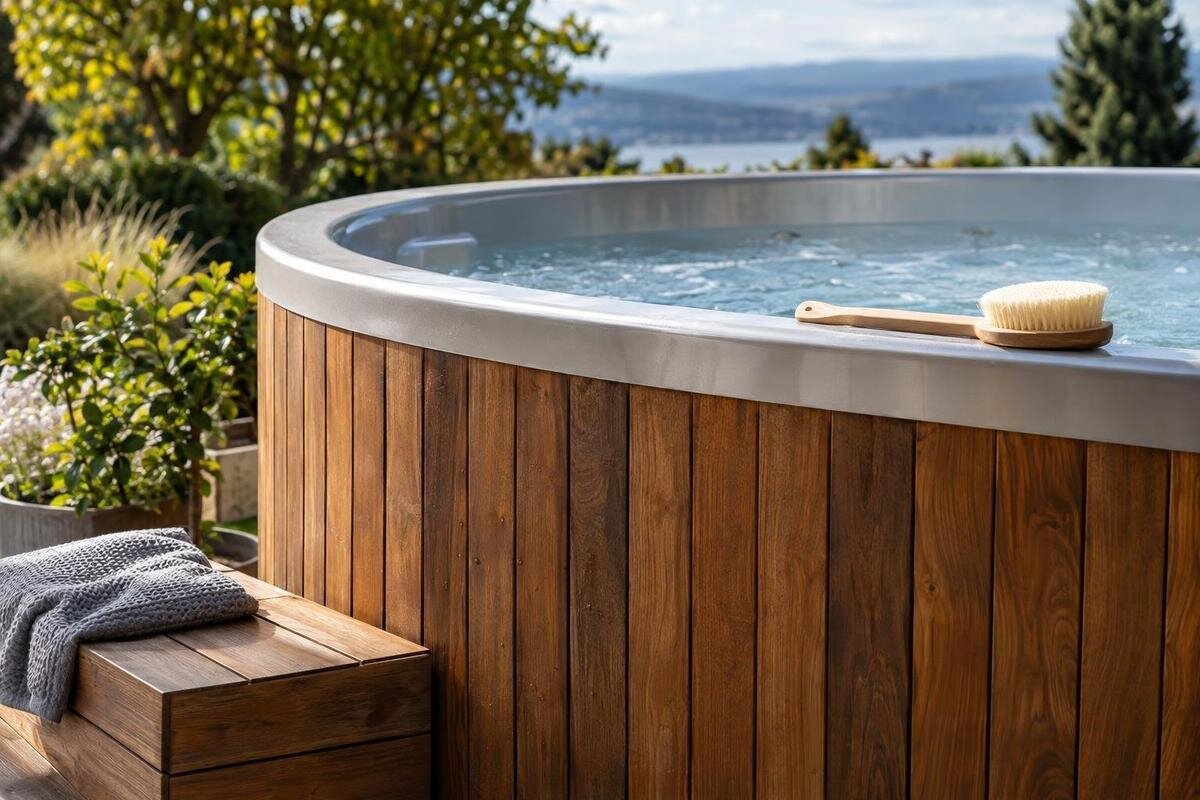
Hot tub exterior care
Caring for a hot tub’s wooden exterior starts with confirming what the outer panels are made from and what finish is on them. A wood-like colour or grain does not establish that the surface is solid timber, untreated wood or suitable for a particular cleaner. This guide is about the outside cladding: identifying it, noting visible changes, checking cleaning and treatment instructions, and allowing for the garden’s actual exposure. It does not cover the shell, interior cleaning or water care. If the material or coating cannot be confirmed, pause before applying a product and ask the supplier for instructions for that exact model and finish.
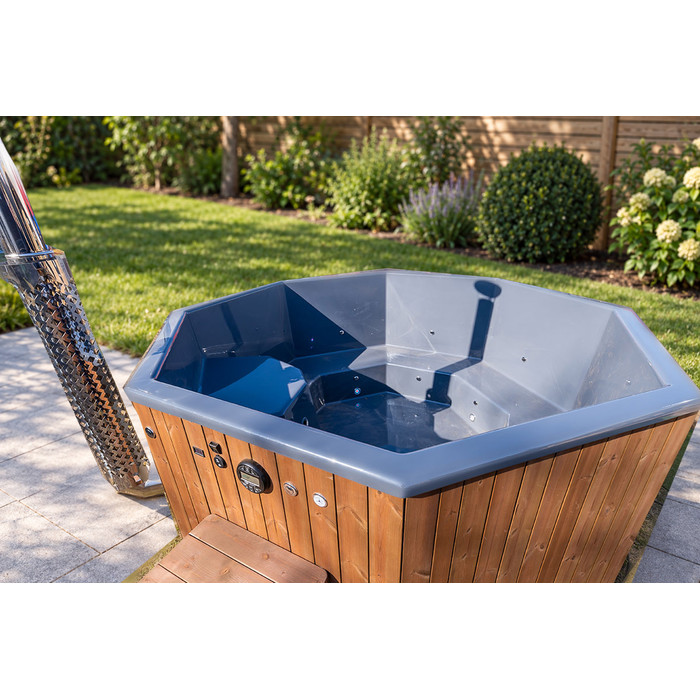
Identify the exterior material and finish
Begin with the product paperwork, not the appearance of a panel. Exterior cladding may be solid timber, a wood veneer, a composite or another material with a wood-like pattern; a visible coating can add another set of care requirements. These are possibilities to check, not claims about any particular hot tub. Look for the exact model and finish supplied, rather than a general catalogue description, and check whether the material statement covers every outer panel or only a trim detail. If the paperwork says only “wood effect”, “timber exterior” or names a colour, it may leave the substrate and coating unclear. Ask the retailer or manufacturer to identify both in writing before choosing a cleaner or treatment.
If you own or are considering the Bloomcabin Hot Tub Cove 2, use the model name to request details of the exterior material, the finish applied at the factory and the care instructions for that version. The model name alone does not establish the exterior construction. If optional finishes or cladding choices are available, ask which one is on the unit being considered or already installed. Keep the answer with the product paperwork, including any explanation of which panels or trim it covers. Advice for garden furniture or a different hot tub may not be suitable for this surface.
What changes in appearance can tell you
Look for changes rather than trying to diagnose them. Note a difference in colour or sheen, dull or shiny patches, water marks, dirt build-up, a raised edge, visible cracking, peeling or a gap between panels. Record where each appears and whether it is limited to one area or repeated along an edge. A colour change on its own does not prove that timber has failed, that a coating has worn through or that a treatment is due. Avoid labelling a mark as rot, mould or water damage based only on its appearance. The purpose of the inspection is to describe what is visible accurately enough to compare it later or explain it to a supplier.
Lighting and surface condition can affect what you see, so make a note of whether the panel was dry, in direct sun or shaded when you looked. If you can, compare the same area from a similar angle later rather than relying on memory or a photograph taken in different light. A mark that remains, changes or spreads is useful information, but it still does not identify its cause. If the change includes lifting, a new split, movement or an opening seam, take clear photos and request model-specific advice instead of deciding that a coat of oil or stain will solve it.
Inspect the cladding without disturbing it
Walk around the accessible exterior and inspect the panels, corners, edges and joins at a comfortable distance. Look where cladding meets trim or another material, because a small change is easier to describe when its position is clear. Note any areas where dust or leaves collect, or where a panel is difficult to see. Do not remove panels, reach behind equipment, lift a component or dismantle the hot tub to inspect the finish. If the unit is close to a wall, screen or planting, record which parts are hard to access; that can matter when planning routine observation or future work. The aim is a visual record, not an attempt to test the construction.
Do not use a fingernail, blade, abrasive pad, tape or tool to check whether a finish is loose, and do not press on a suspect area to judge its firmness. These tests can disturb a surface without showing what lies beneath. If you need help identifying an exterior panel on the Bloomcabin hot tub Haven 6, request a drawing or care sheet that shows its position. Refer to a corner, trim detail or other visible feature when describing the area. If you cannot view a section safely, tell the supplier where it is rather than forcing access or moving the tub.
Confirm the cleaning method before you begin
There is no reliable one-size-fits-all cleaner for an exterior whose material and coating are unknown. Check the manufacturer’s instructions for the precise cladding and finish, then confirm the permitted cleaning product, water use, cloth or brush, rinsing and drying method, if any. Read product labels as well: a cleaner described as suitable for wood is not automatically compatible with a factory coating or composite panel. Do not assume that washing-up liquid, bleach, a solvent, an abrasive pad, steam or a pressure washer is acceptable. If the instructions name only a broad category, ask for the specific product or method before beginning.
Follow the stated sequence and limits rather than combining advice from unrelated guides. If a manual recommends a test area, use only the location and procedure it specifies; a successful spot test does not authorise a different chemical or a more forceful method. Do not combine products or invent a dilution; follow the cleaner’s label and the hot tub maker’s instructions together. Stop if the finish looks altered, colour transfers or the surface behaves differently from the instructions, and contact the supplier. For the Bloomcabin Hot Tub Fjord 8, request exterior-cleaning guidance for the supplied finish instead of treating the product name as a cleaning specification. Keep this separate from shell and water-care instructions.
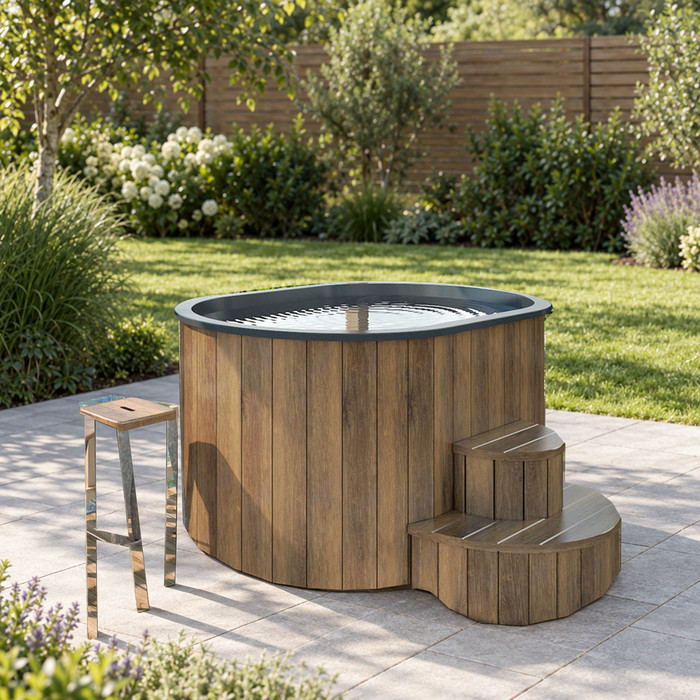
Does the wood need a treatment?
Whether wood needs a periodic treatment depends on what it is, what was applied originally and what the maker specifies. Do not assume that a dull, lighter or weathered-looking surface needs oil, stain, varnish or sealant. A change in appearance can have more than one cause, and adding a product without checking may obscure the original finish or make later assessment difficult. Confirm first whether the exterior is genuine timber, whether it has a factory coating or treatment, and whether the care instructions call for any renewal at all. If they do not state a requirement or interval, ask rather than inventing one.
If treatment is specified, request the product name or an approved product class, preparation and application instructions, the recommended interval, and details of any parts that must not receive it. Ask whether the guidance applies to your exact finish and whether an owner can do the work or should use a service provider; do not assume either answer. When enquiring about the Bloomcabin hot tub Aurora 10, include these questions in your request for exterior-care information. A written answer should make clear whether treatment is required at all, rather than leaving you to choose a product simply because its label says “wood preservative”.
Plan care around the garden’s exposure
Use the garden itself to plan observation; do not apply one seasonal rule to every South African site. Note which sides receive direct sun and when, where rain runs off or splashes, whether irrigation reaches the cladding, and where wind carries dust, leaves or grit. These conditions can make some areas look different or collect dirt sooner, but they do not by themselves set a treatment interval. A simple sketch or a few labelled photographs can show which faces deserve closer visual attention and help you describe recurring marks. Base any cleaning or re-coating timetable on the maker’s instructions, not an assumed climate calendar.
Changes to the garden may also change what reaches the exterior: a new shade structure, screen, planting bed or sprinkler position can alter exposure or access. That is a reason to review the care plan, not evidence that the cladding is protected or needs a different product. If considering the Cove 2 hot tub, describe the proposed position when asking about care for the finish being offered. Include the sides exposed to irrigation, recurring splash or wind-blown debris. Also explain which sides will be difficult to reach, so access for inspection and any specified upkeep forms part of the discussion.
When to ask the supplier for advice
Ask the supplier for help when a change is new, spreading, difficult to identify or accompanied by a physical change such as lifting, cracking, a widening gap or a panel that appears to have shifted. These observations do not establish the cause or show whether a repair is needed, but they are more useful than guessing at a treatment. A uniform colour difference by itself may be an appearance change rather than proof of a fault; only someone familiar with the model and finish can advise whether it matters. Describe what you see and ask what should happen next before applying a cleaner or coating.
Send the model name, the original finish details if known, and well-lit photographs that show both the whole panel and a closer view. Explain when you first noticed the change, whether the exterior had recently been cleaned or treated, and which products were used. Ask whether to leave the area untouched, whether a compatible cleaner or repair method is specified, and who should carry out any repair. For an enquiry about the Haven 6 hot tub, identify the installed finish as well as the model so the supplier can address the affected surface. Keep the response with the photographs and dates for future reference.
Keep a record of the exterior-care instructions
A short exterior-care record helps separate what the manufacturer recommends from what you may merely have heard or tried. Keep the model and finish details, manual, supplier responses, approved cleaner or treatment names, any stated interval, and the dates of work that was actually done. Note a visible change with its location and date rather than writing only “wood looks worn”. Keep labels or instructions for any approved product, so you can check that the same formulation is being used next time. If a schedule is not given, do not create a treatment deadline from memory; ask how often the surface should be checked and what would prompt a follow-up.
Record changes in garden exposure as well, such as a new source of splash or shade, so the context is available if a mark appears later. Keep exterior-care notes separate from water-treatment readings: they serve different purposes. If you are comparing the Fjord 8 product page with another option, file the material and finish information under the corresponding model name to avoid mixing up care requirements. A simple folder or digital note is enough. Make it available to anyone who looks after the exterior, so they can see which products were used, what work was completed and whether a supplier’s response is still outstanding.
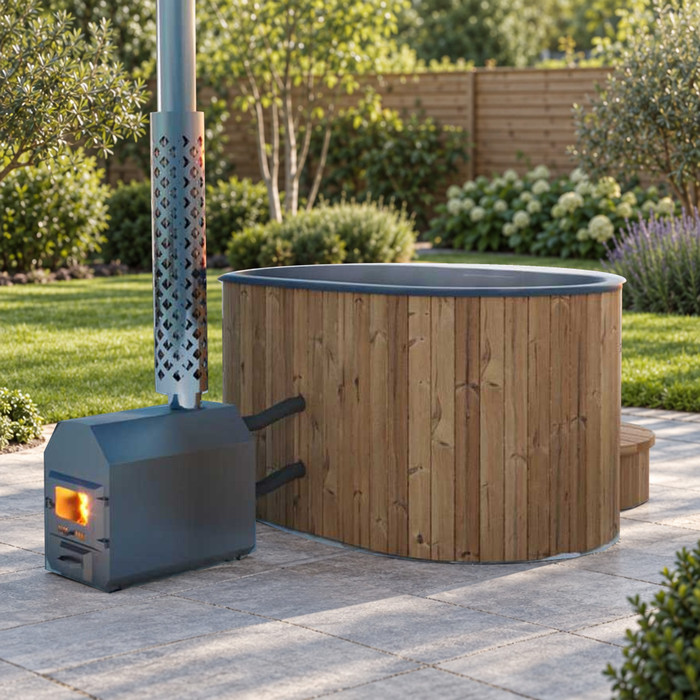
Compare care requirements before choosing a model
Before choosing a model, compare written answers about the exterior rather than comparing photographs or colour names. Ask what each outside panel is made from, what finish is applied, whether it is standard or optional, and which cleaning and treatment instructions cover it. Request any manufacturer-stated maintenance interval, plus guidance on recognising wear and arranging repair. When reviewing the Aurora 10 product details, note which questions are answered and which still need clarification for the exact configuration you intend to order. Use the same questions for each alternative, without assuming that all models have wooden exteriors or need the same care.
Consider how much effort the instructions involve: whether approved products are clearly identified, whether application requires specialist help, how often a stated task recurs, and whether the outside can be reached for inspection. These are practical ownership factors, not a ranking of the named tubs. If answers are vague, request clarification before purchase so you know what remains unknown. A seller’s verbal assurance is less useful than a model-specific care sheet you can keep. Choose according to confirmed exterior construction and documented upkeep, rather than an impression that one surface will be easier to maintain based on a photograph.
Allow for ongoing care in the ownership budget
Budget for care using variables, not guessed catalogue prices. Depending on the confirmed finish, possible costs may include a maker-approved cleaner or treatment, suitable application materials, professional labour if required, and repair or replacement work if damage occurs. The actual need, product and interval must come from the manufacturer or a qualified service provider; do not assume every timber exterior needs annual oiling or that non-timber cladding requires no upkeep. Ask for current local quotes where work or supplies are recommended. This produces a more realistic comparison without inventing a standard cost or treatment cycle.
Weigh practical effort alongside cash outlay: time spent observing the panels, ease of reaching the exterior, and whether the documented method fits the way you want to look after the tub. Keep access and service questions separate from the cosmetic finish; do not modify cladding or apply a new coating to make care seem simpler without approval. When material, finish and care instructions are all clear, you can judge the ongoing commitment before choosing. If one of those details is missing, treat it as an open buying question rather than an invitation to experiment after installation.
Frequently asked questions
How can I tell whether a hot tub’s exterior is real wood?
Colour and visible grain are not enough to identify the material. Check the documentation for the exact model and finish, and ask the supplier whether it describes every exterior panel or only a decorative detail. Get the coating or finish identified as well.
Can I use ordinary wood oil or stain on the cladding?
Do not apply oil, stain, varnish or sealant until the material and existing finish are confirmed and the maker’s instructions allow it. A product intended for one type of timber or finish is not automatically suitable for another exterior.
Which cleaner should I use?
Use a cleaner and method specified for the exact exterior material and finish. Check the manufacturer’s instructions and the cleaner’s label before starting. If the instructions are unclear, ask the supplier instead of testing a household cleaner or a more forceful washing method.
How often should I treat the wood?
There is no treatment interval that can be assumed for every hot tub exterior. The material, factory finish and manufacturer’s care instructions determine whether treatment is needed and, if so, when. If no interval is stated, ask the manufacturer or supplier rather than creating one.
Does a change in colour mean the exterior is damaged?
Not by itself. Colour or sheen can change in appearance without revealing the cause or whether treatment is needed. Note where the change is and whether it develops. If it is accompanied by lifting, cracking, movement or a widening gap, send the supplier clear photos and ask for model-specific advice.
Knowing the cladding material and finish gives you a clear basis for caring for a hot tub’s exterior. Follow the matching cleaning and treatment instructions, and use observations of the garden’s exposure to track where marks recur—not to guess which product to apply. Before buying, consider whether the documented upkeep and access requirements suit the time and effort you want to spend. The aim is to understand what that particular exterior needs, rather than treating every wood-like surface in the same way.
