
How to Plan Water Supply and Drainage for a Garden Hot Tub
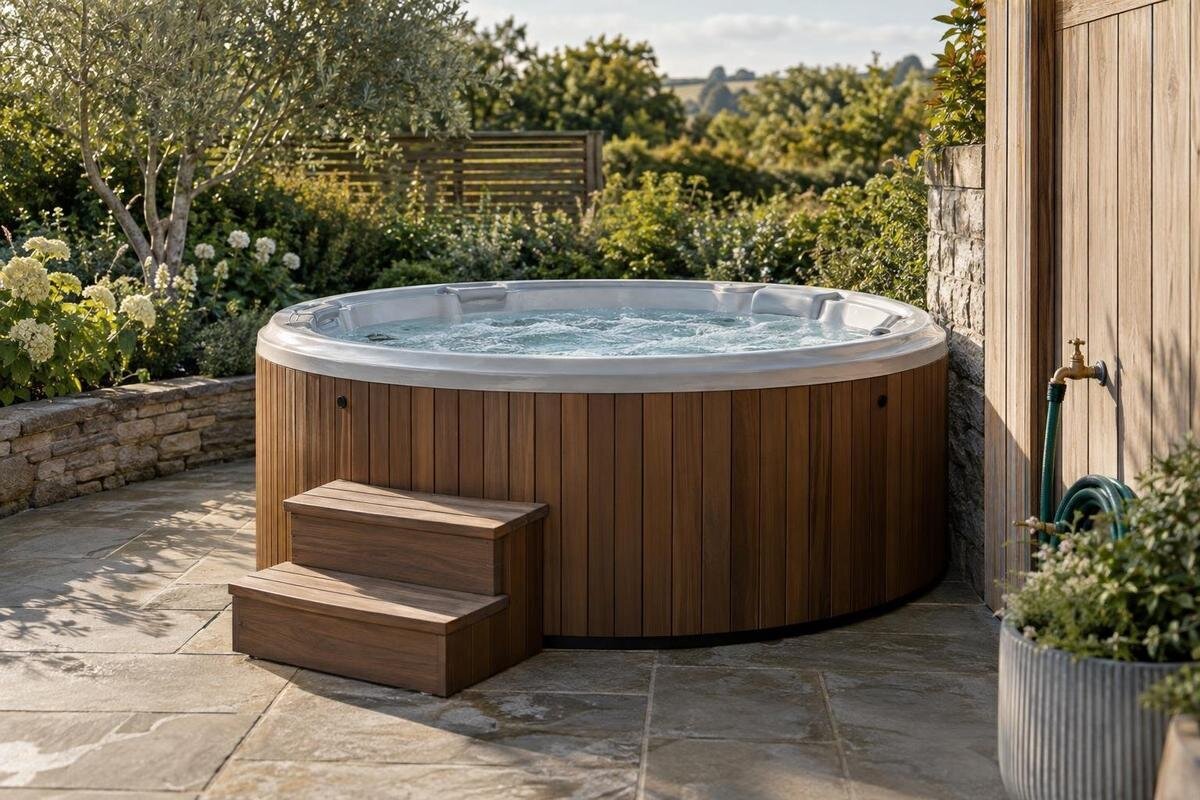
Garden hot tub planning
A garden hot tub needs two workable water journeys: a suitable source for filling and an acceptable destination for emptying. Confirming that a tap is nearby is only half the plan. Before choosing a model, check its actual fill requirements, trace a practical route for the hose, locate the drain connection and decide where used water can go. Rainwater running across the garden is a separate issue; a route that handles one does not automatically handle the other.
Identify a reliable source for filling
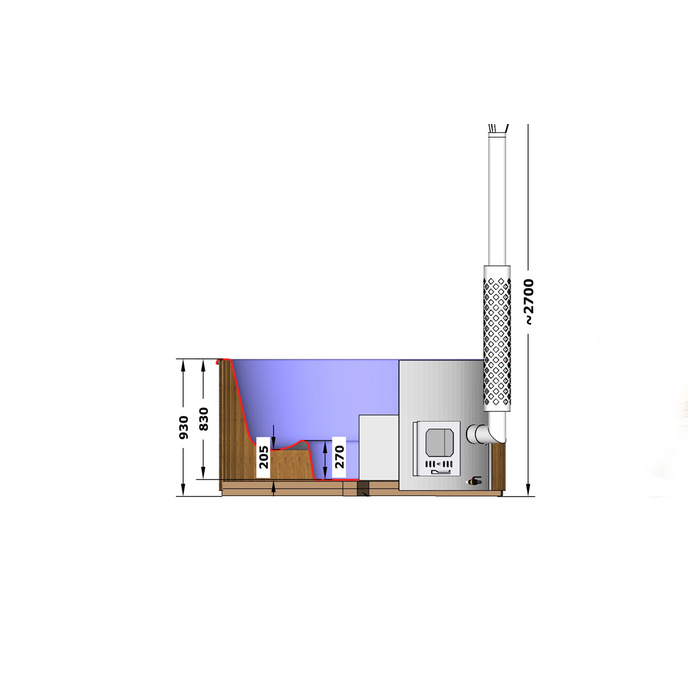
Start by identifying the point at which water will enter the garden: an outdoor tap, an indoor tap reached by a hose, a storage tank or another supply. Note who controls it, whether it will be accessible when you need to fill, and whether it is shared with household or garden use. The nearest outlet is not necessarily the best source if it is unreliable, awkward to reach or already heavily used. If filling depends on a new fixed connection rather than a temporary hose, include that work in the plan and ask a suitably qualified local plumber what arrangement is appropriate for the property.
Check current water-use conditions before treating any source as unlimited. Ask the municipality or water services provider whether restrictions or other conditions affect a hot tub fill at your address, particularly if the supply is shared or metered. For a borehole, rainwater tank or delivered water, verify its dependable quantity and ask the manufacturer whether that source is acceptable; do not assume water available for garden use suits a hot tub. Keep the answer with your shortlist. If Cove 2 is under consideration, record its confirmed requirements rather than reading capacity or connection details into its name.
Confirm the water volume before planning a fill
Capacity is the key figure for estimating an initial fill, but obtain it for the exact model and configuration you are considering. Ask the supplier or manufacturer for the stated water volume and the specified fill level, and clarify what the figure includes and whether it is approximate. A product name, photograph or number in a name is not a capacity specification. Use written information for the exact version, not a generic estimate for a tub that looks similar. If more than one configuration is available, make sure the answer applies to the one in your quotation.
Compare that volume with the source you identified and the household's normal demand, rather than assuming the tap can supply the water at a suitable rate. If the source is a storage tank or shared supply, ask the provider or a plumber whether the planned draw is realistic and how it could affect other users. Check current restrictions before scheduling a fill. Keep each figure and its source in a comparison sheet; for Haven 6, confirm the water volume directly rather than interpreting the numeral in its name. Distinguish the amount of water needed from the time needed to supply it: a volume alone will not tell you how long filling will take. If a filling-time estimate depends on assumed pressure or flow, ask a plumber to assess the actual supply. This also helps you plan when the tap and hose route will be occupied, especially where other people need access.
Map the hose route to the fill point
Draw the actual hose route from the selected outlet to the manufacturer's stated fill point. Measure along the route, not as a straight line across the garden, and note gates, corners, changes in level, thresholds and places where the hose would cross a path. This reveals whether a suitable hose can reach without being stretched, pinched or left where it obstructs ordinary access. If the route passes through a doorway or between separate areas, decide how the opening will remain usable while filling and whether the hose can be removed without moving anything.
Plan where the hose will connect and where it can be put away afterwards. Check that it will not be driven over, caught by a moving gate, dragged over a sharp edge or exposed to conditions the manufacturer advises against. Use the filling method and compatible fittings specified for the model; do not improvise a permanent plumbing connection from a temporary hose. For Fjord 8, mark the confirmed fill point on your sketch and check the route right up to that point, rather than stopping the measurement at the edge of the tub. Include the space needed to handle the hose and reach the connection. If the route crosses a shared path, decide how access will be managed during filling. Where a fixed outlet, pipework change or difficult route is needed, ask a qualified plumber to assess the arrangement before you commit to that position.
Check whether the source water is suitable
Source type and source-water suitability are separate questions. A supply may be physically accessible yet not be accepted for filling under the manufacturer's instructions. Ask which sources the exact model permits, whether the supplier sets limits for incoming water, and whether testing or a particular connection is required. Keep this to initial-fill requirements; it is not a substitute for the manufacturer's routine water-care directions. Do not choose a source simply because it is clear, convenient or used elsewhere in the garden, and do not assume every alternative supply is interchangeable.
Where the proposed source is a borehole, stored rainwater or water delivered to the property, tell the supplier what it is and ask for a written answer before ordering. If its composition or reliability is uncertain, ask whether a local water professional should assess it; do not try to correct it by guessing at products or quantities. Confirm any conditions for drawing or storing that water with the relevant provider. Record the answer alongside your source notes for Aurora 10 or another shortlisted model. Keep two separate entries: whether enough water will be available, and whether that water is acceptable for filling. An answer to one question does not resolve the other. If you are considering a different source as a backup, include it in the enquiry rather than assuming the same answer applies.
Get the model-specific filling details
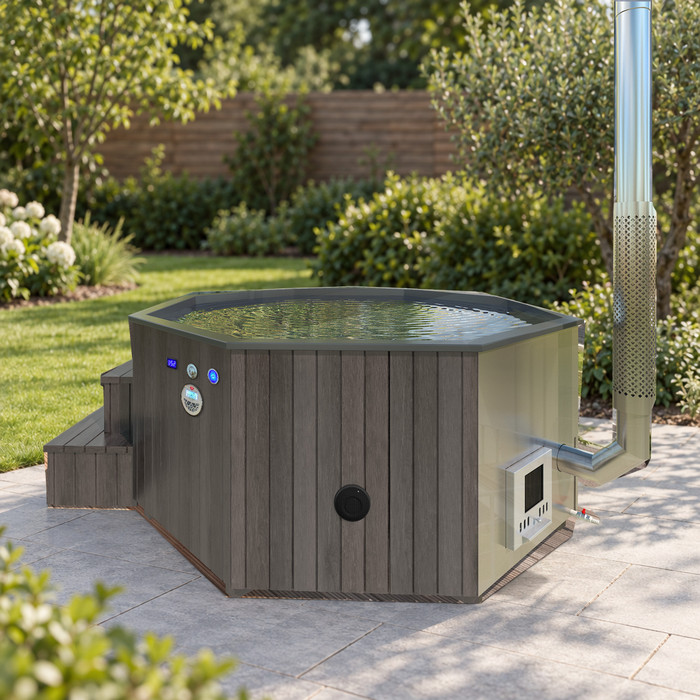
The fill point and procedure can determine whether your water route works. Ask the supplier for current model-specific instructions or a diagram showing where water enters, the required fill level, and any specified connector or access clearance. Confirm whether the point will remain reachable in the planned position and whether filling involves a particular sequence. Do not assume that every hot tub is filled through the same opening or that a product photograph identifies the connection. If the drawing is unclear, ask the supplier to mark the point and explain the method before purchase.
Use a comparison sheet with one line per model: confirmed fill volume, acceptable source types, fill-point location, specified fittings and any installation work that needs a plumber. Ask who supplies connection components and whether they are included in the quoted work; do not infer inclusion from a listing. For Bloomcabin Hot Tub Cove 2, request the same details as for every shortlisted tub so that the comparison is consistent. Where a supplier's answer depends on your site, attach the route sketch and identify the tap or other source being discussed. Keep unanswered questions visible rather than filling gaps with assumptions from another model. The useful comparison is whether each filling arrangement suits your source and route, and what work remains to make it usable. Keep the relevant instructions and any agreed connection work with your order notes.
Confirm drain access and the emptying method
Emptying needs its own model check. Ask the supplier where the drain outlet is, what connector or hose the manufacturer specifies, and how water is meant to leave the tub. Confirm whether the instructions rely on gravity or specify another approved method, and whether any fitting is part of the product or must be obtained separately. These are questions, not details to infer from a model name, image or another tub's manual. Ask for current instructions for the precise version you plan to buy, including any stated requirements for access to the outlet.
Think about access to that outlet with the tub in place. The connection needs to be reachable for attaching the specified hose and controlling the discharge; it should not be hidden behind an obstruction or depend on moving the tub. If access will be tight, show the proposed position to the supplier and ask for an installation drawing or written confirmation. Check whether any panels or parts need to be removed, and who should do that. For Bloomcabin hot tub Haven 6, record the answer separately from its filling details so the two water routes are not confused.
Trace the route from drain to destination
From the confirmed drain outlet, trace the full route to the proposed receiving point. Note its length, bends, crossings, changes in level and whether a hose can be laid out without blocking a doorway or normal walking route. A short straight line on a sketch does not show all these constraints. Ask the manufacturer which route and emptying method its instructions allow, then have a plumber assess any permanent pipework or uncertain change in level. Do not rely on an improvised hose connection to solve a route problem.
If the route would need pumping, lifting over an obstacle or a long hose run, do not choose equipment by guesswork. Ask the supplier whether the proposed approach is compatible with the tub and have a suitably qualified plumber assess the full arrangement. Consider how discharge will be started, monitored and stopped under the manufacturer's instructions, and whether the route can be kept clear of people and neighbouring property. Write down the plan for each candidate, including Bloomcabin Hot Tub Fjord 8. Mark any point where a hose would cross a gate, path or doorway, and show the proposed receiving point clearly. This gives the supplier and plumber the same route to assess. Also distinguish temporary hose placement from any permanent work: the plan should make clear what must be set out each time the tub is emptied and what, if anything, will remain installed.
Check where emptied water may go
Identify the destination before deciding that a route is usable. A garden bed, lawn, soakaway, sewer connection and stormwater drain are not interchangeable merely because each can receive water. Ask the municipality or relevant water services provider which discharge route, if any, is acceptable at the property, and whether conditions apply to the water's composition or timing. Describe the exact outlet and destination rather than asking only whether hot tub water can be emptied. Do not send water to a drain or neighbouring area on the assumption that it will be harmless or allowed.
Water-care instructions matter at the point of discharge. Ask the manufacturer whether its current guidance sets conditions on emptying water that has been treated, and whether preparation or a waiting period is required for the model; follow its written instructions rather than general advice for another product. Give the local authority or service provider any information it asks for about water-care products used. Never assume water is suitable for plants, soil or a sewer because it looks clear. Add the confirmed outlet and any conditions to your comparison for Bloomcabin hot tub Aurora 10.
Keep rainwater runoff separate from drain-down
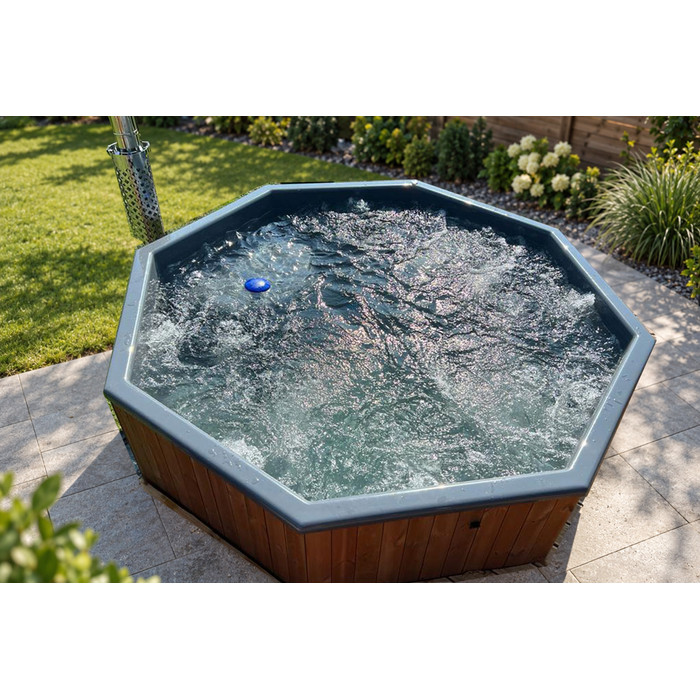
Keep planned emptying separate from rainwater management. Emptying is a deliberate release of the tub's contents through a selected route; rain falls across surrounding surfaces and follows the site's existing low points. After rainfall, note where water gathers, crosses paving, approaches a boundary or runs towards a low point. This helps show whether the proposed discharge path could create a new wet patch or send water into an unintended area. It does not prove that an outlet is acceptable or that the ground can absorb a tub's contents.
Do not count a roof gutter, surface channel or garden drain as a hot-tub drain unless the local authority and relevant professional confirm that use. Rainfall may be routed elsewhere, and one path should not be assumed to accept both a large controlled emptying and ordinary runoff. If soil stays wet, the ground is steep, water already crosses a boundary or the destination is uncertain, pause and have a competent plumber or drainage professional assess it. Keep the planned drain-down hose distinct from ordinary rainwater paths on your sketch.
Resolve local and model-specific requirements before ordering
Before committing, give the property's exact address, intended water source, estimated fill volume, drain route and proposed destination to the right people. Ask the municipality or water services provider about current water-use conditions and the acceptability of the discharge route; ask a qualified local plumber about any new connection, pipework or existing drain on which the plan depends. Ask which plumbing requirements or permissions apply instead of assuming them. If the property is managed, rented or part of a shared development, check with the responsible owner or manager as well. Keep replies in writing so the supplier can work from the same plan.
Compare models once the supplier has provided current specifications and instructions for the exact version: water volume, source requirements, fill point and method, drain outlet, compatible connection and emptying procedure. Review these alongside your site sketch rather than as a separate list of product features. For each model, note whether the existing arrangements work, whether changes are needed, or whether an important question remains unanswered. Ask for itemised local quotes if a plumber, water assessment, additional supply or drainage work may be needed, and identify who is responsible for each task. This makes the practical differences between your options clearer without assuming that one model is easier to connect. A model is ready to order when the filling and emptying routes, the acceptable destination and any necessary work are confirmed, not merely because a tap and drain appear nearby.
Frequently asked questions
How much water will my chosen hot tub need?
Ask the supplier for the stated water volume for the exact model and configuration, together with the specified fill level. Treat a model name or photograph as identification, not a capacity figure. If the volume is approximate, ask what it includes before comparing it with your water supply.
Can I fill a hot tub from a borehole or rainwater tank?
Only use an alternative source if the manufacturer confirms it is suitable for the model. Tell the supplier what the source is and ask whether it needs to be assessed. Also check current conditions with the relevant local provider; do not assume that water used in the garden is suitable for filling.
Can I empty hot tub water onto the lawn?
Do not assume that a lawn is an acceptable destination. Check the manufacturer's water-care instructions and ask your municipality or water services provider which discharge routes are acceptable at your property. Ground that appears to absorb water may still become waterlogged or allow water to flow towards another area.
Can I use a stormwater drain to empty a hot tub?
Ask the municipality or relevant water services provider before using any stormwater drain. Managing rainwater and emptying a hot tub are separate matters, and a nearby inlet is not proof that it is suitable for tub water. Describe the exact outlet and proposed destination when you enquire.
What if the hot tub's drain outlet is difficult to reach?
Ask the supplier to confirm the outlet location, specified connection and manufacturer-approved emptying method for the exact model. If the route would need permanent pipework or relies on a difficult change in level, have a suitably qualified local plumber assess it before ordering.
A workable plan has two documented paths: a confirmed source for the model's specified fill and an accessible drain connection leading to a destination accepted for your property. Check current water-use and discharge conditions, follow the manufacturer's instructions, and have uncertain plumbing or runoff assessed by a competent local professional. With those details in hand, compare shortlisted models using verified water requirements rather than guessing from names or photographs.
