
How to Reduce Hot Tub Heat Loss and Running Costs
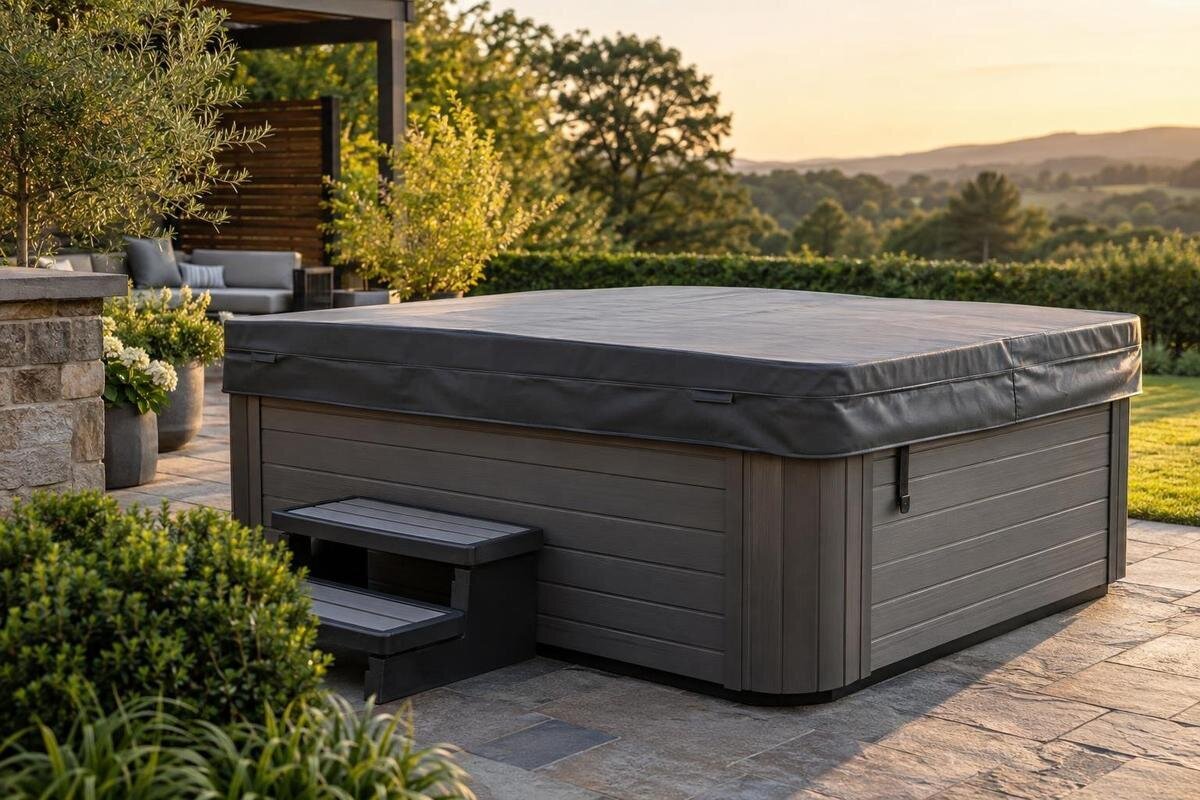
Hot tub heat retention
Heat loss from an outdoor hot tub depends on more than the heater. Cover fit and condition, documented insulation, wind exposure, weather and everyday use all affect how much warmth must be replaced. A useful approach to reducing running costs is to identify where heat loss can be reduced, then compare energy use under similar conditions rather than relying on generic savings claims. This guide focuses on heat retention and a practical cost estimate using the tariff on your current South African bill. A product name alone does not confirm a model's insulation, heating method or energy consumption.
Where an outdoor hot tub loses heat
An outdoor hot tub loses warmth at the water surface, through the cover and shell, and potentially through the base or connected pipework; the routes depend on its construction. With the cover removed, the water is directly exposed to air, and evaporation adds to heat loss. Moving air can carry warmth away from exposed surfaces, while colder surroundings widen the difference between the water and the air. If the heater is maintaining a chosen setting, it must replace some of the warmth that escapes. That makes cover condition, documented insulation and the tub's exposure sensible first checks, rather than assuming the heater is at fault.
Heat loss is not the only reason energy use changes. The heating controls and, depending on the setup, circulation or filtration schedules can affect consumption too. How often the tub is used, how long it stays uncovered, water additions, the selected temperature and the weather all matter. A household bill may include other appliances, so it will not show the tub's share unless consumption is measured separately. Before changing anything, record the setting, documented operating mode, schedule, cover condition and normal usage. That gives you a baseline and makes it less likely that a colder spell or extra sessions will be mistaken for an insulation problem.
Check the cover's fit and condition
Start with the manufacturer's instructions, then inspect the cover in its usual closed position. Walk around the full rim and look for an edge that sits high, a shifted corner or a visible gap. Check that the hinge lies as intended and that any straps or fastenings are present and undamaged. A cover can look sound from one side yet sit unevenly elsewhere, so check each edge rather than judging by the top surface alone. Remove anything caught between the cover and rim, and do not force, trim or alter it to make it close. The cover needs to fit the particular tub, not simply look close in size.
Look over the surface, seams, hinge and underside for cracks, splits, sagging or signs that water has entered the cover. Damage may affect its shape and insulating ability, but appearance cannot tell you how much energy is being lost. Keep the cover closed whenever the tub is not in use, and follow the maker's care instructions; do not put weight on it. If you need a replacement for a Cove 2 hot tub, ask the seller to confirm the exact matching cover and whether it is included or sold separately. A model name alone does not confirm dimensions, fit or package contents.
Read the insulation information carefully
Look for a specification or manual that says which parts are insulated, rather than treating the word insulated as a complete answer. The documentation may describe the cabinet, shell, base, pipework or only selected areas. Ask whether material or thickness figures are stated and what they refer to; do not assume that insulation covers every part of the tub. If the manufacturer provides energy-use figures, check the stated conditions, including the setting, cover use, weather and whether pumps or other equipment are included. Without comparable conditions and boundaries, two performance claims cannot be judged on equal terms.
For an existing tub, use the manufacturer's maintenance guidance to identify what can be inspected safely. Do not remove panels or pack extra material around equipment or pipes as a do-it-yourself fix; that could obstruct access or interfere with the intended operation of the system. If the documentation is unclear, ask the manufacturer or seller for written details about the insulation and heating method. When considering a Haven 6 hot tub, ask which areas its insulation covers. A clear answer is more useful than guessing from a photograph or a broad marketing description.
Assess wind exposure and shelter
Consider the actual spot where the tub sits instead of assuming that local weather affects every garden in the same way. Notice whether gusts reach the cover directly, whether the site is more exposed at certain times, and whether nearby buildings or fences interrupt the airflow. A sheltered corner may experience different conditions from an open part of the same property. Make a note of the conditions during your usual use and when you check energy readings; wind and cooler air can make comparisons misleading if they change substantially between periods.
Existing shelter may reduce direct exposure, but it does not remove heat loss through the water, cover or shell. Do not move the tub, enclose it or add a screen without checking the manufacturer's siting and access guidance. A barrier must not prevent servicing or interfere with equipment intended for outdoor use. If you are planning a location for a Fjord 8 hot tub, confirm the model-specific siting requirements with the seller or manufacturer before deciding on shelter. Where a change affects the installation or equipment, ask a qualified professional before proceeding.
Match the heating schedule to how often you use the tub
The amount of time a tub holds a chosen temperature can affect how much heat must be replaced, but there is no single schedule that will cost less for every household. Keeping the water warm between frequent uses and lowering the setting during a longer break are different choices; the outcome depends on the system, outdoor conditions, time away and energy needed to restore the water to the chosen setting. Check the manual for any supported schedule or economy mode. Do not assume a control feature exists, or that a particular setting is suitable, just because another model offers it.
If the manufacturer permits a schedule change, test one adjustment at a time and record what you changed. Keep the water setting, cover use and other operating habits as consistent as practical, so the result is not confused with a change in routine. Avoid repeatedly changing controls without keeping a record; it becomes difficult to identify which adjustment mattered. For an Aurora 10 hot tub, confirm the heating method, available controls and operating guidance before deciding which schedules to compare.
Reduce heat loss around each session
The cover is most useful when it is closed, so organise what you need before taking it off. Keep the time the tub is open to the air to what is needed for use, rather than leaving it uncovered while preparing towels or other items. Close it again after use in the way the manufacturer recommends. In exposed or windy conditions, a long uncovered period gives air more time to carry warmth away and allows evaporation to continue. These habits do not require a change to the tub's equipment, but they help avoid unnecessary exposure between sessions.
Water additions or replacement can also change the amount of heating required, because incoming water may be at a different temperature. Avoid unnecessary draining or topping up, while continuing to follow the maker's instructions for water care and maintenance. Do not shorten required circulation or filtration schedules to try to cut heat loss: that changes equipment use and is not the same as improving heat retention. If you want to see whether shorter uncovered periods make a difference, note them alongside the energy readings rather than changing several routines at once.
Measure energy use before judging a change
A useful comparison starts with a record of consumption over a defined period. Where a suitable dedicated reading is available, note the start and end readings, dates, weather, selected temperature, hours of use and any changes to the schedule. Also record how long the cover was open and whether there were water additions or other unusual events. You do not need to track every detail indefinitely; the purpose is to identify the main conditions that could explain a difference. If the only reading is for the whole household, it may include appliances unrelated to the tub and cannot reliably isolate its use.
After establishing a baseline, change one factor, such as correcting a cover issue or adjusting a manufacturer-approved schedule, and compare a similar period. Mark conditions that were not comparable, especially different weather or a different number of sessions. If you cannot separate tub consumption safely, ask a qualified electrician about an appropriate measurement method; do not access wiring or improvise a meter connection. When assessing a listing such as Bloomcabin Hot Tub Cove 2, ask whether any published energy figure has a stated measurement method and what equipment it includes.
Calculate the cost using your current tariff
For an electrically heated tub, use the rate that applies to your own account, taken from a current bill or tariff schedule. A generic South African price may not match the rate you pay. If your account has different rates for particular periods or consumption bands, use the rate relevant to the energy being compared. Distinguish charges that vary with consumption from fixed monthly charges: using fewer kilowatt-hours does not normally remove a fixed charge. Note the billing period and tariff used so that a later calculation can be checked against the same basis.
The operating-cost estimate is the measured energy used in kilowatt-hours multiplied by the applicable variable rate in rand per kilowatt-hour. For a saving estimate, multiply the measured reduction in use by that rate, keeping the periods and usage conditions comparable. This is an estimate, not a promised saving, and it does not include the cost of buying or fitting an improvement. If the manufacturer's specified heating system uses another energy source, use its relevant current supplier price and matching unit rather than an electricity tariff. For a listing such as Bloomcabin hot tub Haven 6, ask which energy-use evidence applies before making a model-to-model cost comparison.
Improve the existing setup before replacing it
Begin with checks that do not require altering the equipment: make sure the cover closes evenly, inspect it for visible damage, review the manufacturer's insulation information and note the site's exposure. Then look at your own habits, such as time uncovered and the control schedule. If the cover is damaged or does not fit, compare the cost of an approved repair or compatible replacement with the amount of heat loss you can actually measure. Do not pay extra for an insulation claim until you know what it covers and whether the comparison is based on conditions similar to yours.
If a straightforward change does not explain unusually high use, or if consumption or heating behaviour changes suddenly, ask the manufacturer or a qualified service professional to assess the system. Avoid opening equipment areas or modifying insulation, electrical parts or pipework yourself. If you are comparing a new option such as the Bloomcabin Hot Tub Fjord 8, first obtain the relevant heating, cover and insulation details in writing. A product identity is not proof that it will use less energy than an existing tub, and a replacement is difficult to justify without comparable evidence and a realistic estimate of its full cost.
Compare documented heat-retention features before buying
Ask what is supplied with the tub and what may need to be ordered separately, especially whether a cover is included and which cover fits the model. Request the manufacturer's information on insulation coverage, the heating method, supported controls and any stated energy-use data. If a figure is supplied, ask about the test conditions and whether it covers the heater alone or the wider system. Also confirm the manufacturer's guidance for the intended site and access to equipment. These details make it possible to compare the feature you are paying for, rather than relying on a general claim that one tub is more efficient.
Compare models on the same basis: similar outdoor conditions, selected water setting, cover use, usage pattern and energy-price assumptions. Keep documented figures separate from your own estimates, and mark unavailable information as unknown instead of filling the gap with a guess. For example, before weighing up the Bloomcabin hot tub Aurora 10, check its current product information and ask the seller to confirm any details that are not documented. Apply the same questions to every model on your shortlist. A careful comparison cannot guarantee a lower bill, but it can show whether a claimed heat-retention feature is relevant to your setup.
Frequently asked questions
Should I leave the cover on when the hot tub is not in use?
Yes, keep the cover closed when the tub is not being used, following the manufacturer's instructions. It limits the time the water is exposed to air. Check that it sits evenly and is not damaged; a cover that does not fit properly may leave gaps.
Will switching the hot tub off between uses cut my bill?
Not necessarily. A lower setting or switching off may reduce the energy used to maintain the water temperature, but the energy needed to heat it again, the time between uses and the system's controls all matter. Follow the manufacturer's guidance and compare measured consumption rather than assuming either approach costs less.
Can I add insulation around the hot tub myself?
Do not add loose insulation around the cabinet, equipment or pipework without the manufacturer's approval. It could obstruct access or interfere with the way the equipment is intended to operate. Ask the manufacturer or a qualified service professional about any proposed change.
How can I estimate hot tub electricity costs in South Africa?
Measure the tub's electricity use over a representative period, then multiply the kWh used by the variable rate that applies to your account. Use your current bill or tariff schedule, and do not include fixed charges as a saving from reduced consumption.
Why did my bill not fall after I improved the cover?
The comparison may include different weather, settings or usage, or the meter may include other household appliances. Circulation and other equipment can also affect the total. Compare similar periods using a separate, suitable reading where possible, and seek professional advice if energy use changes unexpectedly.
A well-fitting, sound cover and sensible protection from direct exposure are useful starting points, but neither proves what a particular hot tub will cost to run. Check the manufacturer's information, keep normal operating guidance intact and measure energy use before and after a change. Apply the tariff that actually appears on your bill, and treat undocumented product claims as unknown. That approach gives you a clearer basis for deciding whether to improve your current setup or prioritise verified heat-retention details when buying.
