
Inspecting a Garden Shed After Strong Winds or Heavy Snow
Garden shed care
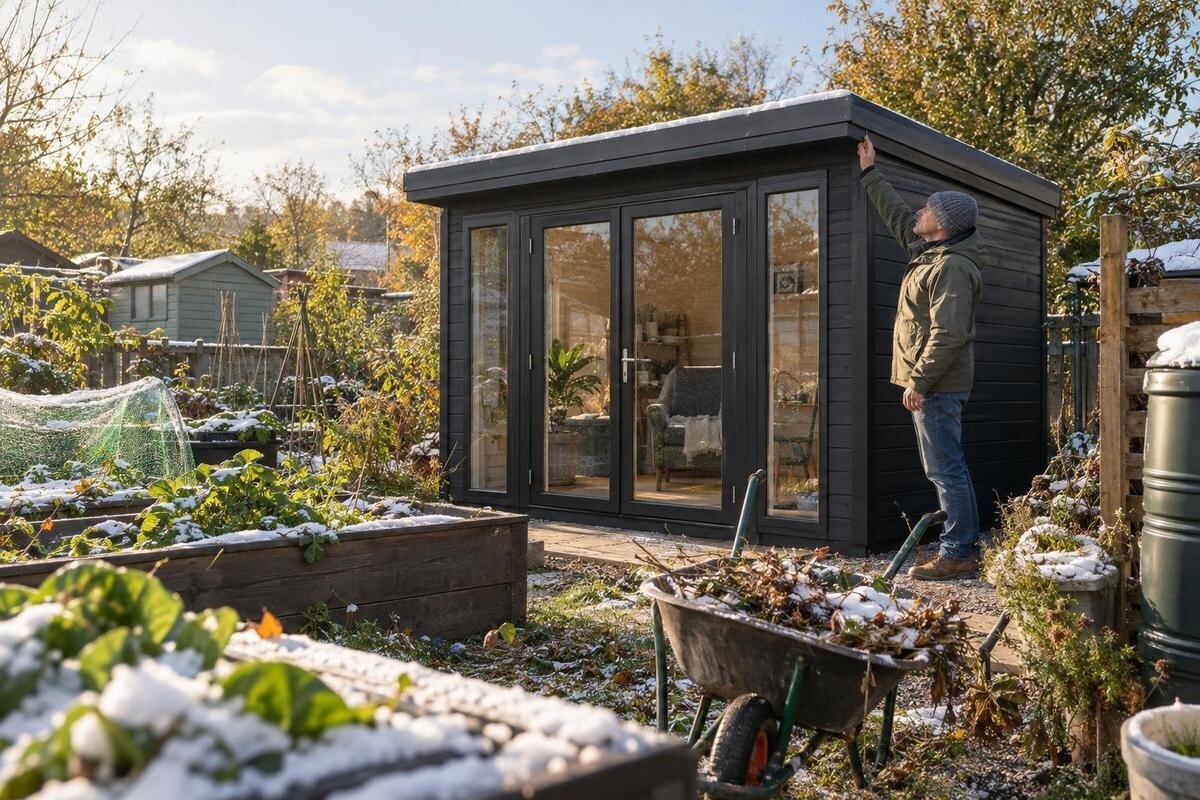
After strong winds or heavy snow, a careful garden shed inspection can show whether the roof, walls, doors or base appear to have changed. Begin from outside and at ground level: look for movement, loose parts and signs of water entry without climbing or disturbing anything. A visual check records what you can see; it does not prove that the structure is safe. This guide explains what to examine, when to keep clear and how to use your observations in a repair or replacement decision.
01
Wait until the site is safe to approach
Wait until the strong wind has eased and the immediate area is safe to reach. Gusts can keep moving branches or loose material after the worst weather has passed, while snow and ice can make paths slippery and conceal debris. From a clear position, scan the shed and its surroundings for hanging branches, damaged overhead cables, leaning fences or objects that could fall. Keep children and pets away. If an obvious hazard blocks access, do not move it yourself; postpone the inspection and arrange appropriate help.
Do not climb onto the roof or use a ladder to reach a damaged edge. Snow may hide the roof surface, and both snow and ice can make access especially hazardous. Treat a visibly sagging roof, leaning wall or separated base as a reason to keep out, not as a prompt to investigate inside. Do not push a panel back into place or stand beneath a loose section. A ground-level view can flag an obvious concern, but it cannot confirm that the shed is structurally safe. If possible, view the shed from more than one safe side, as a change at the rear or along an eave may not be visible from the usual approach.
Make a record before disturbing the area
From safe positions, take a wide photo of each visible side, the roof outline and the ground around the shed. Add closer pictures of any apparent change, with enough surrounding detail to show where it is. Note the date and whether the event involved strong wind, heavy snow or both. Describe what you can see rather than declaring a cause. If older photos are available, compare the same corner or angle; a different viewpoint can make an ordinary joint look displaced. Include a recognisable fixed reference, such as a paving edge or fence post, where it can be done without approaching a hazardous area. This can make later comparisons clearer. If you notice more than one issue, give each photo a simple description such as roof edge, rear corner or door frame. Keep the original files as well as any copies you send, since image dates and wider views can provide context that a cropped image does not.
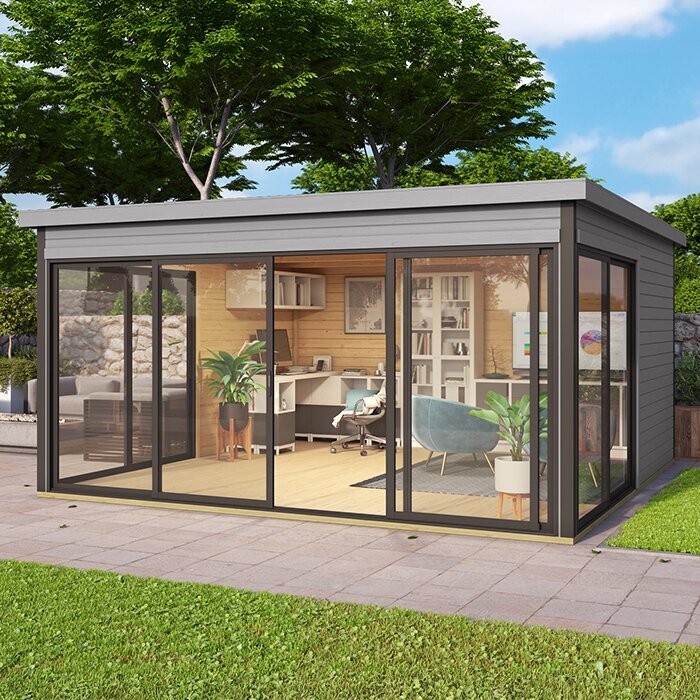
A dated record can also make a repair assessment or replacement comparison more specific. If you may need another shed, note the existing footprint and the route a new unit would need to take. The Verdana 1 garden shed listing is one page to assess against those needs, not evidence of suitability for this site. Check its published dimensions and installation information, and ask about any missing details relevant to local wind or snow exposure before ordering.
02
Inspect the roofline from the ground
Look along the visible roof edges, ridge and eaves for a changed outline, lifted or displaced covering, missing pieces, new gaps or debris lodged where it was not before. After strong winds, a roof edge may be the first place where movement is apparent. Following heavy snow, look for a new dip or unevenness, but do not assume that a roof is undamaged just because its surface looks intact from below. Snow can obscure details, and an altered roofline deserves attention. Also look at the line where the roof meets each wall: an uneven gap or a section that no longer sits flush is useful information to record from a safe distance.
Do not climb up, remove snow, push a loose section or try to fasten it from a ladder. If a roof edge is hanging, a covering is visibly displaced, or the roof appears to have sagged, keep people away and seek qualified advice. If the damage may mean replacing the whole shed, the Verdana 2 garden shed page is one listing to review alongside others. Check the product-specific roof, assembly and site information that is actually provided; do not infer wind or snow suitability from a name or photograph.
Look for wall movement and displaced joints
From a safe distance, check whether the walls still appear upright and whether corners and joints look as they did before the event. Notice a panel that seems to have shifted, a new gap at a joint, a wall that appears to lean, or a change where the wall meets the roof. Strong wind can expose movement that was not obvious previously, while heavy snow may make a change in the overall shape easier to notice. Record the location and appearance rather than trying to move a panel to test it.
A gap or split alone does not explain what caused it; look at the surrounding structure and whether other parts have shifted as well. Do not press on a bowed wall or tighten a connection to see if it will straighten. If a wall has moved or a corner has pulled apart, keep clear and ask a qualified professional to assess it. If replacement becomes a consideration, the Durano garden shed listing can be compared using its stated dimensions, construction and assembly details, rather than assumed to match the current shed. Note whether the change is near an opening, corner or roof junction, because that location gives an assessor more useful context than a general description of damage.
03
Check the base and the ground around it
From ground level, look where the shed meets its base or supporting surface. Note any visible separation, a changed position relative to nearby fixed features, or ground that has washed away or collected water around the edge. A shed that appears to have shifted should not be pulled back into place by hand. Avoid digging beside it, levering the structure or trying to re-level a support while the cause and extent of movement are unknown. Check the whole visible perimeter rather than only the entrance side, since pooling water or an exposed edge may be easier to see along another wall. Photograph any gap before rain, debris or thawing snow changes its appearance. Also note whether nearby paths, paving or drainage channels appear changed, without attempting to clear material from beneath the shed. These observations help separate a visible change around the site from a conclusion about what has happened to the structure.
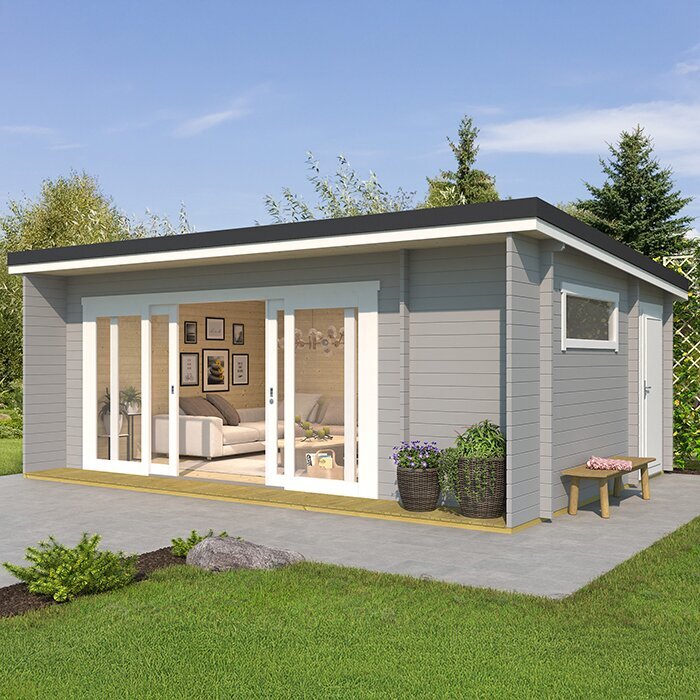
If the base may have moved, establish what needs to be assessed before choosing a replacement. The Veltor 1 garden shed page is one product page to check for any stated base-preparation and fixing requirements. Do not assume that an existing base will suit a different shed just because the general footprint seems similar. Compare the information provided with the actual site, and ask the supplier or installer to clarify requirements that are not stated.
Check whether doors and windows still align
Only if the shed looks stable, observe whether doors and windows sit as they did before the storm. A new gap around a frame, a latch that no longer lines up, sticking or a visibly shifted opening may point to movement elsewhere in the structure. If there is broken glazing or a loose part, keep clear of sharp edges. Do not force a jammed door or window: it may move suddenly, and resistance can be a sign that the frame has changed. Look at the opening from outside first and note whether the frame remains square, rather than repeatedly trying the handle or latch to test its operation.
If access through the opening is important when replacing a shed, include the Orello 1 product page in your comparison only after checking the actual opening details and dimensions stated for that model. Consider the available space in front of the shed and the route that people or stored items need to use. A product name or image does not confirm an opening arrangement, clearance or weather performance, so ask for details that matter to your site before ordering.
04
Look for signs of water entry inside
Enter only if there are no visible signs of instability and access is safe. Look for fresh drips, water marks on internal surfaces, wet flooring or belongings that were dry before the event. Note where the water appears and whether it is near a roof edge, wall joint, door or window. Water can travel before it becomes visible, so a mark inside does not by itself identify the point of entry. Do not stand beneath a damaged roof to investigate it.
Photograph the affected area and move belongings only if doing so is safe. Avoid covering up a mark or treating one visible spot as proof that the source has been found; the relevant damage may be elsewhere. If water entry leads you to consider replacement, compare the published details for a candidate such as the Modano 1 garden shed listing and ask about any unclear roof, opening or installation information. A listing cannot diagnose the leak in the shed you already own. Record whether the mark is dry, damp or actively dripping when you see it, and note any recent rainfall or melting snow that could help explain the timing.
Note loosened fixings without adjusting them
Where they are visible from a safe position, look for missing, displaced or obviously loose fixings and connectors around the roof edge, wall joints and openings. Do not reach for a partly detached component, remove a cover or probe a connection. A fastener that looks out of place may be linked to movement elsewhere, and its appearance alone does not show what repair is appropriate. Record its location in a photo and note whether nearby panels or joints have also changed. It is more useful to photograph the fixing together with the adjoining timber or panel than to take an isolated close-up that gives no indication of its position.
Avoid tightening an unfamiliar fixing or substituting a different one. The correct repair can depend on the particular shed and its assembly guidance, so use product-specific instructions or get advice from a qualified installer. If the incident prompts you to compare a replacement, the Wooden Garden Tool Shed M page is one listing to review for its stated construction and fixing information, if provided. Do not assume that its assembly method or fixings apply to the shed you have.
05
Know when to keep out and call for advice
Keep people out if the roof has a new sag, a wall is leaning, the base appears separated, a large section is hanging loose or the frame has visibly shifted. A door that suddenly will not align may also deserve attention when other parts appear to have moved. Do not wait for another storm to see whether a serious-looking change gets worse. Contact the shed manufacturer or installer for product-specific guidance, or ask a qualified professional to assess structural concerns.
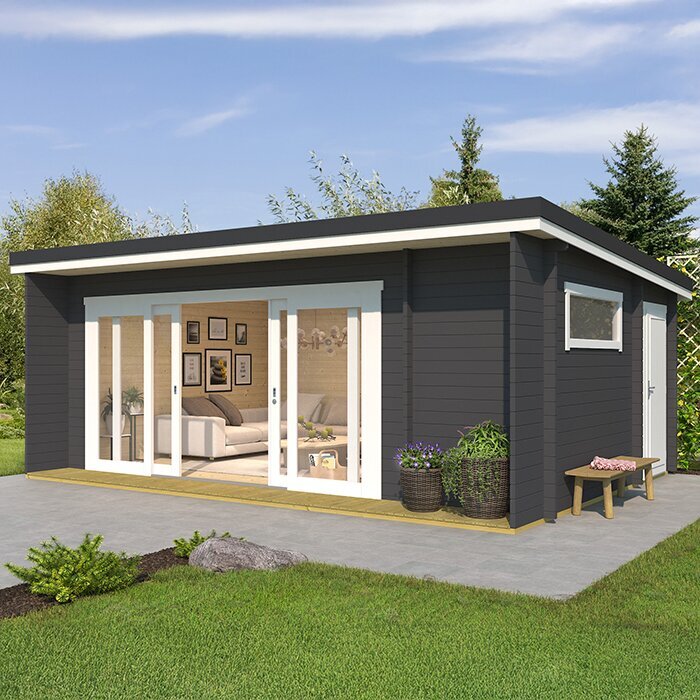
If no serious warning signs are visible, keep the photos and notes and check again only when the site remains safe; snow can hide details until it has cleared. Escalate if a change becomes clearer or recurs. Where a professional advises replacement, the Wooden Garden Tool Shed S listing can be included in a comparison, but its name alone does not establish capacity, weather suitability or compatibility with a particular base. Check the information supplied for that exact model and site. Keep access restricted if conditions deteriorate, and do not regard a temporarily closed door or a settled pile of debris as evidence that the underlying concern has resolved.
Use the findings to plan repair or replacement
When speaking to a supplier, installer or other qualified professional, share the dated photos, the location of each change and what you observed before touching anything. Include whether the issue appeared after wind, snow or both, and say clearly when you are unsure about its cause. This makes it easier to distinguish visible damage from a guess about how it happened. Keep the notes for the decision at hand rather than turning a post-storm check into an assumption that every mark needs the same repair. A short timeline can be helpful: record when the weather occurred, when you first noticed the issue and whether later checks showed the same condition. Include any safe observations about water, debris or an opening that no longer aligns, but avoid describing unseen internal damage as fact. Clear notes allow an assessor to decide what further inspection is needed.
If replacement is recommended, confirm the practical details before ordering: the space available, access to the site, the condition and compatibility of the base, and the product’s stated assembly and fixing requirements. Ask the supplier or manufacturer about wind or snow suitability for the specific location if the published information does not answer that question. Do not rely on a similar-looking shed, a model name or a photograph as a substitute for product-specific details. The inspection is most useful when it leads to a safe, informed decision. Retain the record until the matter is resolved, as dated images can help keep discussions about repair, removal or replacement focused on the visible changes.
Frequently asked questions
When should I inspect a garden shed after strong winds or heavy snow?
Wait until the weather has eased and the route to the shed is safe. If branches, cables, unstable walls or a visibly sagging roof create a hazard, stay clear and arrange appropriate help rather than approaching to inspect more closely.
Is it safe to climb onto the roof to check for damage?
No. Inspect the roofline from the ground and do not use a ladder to reach loose or snow-covered areas. A roof may be slippery or unstable, and a ground-level view is not a structural assessment. Ask a qualified professional to inspect concerns that you cannot safely see.
Should I go inside to look for leaks?
Only consider entering if the shed appears stable and there are no signs such as a sagging roof, leaning walls or a separated base. If anything suggests movement, keep out. Water marks can be recorded from a safe position and assessed by a suitable professional.
How can I tell whether a change happened during the storm?
Compare dated photos taken from similar angles, and note what you remember about the shed before the weather. Describe what is visible without assuming its cause. If you cannot tell whether something has moved, include that uncertainty in your notes for the person assessing it.
Does a visual check prove the shed can handle future wind or snow?
No. An inspection can help identify visible changes, but it cannot confirm a shed’s structural capacity or suitability for a particular site. Check the product-specific information and ask the manufacturer, supplier or a qualified professional about any uncertainty.
A useful post-storm inspection is a cautious comparison with how the shed looked before the weather. Record visible changes, avoid unsafe access and get qualified advice when the structure may have moved. If repair or replacement follows, carry those observations into the decision and confirm the details for the particular shed and site. A photograph can help explain what happened, but it cannot settle a question of structural safety or suitability.
