
Paint, stain or clear finish for your garden shed?
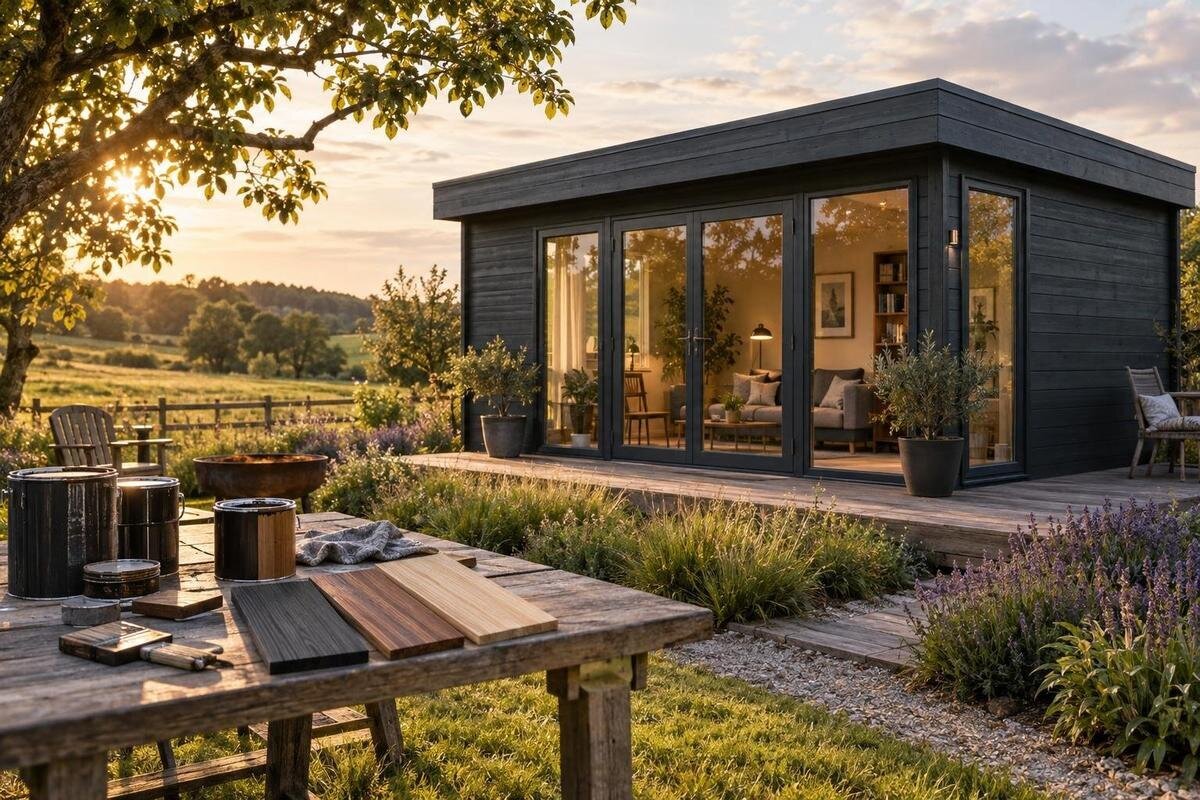
Garden shed finishes
A timber garden shed can be painted, stained or given a clear finish, but the right choice is not just a colour question. The timber, any treatment already on it and the coating’s exterior-use instructions set the limits. Paint usually gives an opaque colour; stains vary in how much grain they show; a clear finish leaves the timber visible. Compare actual products and their maintenance requirements before ordering. A finish name or attractive colour alone does not confirm that a product suits the shed as supplied.
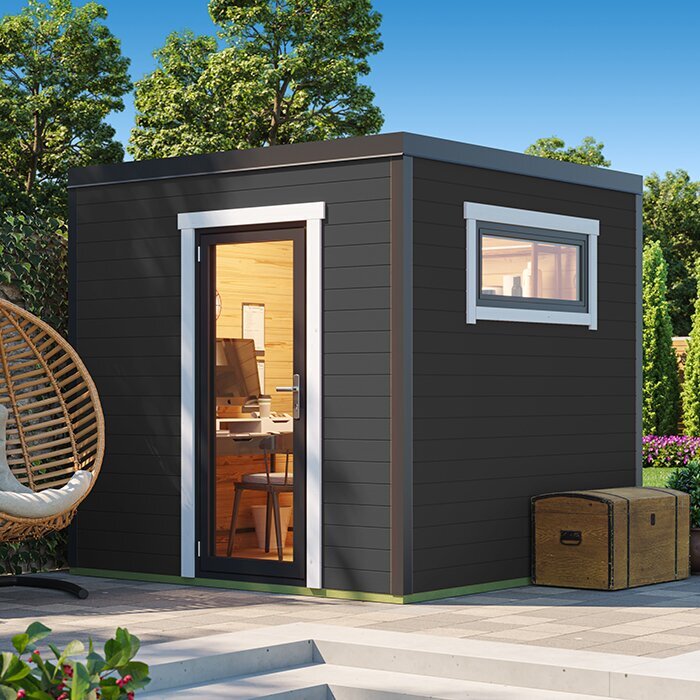
Identify the timber and any existing coating
Before choosing a finish, find out what the shed’s exterior surfaces are made of and whether they have already been treated. A timber garden shed can have different materials or treatments on its walls, trim and doors; a product photograph does not identify the surfaces you will receive. Check the product information, care documents and assembly notes, or ask the seller to confirm. The Verdana 1 garden shed identifies a model, but its name alone cannot tell you which coating will suit the timber. Ask whether the shed is supplied unfinished, treated, primed or already coated, and whether separate components need different products. Keep those answers with your buying notes.
Existing treatment changes the choice. Bare timber, a factory-applied treatment, a sound stain and an old paint layer may respond differently to a new coating. A product intended for exterior bare timber may not be approved over an existing film, so do not assume it will adhere because both are described as wood treatments. Find the shed maker’s care guidance and the coating maker’s instructions for your particular surface. If you cannot identify the previous product, ask about compatibility before ordering. A test patch can help you judge colour and appearance, but it cannot establish every long-term performance issue. If the guidance is unclear, hold off rather than choosing by guesswork.
Paint usually gives an opaque colour
Paint is usually the choice when you want an opaque colour. Exterior timber paint covers much of the wood’s natural colour and grain, so it suits a garden shed whose appearance you want to coordinate with a house, boundary or planting rather than leave in timber tones. It can make boards of different colours look more uniform, although knots, texture and repairs may still show. Decide how much timber character you are comfortable covering and whether you want the shed to stand out or sit quietly in the garden. A colour chip under indoor lighting is only a starting point, not a reliable preview of the finished surface outdoors. Consider whether doors and trim will match the walls or provide contrast.
Buy by the coating system rather than by the colour chart alone. The label should state suitability for exterior timber and explain whether a primer or undercoat is required, which surfaces it covers, and the conditions for drying and recoating. Match those directions to the shed’s factory treatment; do not assume one paint works over every timber or existing finish. For the Verdana 2 garden shed, the model name alone does not establish the supplied surface or a suitable paint system. Confirm those details from the maker’s care information or seller, then compare colour, sheen and the full set of instructions before ordering.
Stain can colour timber while showing some grain
Stain is useful when you want to change or enrich timber colour without automatically hiding all the grain. The term covers products with different levels of opacity: a transparent or semi-transparent stain may leave more of the pattern visible, while a more solid product can cover much of it. Natural variation between boards remains part of the result, so an even-looking sample will not necessarily make the whole shed uniform. Decide whether you want the wood to stay visually prominent or simply want a coloured surface with some texture showing. If possible, test on similar timber and judge both the shade and the amount of grain that remains visible.
Do not choose stain on the assumption that it is a complete outdoor protective system. Some products mainly colour the wood; others make stated protective claims or require a separate sealer or topcoat. Check that the product is specifically intended for exterior timber, then read what it says about the substrate, application and maintenance. If natural grain matters to you, confirm that the product’s opacity matches your preference rather than relying on the word stain on the front label. When considering the Durano garden shed, confirm the supplied surface and treatment before choosing a stain; the model name alone does not answer that.
A clear finish keeps the grain visible
A clear finish leaves the timber grain on show, but clear does not necessarily mean colourless or visually unchanged. Depending on the product and timber, the coating may add a gloss or satin sheen, deepen the wood’s tone or change its appearance as it ages. It will not conceal colour differences, marks or knots, so the boards remain a prominent part of the shed’s look. Compare a product sample or test panel with the actual timber, and view it in the garden in different light. If you want the shed to remain pale, pay attention to the manufacturer’s description of the dried finish rather than choosing from the word clear alone.
Transparency and outdoor performance are separate questions. A clear coating may or may not make claims about UV resistance, moisture or other weather exposure; its label should say what it is intended to handle and what maintenance is required. Do not treat an interior product, or one with no stated outdoor use, as suitable simply because it is transparent. Check compatibility with the timber and any existing treatment, and remember that visible grain can make changes in colour more noticeable. Before choosing a product for the Veltor 1 garden shed, verify its supplied finish and follow the maker’s guidance; model identity alone is not coating advice.
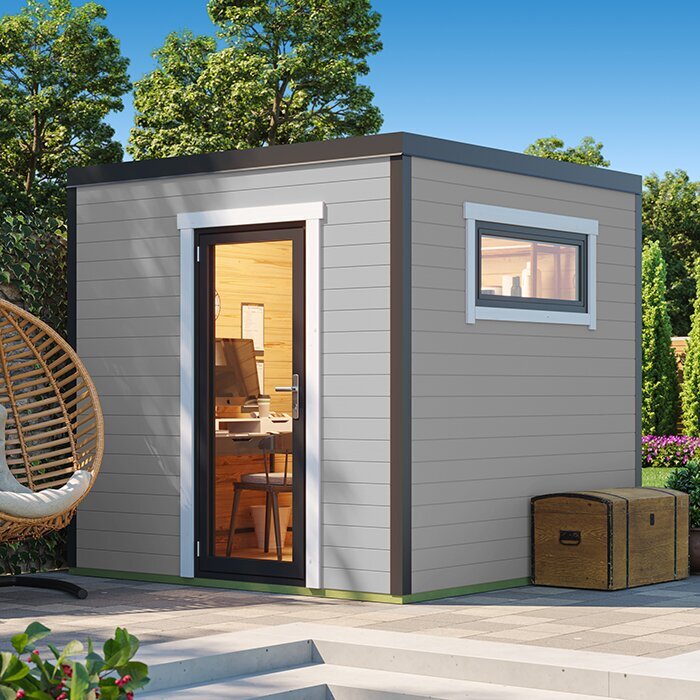
Check outdoor suitability and protection claims
Paint, stain and clear are broad appearance categories, not a reliable ranking of outdoor protection. Do not assume that paint is always more weather-resistant than stain, or that a clear finish is merely decorative. Read the exact label for exterior timber suitability and the exposure the product is intended to handle. If you want a stated claim about sunlight, moisture or fungal growth, look for that wording and its limitations; do not infer it from the product name, colour or opacity. Similar terms can mean different things across products, so compare the instructions rather than the category. Note whether the system needs a primer, sealer or topcoat.
Read the scope of the instructions as well as the headline claims. Check which surfaces the product covers, whether it is intended for new or previously treated timber, and whether any parts are excluded. If the shed maker specifies an existing treatment or a particular care approach, take that information to the coating supplier when asking about compatibility. When comparing options for the Orello 1 garden shed, the model name does not confirm what coating is supplied or which products are suitable. The finish should suit the actual surface and the product’s stated use, not just the appearance you want.
Compare the maintenance each finish requires
Exposure varies around a shed: a wall in full sun, one sheltered by an overhang and one near splashback or dense planting may not age at the same rate. That is why a general promise such as low maintenance is less useful than the product’s own care instructions. Look for any stated inspection or recoating guidance, and check whether the coating calls for periodic attention or a particular repair approach. Treat these as product-specific directions rather than applying one standard timetable to every garden shed. If the expected care is unclear, ask before buying rather than relying on assumptions about paint, stain or clear finishes.
Consider what you are comfortable seeing and maintaining over time. An opaque paint may make a colour change more obvious when it is worn or touched up; a clear finish leaves the grain visible, so changes in the timber can remain noticeable. A stain’s appearance depends on its opacity and formulation. None of these categories automatically needs the least work. Before planning maintenance for the Modano 1 garden shed, check the instructions for its supplied finish and for any product you propose to use; the model name does not provide a recoating schedule. Keeping the product name and colour noted can also help when you need to discuss a future touch-up.
Test colour and sheen in the garden
Judge a finish where the shed will stand, not only on a shop display or computer screen. Daylight, shade and the direction from which you view a surface can affect how a colour and sheen appear. Timber also varies from board to board, so the same product may look different across one shed. If possible, test the shortlisted finish on a small area of comparable timber or a spare piece. Look at it outside at different times of day and from the places where you will usually see the shed. This helps you catch a colour that looks too strong, too warm or too shiny before buying enough for the full project.
Compare the sample with fixed colours nearby, such as the house exterior, paving or garden structures, and decide whether the shed should blend in or stand apart. Consider whether you want one colour throughout or a separate shade for trim; different products or sheen levels can make a simple scheme more complex to match later. A product page such as the Wooden Garden Tool Shed M listing helps identify a model, but it cannot predict the final shade on your timber. Keep the name or colour reference for the sample you prefer so you can order the same finish rather than trying to reproduce it from memory.
Plan the full coating system and quantity
Before ordering, identify which surfaces the shed maker says should be finished. Walls, trim, doors, exposed edges and interior faces may not all call for the same product, and some parts could already be treated. Do not assume every face needs the same coating. If the instructions say that certain components should be treated before assembly, include that in your plan; otherwise ask which surfaces to cover. This is also the time to check whether one finish is appropriate for all the parts you intend to coat, rather than discovering that a product is unsuitable for a particular surface after it arrives.
Build a product list from the instructions: any required primer or sealer, the chosen finish and the supplies needed to apply it. Estimate the amount from the surfaces you plan to coat, the product’s stated coverage and the number of coats in its directions. Coverage is a planning guide, not a guarantee; the surface and application can affect how much you use. With the Wooden Garden Tool Shed S, as with any model, confirm what treatment is supplied before estimating your requirements. Checking the complete system and quantity together can help avoid ordering only a topcoat when the manufacturer’s instructions call for more.

Compare the full project cost
Compare the coating system, not only the price of one container. A like-for-like estimate should include any required primer, sealer or undercoat, the finish coats, the amount indicated by each product’s coverage and the application supplies recommended on the label. Products can differ in coverage and in the number of coats their instructions call for, so comparing container prices alone can give a misleading picture. Use the details for the specific products you are considering; there is no general cost ranking that applies to every paint, stain and clear finish.
Include the time and ongoing care you are realistically prepared to manage. A system with more stages may take more planning, even if its appearance is the one you prefer. Consider the effort involved in reaching all the surfaces and keeping to the product’s stated application conditions, without assuming that a higher price means longer-lasting results. If you need help with a complicated or hard-to-access surface, get a quote rather than guessing at the cost. Keep the product name, colour reference and care instructions with your records; those details can make later maintenance or a matching touch-up easier to plan.
Questions to settle before ordering
Ask the seller what treatment the shed will have when supplied, which surfaces it applies to and where to find the aftercare instructions. If the information is not listed, ask whether the exterior is unfinished, treated, primed or already coated, and whether any components differ. Take those details to the coating supplier and ask whether the exact product is suitable for that surface. Asking about the actual treatment is more useful than saying only that you have a wooden shed, because the answer can affect compatibility and the products you need to order.
Then compare your shortlist against three requirements: a look you like, clear suitability for the intended outdoor surface and maintenance instructions you are willing to follow. Rule out a product if its label does not cover the surface or its compatibility remains uncertain. If the appearance is the only point you can confirm, wait for better product information before buying. Once the surface and coating system are clear, the choice between paint, stain and clear finish becomes a practical balance of colour, visible grain and future upkeep rather than a guess based on the name on a tin.
Frequently asked questions
Can I paint over a stained garden shed?
Sometimes, but compatibility depends on the stain, its condition and the paint system. Check the shed maker’s guidance and the paint manufacturer’s directions for that surface. If you cannot identify the stain, ask the supplier before buying. A test patch can show how the paint looks, but it does not prove long-term compatibility.
Does a clear finish protect timber outdoors?
It may, but the word clear does not confirm outdoor suitability or a particular level of protection. Check the label for exterior timber use and any stated claims about sun, moisture or weather exposure. Also follow the instructions on compatible surfaces and maintenance.
Will stain hide the wood grain like paint?
That depends on the stain’s opacity. Transparent and semi-transparent products tend to show more of the grain, while more solid stains can cover much of it. Compare a sample on similar timber; the product name alone does not tell you how visible the grain will remain.
Should I finish the inside of the shed as well?
Follow the shed maker’s instructions rather than assuming every face needs the same coating. Check whether the product is intended for the surface you plan to treat, including any interior faces. If the guidance is unclear, ask the seller or coating supplier which surfaces should be finished.
Which finish needs the least maintenance?
There is no universal answer. Maintenance depends on the specific product, the shed’s existing treatment and how exposed its surfaces are. Compare the care and recoating guidance on the products you are considering, then choose a finish whose upkeep you are prepared to follow.
Choose by matching the surface you actually have, the look you want and the maintenance you are prepared to manage. Paint, stain and clear products are broad categories, not guarantees of identical performance, so read the instructions for the exact product. Once compatibility is confirmed, use a real sample and compare the full coating system rather than ordering from a finish name alone. That keeps appearance, suitability and future care in view together.
