
Planning Gutters and Rainwater Collection for a Garden Shed
Garden shed planning
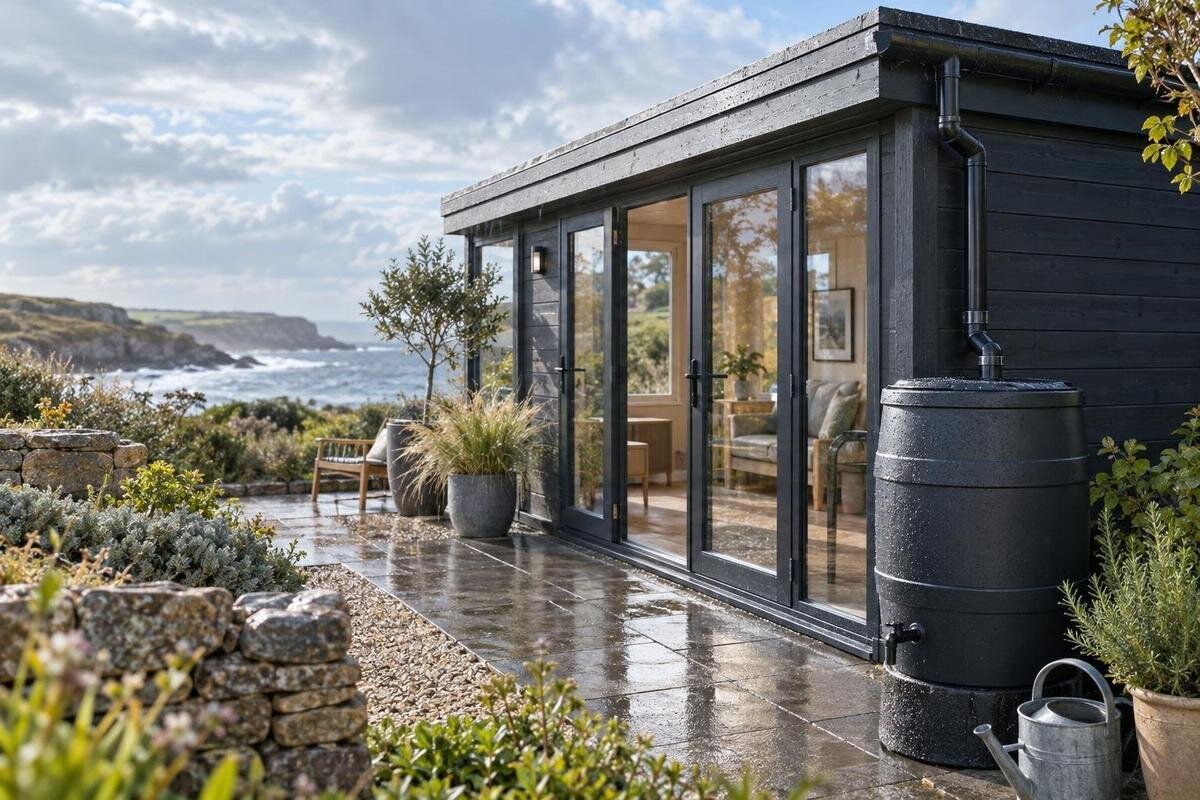
Roof runoff from a garden shed changes where water lands; collecting it adds decisions about storage, overflow and intended use. A neat-looking downpipe can still discharge beside the base, cross a path or lead to a tank that is awkward to reach. Plan the whole route—from the roof edge to a tank or safe discharge—before choosing a gutter system. Roof design, ground levels, local rainfall and the way you plan to use the water all matter. Confirm details for the exact shed model rather than assuming a generic kit will fit.
Before ordering 1
Map the roof runoff before choosing a collection point
Begin with a simple site plan showing the shed footprint and each roof edge that sheds water. Mark doors, paths, steps, paved areas, garden beds, boundaries, nearby drains and any low spots. A roof may send rain towards more than one side, and an edge beside a walkway needs a different plan from one over open ground. Observing rain on nearby structures may help you understand the site, but it does not replace the shed’s own roof plan. The aim is to locate every discharge point before deciding where a gutter outlet should sit.
Trace a possible route on the plan: roof edge, gutter, downpipe, tank inlet and overflow destination. Look for conflicts at every link, such as a door opening into the pipe route, a narrow side passage, an existing wet patch or a route that sends excess water back towards the shed. Do not treat the soil beside the shed as a drain just because it is close by. If the ground falls towards a building, a boundary or a place where water already collects, have a drainage professional review the layout before ordering. Record the exact model you are considering, such as the Verdana 1 garden shed listing, and use confirmed roof details rather than the model name when planning.
Check gutter compatibility before ordering the shed
Choose a gutter system for the roof edge, not just the shed’s footprint. Roof shape, eaves or fascia arrangement, overhang and intended fixing points all affect what can be fitted. Before ordering, ask whether the shed supplier offers a compatible kit, whether it is included or separate, and which edges it covers. If you source gutters separately, request the required measurements and any manufacturer guidance for the exact shed. Do not infer dimensions from product photos or a model name. When comparing the Verdana 2 garden shed page, confirm the exact version with the seller and ask for the roof-edge information you need.
Ask how the proposed brackets attach, where fixings are permitted and whether the system can be fitted without interfering with roof covering, trim or access for maintenance. Do not assume that drilling, trimming or generic brackets are acceptable; an unsuitable attachment can damage an edge or fail to support the gutter properly. If there is no matched kit, ask a competent gutter installer to assess the connection before buying separate parts. A useful quotation identifies the roof sides covered, the gutter and outlets, downpipes, connectors, and who supplies and fits each item. Clarify whether any extra finishing work is needed rather than discovering an omission after the shed is assembled.
Before ordering 2
Choose which roof edges need gutters
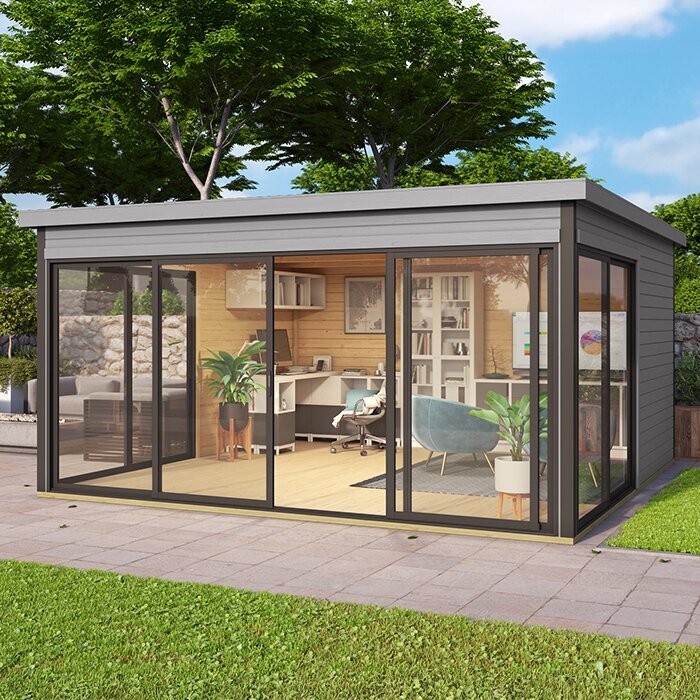
Not every garden shed needs gutters around every edge. Start with the way the roof sheds water: identify the edges where runoff leaves, then decide which drops need to be captured to protect access, planting or a collection point. An unused edge may not need a gutter, while one that directs water onto paving or beside a doorway may deserve attention. Do not assume that one long run will collect all the runoff if the roof sends water in different directions. For the Durano garden shed listing, ask the seller which roof edges are present on the exact version and whether the proposed gutter layout is compatible.
Have the gutter size and number of outlets checked against the roof catchment and rainfall conditions at the site. A guess based on the shed’s apparent size, or on a neighbour’s setup, may not account for intense showers or how much roof area feeds a particular run. Ask the installer or supplier to specify the system for the location rather than choosing a profile by appearance. Trees nearby bring another practical question: leaves, twigs and other debris can block gutters, so leave a way to inspect and clean each run. Screens or guards may be offered, but ask what maintenance they still require and whether they suit the chosen gutter.
Position downpipes around access and the tank
Plan the downpipe route from the tank or discharge point back to the gutter outlet. Mark where the pipe can run without obstructing a doorway, a narrow path, a gate or access to stored items. Keep it close enough to connect neatly, but do not put the tank in a poor location just to shorten the pipe. The number and position of downpipes depend on the designed gutter system, not on a universal rule that every shed needs one at each end. When considering the Veltor 1 garden shed page, confirm the model and roof layout before asking for a suitable outlet position; the listing name does not specify a pipe route.
Check how the downpipe will meet the tank inlet and what fittings make that connection. A bend, offset or diverter may affect access and cleaning, so include it in the plan rather than improvising after the tank arrives. Ask whether the system needs a leaf screen, first-flush component or other filter, how it is maintained, and whether those pieces are included. Keep removable or serviceable parts reachable; a hidden connection can make blockages difficult to spot. If the route would cross a frequently used path or require altering the shed, pause and get advice on another position before ordering.
Before ordering 3
Select a tank location with enough room for service
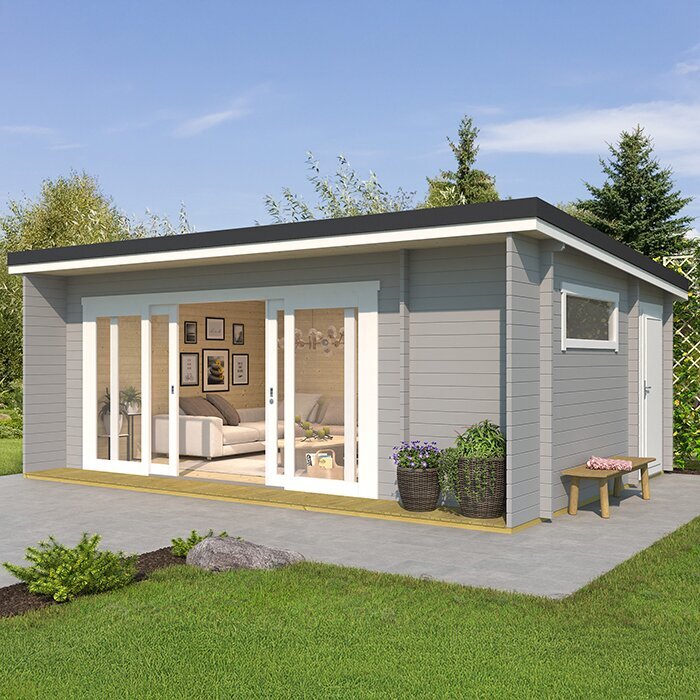
Choose the tank position before buying either the tank or gutter accessories. Allow for its footprint plus access to the lid, inlet, tap and any filter that needs attention. A tank close to a downpipe can simplify the route, but the shortest connection is not automatically the best one: preserve a clear walkway, avoid blocking shed doors and keep overflow away from the shed base. When reviewing the Orello 1 garden shed listing, confirm the model’s actual dimensions and roof details with the seller before checking clearances; the name alone cannot establish them.
A full rainwater tank carries substantial weight, so its supporting surface must meet the tank maker’s requirements and suit the site. Do not assume that a patch of paving or soil is adequate from its appearance; ask the tank supplier or a qualified installer what base is required. Planning the position early also lets you check delivery access, whether the tank can be placed without blocking future work, and where an overflow pipe could go. Leave room to inspect connections and clean the tank as recommended. If there is no stable, accessible location with a workable overflow route, resolve that constraint before ordering instead of relying on a last-minute adjustment.
Match tank capacity to the water’s intended use
Be clear about the intended use before choosing storage capacity. Occasional watering, regular irrigation and rinsing garden tools place different demands on convenience and available volume. A tank that takes too much room may be unnecessary for modest use; one that is too small may fill and overflow when rain arrives and be empty when demand returns. Neither shed size nor tank appearance tells you how much useful water you will collect. If you are comparing the Modano 1 garden shed page, use the confirmed roof plan and intended garden use as separate inputs; do not treat the product name as a yield estimate.
Rainfall varies by place and season, while collection depends on the roof area and the chosen system. Ask a tank supplier or rainwater professional to estimate a suitable capacity using your site and use pattern; this is more reliable than choosing the largest tank that fits. Compare usable storage and practical access, not only the outside dimensions. Ask where the inlet, outlet and overflow sit, whether a tap or hose connection is compatible with your use, and how the tank is cleaned. Remember that storage cannot create a dependable supply during a dry spell, so plan for periods when collected water is unavailable rather than relying on it as the only source.
Before ordering 4
Buy compatible gutters, fittings and tank connections
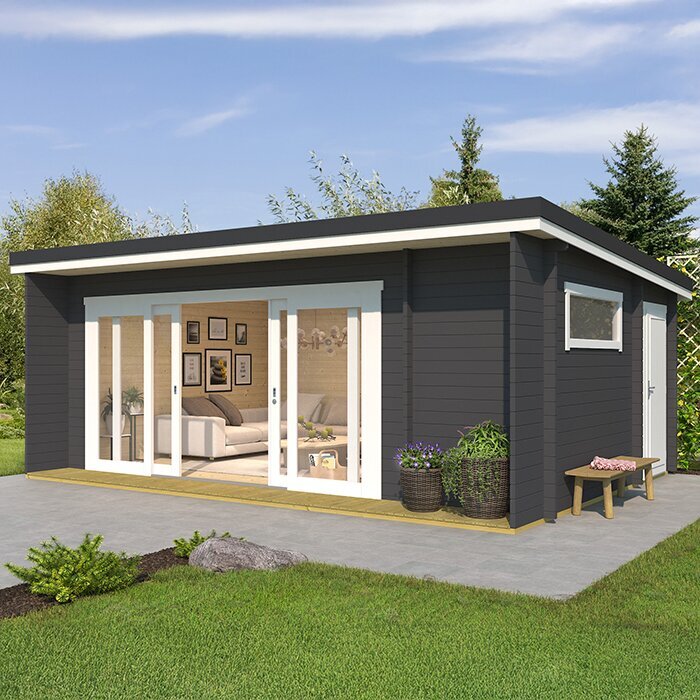
Buy the gutter, brackets, outlets, downpipes, bends, connectors and tank fittings as a coordinated set where possible. A low component count does not show whether end caps, strainers, tank adapters or overflow fittings are included. Request a list of supplied parts and check that each connection matches the next component and the intended tank. If the wooden garden tool shed M listing is under consideration, confirm the exact shed version with the supplier and ask which, if any, collection accessories are approved for it. Do not infer a material, dimension or included gutter kit from the listing title.
Compare materials only after confirming that they suit the roof edge, site exposure and tank connection. Ask the supplier about relevant sun or corrosion considerations, expected care, compatible cleaning products and the availability of replacement fittings. Components that look similar can still differ in how they join, so obtain manufacturer guidance before mixing parts from different systems. Clarify who is responsible for checking compatibility if the shed and guttering are bought separately. A written quote should distinguish supplied components from installation work and state any exclusions, so you can compare like with like without assuming that every visible accessory is part of the purchase.
Plan water quality and maintenance
Roof water can pick up dust, leaves, bird droppings and particles from the roof covering, so a screen alone does not make it safe to drink. Decide what uses are appropriate for water from the particular roof and ask whether its covering or nearby activities raise concerns for that use. Do not judge drinking suitability by clarity or smell. If you intend to use collected water for drinking or cooking, arrange appropriate assessment, treatment and testing with a qualified water professional before designing the system around that use. For the wooden garden tool shed S listing, ask about confirmed roof details and compatible collection accessories; the product name does not identify the roof material.
Include maintenance in the purchase decision. Gutters, screens, downpipes, tank inlets and overflows all need inspection, particularly after storms or when trees shed leaves. Ask what access is needed and what the manufacturer recommends for cleaning; a system that is difficult to reach may be neglected. Look for a design that lets you see and clear likely blockages without unsafe access to the roof. If a section cannot be reached safely from the ground or suitable access equipment, arrange for a competent person to maintain it rather than climbing onto the shed. Check joints and connections for leaks, and confirm that replacement screens or fittings can be obtained.
Before ordering 5
Give tank overflow a safe route
Plan the tank overflow with the same care as the inlet. Once the tank is full, excess water still needs a safe route, especially during heavy rain. Identify its outlet location and where the water can go without running back towards the shed, crossing a path or soaking a low area that already holds water. Do not assume the ground will absorb every overflow, or direct water onto neighbouring land. If you plan to connect the overflow to a formal stormwater system, ask the relevant local authority or a drainage professional what applies at your property before ordering pipework.
Check that the overflow route will remain accessible and will not be blocked by garden tools, planting or later landscaping. It should not create a new trip hazard or channel water where it could damage a surface. The tank and gutter supplier can confirm the intended overflow connection; a drainage professional can advise on a suitable destination where ground levels are difficult. Do not cap or omit the overflow to solve a placement problem. If no sensible route is available from the proposed tank position, move the tank or reconsider the collection layout before delivery. Mark the final discharge point on the site sketch so it is not forgotten during setup.
Confirm the complete system before placing an order
Before placing an order, bring the decisions together in one record: exact shed model and version, roof-edge information, compatible gutter options, sides to be collected, downpipe position, tank location and capacity, and a safe overflow destination. Add the measured clearances and any base or access requirements confirmed by the tank supplier. Ask the shed seller and gutter installer to identify who is confirming fit, which components are included and what is excluded. This turns a vague request for gutters for a shed into a plan that suppliers can review, and reduces the risk of discovering that a fitting or route is unsuitable after the main purchase.
Compare proposals by completeness as well as by product names. A useful written response confirms the model being discussed, the roof edges covered, parts supplied, connection to the selected tank, overflow arrangement and any installation work that remains. If you are buying the shed and collection system from different suppliers, get compatibility confirmed before either order is final. Keep the drawing, product details and care instructions together for later maintenance. When the system is in place, observe the first rainfall from a safe position; if water spills over, leaks or collects in an unexpected spot, have the cause assessed and the route corrected rather than accepting it as normal.
Frequently asked questions
Do gutters need to run along every edge of a garden shed?
Not necessarily. Check which roof edges shed water and where that runoff would land. The suitable gutter layout depends on the roof design, the site and the system’s capacity, so confirm it with the shed supplier or a gutter professional rather than assuming every edge needs a gutter.
How do I choose a rainwater tank size for a shed?
Consider the roof area, rainfall at your site, intended use and how much storage space is available. Ask a tank supplier or rainwater professional to estimate a suitable capacity using those details. There is no single tank size that suits every garden shed.
Can I use water collected from a shed roof for drinking?
Do not assume it is suitable for drinking or cooking. Roof water can pick up debris and other contaminants, and a screen alone does not establish its quality. If you have that intended use, arrange appropriate assessment, treatment and testing with a qualified water professional.
Can I add gutters after a garden shed has been assembled?
Whether that is practical depends on the roof edge, permitted fixing points and access. Check the shed manufacturer’s guidance and ask a competent gutter installer to assess the proposed system before drilling, trimming or fitting separate components.
Where should a shed downpipe end?
It should lead to a compatible tank inlet or a suitable discharge point, without obstructing access or directing water back towards the shed. Plan the tank overflow as well: a full tank still needs a safe route for excess water.
A workable rainwater plan is more than a tank beside a shed. It brings together a confirmed roof edge, compatible gutters, an accessible downpipe, practical storage and an overflow route that suits the site. Decide those parts before ordering so the shed, collection system and intended use can be considered as one arrangement. The result should direct water where it can be used or safely carried away, without blocking access or sending runoff back towards the shed.
