
Positioning a Garden Shed Near Trees: Roots, Branches and Debris
Garden shed planning guide
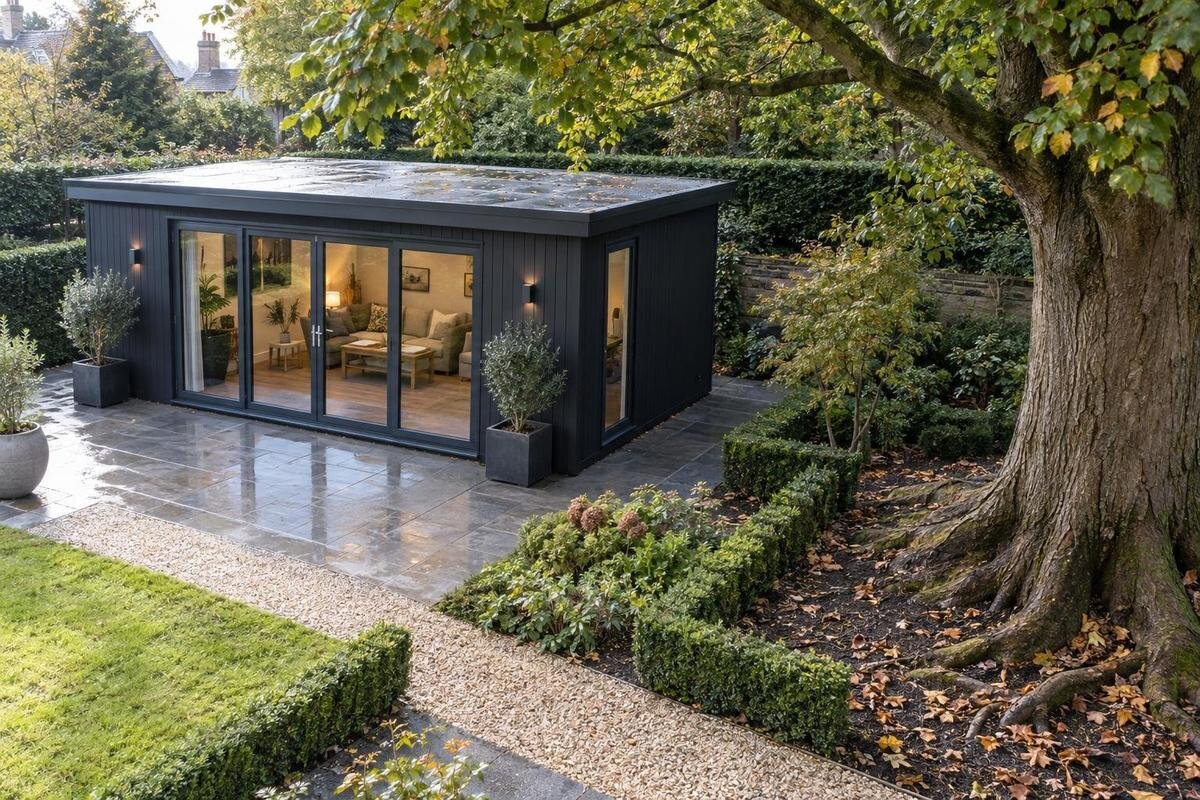
Positioning a garden shed near trees means looking beyond the patch of ground available today. Roots can affect excavation and base preparation, branches may extend or move over the roof, and leaves, fruit or twigs can add to regular cleaning. A good choice balances those tree-related demands with the shed’s footprint, access and care instructions. Compare more than one possible position, watch what the tree does over time, and confirm the actual product details before ordering.
Assess the tree through the seasons
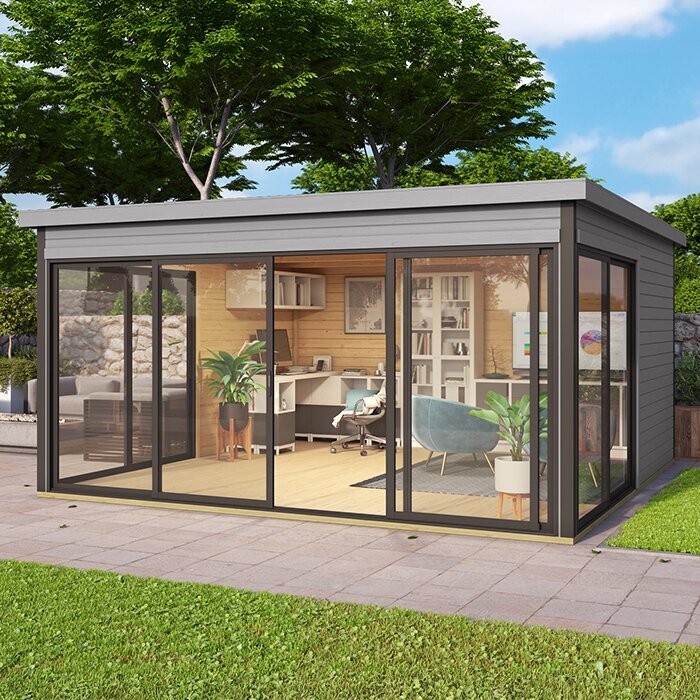
Begin with the tree, rather than assuming that the nearest open patch will work. Note whether it keeps its leaves or sheds them, when it flowers or drops fruit, and how its canopy changes through the year. Shade, branch reach and the amount of debris can vary by season; a clear view in one month is not a reliable picture of every month. Consider recent pruning as well, since it may make the canopy appear temporarily smaller than its usual spread. If you are unfamiliar with the tree, ask someone who knows its usual growth and maintenance pattern. This gives you a better basis for comparing locations than a guess based on its present shape.
Walk each possible position at different times and look up as well as down. Record the trunk position, the direction and reach of branches, where leaves or fruit tend to land, and any areas that stay damp or collect wind-blown material. If possible, observe after rain or a windy spell as well as in calm weather. A sketch with each proposed shed footprint and entrance direction can show whether tree-related issues crowd the side you will use. Mark fixed features such as paths, taps, drains and existing planting too, because they may limit how far the shed can be moved if the first location proves unsuitable. These observations will not reveal underground roots or predict every future branch, but they make comparisons less dependent on memory.
Allow for roots when planning the base
Tree roots are not confined to the ground directly beneath the canopy. Their spread and depth vary with the species, age, soil, available moisture and past disturbance; many roots occupy upper soil layers where air and moisture are available. Roots may also extend towards areas where conditions are favourable, rather than forming a neat circle around the trunk. A clear patch beside a trunk does not prove that excavation will be root-free. Equally, the presence of a tree does not mean every nearby shed base will be affected. Look for exposed roots, raised paving or repeated repairs as clues to investigate, rather than as a diagnosis of what lies underground. Take care not to confuse old surface roots with the full root area: an apparently clear edge may still need assessment before ground preparation begins.
Mark the proposed base and any ground that must be dug or levelled. Avoid cutting or burying substantial roots simply to make a preferred position fit; the tree and the base both need to be considered. If roots cross the intended footprint, or you cannot tell whether excavation is acceptable, ask a qualified arborist and the person responsible for the base to assess the site. If the Verdana 1 garden shed is on your shortlist, confirm its actual footprint and base requirements from current product information instead of estimating from its name or a photograph.
Check the ground, not just visible roots
A site can look suitable beneath a tree yet still be difficult to prepare if the ground is uneven, loose or affected by runoff. Look for low points, puddling after rain, exposed soil and paving or paths that have shifted. These signs can have several causes, so do not assume that roots are responsible. Record ground conditions separately from visible root signs. That gives a builder or base installer more useful information when assessing what preparation the chosen shed actually needs. Note the direction water takes across the area during rain, including water arriving from a slope, nearby hard surfaces or downpipes. This helps distinguish a recurring drainage issue from a temporary damp patch caused by shade or recent weather.
Do not select a foundation method by copying what worked elsewhere: requirements depend on the specific product and the site. Ask what level, surface and preparation are required, then check whether those requirements can be met without disturbing roots or creating a drainage problem. Before adding the Verdana 2 garden shed to a final shortlist, obtain its exact base and ground-preparation requirements. The model name alone cannot tell you whether existing ground is suitable, or how much work may be needed.
Keep roof space clear of branches
A branch that clears a proposed shed today may grow further or move in wind. Branches over the roof can drop leaves, fruit and twigs, and contact with the roof may cause wear. Branches can also be difficult to inspect once the shed occupies the space beneath them. A damaged or dead limb above the site deserves particular attention before you commit to a position. Do not judge clearance only by looking straight up from the trunk: follow the branch’s direction and consider how it may extend across the proposed roof area. Consider the whole crown rather than one conspicuous limb, since smaller branches can become a maintenance issue as they grow. If you are unsure about a limb’s condition or future growth, ask an arborist to assess it.
Compare the tree with the shed’s documented external dimensions, including roof projections and any fitted features shown in the product information. Do not rely on a product photograph to judge the space needed around a roof. For the Durano garden shed, as for any candidate, confirm the current dimensions and relevant design details before deciding whether branches will have practical clearance. If tree work is needed, have it planned by a qualified person rather than assuming it can be done after the shed is in place.
Plan for leaves, fruit and other debris
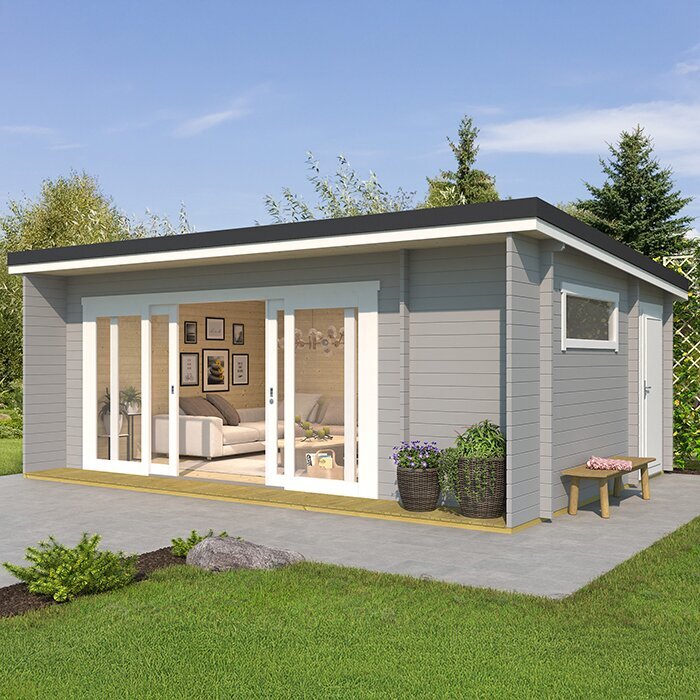
Leaves are only one part of the clean-up. Flowers, fruit, seed pods, bark and small twigs can collect along roof edges, beside walls or around the base, depending on the tree and wind. Accumulated organic material can hold moisture and make it harder to see the condition of surfaces underneath. If the shed has gutters or other rainwater components, debris may also affect them; check the actual product details rather than assuming they are included. Think about where material falls and where it is likely to settle, not just how much the tree sheds.
Choose a spot where regular checks and ground-level clearing are realistic, especially during the tree’s heavier shedding periods. Consider whether debris could collect where you need to open a door, reach stored items or inspect the base. Also allow for where you can place a container or tools while clearing material without blocking the entrance. Think about the route for removing collected debris as well, particularly where a narrow side passage could become slippery or obstructed. Do not plan on climbing onto a roof to remove leaves. Before choosing the Veltor 1 garden shed, check the current information for roof-edge, drainage and maintenance details; neither the name nor a photograph confirms a particular roof shape or fitting.
Consider shade and drying conditions
A dense canopy can change how much direct sun reaches the shed and how quickly its surfaces dry after wet weather. The effect depends on the tree, the position and the shed’s design, so shade should not be treated as automatic protection from rain or as proof that a site will stay damp. Also consider whether the tree sheds material onto surfaces that are already slow to dry. Observing the candidate area over time is more useful than assuming that all shaded positions behave alike.
Use the product’s care instructions to decide whether its stated materials, finishes and upkeep requirements suit the conditions you observed. Do not infer performance in shade from a model name or a photograph. Compare observations from different times of day and after wet weather, rather than treating a single visit as representative. If the Orello 1 garden shed is one of your options, confirm its current product details and care guidance before comparing it with other candidates. The right choice is the model whose documented requirements you can meet at that particular site, rather than one selected on an assumption about how it will cope.
Keep access practical for inspection and upkeep
A position near a tree needs to work after installation, not only on the day the shed is assembled. You should be able to inspect the ground around the base, notice new exposed roots or changes in paving, and clear debris where it tends to collect. Leave room to see and reach the relevant edges without moving stored items outside each time. Consider whether the space between the trunk and shed will remain usable as the tree grows. A narrow gap that looks manageable now may become awkward for routine checks, especially if branches or shrubs also restrict access.
Think about access for the people who may need to maintain the tree or the shed. If an overhanging branch needs professional attention, the work area should not depend on standing on the shed or using its roof as a platform. Likewise, choose a position that allows ordinary cleaning without unsafe reaching. Consider where a ladder, pruning equipment or collected debris could be placed at ground level without forcing work through a planted bed or against the shed wall. Where a tree cannot be inspected or maintained sensibly once the shed is in place, compare another location before ordering; a small change in position may be easier to plan at this stage.
Compare possible sites with the same checklist
Use the same observations for every candidate so that one attractive feature does not dominate the decision. A simple comparison sheet can have separate entries for roots and base preparation, branch clearance, debris, shade and drying, and access for upkeep. Add a note about what would change if the tree grows or sheds more heavily than it does now. Note what you have seen, what remains uncertain and what needs professional assessment. Include the tree’s seasonal behaviour rather than recording only the conditions on the day you measured the garden. It can also help to mark which concerns would affect installation immediately and which would require recurring maintenance afterwards. This turns a vague impression into a set of practical questions to resolve before choosing a product.
Separate firm constraints from manageable inconveniences. A few leaves may be acceptable if they can be cleared safely; a possible conflict between excavation and substantial roots may need a professional decision before you proceed. Do not let a strong score in one category hide an unresolved concern in another. Assess the Modano 1 garden shed only as a candidate against the same site notes: its actual footprint, base requirements, openings and care needs must fit the chosen position. Do not infer any of those details from its model name.
Match the site to the product details
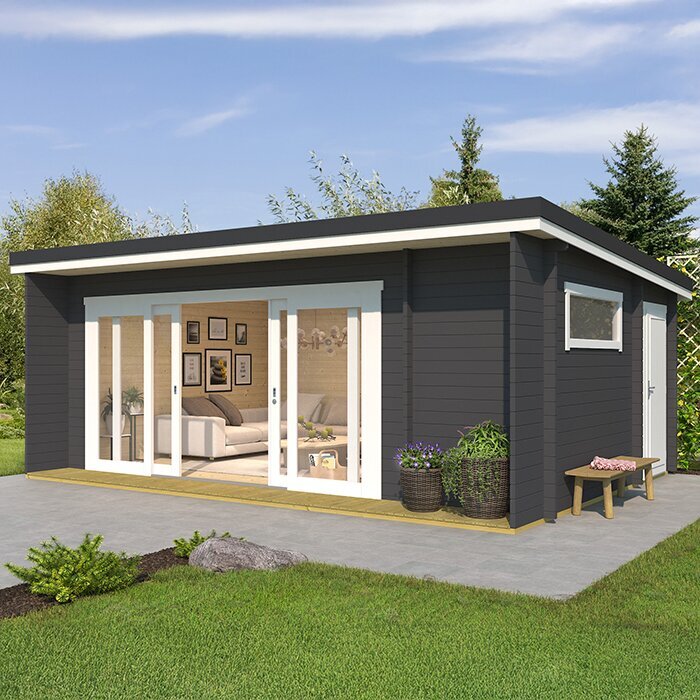
Once a location looks promising, check the exact model information before measuring for the final layout. Confirm the external footprint and roof dimensions, any projections, the position and movement of openings, base requirements and assembly needs. Use the full documented outline rather than the floor area alone, since the roof may extend beyond it. If an important measurement or installation detail is not clear, ask for clarification before treating the site as suitable. Product images and model names are not substitutes for the specifications needed to plan a position.
Ordering also involves the route to the site and the space needed to bring components in, store them briefly and assemble the shed. Consider whether people or equipment would have to pass over exposed roots or soft ground, and ask the installer how the route can be managed without damaging the area. Make sure temporary storage will not obstruct a path needed for tree maintenance or garden drainage. Check that the planned position still leaves access for future cleaning and tree care. Measure turns, gates and narrow passages rather than assuming that a clear-looking route will accommodate the delivery and assembly process. For a model such as Wooden Garden Tool Shed M, compare its documented dimensions and installation requirements with the measured site before arranging delivery.
Confirm the plan before ordering
A good final position balances several conditions rather than eliminating every possible contact with a tree. The base must be feasible, branches should not present an unresolved concern, and expected debris should be manageable from safe access. If those conditions compete, compare another spot or ask the relevant professional to assess the trade-off. An arborist can advise on tree-related concerns, while the person responsible for the base can confirm what the chosen product needs from the ground. Neither a fixed distance nor a quick visual check can settle every site-specific question.
Before confirming a purchase, keep the site notes beside the current product information and check that the proposed footprint, preparation and access plan still agree. Confirm who will handle any agreed tree work and whether the installation approach changes where the shed can sit. Record any decisions about clearance and maintenance so that they are not lost between measuring, ordering and installation. If Wooden Garden Tool Shed S is under consideration, apply the same checks as for any other model; do not assume its size or suitability from the name. Resolving uncertain root, branch or base issues before an order is placed gives you more room to compare alternatives.
Frequently asked questions
How far should I place a garden shed from a tree?
There is no distance that suits every tree and shed. Root spread, branch growth, ground conditions and the product’s base requirements all matter. Compare the full shed footprint with the tree’s likely growth and ask an arborist or base professional to assess the site if roots or branches could be affected.
Can tree roots damage a garden shed base?
Roots can interfere with excavation or affect nearby paving and ground, but their presence does not mean a shed base will necessarily be damaged. Root patterns vary, and a surface inspection cannot show everything underground. Avoid cutting substantial roots to make a site fit; get qualified advice where the proposed base crosses a root area.
Can branches hang over a shed roof?
Overhanging branches can drop leaves, fruit or twigs, rub against a roof as they move, or present a concern if they are damaged. Check both current and likely future growth. If a branch needs assessment or pruning, use a qualified arborist rather than working from the shed roof.
How often will I need to clear leaves from a shed?
That depends on the tree, the season, wind and the shed’s roof design. Watch where leaves and other debris collect at your site, then plan inspections around those patterns. Follow the product’s care guidance, and use safe access or professional help for areas that cannot be checked from the ground.
Should I order the shed before planning the base and tree work?
It is better to compare the site with the exact product requirements first. Confirm the shed’s external dimensions, base preparation, assembly needs and access route, then resolve any root or branch concerns. If the ground or tree is uncertain, pause before ordering and get the relevant professional assessment.
When a garden shed sits near a tree, its position is a long-term maintenance decision as well as a purchase choice. Favour a site where root and base work can be assessed responsibly, overhead growth is not an unresolved concern, and ordinary debris can be dealt with safely. Then match the site to documented product dimensions, preparation requirements and care guidance. If roots, branch condition or the ground remain uncertain, pause before ordering and get the relevant professional view; it is easier to compare alternative positions before the shed arrives.
