
Routing Electricity to a Garden Shed: What to Discuss With an Electrician
Garden shed planning
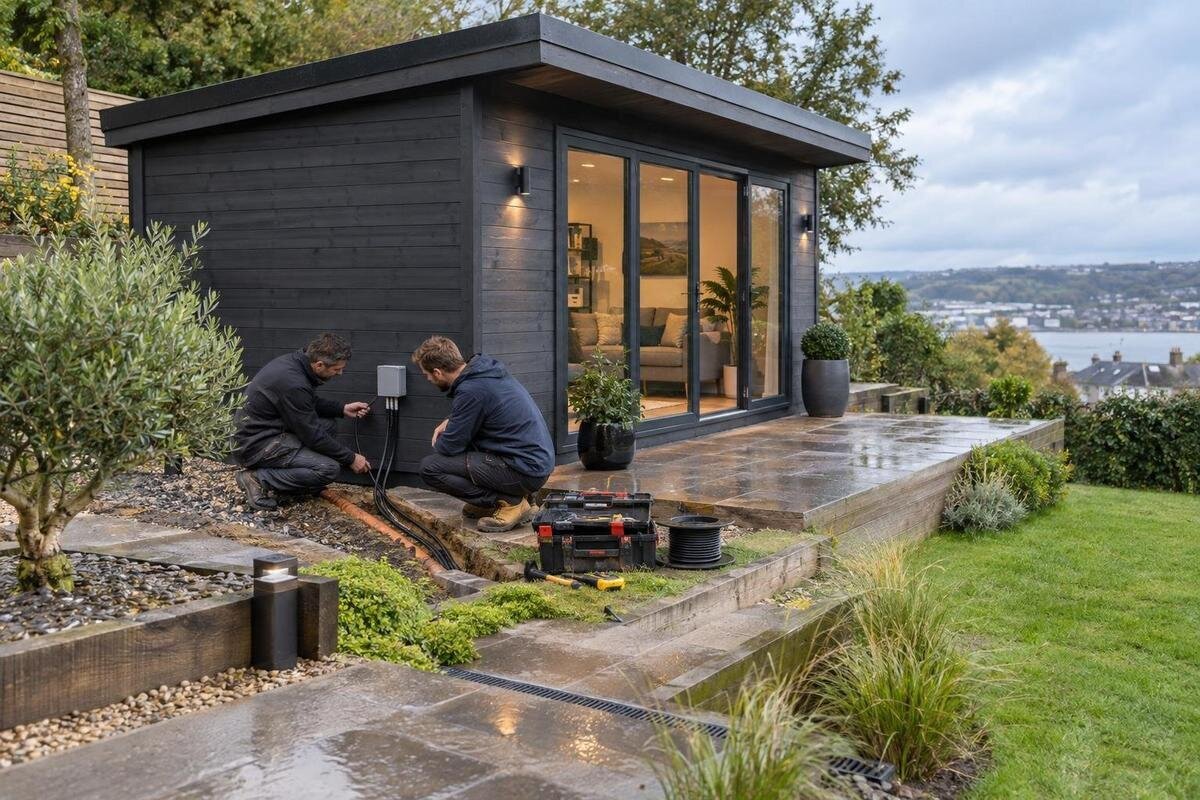
Adding electricity to a garden shed is a site-planning decision as much as an electrical one. The route from the house, the shed’s final position, the way you intend to use the space and the structure itself can all affect what an electrician proposes. Before ordering or starting work, prepare a clear description of your needs and ask a qualified electrician to assess the route, connection points and relevant safety requirements. This guide helps you organise that conversation; it is not a wiring plan and cannot specify suitable equipment or installation methods for your property.
01
Decide how you will use the shed
Decide how the shed will be used before asking about garden shed wiring. A space used mainly for hand tools may need no permanent supply, while one used for charging batteries, running powered equipment, working at a bench or spending time after dark raises different questions. Tell the electrician which activities are planned and how often they take place. Explain whether devices may run at the same time, whether the shed will be occupied for long periods, and whether the need is occasional or part of a regular routine. Include items used only now and then, such as garden-maintenance tools, and say whether they will be charged inside or used nearby. This context is more useful than guessing a socket count.
Separate current requirements from possible later changes. Lighting and charging may be enough at first, but a computer, freezer, pump or other equipment could change the assessment. You do not need to predict every purchase; flag realistic possibilities and ask whether they should be considered now. If comparing a named option such as the Verdana 1 garden shed, use any confirmed dimensions or layout details for that model to show where a desk or workbench might sit. The name alone says nothing about capacity, fittings or electrical readiness. If your intended use is uncertain, ask how different likely uses would change the proposal rather than approving a design based on guesswork. Discussing flexibility early can also prevent a point being placed where a later layout would make it awkward to use.
Choose the shed position before planning the route
Choose the shed’s final position before treating a cable route as fixed. On a rough sketch, mark the house, shed, existing outdoor connection points and the route you are considering. Add paths, paved areas, garden beds, gates, trees, irrigation lines, drains, water features and any buried services you know about. Note where access is easy or restricted and whether landscaping is likely to change. The shortest-looking path is not automatically the most practical: the electrician needs to consider site conditions and how a route can be installed and maintained. Do not dig to investigate suspected services; tell the electrician what you know and ask how their locations will be confirmed.
Keep the shed choice and site layout in view together. Check its confirmed footprint, openings, delivery and assembly access, and room to move around it later; allow for how doors and garden paths are used. If the Verdana 2 garden shed is on your shortlist, compare the supplier’s available dimensions and layout information with your site sketch, rather than treating a product title or photo as an installation drawing. Ask the supplier and electrician whether your preferred position and proposed service entry are compatible before ordering. This matters if moving the shed after delivery would make the route harder to reach or maintain.
02
List equipment and likely use
Prepare an inventory of the equipment you expect to use, including items charged or plugged in only occasionally. Note each appliance type, how often you use it and, where convenient, the information on its rating label or in its manual. You do not need to interpret figures or calculate electrical demand yourself; they give the electrician useful context. Bring manuals or photographs for equipment already owned, and describe purchases you have not selected yet. Also explain whether devices run continuously, start up briefly, or are used only while someone is in the shed. A list of actual tasks is more useful than describing the proposed supply as small or standard, which does not define what it must support.
Discuss which items may operate simultaneously, not only the most powerful or most frequently used one. A light, charger and tool used together create a different usage pattern from a single device used alone, and future additions may alter the plan. If the Durano garden shed is among the products you are comparing, base the electrical brief on how you plan to use the chosen space, not assumptions drawn from a product name or image. Ask whether the proposed supply is intended for your listed activities, which additions would need reassessment, and whether any equipment should be located elsewhere. Update the plan if your intended use changes before the work is scheduled.
Walk the proposed cable route
Walk the proposed route with the electrician rather than assuming it follows the most direct line. Point out changes in surface, paving, steps, retaining edges, planting, irrigation and drainage, along with any known buried services. Explain where a path, vehicle access or regular gardening work must remain usable. Include narrow gates, sloping ground or garden structures that restrict access. If paving or planting could be disturbed, ask what access the work might require and whether reinstating surfaces is included in the scope. Share information about earlier ground work before any excavation is planned. Do not move, expose or trace services yourself; ask how their positions will be confirmed.
Have the electrician compare practical route options and explain any effect on access, maintenance and future garden changes. Mark alternatives on a sketch, but leave the final method and technical details to the professional after assessment of the site. If the Veltor 1 garden shed is under consideration, use its confirmed position and product information—not an illustrative image alone—when discussing access to the entry point. Check that the route will not obstruct doors, paths or the movement of stored equipment. Consider whether a future fence, deck or planting bed could block access. If the shed or garden layout might change before work starts, mention that before the route and quote are finalised.
03
Plan useful connection points
Mark preferred connection points on a simple floor sketch, with doors, windows, shelves and a planned workbench shown as well. Indicate where you expect to work, charge equipment, use lighting or keep a frequently used appliance; this helps the electrician assess reach and access. Show any areas that must stay clear for stored tools or movement through the shed. Think about how the space will be used when equipment is put away, not only when the workbench is clear. You can express a preference for switching near the entrance or in another convenient position, but treat it as a discussion point, not an installation instruction. The electrician should decide whether proposed positions and equipment suit the installation.
Include outdoor needs separately. You may want light at the entrance, a point for a specific task, or no external connection at all; be clear about what would actually be used. Outdoor fittings face different conditions from items inside, so ask how their position and protection will be selected for the site. If the Orello 1 garden shed is on your shortlist, compare desired points with confirmed layout details and discuss any constraints with the electrician. Do not assume a convenient spot is suitable because it appears sheltered or is away from direct rain; suitability depends on actual conditions and equipment. Also explain whether a garden path, door or regular work area needs to remain unobstructed.
Check the shed structure and service entry
Ask how the electrician plans to bring the supply into the chosen shed without assuming that any wall, floor or roof can be altered. Construction, panel positions, door and window openings, and assembly details vary by product. Ask which parts are suitable for a service entry, who may make the opening, and how it will be finished and protected against conditions at the site. Consider whether the entry could be exposed to stored tools, movement or water. Do not drill or cut the shed to make a route easier before the approach has been agreed. An entry that looks simple can affect assembly or the manufacturer’s instructions, so settle the question before work begins.
Before ordering, check what the supplier says about assembly, permitted changes and product support; if details are unclear, ask rather than infer them from a photo. Confirm whether the shed should be assembled before the electrician’s visit, or whether planning needs to happen earlier, and who coordinates between the supplier, assembler and electrician. For the Modano 1 garden shed, use only confirmed model information in that conversation. Ask whether any proposed alteration has implications for supplied instructions or warranty conditions; do not assume one way or the other. If the shed is being assembled on site, agree who will make the area accessible for the electrical work.
04
Describe the outdoor conditions
Describe the conditions where the shed will stand instead of treating every garden as equally exposed. Tell the electrician if the route or shed area is exposed to rain, wind-driven water, damp ground, dust, direct sun, heat, falling leaves, garden hoses or frequent cleaning. Mention any nearby water feature or irrigation that could affect the route or chosen connection points. These details help the electrician assess what outdoor equipment and protection are suitable; they do not mean you should select fittings by appearance. If exposure changes seasonally, or if doors are regularly left open, explain that too. Include any site conditions that might change how the space is used throughout the year.
Discuss how equipment will be stored and used as well. A charger, light, power tool or garden appliance may move between indoor storage and an outdoor task, which affects where a point is useful and what conditions it may face. Explain whether equipment needs to be plugged in inside the shed or used nearby, and whether the floor or access area is often wet or dusty. If the Wooden Garden Tool Shed M is on your list, use confirmed product details only to discuss layout; the label does not tell you what electrical supply is suitable. If no power is currently needed, say so and ask what planning would make a later change less disruptive.
Ask about protection and isolation
Ask the electrician to explain the protective measures proposed for the supply and any connection points, including how the plan accounts for faults, overloads and outdoor conditions. The suitable arrangement depends on the existing installation, route, equipment and site; there is no safe choice to make from a generic online list. Ask whether the existing house installation needs assessment, what isolation arrangements are proposed, and how external equipment will be protected. Find out which controls you will be expected to operate and whether any routine checks or maintenance are relevant. If you are uncertain about a technical term, ask for a plain-language explanation before approving the scope.
Find out what to do if a protective device trips or equipment behaves unexpectedly. Ask where the relevant controls or isolation points will be, who can access them, how they will be labelled and whom to contact about a fault. If the Wooden Garden Tool Shed S is on your shortlist, use confirmed layout information when discussing reachable control positions, but leave decisions about protection to the electrician. Keep the operating instructions and records with the shed’s other documents. Do not make alterations or repairs yourself, and ask how a future change in equipment should be reviewed before it is connected.

05
Clarify the electrician’s scope and records
Before accepting a quote, ask about the electrician’s relevant qualifications and experience with outdoor supplies, and how you can verify them. Establish who will assess the site, choose the route and connection points, carry out the electrical work, and coordinate any ground or shed-assembly work. Ask which South African requirements, approvals or notifications are relevant to your particular job, who will confirm them and whether anything must be settled before work begins. Avoid assuming that one answer fits every property. A site visit and clear written scope can reduce misunderstandings about access, existing services and the work included.
Request a written description of the proposed route, connection points, equipment, exclusions, assumptions and responsibilities for excavation and reinstating surfaces, where those tasks are part of the job. Ask whether the existing house installation needs assessment to support the proposed supply. Confirm what checks will be carried out and which records, test information or compliance documents apply and will be provided. If the quote depends on a particular route, number of points or access condition, make that assumption visible and ask how a change would be handled. This lets you compare proposals based on the work described, rather than a single total, and gives you a record of what you agreed.
Confirm the plan before work starts
Before work starts, review the agreed layout with the electrician and the person assembling or delivering the shed. Confirm the exact position, preferred points, route assumptions, access and any ground or surface work included. If the shed has moved, a path has changed or a previously unknown service has appeared, pause and ask for the plan to be reassessed before work continues. Keep a marked copy of the agreed layout, but treat it as a record of the discussion rather than an instruction for installation. Confirm who will be on site and which areas need to be accessible during the work.
At handover, ask the electrician to explain how the installation has been checked, how to operate its controls, what the protective devices do and what action to take if something goes wrong. Collect the records they have said are applicable, together with any product instructions and details of the work; keep them accessible for future repairs or changes. Check that the points you requested are in the agreed positions and that the controls are understandable. If the shed’s use later changes, or you add equipment, ask for a new assessment rather than assuming the original plan covers it.
Frequently asked questions
Should I speak to an electrician before buying a garden shed?
If a permanent supply is part of your plan, it is sensible to discuss the site with an electrician before finalising the purchase. The route, access and shed construction can affect where it is practical to position the shed and plan a service entry. A product name or photograph is not an electrical specification.
What should I prepare for the first discussion?
Bring a rough site sketch showing the house, proposed shed position, possible route and any known buried services. Describe how you will use the shed, list equipment you already own or expect to buy, and note where you would like lights, controls and connection points. Photos of the site can help explain access and obstacles.
Can I decide where the cable enters the shed?
You can identify a preferred location, but the electrician should assess whether it is suitable. Ask the shed supplier about permitted alterations and the electrician about protection, weather exposure and the finished entry. Do not drill or cut the shed based on appearance alone.
Can an extension lead be the permanent supply to a garden shed?
Do not treat an extension lead as a permanent electrical supply. Whether temporary use is suitable depends on the equipment, conditions and intended use. Ask a qualified electrician about a properly planned supply, and follow the lead manufacturer’s instructions if a lead is used temporarily.
What should I ask for in the quote and at handover?
Ask for a written scope showing the proposed route, connection points, assumptions, exclusions and who is responsible for any ground or surface work. Confirm which checks and records apply to the job. At handover, ask the electrician to explain the controls, protective devices and documents they provide.
A useful garden shed electrical plan begins with the way you will use the space, then accounts for the shed’s position, construction and outdoor conditions. A sketch and equipment list make the discussion with an electrician more specific, while a written scope clarifies the route, points and responsibilities. Confirm the plan before work begins, and revisit it if the shed moves or its intended use changes. That keeps the purchase and the electrical work aligned without relying on assumptions about the product or the site.
