
Using an Outdoor Hot Tub in Winter: What to Prepare
Winter hot tub guide
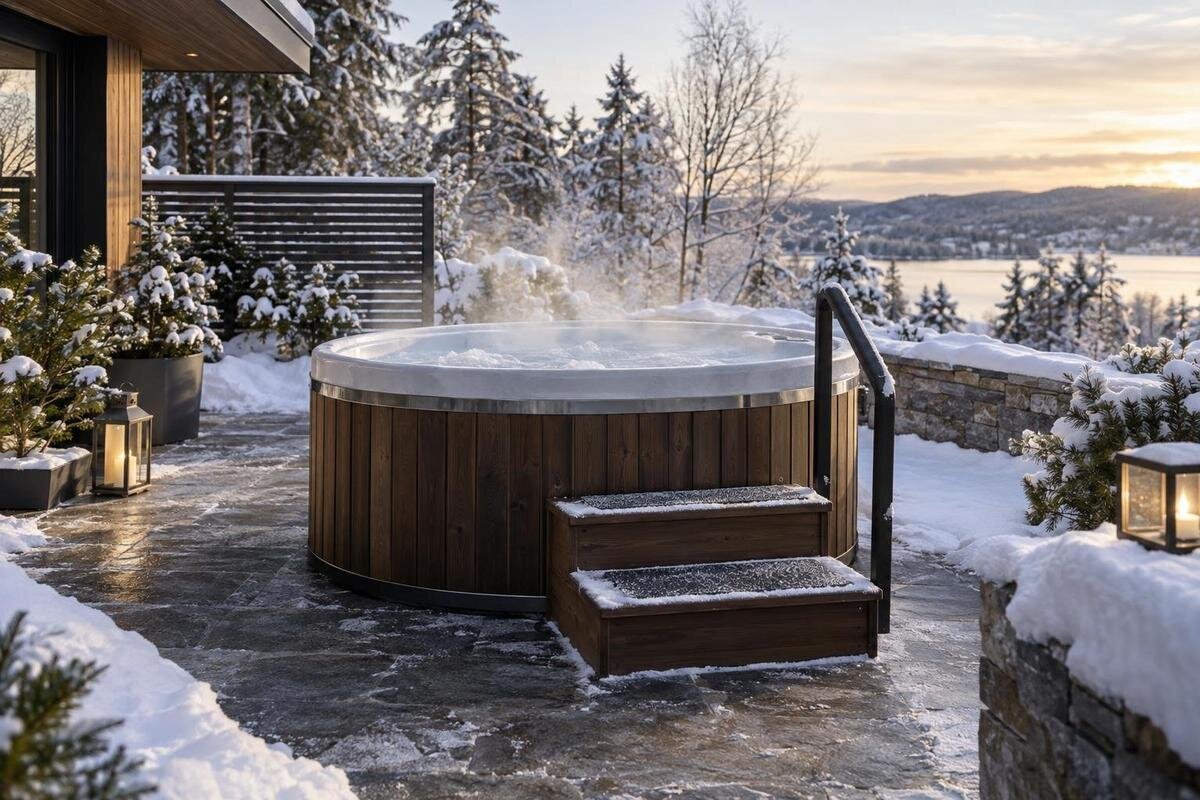
Using an outdoor hot tub through winter means matching the setup to the conditions at your own home. South African winter weather varies by location and exposure: one garden may have mainly cool evenings, while another may also be exposed to wind, rain or frost. Before planning regular use, make the route practical in wet or dark conditions, review the cover and surroundings, and confirm cold-weather and water-care guidance for the exact model and equipment. The points below separate visible site checks from operating decisions that must come from the manufacturer.
Before you buy 1
Winter conditions vary across South Africa
Start with the conditions at the tub rather than a general idea of winter. Local weather and exposure can differ from one property to another: a sheltered courtyard may be calmer than an open side of the house. Depending on where you live, winter planning may need to account for cool evenings, wind, rain, damp surfaces, frost or freezing conditions; not every item applies everywhere. Check the forecast for the days you expect to use the tub and note what happens at the site. A town forecast is useful context, but may not reflect a sheltered, shaded or exposed corner of your property.
Make a short list of conditions that could change how you use the space: whether the path is often wet, whether wind makes the area uncomfortable, whether you can reach it after sunset, and whether cold spells coincide with time away. Think about the routine you want, such as occasional sessions or regular winter use, because the practical planning will differ. This list does not replace model-specific operating limits; it helps you identify questions to take to the manual or seller. Revisit it as the weather changes rather than treating one mild afternoon as proof that the setup is ready for the whole season.
Walk the route to and from the tub
Walk the full route as if you were returning to the house after a session in the evening, not only taking the short path in daylight. Look for steps, uneven paving, loose mats, hoses, toys, doors that are awkward to open and places where leaves or rain collect. Check the route in both directions, including the point where you would set down a robe or towel. When considering the Bloomcabin Hot Tub Cove 2, request exact measurements and use them to assess the proposed position. Consider how that position affects the approach from the house: a route that looks direct on a plan may involve an awkward gate or a narrow passage. Separate the space occupied by the tub from the space you need to walk around it.
Pay attention to how the route works when you are carrying something, when the ground is damp and when you need to see clearly. Keep the approach and exit clear of items that could be moved elsewhere, and decide where dry towels, footwear and a robe will be kept so they are within easy reach. If changes to fixed lighting, drainage or other services are needed, ask a suitably qualified professional rather than improvising. The aim is a straightforward path that you can use in the weather and at the time of day you actually expect to use the tub.
Before you buy 2
Set up a practical changing and entry area
The small area immediately around the tub has a different job from the route to it. Decide where you will leave clothing and personal items, dry off and put on a robe without blocking the way in or out. A sheltered place to keep towels can be useful in changeable weather, but it should not create clutter or make the entry awkward. Consider privacy and where a door or gate opens, too. Make sure you can manage the space comfortably in the clothing and footwear you expect to use, rather than planning around an ideal dry day.
For a purchase, check the proposed position against verified dimensions and any documented access requirements; do not infer size or entry arrangements from a model name or number. If considering the Bloomcabin hot tub Haven 6, ask the seller for the exact measurements and details of the supplied equipment. Compare these with the usable area, allowing for movement around the tub rather than measuring only its footprint. Picture the entry area with towels, footwear and the removed cover in their intended places. Can you still open the nearby door or gate and move between the house and tub without rearranging everything? Where a step, handhold or other fixed feature may need changing, get advice from a qualified installer. Resolve the layout before committing to a position that may be inconvenient in winter.
Inspect the cover and surrounding space
Check the cover as a piece of equipment you will handle regularly, not just an item to look at when buying. Follow the manufacturer’s instructions for fitting, removing, securing, cleaning and storing it. Look for visible damage or a fit that seems different from before, and ask the manufacturer or service provider what to do if you are unsure whether it is still appropriate. Avoid making repairs or altering fastenings based on a guess. You will need a practical place to set the cover aside during use and to replace it afterwards without blocking the route.
Also look at the ground and nearby surroundings after rain or in windy conditions. Keep the area around the tub clear enough for normal access and any service work described by the manufacturer, and consider where leaves, runoff or loose outdoor items may collect. If the tub is proposed for a deck or other structure, have the site assessed by an appropriately qualified professional; do not assume that a surface is suitable. For the Fjord 8 cover and setup enquiry, ask whether a cover is included, what it is designed for and how it is handled. Check the space needed to remove and replace it against the surrounding layout. The place you choose for the cover during a session should leave both the entry and the route back to the house clear.
Before you buy 3
Find the exact model’s cold-weather instructions
Use the current manual for the precise model and equipment package, not instructions for a similar-looking tub. Look for any documented operating limits and guidance related to low temperatures, frost, freezing conditions, warnings, shutdown or restart. Check whether the manufacturer describes a cold-weather feature or a required response to a power interruption; do not assume such a feature exists. If you are considering the Bloomcabin hot tub Aurora 10, ask which instructions apply to the configuration being offered. Match the model and equipment details in those instructions to the proposed purchase. Note any questions about your expected winter conditions separately, so that a general explanation of outdoor use is not mistaken for an answer about a particular cold spell.
If the manual does not address the conditions you expect, contact the manufacturer, an authorised service provider or the seller and ask for written, model-specific guidance. Keep the manual and relevant support details somewhere accessible before a cold spell or an interruption occurs. Avoid copying settings or operating steps from another tub, and do not improvise by adding temporary heat, changing settings or draining the tub without documented instructions. If a warning or fault appears, use the manufacturer’s guidance for that model and leave diagnosis or repairs to an appropriately qualified service person.
Confirm winter water-care guidance
Water care should come from the instructions for the exact model and the products used, not from a generic winter recipe. Check the manufacturer’s guidance for water testing, treatment products, filtration or circulation, and any instructions that apply when the tub is used less often or closed for a period. Do not guess at quantities, schedules or settings, and do not assume that advice for another model or water-care system applies to yours. If the manual refers to a separate water-care guide, make sure you have the version intended for your setup.
A simple record can help you follow the documented routine: note when you checked the water, the result, any action taken under the instructions and anything that needs follow-up. Keep those observations separate from assumptions about what colder weather might change. If you use the tub less often in winter, check whether the guidance addresses that pattern rather than reducing the routine yourself. Use the product labels and the manufacturer’s directions together; if they leave a question unanswered, ask the supplier or manufacturer before changing the routine. When the water or equipment is outside the limits described in the instructions, follow the stated response rather than relying on appearance alone.
Before you buy 4
Plan sessions around the local forecast
Use a flexible session window rather than assuming that a particular winter day will suit the plan. Check the local forecast for conditions that affect your route and the immediate surroundings, including rain, wind or frost where relevant. If the forecast changes, it is reasonable to postpone rather than feel committed to using the tub. Base any decisions about whether the tub is ready on its own operating instructions, not on an expected warm-up time from a different model or a general online estimate.
Prepare the practical items before you begin: a dry towel and robe, a clear route back to the house, and a place to put belongings. Consider how much daylight remains and how the area will be lit if the session finishes after dark. When comparing the Cove 2 for your winter routine, ask how preparation time may vary under the conditions at your home, using information for the exact configuration. Keep preparation time separate from the time you want to spend using the tub. Include removing and replacing the cover and getting the surrounding area ready in your plan. A session that fits comfortably into a free afternoon may be less practical on a busy evening. Leave room to postpone if the weather or a model-specific instruction changes the plan.
Choose between continued use and seasonal closure
Using a tub through winter and closing it for the season are different plans. Continued use means following the model’s operating and water-care guidance through the period, including any instructions for cold weather and interruptions. Seasonal closure means following a documented shutdown and restart process. Simply leaving a tub unused is not necessarily the same as a planned closure, and the right approach can depend on the model, its equipment and conditions at the property.
Think about whether you can keep up with the manufacturer’s stated checks, whether you expect to be away, and what the manual says about prolonged periods without use. Do not assume that leaving the tub filled, emptying it or changing a setting is the right choice for every model. When reviewing the Haven 6 for continued winter use, ask for guidance covering both operation through winter and seasonal closure. Compare the responsibilities involved in each option, including water care and the preparation needed before using the tub again. If your plans change halfway through the season, you need to know which documented procedure applies rather than simply stopping your usual routine. Keep the chosen plan clear for anyone else who helps look after the tub, especially if your household alternates between regular use and longer breaks.
Before you buy 5
Allow for time and running costs
Costs are secondary to readiness, but they can affect whether regular winter use fits your routine. They depend on information that is not established by a model name: the exact equipment and energy source, documented consumption, local energy prices, how often the tub is used, the settings permitted by the manufacturer and outdoor conditions. The condition and use of the cover may also matter to the overall routine. Avoid comparing figures that use different assumptions, and do not treat an estimate for another configuration as a reliable forecast for yours.
Ask a seller for any published energy information and a cost estimate that states its assumptions, then compare that with local tariffs or fuel prices and your intended use. Include recurring water-care products and any service or replacement costs relevant to the exact setup, without assuming they are included in the purchase. For the Fjord 8 equipment package, request figures for the configuration being offered. Keep one-off setup expenses separate from recurring costs so that you can see what each estimate covers. If heating time matters to your schedule, ask for an estimate based on stated starting conditions and outdoor weather; treat it as planning information, not a guarantee. Compare the time needed for preparation and checks with the evenings or weekends you realistically have available, rather than judging winter practicality by energy costs alone.
Compare the model, package and site before buying
Before choosing a tub for winter use, ask for the current manual and clarify what is supplied with the exact model. Confirm what documentation says about outdoor operation, cold-weather limits, water care, cover use, power interruptions and seasonal closure. Ask which items are included and which would be optional, and whether the seller can direct you to manufacturer support for questions that are not answered. A clear answer about the whole package is more useful than an assumption based on a photograph, product name or model number.
Bring your site notes and intended winter routine to the buying discussion. For the Aurora 10 product enquiry, explain how often you expect to use the tub, when you may be away and which local conditions concern you. Compare the answers with the path from the house, the space around the tub, cover handling and access for service. Confirm dimensions and installation requirements from reliable product information, and refer site or service questions to a suitably qualified professional. Keep a short comparison of what is included, what would be optional and which questions remain unanswered for each model. This makes it easier to compare complete proposals rather than product names or photographs. Choose a package whose documented requirements fit the winter routine you can realistically maintain.
Frequently asked questions
Can I use any outdoor hot tub in winter?
Do not assume that every model or equipment package is suitable for your local winter conditions. Check the exact model’s current instructions for outdoor and cold-weather operation, and ask the manufacturer or seller about anything the documentation does not cover.
Should I drain my hot tub when winter starts?
There is no universal answer. Whether to keep using it, leave it unused or close it for the season depends on the model, its equipment and the conditions at your home. Follow the manufacturer’s documented shutdown and restart guidance rather than guessing.
What should I check before a cold night?
Review the local forecast, make sure the route and entry area are practical, and follow the exact model’s instructions for operation and any expected cold conditions. If the manual does not explain what to do about a power interruption or warning, contact the manufacturer or service provider.
Does a cover make a hot tub ready for winter?
A cover alone does not confirm that the complete setup is suitable for winter. Check that the correct cover is included or available, how the manufacturer says to handle it, and what the model’s instructions say about cold-weather use.
Can I estimate winter running costs before buying?
Ask for a cost estimate based on the exact configuration and clearly stated assumptions, including the energy source, local tariff, intended use and outdoor conditions. No price or consumption figure can be inferred from a model name alone.
Winter readiness brings together two kinds of checks: what you can assess around the tub and what only the exact model’s instructions can answer. Make the route and entry area workable, check the cover and surrounding space, and have the appropriate cold-weather, interruption and water-care guidance to hand. Then plan around local conditions and decide whether continued use or seasonal closure suits the documented requirements. A winter routine is easier to sustain when it fits both the weather at your home and the equipment you actually have.
