
What Makes a Well-Built Outdoor Hot Tub?
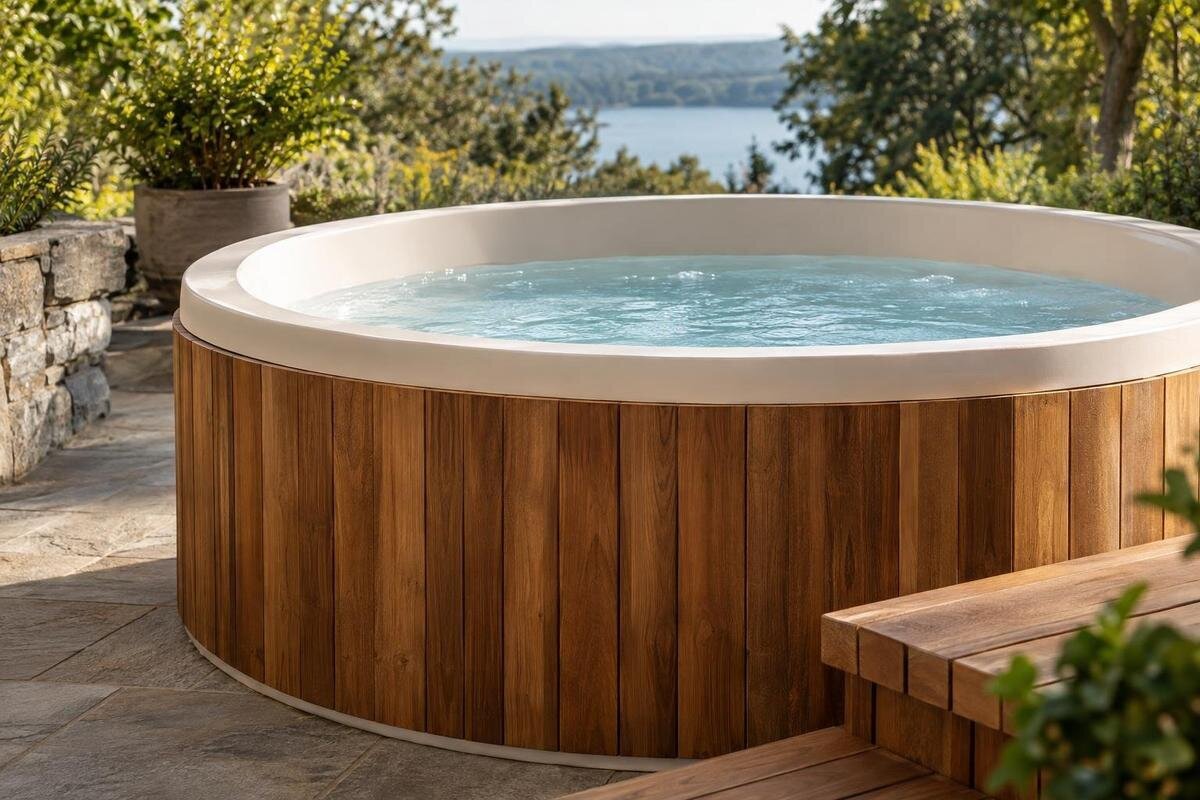
Outdoor hot tub guide
An outdoor hot tub can look substantial and have a polished cabinet, yet neither tells you how its shell is made, what supports it or whether hidden components can be reached for repair. Build quality depends on materials, joins, protection, insulation, the cover, service access and care requirements. The product records available for the South African models named here confirm catalogue identity only, not construction, service arrangements, care instructions, warranties or after-sales terms. The checks below help you distinguish evidence of sound construction from an attractive finish or a broad durability claim.
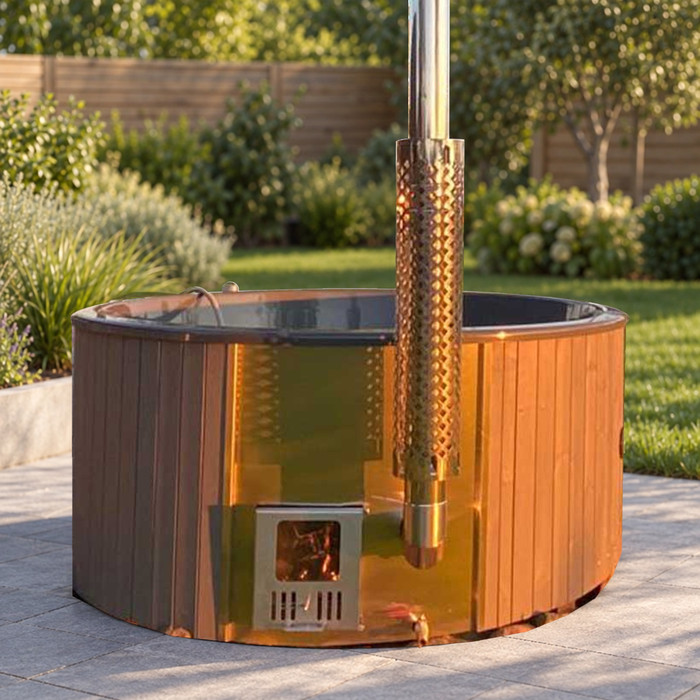
What build quality means for an outdoor hot tub
Build quality is how the complete tub is made and how its parts work together outdoors, not simply whether the cabinet looks neat. The shell contains the water; a supporting structure carries it; an exterior finish faces the weather; seals and plumbing join wet components; and, where fitted, insulation and a cover form part of the enclosure. Service access affects whether faults can be addressed. The exact arrangement varies by product, so two tubs with similar shapes or finishes need not share the same construction. A useful specification identifies each part and its role instead of relying on one label such as “premium”, “reinforced” or “all-weather”. It also shows which components can be serviced and what care is expected.
Ask for a specification or drawing naming the exact model and configuration, its materials and build method, plus the relevant care and service documents. The catalogue record for Bloomcabin Hot Tub Cove 2 establishes identity, not construction. Leave missing details marked as unknown rather than borrowing descriptions from another model, year or finish. If the seller sends several documents, confirm that each applies to the version offered, including any optional or changed components. Dated written information gives you a record to refer to later.
What an exterior finish can and cannot tell you
Identify the visible cabinet material: ask about the panel substrate, surface finish or coating, treatment of exposed edges and fixings, and whether individual panels can be removed or replaced. A timber-look surface, smooth colour or uniform panel gaps describe appearance, not the material beneath or how the finish is attached. For claims such as “weatherproof”, “fade-resistant” or “corrosion-resistant”, ask which component is covered, under what conditions and with what supporting evidence. The finish may be decorative or protective depending on its construction. Ask whether touch-ups or refinishing are required and which areas need particular attention.
Request current close-up photographs of corners, panel joins, access doors and cut edges on the exact model. Photographs can reveal visible defects or poor alignment, but cannot establish UV performance, moisture resistance or fastener material. The supplied images of Bloomcabin hot tub Haven 6 identify the model without specifying its cabinet materials or finish. Ask how the finish should be cleaned, which products or refinishing methods to avoid, and whether damaged panels or finishes can be repaired separately. A care sheet answers questions that a colour sample cannot.
How to check the shell construction
Request the exact shell material and construction method, not just a shorthand such as “acrylic”, “composite” or “reinforced” unless the seller explains what each word means for that model. Ask whether the description covers the water-contact surface alone or the full shell build-up, what backing or other layers are present if any, and how the surface and layers are formed and joined. A sample or glossy photograph can help identify colour and texture, but it cannot reveal concealed layers. A model-specific technical sheet or construction drawing is more useful; note its date and check that it applies to the exact version being offered. If the answer is verbal, ask for it in writing alongside the model name.
Ask how the shell is maintained, what damage can be repaired, who should do the work and which materials or methods are approved. The guidance should distinguish cleaning from repair and explain when a mark, crack or leak needs specialist assessment; do not improvise with a generic repair kit. If a shell-thickness figure is given, ask where and how it is measured rather than treating a larger number as a quality score. For Bloomcabin Hot Tub Fjord 8, shell materials, layers and repair arrangements remain unconfirmed. Ask whether repairs can avoid damage to adjoining finishes.
How the supporting structure is specified
A shell is only one part of the construction. Ask what carries and supports it, where that structure sits, and how it connects to the shell and base. Request the support or frame material, any stated protective finish, the type of fixings, and a model-specific drawing or parts list that shows the arrangement. If the seller describes a frame as treated, rust-resistant or heavy-duty, ask what material or treatment those terms refer to and what maintenance is expected. These details matter because exterior panels can hide the support; a clean cabinet surface does not show how unseen parts were assembled. Ask whether the frame can be inspected without removing the shell.
Find out which areas can be inspected during servicing and whether a support, base or fixing can be repaired without replacing the whole unit. Ask whether replacement parts are identified and supplied, and who should fit them. Compare equivalent documentation, not frame colour, apparent thickness or adjectives. The catalogue record for Bloomcabin hot tub Aurora 10 does not specify frame or base construction. Keep those points open until the supplier responds, and record whether each answer comes from a drawing, technical sheet or verbal description. Get important details in writing.
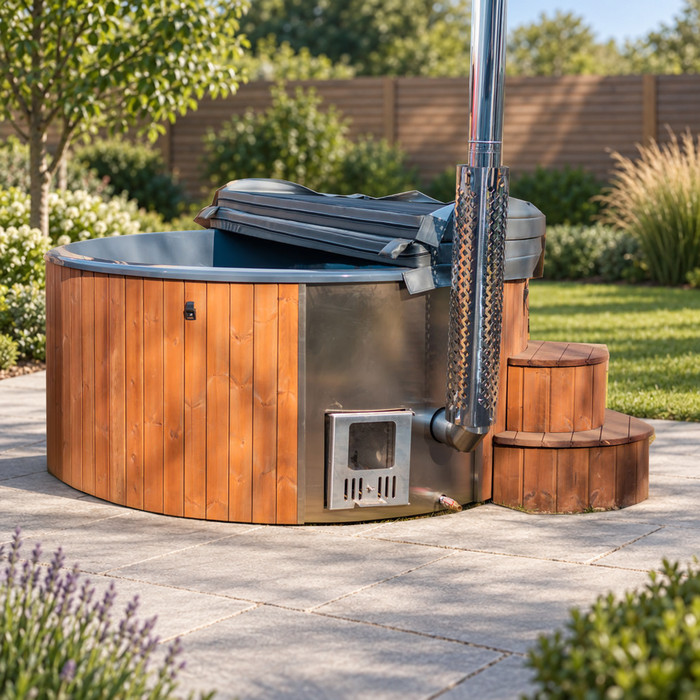
What insulation information is useful
Insulation claims are difficult to assess from an exterior photograph. Ask what material is used, where it is placed, how it covers the shell, base and surrounding compartment, and whether any areas are left open for servicing. Terms such as “full foam” or “multi-layer insulation” need a model-specific explanation and drawing; they do not establish coverage or performance by themselves. More insulation is not automatically evidence of better overall construction if components cannot readily be reached or repaired. Ask how the insulation layout allows for servicing and whether the insulation itself needs inspection or maintenance.
Request insulation or heat-retention results with their test conditions and configuration. Different methods, covers, ambient conditions or operating assumptions may prevent a fair comparison. No insulation specification has been confirmed for the Cove 2 product listing. For any model, ask how insulation is inspected or restored after repairs, whether the manufacturer describes protection against moisture, and what care is required. If no test results are available, distinguish the seller’s description from measured performance. Useful evidence explains both the insulation layout and how it accommodates servicing.
Check fittings, seals and connections
Fittings such as water outlets, drains, pipe unions and seals form connection points that should be described in the product documentation. Ask what each important fitting is made from, how it seals to the shell or connects to plumbing, and whether a seal or fitting can be replaced separately. If a visible part looks metallic, do not infer its alloy or coating from colour; request the stated material and any care limits. Check whether instructions explain how connections are inspected and what signs mean the tub should be assessed by a service technician rather than repaired at home. A parts list should distinguish between the fitting itself, its seal and any related pipework.
Ask whether the maker’s specified water-care products and cleaning agents are compatible with the shell, seals and fittings. Keep the written guidance for the exact model; advice for another material may not apply. Clarify which parts are consumables or wear items, whether replacements can be ordered, and whether repairing a leak may affect adjacent components or finishes. The Haven 6 catalogue listing does not establish materials, joint design or maintenance requirements. Resolve these details before comparing construction, rather than assuming similar-looking fittings are alike.
How to judge the cover’s construction
A cover is an exposed component in its own right, so ask what it is made of, how seams and edges are finished, how it attaches, and whether it is intended for the named model. A product photograph can show outline and colour, but not core material, internal support, stitching or water resistance. If a claim refers to weather performance or insulation, request the relevant technical description and the conditions behind it rather than treating a generic cover claim as a model-specific result. Check that the care guide covers the cover as well as the tub, including any cleaning or drying instructions. A tidy seam or visible hinge is something you can observe, but it does not establish the construction inside.
Ask whether the cover can be replaced separately, how to identify a compatible replacement and whether the supplier can provide it. Follow the maker’s cleaning, drying and storage instructions rather than assuming all cover materials respond alike. The information available for the Fjord 8 product page does not confirm cover materials, construction or inclusion. This is an unanswered specification question, not evidence of a defect. Resolve it for the exact model and configuration before including the cover in your assessment of build quality.
Service access is part of build quality
Even sound components can be difficult to maintain if they are hidden behind fixed panels, surrounded by inaccessible insulation or arranged so a common repair disturbs other parts. Ask for a service drawing or panel map that identifies equipment and connections, where fitted, and shows which panels open and what must be removed for routine inspection or replacement. Ask the seller to distinguish owner care from work requiring a service technician, and to explain any maintenance access described in the manual. This is not an invitation to open equipment or alter it yourself; it is a way to establish whether the design has a defined route for qualified servicing. Ask which parts are intended to be replaceable.
Find out who provides service, how parts for the exact model are identified, and what happens if a component becomes unavailable. Ask which access panels must remain reachable in the intended position and whether the manufacturer specifies service clearances. The available information for the Aurora 10 catalogue entry does not establish equipment layout or service openings. Request a drawing and written service terms, including chargeable work. Compare the supplier’s response rather than assuming a layout from the model name or photographs.
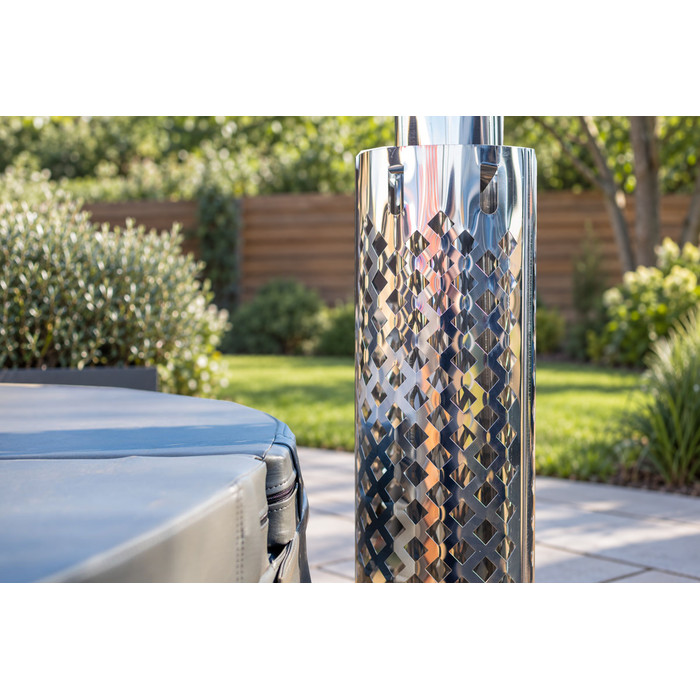
What durability, care and warranty claims should show
Treat words such as “long-lasting”, “robust”, “weather-resistant” and “low-maintenance” as prompts for details. Ask what part the claim covers, the exact material or component, the conditions under which it is expected to perform and the maintenance required to support it. If test data are offered, request the method, model or component tested, result and limitations; a result for one part should not be read as proof for the whole tub. Care instructions should identify acceptable cleaning products, routine checks and what to do when wear or damage appears. If the proposed site is particularly exposed to sun, wind-blown dust, frequent rain or coastal air, ask which documented materials and care instructions address that exposure.
Read any written warranty or guarantee before relying on it, and separate coverage for the shell, frame, finish, fittings, cover, labour and call-outs where those are addressed. Ask about exclusions, required care records, who assesses a claim, which repairs must be done by the supplier and the process if a replacement part is needed. Do not assume that a phrase like “manufacturer-backed” answers these questions. The catalogue records supplied for Cove 2, Haven 6, Fjord 8 and Aurora 10 provide no verified care, warranty or after-sales terms; ask for documents that apply to the exact model and sale. For a buyer in South Africa, the useful point is a clear route to support, with care obligations and exclusions in writing.
Compare construction details model by model
Use one comparison sheet and give each field one of three statuses: documented for the exact model, described but unsupported, or not provided. Record shell material and build method; support structure and protective finish; insulation material and coverage; exterior panel material and repairability; fitting and seal details; cover construction; service access; care requirements; and the parts and labour terms in writing. That stops a polished photograph from counting as evidence in the same column as a technical specification. Note the source and date of each answer so a current manufacturer document, older manual and sales description do not blur together. Ask which configuration and revision the document describes.
A concise request could read: “Please confirm this model’s shell and frame materials and build methods, insulation coverage, service access, fittings and cover construction. Please include its care and repair guidance, warranty terms and after-sales process.” Ask the seller to identify unknown details explicitly. Then compare whether the information is complete and usable, the care requirements are manageable, and the service arrangements allow repairs where appropriate. If two choices remain close, favour documented construction and accessible support over claims about appearance. Keep the reply with the model-specific paperwork.
Frequently asked questions
How do I know whether a hot tub shell is well made?
Ask for the exact material and construction method, a model-specific sheet or drawing, maintenance instructions and a repair route. A smooth surface or glossy photograph cannot reveal concealed layers or prove how the shell will age. If the material label is broad, ask which layers it covers and whether the document applies to the version being offered.
Does a polished cabinet show that the hot tub is durable?
No. It can help you assess visible condition, alignment and finish, but not the panel material beneath the surface, hidden support, protective treatment or fixings. Ask what the panels are made from, whether their finish needs care, and whether individual panels can be repaired or replaced. Treat appearance as one observation, not a durability test.
Does more insulation always mean better build quality?
Not by itself. Ask for the insulation material, location and coverage, any performance evidence with its test conditions, and how service access is maintained. Insulation and repairability need to be considered together. A description such as “full foam” needs a model-specific explanation; the wording alone does not show the layout or establish performance.
What should I ask about service access?
Request a model-specific drawing showing access panels and equipment, where fitted. Ask what can be serviced or replaced, which tasks require a technician, whether replacement parts are identifiable, and who handles repairs. Also find out what service work is chargeable and where those terms are stated. Ask how repairs can be made without damaging unrelated panels or insulation.
Which construction details are confirmed for Cove 2, Haven 6, Fjord 8 and Aurora 10?
The supplied product records confirm catalogue identity only. They do not verify shell or frame materials, insulation, fittings, covers, service access, care instructions, warranty terms or after-sales support for these models. Ask the seller for written details that apply to the exact model and configuration; do not infer construction from a model name or photograph.
Good construction is clearest when material descriptions, joins, support, care and a credible repair route fit together for the same model. A polished finish can be part of the picture, but it cannot fill gaps in a shell or service specification. Compare what the supplier can document and what ongoing care it requires; keep unanswered points marked as unknown. That is a more reliable basis for judging build quality than the strongest durability adjective.
