
When Should You Treat a New Wooden Garden Shed?
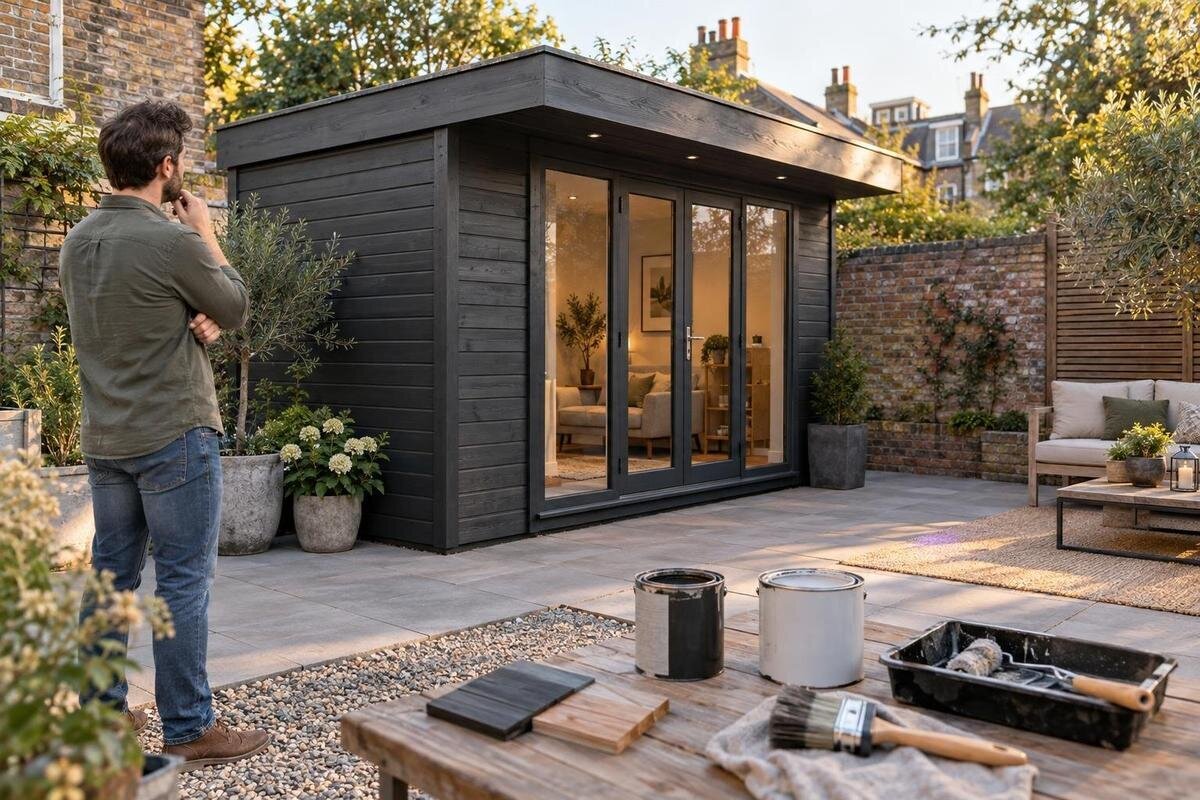
Garden shed care
Delivery date alone does not tell you when a new wooden garden shed is ready for treatment. The right point depends on what has already been applied to the timber, whether the shed’s instructions call for treatment before or after assembly, and whether the surface and weather meet the finish manufacturer’s requirements.

There is no universal wait after delivery
Delivery date is a poor trigger on its own. A new shed may arrive with timber in different conditions or with a treatment applied before dispatch, and the finish you plan to use has its own requirements. The useful question is not how many days it has been on site, but what is already on the timber and whether it is ready for this particular product. Read the shed maker’s assembly and care instructions alongside the treatment label. If the two sources do not agree, or either is unclear, ask the shed supplier or treatment manufacturer before applying anything. The answer can also change if the shed has been stored outdoors since delivery, so judge its current condition rather than its order date.
Once those details are clear, time the work for the stage required and for conditions allowed by the label. The shed maker may specify treatment before assembly, after assembly or not at all; do not choose a sequence by habit. Avoid coating timber that has not met the stated readiness requirements, or covering an existing finish with an incompatible product. This is why rules such as treating within a set number of days or waiting a full month are not reliable for every new wooden garden shed. Some may not need an immediate additional coat; others may have a specified first-treatment step. Let the product and shed instructions determine the date, including any wait they require.
Check whether the timber has already been treated
Find out whether the shed is supplied untreated, factory-treated, primed, stained or otherwise finished. Do not infer this from colour, smoothness or the word timber in a product title. Ask what was applied and exactly which parts it covers, including whether it is intended as an initial treatment or as the exterior finish. A colour change is not proof of a particular protective system, and a clear-looking surface does not prove that no product is present. Written care information is more reliable than a visual guess. Keep it with the assembly instructions so you can identify the starting point when maintenance is due.
If a listing leaves this out, ask before ordering rather than buying a finish on assumption. If you are considering the Verdana 1 garden shed, confirm the stated construction and whether any treatment is supplied, including which surfaces it covers. Ask what the maker permits as a first additional finish, if one is needed, and whether cut ends or concealed faces are addressed in the care instructions. These details can affect both the product you choose and whether treatment is planned before assembly. If the answer is only that the shed is treated, ask what that means; it is not, by itself, a complete care schedule. Save the response so you are not relying on memory after the shed is assembled.
Confirm whether treatment comes before or after assembly
Treatment timing can change before and after assembly because access changes. The manual may identify boards, edges or faces that are easier to treat while separate, or specify a different sequence. Do not assume that visible outer surfaces are the only ones that matter, and do not coat every joint or contact face unless the maker says to. A finish can affect fit or later work if it is applied where the instructions say not to. Read the sequence before unpacking and plan the required stages so you can treat only the surfaces and components the manufacturer identifies.
Before ordering a shed that needs finishing, ask for the assembly manual and treatment notes rather than relying on a product photograph. The Verdana 2 listing is one page to check while shortlisting, but its name alone cannot tell you the treatment sequence; request model-specific guidance. If the instructions call for pre-assembly work, check what to do if delivery arrives during unsuitable weather or the timber is damp. If the shed is already assembled, do not dismantle it to reach hidden areas unless the maker directs you to. Ask whether an acceptable method is available for the surfaces you can access. That answer may matter when planning the time and effort involved.
Make sure the timber is ready for the chosen finish
A dry-looking surface does not always establish that timber is ready. Rain, washing, condensation in packaging or outdoor storage can affect its condition, and finishes differ in what they allow. Remove packaging as directed, look for wet patches or dirt, and compare the surface with the treatment label’s requirements. Some products specify a moisture limit or a suitable test; follow that exact instruction rather than adopting a figure from another coating. Do not coat visibly wet timber or wood that fails the product’s stated test. If the label leaves the condition unclear, ask the product maker how readiness should be assessed.
Readiness also means a sound surface. Dust, loose fibres, residue or an existing finish can affect how a new coating applies, so follow the product’s preparation instructions and the shed maker’s advice. If you find damage, unusual marks or mould-like growth, do not simply cover it: photograph the area and ask the supplier what it is and whether it needs attention first. When checking the Durano garden shed page, confirm the stated material and supplied finish directly. An image cannot establish whether timber is untreated or ready to coat, so use the model information and written care guidance instead.

Use the product’s weather window, not a calendar rule
Choose the application window from the label, not from the month on the calendar. Check every condition the finish maker specifies, such as permitted air or surface temperature, moisture, rain-free time, direct sun or wind; the relevant list varies by product. The forecast needs to cover application and the period when the finish must stay dry, not just the hour you begin. If several coats are required, check the interval between them and whether the weather is likely to remain suitable through the whole sequence. Do not assume that a particular season or a cloudy day is automatically right for every treatment.
Outdoor conditions can shift during the day, and a shed surface in sun may be in a different condition from timber in shade. Follow the label’s limits, choose a time when you can work steadily, and avoid starting if the weather would take the job outside those instructions. If you are shortlisting the Veltor 1 garden shed, ask the supplier what the maker specifies for first treatment and aftercare. That information is more useful than assuming every timber shed shares the same seasonal schedule. Keep your planned date flexible so that a suitable weather window does not become a rushed application.
Check that the treatment is compatible with the shed
Choose a treatment for the material and finish actually supplied, not just one labelled wood care. Check whether it is intended for exterior timber, whether it can be used on new or pre-treated wood, and whether it must be paired with a primer or topcoat. A preservative, stain, paint and clear finish can have different purposes; they are not automatically interchangeable layers. Look for instructions on compatibility with any factory coating and whether an existing treatment must be cleaned, removed or handled in another way first. Do not combine products or coat an unidentified finish unless the manufacturers confirm that the system is suitable.
Ask for product-specific guidance before buying if the shed maker does not name an approved type or system. For the Orello 1 garden shed, verify the stated construction, any supplied coating and permitted maintenance products with the seller or manufacturer; the model name does not establish those details. Keep the product label and application notes, so you can check what was used when future maintenance is due. If the treatment maker’s instructions exclude your timber or an existing finish, choose a compatible option rather than trying it on the whole shed. If advice is inconsistent, get clarification before opening the product.
Estimate product needs from the instructions and surfaces
Estimate quantity from the treatment maker’s coverage figure and the surfaces the shed instructions say to treat. The amount depends on the actual area, the timber’s absorbency, the number of coats and the coverage rate on the label; a listing photograph or model name cannot supply those figures. Use published dimensions or panel details only when they are available, and clarify whether the stated area includes doors, the floor or other parts that the instructions call for you to treat. If there is not enough information to estimate, ask the seller or manufacturer rather than buying on a guess.
Read the product label to see whether coverage is stated per coat and whether additional coats are required. Note any separate product the system calls for, the interval between coats and the surfaces included in the directions. Do not count a second coat as optional just because the first looks even, and do not apply extra coats beyond the instructions to use up a tin. While comparing the Modano 1 listing, request the assembly or care document and measurements needed for a realistic estimate. Do not assume its treatment needs from the name or from another shed in the range.
Allow for drying before use or another coat
Once the first coat is on, distinguish touch-dry from ready for another coat or exposure. These are not necessarily the same point. Use the treatment label’s stated intervals and conditions, because drying can depend on the product and the weather during the work. Avoid leaning items against the surface, fitting covers or placing stored goods where they may touch it until the manufacturer says that is acceptable. If conditions change, check the label or seek advice about whether to wait, recoat or take another step; do not guess based on how the surface feels.
Plan the job so you can complete each instructed stage without rushing the next one. Note when you apply each coat, the product used and any method or dilution the label allows; do not alter it for convenience. If an interval is missed, look up the product’s guidance rather than putting on another coat automatically. Keep these notes with the shed documents, as they help identify what is already on the timber later. Treat the shed as still in the application process until the treatment maker’s requirements for drying or curing have been met.

Set a maintenance plan based on condition and guidance
After the initial treatment, use the shed maker’s maintenance schedule and the finish manufacturer’s guidance to decide when to inspect or renew it. A fixed annual date may be too early for one product and too late for another; the finish and how it has weathered matter. During ordinary garden checks, look for peeling, fading, bare-looking patches or coating that has lifted, and compare what you see with the product’s advice. A change is a reason to investigate, not an automatic instruction to add another coat over the top. The maker may specify preparation or a different response.
Before choosing a shed, consider whether its aftercare information is clear and practical for you alongside its other stated details. For the Garden Tool Shed M listing, ask for the maker’s maintenance guidance and any re-treatment interval for the supplied finish; do not transfer a schedule from another product. Keep the manual and treatment records together, and note when you inspect the timber and what you observe. This makes a later decision more informed: you can check whether the maker calls for cleaning, preparation or a recoat instead of relying on memory or appearance alone.
Pause if the timber or instructions are unclear
Pause if the timber is wet, the existing finish is unknown, the labels conflict or the maker has not said whether a pre-treated shed can accept another coat. These are signs that you need a specific answer, not a reason to choose a stronger product or apply one quickly. Send the supplier the model name, clear photos of the area and the treatment label you plan to use. Ask focused questions: is this finish compatible, what preparation is needed, and should treatment happen before or after assembly?
If a product page does not answer those points, resolve them before ordering rather than when the shed is already assembled. You can examine the Garden Tool Shed S page as one example of a listing, but check the actual model documentation for its stated construction, supplied treatment and care instructions. If the timber looks damaged or differs from its delivery description, record the issue and contact the seller before coating. Treating after uncertainty is resolved is more useful than rushing into an incompatible finish or making a condition harder to assess.
Frequently asked questions
Should I treat a garden shed before assembling it?
Only if the shed maker’s instructions call for treatment before assembly. Follow the specified order and treat only the surfaces identified; coating every edge or joint is not automatically appropriate. If the shed is already assembled, ask the maker how to handle any inaccessible areas.
Can I treat a shed as soon as it is delivered?
Not just because it has arrived. First check whether it already has a factory treatment, whether the timber is ready for the product and whether the weather meets the label’s requirements. The instructions, rather than the delivery date, determine the timing.
How long should I wait between coats?
Use the interval stated on the treatment product’s label, including any conditions that affect it. Drying time varies by product and application conditions, so do not borrow a waiting period from another finish or rely on touch alone.
Does factory-treated timber need another coat?
Not necessarily. Find out what was applied, which surfaces it covers and what the shed maker recommends for further treatment. Do not add a product until you know it is compatible and the instructions say the timber is ready.
Is there a best season for treating a wooden shed?
There is no universal best season. Choose a period when the timber and weather meet the treatment label’s requirements, including any rain-free or drying time. Check the forecast for the full application process, not only the time you start.
To decide when to treat a new wooden garden shed, work from the shed instructions rather than a calendar. Confirm what is already on the timber, whether treatment belongs before or after assembly, and whether the surface and weather meet the product label’s requirements. Follow the stated intervals for each coat and keep a record. If any detail is unclear, get model-specific advice before applying a finish. That gives you a treatment date suited to the shed and product, not an arbitrary wait after delivery.
