
Greenhouse Fungus Gnats: Causes, Prevention and Treatment
Greenhouse plant care · flying adults, hidden larvae
Greenhouse Fungus Gnats: Causes, Prevention and Treatment
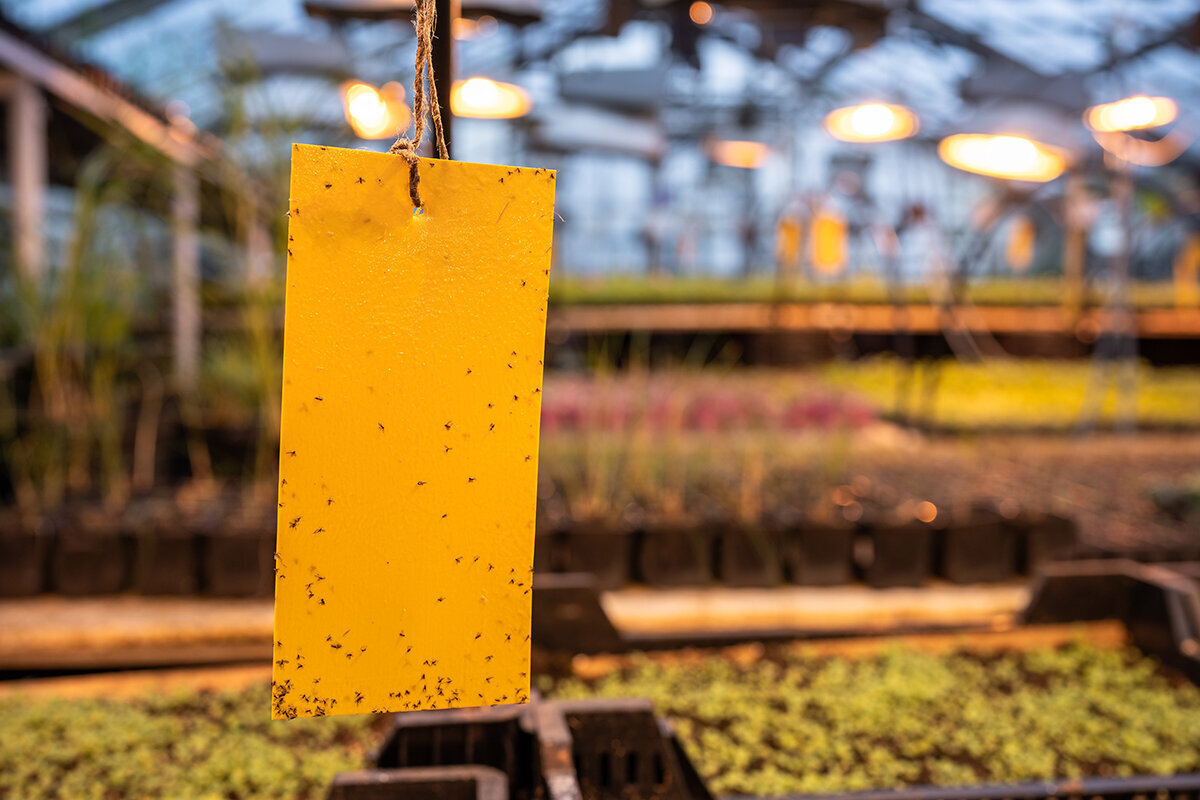
Yellow cards expose the presence of flying fungus gnats without repairing conditions around roots. Those adult catches usually indicate a moist biological community in the growing medium's upper layer.
That distinction determines the response. Trapping adults supports observation and reduces some immediate pressure. Lasting improvement also requires attention to wet surfaces, algae, organic debris, vulnerable propagation stock and larvae around roots. Provide the water each crop needs while interrupting continuously damp gnat habitat; drying every pot completely is not the objective.
Treat the card as evidence. When weekly totals climb, investigate irrigation, cleanliness and conditions beneath the propagation crop rather than mistaking the trap for a complete remedy.
What to do within 48 hours
Start with vulnerable plants
Propagation areas need particular care: sown trays, rooting cuttings, newly potted specimens and young plants establishing slowly. Vigorous, settled crops often tolerate light infestations more readily. Seedlings and incompletely rooted cuttings have fewer reserves, as do delicate root systems. Start by separating vulnerable propagation stock from the rest, instead of automatically treating the whole greenhouse.
01
Temporarily pause automatic cycles
See whether timers kept operating through cool, cloudy days while plant demand fell. A schedule that worked last week may deliver too much water now.
See whether timers kept operating through cool, cloudy days while plant demand fell. A schedule that worked last week may deliver too much water now.
02
Clear algae and pooled water
Drain saucers and holding trays, dry wet patches under benches, and scrub green films from floors, containers and irrigation areas.
Drain saucers and holding trays, dry wet patches under benches, and scrub green films from floors, containers and irrigation areas.
03
Inspect arrivals away from propagation
Initially separate incoming seedlings, houseplants and damp growing-medium bags from propagation stock. Inspect them and position a yellow monitoring card nearby, marked with the date.
Initially separate incoming seedlings, houseplants and damp growing-medium bags from propagation stock. Inspect them and position a yellow monitoring card nearby, marked with the date.
Confirm the insect before responding
Small dark flies are not all fungus gnats
Adult fungus gnats have fine dark bodies and long legs and are generally around1.5to3.0mm in length. Their flight is weak and wavering near pots, and they sometimes run across the growing mix. On a well-positioned card, long legs and slender antennae offer initial clues. If visible, the characteristic Y-shaped wing vein can be checked with a magnifier.
The stronger clue lies below: a larva is narrow, glassy or whitish, legless and marked by an obvious glossy black head capsule. Search the moist surface layer rather than looking only deep inside a pot. Wet propagation cells, dead foliage and continually damp container rims are particularly useful places to inspect.
Fungus gnat likelyFine-bodied · long legs
Possible shore flyStocky · pale wing marks
Protect helpful insectsCheck for a wasp-like waist
Best practiceVerify both insect and habitat
Signs pointing to fungus gnats
Identification clues include wavering weak flight, transparent wings and thread-like antennae. Larvae have a conspicuous dark head capsule. Fungi, algae and decaying organic material provide food; dense populations may also threaten delicate roots and their hairs.
A common alternative: shore flies
Excess moisture and algae attract shore flies too. Look for their stockier adults and pale wing markings. Their mainly algae-feeding larvae lack the conspicuous dark head capsule characteristic of fungus gnats.
Do not injure beneficial insects needlessly
Small parasitoid wasps and predatory midges also land on adhesive cards. Check several specimens, especially when you notice a narrow waist or cannot identify them confidently. Tiny flying insects inside the structure are not necessarily pests.
Why a correct identification changes control
Cleaning away algae benefits management of either fly. Measures intended to protect roots or attack larvae are chiefly relevant once fungus gnats are verified. The number stuck to one yellow card cannot settle the identification.
The life cycle occupies two zones
Manage the air and the growing mix
Development proceeds through egg, larva, pupa and adult, at a pace affected by warmth, food and moisture. A calendar prediction therefore offers no guarantee. Monitor and intercept flying adults above the crop, while addressing eggs, larvae and pupae around the moist growing surface. Effective management must cover both spaces.
Over the plants
Observation zone
Observation zone
Adults→
Egg deposition→
Cards track activity→
New adults appear
Within and around the
upper growing-medium layer
upper growing-medium layer
Eggs→
Larvae→
Pupae→
Risk to roots
What sticky cards reveal above plants
Because adults are poor fliers, they remain near containers, lower foliage and moist surfaces. Females seek damp organic sites for egg laying, close to food for emerging larvae. Yellow cards record adult movement and whether pressure changes over successive checks. They cannot show how many larvae occupy a particular pot, and each emergence starts another visible phase.
Why action focuses inside the mix
Tiny eggs are deposited on or near damp potting surfaces. The larvae graze on available fungal growth, algae and decaying debris before pupating in that medium or organic remains. Dense populations pose particular problems for seedlings, cuttings and roots already weakened.
Conditions behind an outbreak
Plants need moisture, but not unbroken saturation
Sheltered warm air + soaked surface mix + organic residue + repeated irrigation without a drying interval = attractive fungus-gnat conditions.
Peat-based and other organic mixes may be excellent plant substrates. Trouble begins when their surfaces remain soaked for several days, air movement around roots is poor, algae establish, fallen foliage accumulates or containers sit continuously in runoff. Gnats alone neither demonstrate bad housekeeping nor confirm damaged roots. Their presence is instead a useful signal to reassess how irrigation, drainage and daily work have shaped the growing environment.
Drainage
Give surplus water somewhere to go
Clogged drainage openings, compressed mix, water-filled saucers and poorly drained floors can leave the area under benches wet well after plants have taken up what they require.
Algae
A green film signals persistent moisture
Algal growth points to recurrent surface wetness and accessible nutrients. It strongly favours shore flies and often accompanies the same long-lasting dampness that supports fungus-gnat development.
Decaying organic matter
Remove damp residues as routine work
Dropped leaves, spent propagation plugs, old growing mix and other plant waste hold water and encourage fungi. Clear them before they provide shelter and food for a further gnat generation.
Interpret symptoms carefully
Root injury is possible, but avoid overdiagnosis
Most larval feeding is on fungi and decomposing organic matter. Where numbers become high, larvae may graze root hairs or penetrate tender roots. Even modest injury can hinder the establishment of seedlings and cuttings, which makes those crops particularly sensitive. Damaged or already stressed roots may also become more susceptible to wider root problems. Always assess plant condition and the root zone alongside the visible adults.
Gnats are not the only explanation for yellowing, stunting, wilting or poor rooting. Low light, cold or compacted medium, unbalanced nutrients, root disease, excessive drying and repotting mistakes can produce similar symptoms. Check moisture and inspect roots before attributing everything to insects. The classic aluminium greenhouse provides a durable setting in which separate crop zones can be observed and managed.
Stable conditionsLight-coloured fine roots with crop-appropriate moisture.
Available foodAlgae, discarded plant matter and spent propagation mix.
Higher concernA continually soaked surface with larvae confirmed.
Evidence that is not enoughFlying adults alone do not establish root damage.
Useful action point: Finding larvae among propagation stock warrants immediate improvement of the environment. Delaying until pronounced wilting appears makes plant care more difficult and leaves fewer options for measured, selective control.
Irrigation offers the greatest leverage
Schedule partial drying without causing drought
“Let it dry” is sound advice only after considering species, root volume, weather and development stage. Basil in a small cell, an established cutting, a large potted citrus and a dormant succulent cannot share one interval. Where the crop permits, allow some drying at the surface between irrigation events, but continue supplying the active roots with suitable moisture.
Irrigate to plant demandLet the surface partly dryWater again before plants become stressed
1. Inspect beneath the top layer
Check the upper centimetres by touch, lift the pot or use a correctly sized moisture probe. Pale surface material may conceal saturation below; dark material may suit a moisture-loving crop. Combine pot weight, surface condition and plant health when judging the need to water.
2. Coordinate dose and timing
Where a bench repeatedly remains wet, examine dripper output, runoff paths and drainage. Apply water deliberately through the required root depth rather than adding a small amount at every timer pulse. Once plants have absorbed their share, enclosed trays should not remain filled for days.
3. Adjust for current conditions
After cool, cloudy weather or reduced ventilation, lower irrigation accordingly. Southern Australia's dim winter conditions particularly warrant this adjustment. Tropical, subtropical and arid areas need locally appropriate seasonal decisions. Hot sunshine can increase demand sharply without favouring gnats, if drainage works and the surface gets a suitable break from wetness.
Tomatoes demonstrate why crop demand comes first: their water use shifts markedly with foliage, sunlight and fruit load. The classic aluminium greenhouse provides a setting for managing these changes. Apply that principle to individual pots: supply roots according to crop needs rather than routinely maintaining damp conditions favourable to gnats.
Use four checkpoints for diagnosis
Bring several observations together before treatment
Combine adhesive cards with inspections of potting material and roots, keeping brief written notes. Each method reveals a different part of the problem. Record the busiest locations, whether larvae are present, the crops most at risk and changes in catches after adjusting irrigation and cleanliness. This makes a cloud of flies into evidence you can assess.
Sticky cards
Flying-adult trendMix inspection
Larvae near the surfaceRoot examination
Plant susceptibilityIrrigation notes
Environmental patternSticky-card records
Place cards just above foliage or close to the potting surface in vulnerable areas. Mark each with its location and date, compare equivalent positions weekly and assess trends across catches. Adult activity is what the cards reveal, not larvae per pot. Outside enclosed greenhouses, limit adhesive traps to avoid catching other insects.
Checking for larvae
Search the damp surface layer, concentrating on container margins, spaces beneath plant litter and wet propagation cells. Sample several pots that represent the crop instead of selecting only the worst-looking one. A larva confirms activity at that spot, but it does not describe every root system or map the infestation across the structure.
Inspect the root system
Inspect two or three representative seedlings, cuttings or struggling pots. Look for predominantly light-coloured roots with firm tissue and good branching. Also check for rot, unusual smells, saturation and visible larvae. This reveals the crop’s vulnerability rather than adult flight pressure elsewhere.
Keeping irrigation records
Record the crop, water applied, weather, leaks, algal films and card counts. One concise entry each week can expose local patterns that memory misses. Notes may reveal whether watering changes coincide with gnat pressure, although a log on its own cannot identify the insect.
Put treatments in a sensible order
Repair the habitat before directing control at larvae
Combine compatible measures, starting with conditions that sustain the infestation. Consider biological enemies after confirming larvae or where pressure persists. Australian chemical use must match the pest, crop, setting and user permitted by current APVMA registration or permits, the label and applicable state or territory rules. An ornamental-crop authorisation does not automatically extend to edible plants.
1
Drainage, clean practice and dry storage
Drain saucers and puddles, remove algae and dead plant material, and discard heavily affected old mix where horticulturally appropriate. Store fresh bags clean, closed and clear of damp ground. Restore blocked drainage holes and provide an even water supply without permanent saturation. These foundations help prevent renewed infestation after other controls.
Suitable for:
All crops, seasons and levels of infestation.
All crops, seasons and levels of infestation.
2
Physical measures and crop care
Yellow cards provide early warning, reveal trends and remove some adults. More cards cannot replace larval assessment. Clear fallen leaves, space plants for airflow and avoid saturating propagation cells just because neighbouring mature plants require more water.
Suitable for:
Early intervention and light to moderate pressure.
Early intervention and light to moderate pressure.
3
Living controls aimed at larvae
Depending on the crop, temperature, production method and local availability, larval management may include entomopathogenic nematodes such as Steinernema feltiae or predatory mites active in soil, including Stratiolaelaps scimitus These are living beneficial organisms and their performance is influenced by freshness, temperature, accurate application and suitable medium moisture Prepare the treatment area, application plan and timing before ordering. Storage, dosage, water quality and compatibility must follow the specialist supplier's instructions. Nematodes need moisture to move through the medium; a permanently flooded tray is not appropriate.
Suitable for:
Confirmed larval presence, propagation areas and planned preventive management.
Confirmed larval presence, propagation areas and planned preventive management.
4
Apply authorised products exactly as the label directs
Where cultural and biological measures prove insufficient, check that a treatment is authorised for the crop, pest and precise setting. Consult current APVMA registrations and permits before purchase, read its full label and check applicable state or territory use requirements. Broad-spectrum treatments can harm beneficial organisms without correcting persistent wetness around roots.
Suitable for:
Ongoing problems after the insect has been identified confidently.
Ongoing problems after the insect has been identified confidently.
Confirm that measures are compatible: Match moisture conditions to nematodes and predatory mites, and do not assume compatibility with pesticides, cleaning products or tank mixes. Plan hygiene, release and any chemical treatment together. Only combine measures with explicit supplier confirmation, checking current directions and the binding product label.
Refresh the propagation zone
Make conditions less inviting from the beginning of the next crop
Between crops, remove loose medium and plant debris from benches, floors, crevices and drainage routes. Clean reusable tools and trays, remove splash-zone algae and check that benches drain without retaining a film. Restart with clean containers, fresh medium stored dry, labelled trays and dated yellow monitoring cards.
Set an irrigation approach for each crop. A misted cutting bed and a bench holding vigorous tomato seedlings have different requirements, and neither should dictate watering for the other. Where practical, separate seed trays, cuttings and established container plants. That division improves crop precision while providing an unhurried, effective form of integrated pest management.
Order of work at a clean bench
ClearTake away residues and spent growing mix.
WashClean containers, implements and work areas.
DrainRepair leaks and clear pooled water.
ObserveLabel and date cards before plants arrive.
For a greenhouse that serves as both an efficient work area and an attractive garden room, accessible benches, manageable ventilation and defined zones make repeated tasks easier. Consider the adaptable, durable classic aluminium greenhouse and arrange bench access, roof vents and a dedicated propagation section around the work you genuinely perform.
Questions gardeners often ask
Straightforward guidance for the potting bench
Measured observation and an organised reset usually outperform either one severe treatment or indiscriminate drying of every plant.
Can yellow cards remove an infestation by themselves?
No. Cards catch adults and locate concentrated flight activity; larvae within pots are not reliably controlled. Keep monitoring with them, correct prolonged wetness and, once larvae are confirmed, use an appropriate control for that crop and setting.
How far should pots dry between watering?
Stop short of stressing the crop. Controlled drying near the surface is appropriate only where tolerated. Seedlings, cuttings and moisture-loving species must not suffer a completely dry root ball. Let pot weight, the feel of the medium, weather and plant health guide you, rather than counting a fixed interval.
Can established plants also be harmed?
Among vigorous plants with developed root systems, the flying adults are commonly more annoying than damaging. Dense larval populations may still affect fine roots when the mix remains saturated or the roots are already weakened. An equivalent amount of injury has greater consequences for seedlings and cuttings. Inspect both larvae and roots before attributing every growth issue to gnats.
Does shore-fly management follow the same approach?
Removing algae and avoiding continually wet surfaces assists with both groups. Shore flies, however, are more dependent on algae and ordinarily do not feed directly on roots. Their compact build and light wing markings distinguish them from the finer body and long legs typical of fungus gnats.
At what point should biological controls be considered?
Match living controls to the crop, confirmed larvae, infestation pressure, temperature, irrigation method and availability. Their storage, transport, application and moisture requirements need careful attention. Follow the specialist supplier's directions exactly, while improving drainage, hygiene and watering patterns so the measures support one another.
References and additional help
Authoritative places to check chemical registration and permitted use
Availability, authorisations and binding directions can change. Before buying living controls or pesticides, consult the supplier's current instructions and the product label. For pesticide use, check APVMA registration and permit records alongside destination state or territory requirements; Commonwealth registration does not override those regional controls.
More from Bloomcabin: Greenhouse setup: planning, plants and maintenance · Made-to-measure aluminium greenhouse · Smart greenhouses for home gardeners
- APVMA: search registered products and permits
- APVMA: find permits for authorised chemical uses
- Australian Government: regulation of agricultural and veterinary chemicals
- APVMA: PubCRIS registered-product search
- APVMA: verify product and permit requirements
- APVMA guidance for product and permit searches
Build a weekly checking habit
Shorten the period of continuous wetness
Keeping gnats scarce usually depends on regular, disciplined inspection, not a perfect trap or one drastic intervention. A brief check made consistently helps prevent moist potting material from becoming a permanent breeding site.
Assess moistureCompare the surface layer with moisture deeper around the roots before each scheduled irrigation event.
Drain pooled waterWalk past saucers, trays, benches and floor margins, correcting every place that remains wet.
Compare sticky cardsMark each card with its date and compare it with last week’s result rather than relying on remembered catches.
Inspect susceptible rootsWhen captures increase or growth slows, examine a representative seedling, cutting or young propagation container.
