
Pergola Noise in Rain and Wind: What Matters
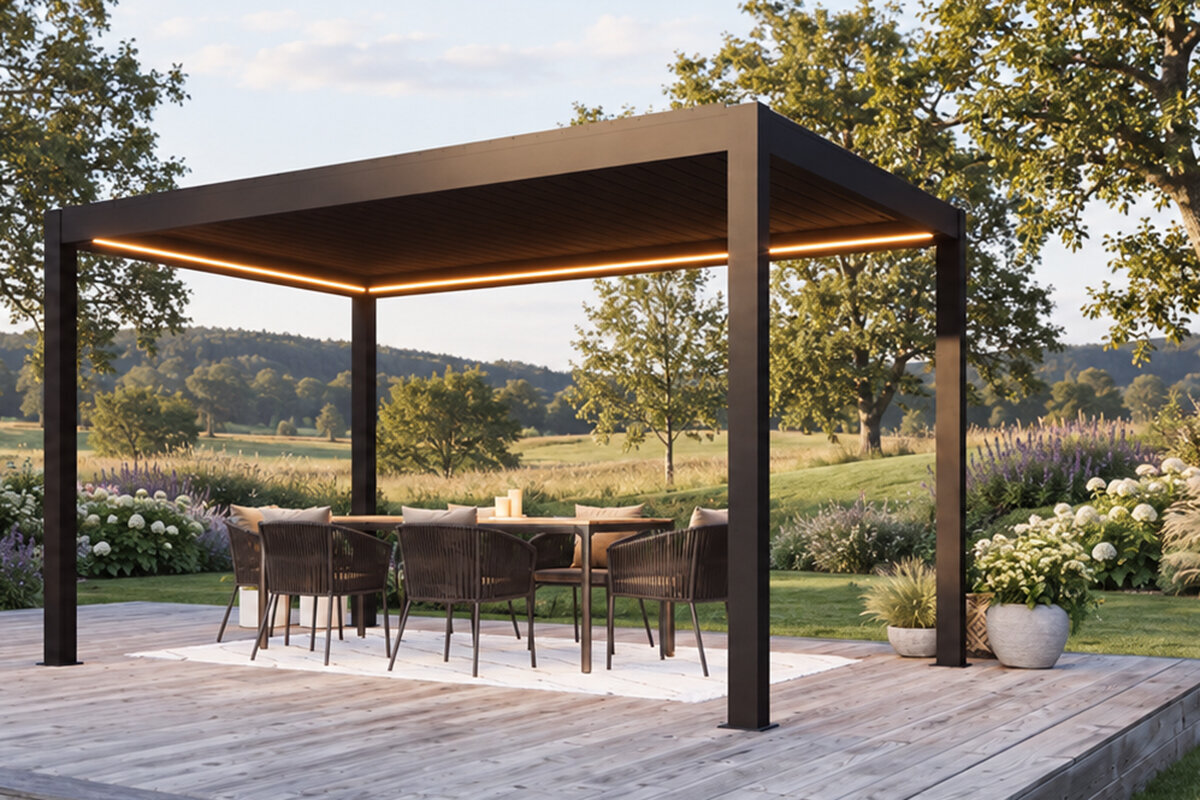
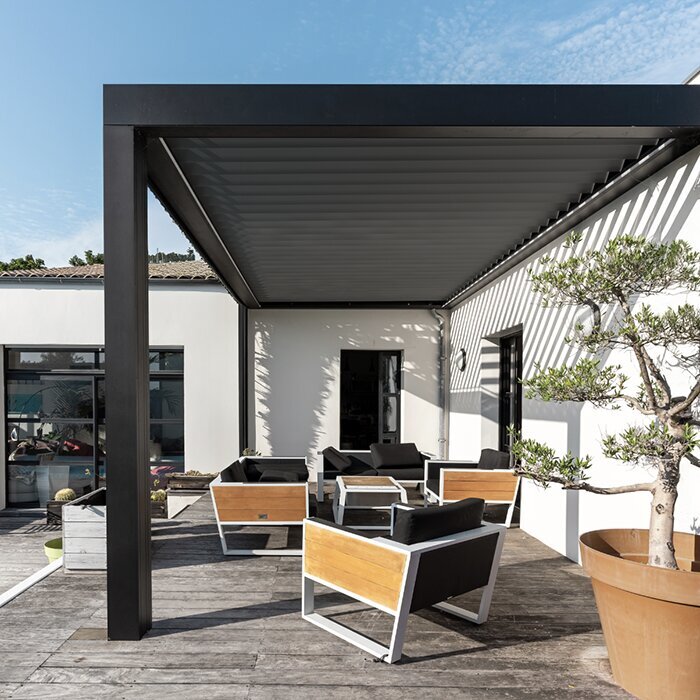
An aluminium pergola may be audible when rain lands on its roof, wind passes its edges or components move slightly. Any assessment should account for the location, roof design, construction and installation rather than rely on a universal quietness claim.
A pergola planned as a sheltered outdoor retreat is often chosen for shade, visual appeal and extended use. Sound deserves equal thought. Weather meets surfaces, profiles and joints, while the resulting impression varies with conditions, setting and activity. On an open terrace it may go largely unnoticed, but beside the home or within a quiet garden it can stand out more.
During wet weather, droplets hitting the roofing create the principal sound. Wind may be heard as it passes louvres, side panels, gutters and junctions. Minor weather-driven movement can also carry through the frame. None of these effects alone determines quality; each should instead prompt closer consideration of design, fitting and operation.
This guide helps you set realistic expectations and prepare targeted consultation questions. Learn which sound sources may matter with an aluminium pergola, why the site counts, and how to include installation and later checks in your decision.
Basics · 01
Why rain is audible on a pergola roof
Sound begins when rain meets a solid surface. How prominent it seems varies with rainfall intensity, droplet pattern and the area below. People often sit, eat or talk beneath a pergola, so the roof can be more noticeable during a quiet moment than while the garden is busy.
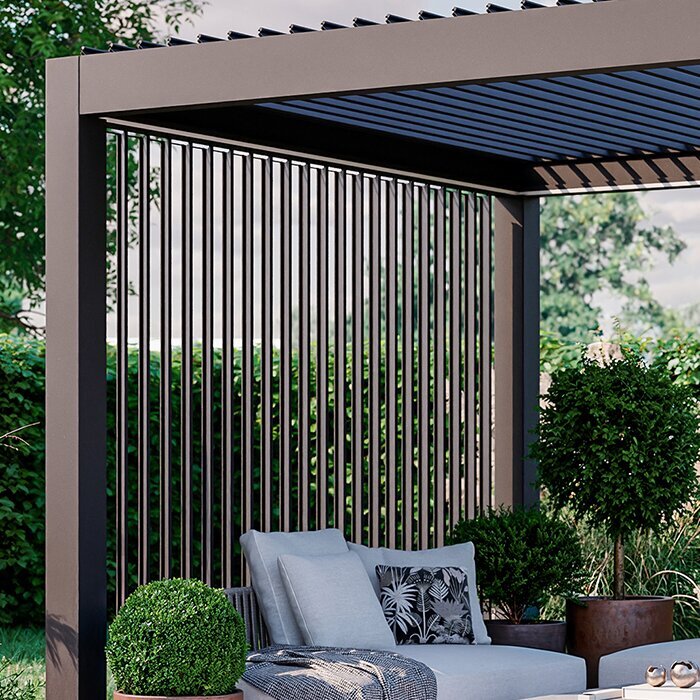
A bioclimatic roof requires attention to each louvre. The spacing, overlap and chosen opening angle alter the routes taken by water and sound through the assembly. Alongside the material, discuss operation in varied conditions and ask what you could reasonably hear during heavy rainfall.
- Use your intended activity as the benchmark: reading, dining and conversation differ in their sensitivity to rain noise.
- Consider nearby hard surfaces, including walls and façades, because reflected sound may change what occupants hear.
For adaptable roof surfaces, explore our bioclimatic aluminium pergolas and their planning options.
Roof systems · 02
The sound character of fixed roofs
A conventional pergola is also audible in rain because its roofing receives each droplet and transfers the impact into the supporting parts. Roof shape, substructure and junctions all contribute. An open setting does not automatically soften the result; it may leave the frame directly exposed to weather.
Assess the pergola as part of the home rather than in isolation. Façade proximity becomes more significant outside a bedroom, living room or study. Nearby glass, another roof or smooth paving may return sound towards the building. Supplying a detailed site sketch will make the advice more relevant.
- Ask which roof details direct water deliberately and where drip sounds could be heard in your proposed orientation.
- Compare more than images: a quiet seating area needs different priorities from an exposed space for social gatherings.
If you prefer a clean, classic structure, discover our regular aluminium pergolas for different terrace settings.
Wind · 03
How airflow can create noise
Air movement continually changes in strength and direction. Posts, framing and roof edges interrupt it, while walls redirect it and open sides may increase its speed. The resulting sound varies between gusts. Conditions on an open rooftop terrace will differ from those around a pergola sheltered by a house, hedge and neighbouring building.
The angle of adjustable louvres changes the shape presented to moving air. For that reason, acoustic planning should include the operating manual and any directions for windy conditions. Tell the adviser where prevailing winds and gusts approach the property and when you expect to use the terrace.
- Before planning, observe which direction gusts actually reach your terrace from and where they noticeably intensify.
- Point out tall walls, corners and adjacent buildings so their effect on air movement can be considered.
For terraces needing flexible shade, Bloomcabin offers bioclimatic pergolas with louvred roofs as a relevant category.
Construction · 04
Movement, joints and component sounds
Outdoor frames respond to heat, moisture and wind pressure. This can make small movements audible around joints, covers and transitions. Separate an occasional weather-related sound from an issue that repeatedly returns. Record when any rattling, scraping or strong impact occurs, together with the prevailing conditions.
Look beyond the visible roofing when tracing a sound. Anchors, post alignment and accurately installed trims all affect the completed structure. Following the instructions for the specific product helps its parts operate as designed. Before work begins, establish the base requirements and how the finished installation will be inspected.
- When a sound seems unusual, record the wind direction, rainfall and louvre position to support an informed assessment.
- At handover, have operation, visible connections and moving parts explained together instead of searching for details later.
For a streamlined outdoor space, our classic fixed-structure pergolas can provide a useful starting point.
Planning · 05
Why the site shapes what you hear
Matching pergolas need not sound alike. One may be protected inside a courtyard while another occupies a wind-exposed corner. The surrounding façade, glazing, garden walls and paving help define the acoustic setting. Seating position also matters: conditions immediately below the roof are experienced differently from those a few metres beyond it.
Alongside appearance and footprint, map where people will spend time. Show the proposed dining setting, lounge or outdoor kitchen, identify rooms on the other side of the façade and note likely usage times. These details give a specialist a firmer basis for discussing sound than a broad product description can provide.
- Before choosing dimensions and equipment, add seating, doors, windows and permanent garden surfaces to a basic site drawing.
- Observe the terrace during wet and windy conditions; existing echoes and draughts can reveal useful site characteristics.
For sites with changing needs for sun and ventilation, our bioclimatic pergola solutions offer interesting design scope.
Installation · 06
Why installation quality matters
Accurate work is essential even when the design is sound. The proposed anchors must suit the base, the frame and posts require correct alignment, and each connector must be fitted carefully. Components forced together under tension, or trims seated poorly, can make weather-related noise more apparent.
Clarify in advance who is responsible for each task and which documents are relevant to installation. For building questions on your property, involve the appropriate qualified professional or, where needed, local authority early. General information cannot replace assessment of your actual foundation, wall construction or local requirements.
- Before installation, review the supporting surface, concealed services and connection locations that may affect the work.
- Ask for a clear functional check so operation and visible components can be inspected together at handover.
If you are planning a simple, clear roof design, view our traditional aluminium pergolas for outdoor areas.
Use · 07
Plan for roof settings and ongoing care
Acoustic planning continues after the pergola is installed. With movable roofing, the selected angle changes how weather reaches the surface. Always use the instructions supplied for that product, especially when conditions shift quickly. The preferred balance of light should not override guidance that applies during wind or rain.
A routine visual inspection can reveal developing issues. Clear loose material only as the care guide permits, noting damage and unfamiliar sounds. If operation or a component causes concern, seek qualified advice rather than altering structural fixings or movable mechanisms without authorisation.
- Describe each recurring sound by its exact circumstances rather than simply calling the pergola loud in windy weather.
- After severe weather, inspect visible elements and follow the relevant product guidance when carrying out care.
For adaptable control of daylight and ventilation, consider our bioclimatic pergolas for terraces for consideration.
Buying advice · 08
Questions to ask before deciding
A considered purchase brings the desired look together with the realities of the property. Request a straightforward account of the roofing, drainage path and site prerequisites. Rather than expecting silence, explain the kind of comfortable outdoor setting you want. This makes sound a practical part of the consultation.
Think ahead to regular activities. Will this be a quiet retreat, a dining area or a terrace beside a study? Compare the precise configurations currently offered instead of assuming different designs share the same characteristics. That approach provides clarity without attributing performance to a site that cannot support it.
- Have roof designs, side options and anchoring methods explained against the layout of your own terrace.
- Put agreed specifications and key commitments into the latest quotation and order paperwork, keeping the proposed work consistent with the plan.
To compare different basic concepts, see our regular pergolas for garden and terrace for orientation.
Comparison
Compare sound sources systematically
Pergola acoustics arise from several interacting details. The table highlights questions worth asking about rain, wind and everyday activities. Although it cannot assess the property itself, it can direct the consultation towards the relevant circumstances and parts.
| Topic | Possible perception | Key planning question |
|---|---|---|
| Rain on the roof | Drops audibly strike solid roof surfaces. | How close is the seating area beneath the roof? |
| Wind at edges | Gusts can cause airflow noise. | Which wind directions shape the terrace? |
| Movable louvres | Roof position changes surface and airflow. | What operation is intended during weather changes? |
| Connections and covers | Loose or ill-fitting parts can be noticeable. | How will installation and handover be checked? |
| Façade and ground | Hard surfaces can reflect sound. | Which surfaces surround the proposed location? |
Rain
Drop size, rainfall intensity and roof surface shape the sound. A heavy shower is perceived differently from steady light rain.
Wind
Openings in buildings and nearby surfaces may redirect or concentrate wind. Sound at an exposed corner is consequently influenced strongly by the individual site.
Installation
Sound performance depends on firm connections, properly matched components and inspection of moving parts. Describe any unfamiliar noise precisely and request a qualified assessment.
Five steps to a thoughtfully planned pergola
Bring acoustics into the project from the outset. Targeted site observations and carefully chosen questions will improve the basis for product selection, quotations and installation discussions.
01
Observe the terrace
Visit the area in light rain and windy weather. Identify draughts, façade echoes and places where easy conversation matters most.
02
Define how you will use it
Choose whether the space will primarily support meals, rest, work or entertaining. Each priority affects decisions about roofing, seating and distance from the house.
03
Understand the roof system
Ask for an accessible account of the preferred roof's operation and water path. Include questions about rainfall, gusts and sudden changes in conditions.
04
Clarify the installation basis
Check the base, fixing area and possible connections early. Involve a suitable qualified professional if construction conditions are unclear.
05
Prepare for handover
Plan a shared operating check, request an explanation of the instructions and record the appropriate contact for concerns that emerge later.
Checklist for your consultation
Use these prompts to make acoustic comfort a practical discussion. Bring terrace photographs, measurements and a short account of its usual rain and wind exposure.
01. Sketch the site, including house wall, walls, windows and nearby hard surfaces.
02. Record the usual approach of the wind and any corners where draughts intensify.
03. Measure from the roof to the intended dining or lounge position.
04. Ask how the roof, drainage path and controls are intended to function in rain.
05. Clarify base requirements and all intended fixing points.
06. Discuss the installation process and joint functional check before handover.
07. Retain the operating and maintenance information for visible and movable parts.
08. If an unusual sound develops, record the roof setting and weather at the time.
Frequently asked questions about pergola noise
Is rain noise normal with an aluminium pergola?
Rain hitting any roof will normally be heard. Its prominence depends on the downpour, roofing arrangement, distance from the listener and nearby surfaces. A tree-sheltered setting behaves differently from a terrace bordered by smooth walls, so discuss the selected design and position the seating with care.
Why can I hear my pergola in wind?
As air crosses openings, frames and exposed edges, it can become audible. Corners, passages and walls may redirect a gust and increase its local effect. An adjustable roof adds another variable through its chosen position. Log any repeated rattle or scrape with the conditions present, then arrange a professional assessment.
Can installation affect noise?
Yes. How the posts align, anchors hold, junctions meet and covers sit affects the interaction between components. The supporting surface must be appropriate, and the relevant installation directions should be followed. If site conditions are uncertain, have a qualified professional assess the actual project rather than extrapolating from a generic example.
Does a louvred roof make more rain noise than fixed roofing?
There is no dependable universal comparison. For louvres, the selected angle, overlapping edges and rainfall strength all influence the result. Fixed roofing has its own construction and junction factors, while the setting affects both types. Compare the particular models under consideration with the characteristics of your site.
What should I do about unusual sounds?
Record the conditions at the time, including rain strength, wind direction and roof setting. Limit any visual inspection to actions allowed by the maintenance guide, and do not alter anchors or mechanisms yourself. Detailed observations give the appropriate professional a much better basis for identifying the cause.
Do I need to clarify legal requirements before installation?
Before committing to a pergola, contact your state or territory planning service and local council with the site and design details. For a rental or owners-corporation property, also ask the relevant manager or owner what consent is needed. Resolve these project-specific checks before finalising the plan.
Compare pergola designs
Comfort starts with realistic expectations
An aluminium pergola can organise an outdoor area and create an inviting place to gather. It will still experience real rainfall and wind, along with the sounds they bring. Treat acoustics as part of the combined assessment of roofing, location, installation and intended activities.
A detailed description of the terrace, coupled with specific questions about drainage, airflow and controls, supports a more informed choice. Bloomcabin can assist with comparing pergola concepts against the priorities of your space.
Discover suitable concepts for your terrace and garden, and prepare for a focused consultation.
