
Buy windows only or arrange installation too?

Planning your windows and choosing a purchasing route
Two quotations can show the same windows while describing very different projects. With a supply-only purchase, you order the units while measurement, installation, site logistics and coordination with other trades remain with you or professionals you hire separately. A supply-and-install arrangement may place more steps with one provider, but it does not automatically include every preparatory or finishing task. If you want Bloomcabin to handle installation, enquire about availability for your location, pricing and timing rather than assuming the service accompanies every order. The best choice depends less on the label than on clearly assigned responsibilities. Before comparing prices, ask: Who approves manufacturing dimensions? Who assesses the existing wall construction? Who responds if an opening differs from plan? Where does installation stop, and when is the work accepted? A shared scope of work and window schedule will show which route suits your planning capacity, timeline and available trades.
Compare responsibility, not simply the product
The key buying decision is not simply whether to install windows yourself or hire someone to do it. It is who owns each task from the first measurement through to a functioning opening. A supply order covers the specified unit and agreed delivery. Checking the rough opening, setting dimensions, preparing installation, appointing trades and coordinating interfaces with other work remain your responsibility. This can work very well where a window installer, construction manager or experienced renovation team already runs the project. It does, however, require one reliable chain of information. Manufacturing dimensions, the actual opening, handing, proposed fixings and connection details must not come from conflicting plan versions. Name one responsible person for every approval and maintain one controlled set of documents.
An installation package does not automatically transfer every site task. It may include measuring, fitting and adjustment, while exposing the opening, scaffolding, electrical work for shading, plaster repairs, painting or disposal remain separate. For either route, request a written scope using clear actions: measure, deliver, remove, transport, install, connect, adjust, inspect, accept and dispose of. Record who supplies materials and what site conditions are required for each item. Only then can quotations be compared fairly. A lower supply-only price and a higher combined quotation are not direct opposites; they allocate outside labour, owner coordination and remaining interfaces differently.
Start with a dependable window schedule
A window schedule provides a common foundation for both purchasing routes. Record the room, floor, position number, existing opening, desired operation, hinge side, sill condition, division, glazing preference and unusual installation conditions. Add interior and exterior photographs, plus notes on blinds, radiators, furniture, reveals, window sills and adjoining exterior finishes. Where several openings look alike, clear identifiers help prevent dimensions or operating directions being mixed up. A single-sash inward-opening window is only unambiguous in an order when its position, interior and exterior views, and intended operating side are confirmed. Mark the position and a known reference direction on photos rather than relying on file names alone.
Keep product selection separate from the decision on final measurements. A catalogue image or approximate opening size can narrow down options, but it is not a binding production survey. With supply-only purchasing, decide before ordering who takes the final measurements, who checks them and who decides if information conflicts. With a supply-and-install offer, ask whether the survey is included, what prepared site condition it assumes and when dimensions are released. Record changes in writing and use a clear revision number. A later change to sash divisions, handle side or opening direction can affect furniture planning, shading and opening preparation as well as the window itself. Verbal corrections should never sit beside an outdated drawing.
Keep the whole project in view
When supply-only can be the right fit
Buying windows separately often makes sense where the construction site is already being professionally managed. That may be a renovation in which an architect, general contractor or trusted window specialist is responsible for dimensions, interfaces and installation sequence. A new build with clearly planned openings can also suit this division of work. You retain freedom to select the product and appoint delivery and installation separately. In return, you need active project management: order approval, access, receiving, protected storage and the installation date all need to align. Before ordering, ask the intended installer to check whether the configuration, measurement documents and supplied items fit their plan. That review is far more useful than a fundamental dispute after delivery.
Supply-only purchasing can also suit a clearly defined project, for example where a knowledgeable professional is replacing one unit and understands the existing construction. With fixed-glazed windows there may be no sash-operation questions, but decisions about dimensions, fixing, glass handling and connections to the surrounding construction still remain. Before purchase, confirm whether the installer will inspect the selected unit and under what conditions they will fit owner-supplied products. Also ask who specifies required installation materials and whether they are included in the quotation. A late refusal on site is not merely a pricing issue; it can affect storage, follow-on trades and use of the room. This route suits existing expertise, not simply a willingness to take on work.
When supply and installation can simplify the process
A combined order can be particularly appealing where several uncertainties occur together: uneven openings in an older property, many window formats, difficult access or a tight renovation schedule. One contact can coordinate the sequence from survey to fitting more closely. That reduces handoffs but does not remove the need for a precise scope. Describe the existing conditions openly: Are old frames exposed or covered? Is full removal planned? Are there delicate finishes, narrow staircases or rooms that must remain in use? Also establish whether installation will happen in one stage or several. Such details affect crew planning, protection measures, temporary conditions and coordination with occupants or other trades.
With large movable units, the interface between product, transport and installation becomes especially important. For Patio Life lift-and-slide doors clarify before ordering how delivery will reach the installation location, which access routes and lifting options are available, and who prepares the site. Ask when operation will be tested and whether protection for adjacent floors or walls is included. The handoff to follow-on work also matters: When can interior finishing or floor work begin, and who updates those trades on actual installation progress? A combined package is not a vague promise of convenience. Its value comes from specific tasks being assumed, known site requirements and a process that can deal with questions when they arise.
Final measurement: the decision with the greatest consequences
Window dimensions involve more than width and height. The person measuring must understand which plane is the reference, how irregular reveals are assessed and what space is needed for fixings and connections. In replacement work, it also matters whether the old frame remains or is removed; each method creates a different starting point. Record not only numbers, but the measurement method, existing construction and details such as uneven sills, recesses, linings or later-applied finishes. Multiple measurement points can reveal irregularities, but they do not automatically produce the correct order size. Deriving that size belongs to the person professionally responsible for the installation concept. Without an agreed measurement basis, a product quotation remains preliminary.
Non-rectangular shapes require even closer coordination. A triangular or angled fixed-glazed window needs an unambiguous geometric template and shared terminology for the relevant edges, angles and viewing sides. Supply-only remains straightforward only if the measurement basis has been professionally verified and accepted by the installer. With an installation package, establish whether the geometry will be surveyed on site, who checks the production drawing and how approval is recorded. Review drawings for orientation and the position of the slope as well as overall width and height. Do not leave dimensional assumptions only in a hand sketch or verbal discussion; they should appear clearly in the approved order documents.
Separate the window scope from wall work and local approvals
The visible frame is only part of the finished result. Fixings, joints, interior and exterior connections, and transitions to the wall, insulation, sill and possibly shading all sit around it. The appropriate execution depends on the existing construction and the overall design. Ask the quotation specifically about proposed connection work rather than relying on broad terms such as “installation.” Request a description of which side is finished to what condition and where another trade takes over. A qualified designer or installer can assess the work in the context of the building. If the wall construction or existing condition is unclear, plan any required investigation before production approval, not on installation day. For a Canadian project, make the jurisdiction check part of this review. The National Research Council publishes model codes, but directs users to provincial or territorial officials to identify the codes and regulations that apply locally. Confirm that route and ask the municipality about project-specific permits before approving manufacture, particularly if the opening or surrounding construction will change.
Preparatory work can influence the schedule more than placing the window itself. It may include clearing the work area, protecting furniture, removing old linings, separating adjoining elements, creating suitable surfaces or coordinating façade and interior-finishing work. In a supply-only arrangement, decide which trade takes each step and how the opening is protected before the next one. For an installation quotation, check whether these tasks are included, optional or excluded. Ask who closes reveals, works on sills and restores finishes after installation. A useful comparison states the handoff in plain language: “unit installed and operational, interior reveal left open” says more than “installation complete.” It prevents the assumption that a fitted window automatically means a fully renovated wall.
Keep the whole project in view
Choose operation around future use
The purchasing route should not obscure product selection. First decide how the window will be operated, ventilate the room, be cleaned and sit alongside furniture in daily life. Inward-opening sashes need clear space in the room; outward-opening versions change conditions at the façade, balcony or path. With several sashes, consider which one will be used regularly and whether handles, curtains, fittings or radiators will interfere. A double-sash inward-opening window is a different day-to-day choice from two individual windows, even if the elevation looks similar. Test the swing area on a floor plan or in the actual room. This reveals conflicts before an orderable but impractical configuration is approved.
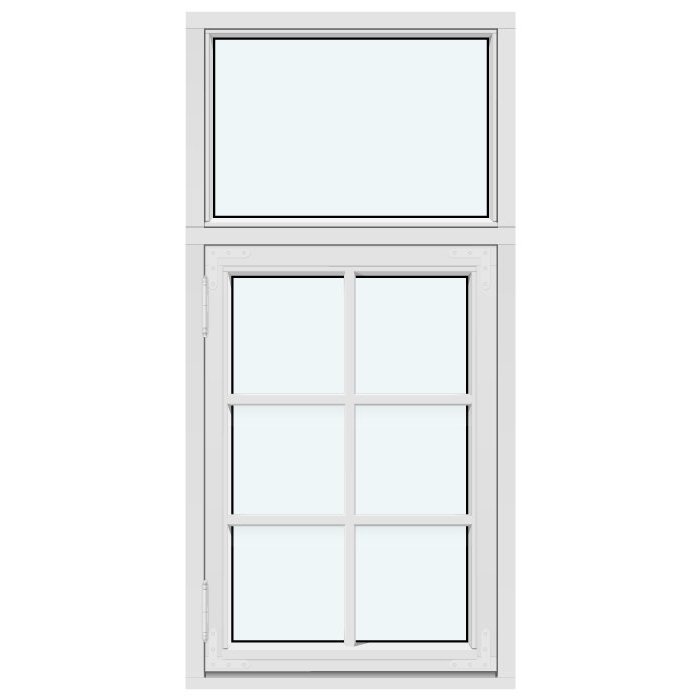
Glazing bars should also be addressed early. Specify whether they are wanted as a design feature and, where relevant, whether true divided lights are intended. A desired appearance on a heritage-style building is not a reason to simplify questions of dimensions or connections. A traditional outward-opening “Kombi” casement window describes the visible product configuration; project-specific questions about the existing construction, dimensions and installation still need separate review. When replacing individual units, front-on photos of neighbouring windows and traceable dimensions of the divisions are helpful. Compare interior and exterior views too, because handing and sash layout can be read differently from each side. An agreed elevation prevents the product choice and installed orientation being reconciled only on site.
Organize delivery, storage and access in advance
A delivery date is useful only when the goods can be received and protected. Check vehicle access, unloading space, doorways, stairs, elevators and the route from the vehicle to the installation point. Large or heavy units may require a dedicated on-site handling plan. Agree more than a date: Who will be present, who checks the delivery, where will it be placed and how will it be protected before installation? Bloomcabin’s usual delivery time is 4 to 6 weeks, subject to order confirmation. Arrange firm installation capacity only after receiving the confirmed date, and remember that safe storage conditions should not be improvised. An empty spot is not automatically a suitable storage area.
When receiving goods, check quantities, labels, visible transit damage and consistency with the order. Photograph any concerns immediately, including overview and detail images, and report them through the agreed contact route. Do not rush to unpack or install anything if there is a fundamental doubt about the specification or completeness. A pivot roof window should, for example, be clearly matched to its planned location and associated documents rather than recorded as a generic window unit. With an installation package, clarify who carries out the goods inspection and how a unit that cannot be fitted affects the schedule. Sound logistics will not prevent every discrepancy, but it keeps the goods, records and responsible person together without unnecessary searching.
Use a comparison matrix for quotations
Place quotations side by side and compare them line by line: product name, quantity, dimensions, opening direction, design, delivery, survey, removal, installation, connection work, disposal, ancillary work, schedule assumptions and acceptance. Mark every unmentioned item as open, not automatically included. Add columns for “who will resolve this?” and “when is it needed?” This reveals not only price differences but also tasks without an owner. A supply-only proposal may be the better basis if your installer takes all remaining items on clearly. An installation proposal may be more convincing if it specifically addresses uncertain interfaces. Ask for optional services to be shown separately so a useful alternative is not confused with an unstated gap in the scope.
For doors, also assess transitions to the outdoors and the actual use of the opening. With a single-sash inward-opening patio door the order and installation plan should show the same hinge side, opening direction and floor condition. Ask what information is still needed before approval and which tasks remain dependent on other trades. Compare payment and approval stages with the project sequence rather than looking only at the final total. Flat rate figures per square metre or per unit are not enough for a meaningful comparison: projects of similar size can vary greatly because of removal, access, connections and reinstatement. The key issue is the documented gap between promised work and what you must still appoint, manage or do yourself.
Acceptance, records and dealing with discrepancies
Do not treat acceptance as a signature at the end of a long construction day. Check each position to confirm that every unit matches the order, sashes and hardware operate, glazing appears undamaged and agreed work has been completed. Also record which remaining items are explicitly outstanding. Make each note specific: position, observation, photograph, responsible contact and agreed next step. A note such as “check window” offers little later; a clear position number and description does. With supply-only purchasing, decide before ordering who will assess the completed installation and where product questions should go. Where installation is provided as one service, acceptance is easier to manage when the scope and checks have been agreed in advance.
Keep the quotation, order confirmation, approved dimensions, drawings, delivery note, photographs, correspondence and acceptance record together, organized by position. These records are more useful for later questions than memories of phone calls. Bloomcabin windows and doors have a 5-year warranty; the warranty terms and documents applicable to your order govern. A warranty does not replace careful goods inspection or determining whether an issue concerns the product, installation, connections or later work by another trade. Record which company carried out each task. The clearer the responsibilities and original site condition are documented, the more accurately an issue after installation can be assessed and directed to the right party.
Frequently asked questions
Is buying windows without installation always less expensive?
Not necessarily. The product price may look lower while surveying, fitting, site transport, connection work and ancillary tasks still need to be arranged. Compare the complete supply route with an installation quotation using the same list of tasks. What matters is which services are reliably covered, which risks remain separate and how much coordination you will take on.
Can I measure windows myself and have them installed later?
It can work if the intended installer accepts the measurement basis and selected unit before you order. Confirm in writing who checks the measurements, derives production dimensions and decides if there is a discrepancy. Measuring an opening yourself does not automatically amount to a professionally confirmed production release or a survey accepted by the future installer.
What should an installation-inclusive quotation include?
The quotation should state which units will be supplied and whether it includes surveying, removal, on-site transport, installation, connections, adjustment, disposal, protective measures and acceptance. Exclusions and required site conditions are equally important. For umbrella terms, ask for specific activities, materials and handoff points instead of accepting an assurance that “everything is included.”
Who coordinates the installer and delivery with supply-only windows?
Usually you or the construction manager you appoint. Coordinate the confirmed delivery date, access, storage area, receiving process and installation capacity. The installer should have time to review the order, dimensions, configuration and proposed connections. That makes it possible to identify missing documents or unassigned work before delivery.
What should I do if something is wrong with the delivery?
Check quantities, position labels, visible damage and agreement with the order documents. Record concerns straight away and use the agreed contact route. If there is a fundamental doubt, do not have the affected unit installed too quickly. For an installation package, clarify in advance who is responsible for inspection, documentation and further coordination.
Next step
The right purchasing route follows your project organization, not a universal rule. Supply-only purchasing makes sense when survey responsibility, installation capability, logistics and site management are already reliably covered. Supply with installation can reduce pressure where existing conditions are uncertain or many interfaces need managing, provided the quotation precisely states the work being assumed. Begin with a clear window schedule, confirmed production dimensions and an honest description of site conditions. Then compare tasks rather than headings: surveying, removal, connections, access, protection, reinstatement and acceptance. The better option is the one with understandable scope boundaries that suit the professionals actually delivering your wider project.
