
Choosing Greenhouse Polycarbonate | Panel Design & Insulation
article lang="en-CA" style="max-width:1160px;margin:0 auto;padding:0;font-family:Arial,Helvetica,sans-serif;line-height:1.8;color:#253034;background:#f4f7f7;overflow:hidden;overflow-wrap:anywhere;box-sizing:border-box;border-left:1px solid #dce4e5;border-right:1px solid #dce4e5;box-shadow:0 30px 90px rgba(24,38,42,.07);">
Look beyond thickness
Asking how thick a greenhouse panel should be is reasonable, but the answer depends on much more than its millimetre measurement.
Greenhouse builders use polycarbonate because it can provide impact resistance and thermal benefit without the weight of glass. In a multiwall sheet, enclosed air spaces restrict heat movement while the ribs between the skins strengthen the panel.
Nominal thickness does not guarantee identical performance. Twin-wall, triple-wall and more elaborate 10 mm panels can have different cell layouts, thermal ratings, daylight transmission, weights and allowable unsupported spans.
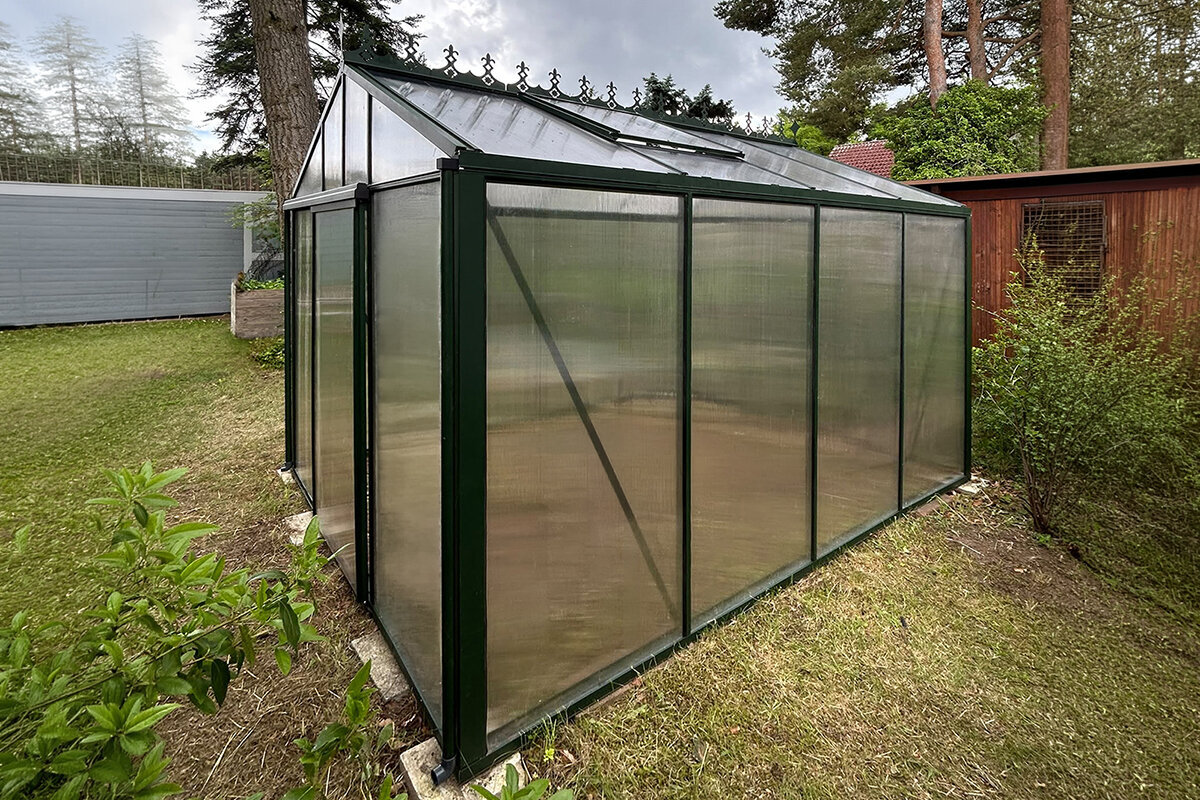
This article treats the panel as one integrated glazing system , rather than letting a single millimetre measurement decide. For an aluminium greenhouse that can be paired with polycarbonate, start with the Bloomcabin Classic Aluminium Greenhouse as the principal Bloomcabin product reference for Canadian shoppers.
Define the site conditions, months of use, daylight needs, heating plans and frame before narrowing the panel options. Canada’s regional differences mean winter sun, frost, summer heat, wind and snow exposure must be considered for the actual property.
01 • The material
Understanding greenhouse polycarbonate
Polycarbonate is a thermoplastic made into solid, corrugated and cellular sheets, including twin-wall and multiwall forms. In cellular panels, ribs join the outer skins and divide the interior into air-filled channels. This produces a light panel that can be stiffer and more thermally effective than a thin solid sheet.
Outdoor products may use UV-stabilized material or a coextruded protective surface. Manufacturers can also vary clarity, add diffusion or apply an anti-condensation finish. The material name alone therefore tells you little about the completed panel’s performance.
02 • Thickness
4 mm vs. 6 mm vs. 8 mm vs. 10 mm vs. 16 mm polycarbonate
A greater thickness can make room for deeper cells or a more involved rib layout, but millimetres are not an insulation rating. Treat the ranges below as prompts for comparing specifications, not as proof that panels sharing a thickness will perform identically.
| Nominal thickness | Question for the project | Potential advantage | Details to verify |
|---|---|---|---|
| 4 mm | Does the design call for the lightest, thinnest panel? | Low-weight, uncomplicated glazing | Published thermal data, span allowance, impact data and approved framing |
| 6 mm | Is the goal a lightweight twin-wall option for seasonal growing? | Cellular heat retention without much glazing weight | Rib layout, stated U-value, support centres and protected UV surface |
| 8 mm | Would deeper chambers or a triple-wall arrangement suit the project? | Room for better heat retention in a compact format | Exact twin-wall or triple-wall section, transmitted light and panel mass |
| 10 mm | Will a longer growing season make heat retention more valuable? | Greater scope for stiffness and insulation | Daylight data, chamber layout, matching profiles and allowance for expansion |
| 16 mm+ | Is enhanced thermal performance one of the project’s leading priorities? | Capacity for more elaborate multiwall geometry | Reduced daylight, frame fit, price and the structural assumptions behind the design |
03 • Panel geometry
How twin-wall, triple-wall and multiwall sections differ
A twin-wall panel uses internal ribs to connect two outside skins, leaving a principal row of long channels between them. This relatively simple, lightweight construction is common among thinner greenhouse panels.
A triple-wall panel introduces another skin, dividing the section into more than one air layer. Its thermal resistance may exceed that of a twin-wall panel of similar thickness, depending on the precise cross-section.
The multiwall category covers more involved sections, including extra horizontal layers, diagonal bracing, X-shaped ribs and combinations of these features. A label stating only “10 mm polycarbonate” leaves out this important geometry and its associated technical ratings.
04 • Insulation
Where the insulating effect comes from
The enclosed chambers provide much of a multiwall panel’s thermal resistance. Heat crosses relatively still air less readily than a continuous, highly conductive material. Results can therefore vary with rib layout, skin count, thickness and installation conditions even among products carrying the same nominal size.
University and agricultural-extension material recommends assessing greenhouse coverings through measured heat transfer as well as material type. In general, a smaller U-value indicates lower heat flow, whereas a larger R-value indicates greater resistance. Use the rating published for the panel under consideration.
For winter crops or a heated structure, obtain the thermal rating of the supplied panel itself. At cold and snowy Canadian sites, pair that information with a frame selected for the property’s snow conditions. Where use is largely limited to spring, summer and fall, daylight, ventilation, price and straightforward construction may outweigh the pursuit of maximum insulation.
05 • Light
Do not gain heat retention at the expense of essential growing light
Skins, ribs, tints and solar-control finishes all redirect or reduce incoming light. Because Canadian growing conditions differ greatly by region, limited winter daylight may become more important than a modest improvement in thermal rating.
Request visible-light or PAR figures for plant use, and examine how the panel diffuses light. Useful diffusion can distribute radiation more evenly through foliage and soften concentrated bright areas. Dark or reflective finishes may moderate summer heat while also withholding light from plants.
06 • UV protection
Finding the sun-facing side of the sheet
Panels made for sustained outdoor exposure commonly include a UV-stabilized layer that slows ultraviolet deterioration of the polycarbonate itself. The treatment may cover only one face or may be present on both, so confirm the product specification before fitting the sheet.
If protection is provided on only one face, install the marked surface toward the sun. Reversing the panel may reduce the weather resistance intended by its manufacturer. Leave the protective film on while identifying the correct orientation.
The two surfaces may not be equivalent. Use the markings and fitting manual supplied for that particular panel.
07 • Condensation
Surface droplets and moisture within the panel are separate concerns
Warm humid greenhouse air produces condensation when it reaches a colder panel. Certain horticultural sheets use a surface treatment that encourages water to spread and drain as a film instead of forming large drops. This may reduce dripping and the optical interference caused by reflective droplets.
Water within the panel cavities needs a different response. Fit channels, edge closures and profiles so that avoidable water trapping and contamination are limited. Because polycarbonate also expands and contracts appreciably, drainage, holes, edge gaps and profile engagement must be designed together.
08 • Service life
Expected life of greenhouse polycarbonate
No lifespan applies to every polycarbonate sheet. University greenhouse references often suggest roughly ten to fifteen years for suitable coverings, but a specific warranty depends on the product, its UV treatment and the written terms. Exposure, cleaning methods, chemical contact, fitting quality and frame condition also influence ageing.
Mechanical integrity and appearance do not always decline together. A panel can remain in place after yellowing, haze, scratches, dirty chambers or deterioration around edges and fasteners have already affected its usefulness.
Do not stop at the length of the warranty ; examine the protected characteristic as well. Breakage, retained light transmission, yellowing and other measures may each have different terms.
09 • Impact performance and the supporting structure
A tough panel still needs a properly designed frame
Impact toughness is a major reason for choosing polycarbonate, especially where resistance to breakage is valued. The sheet does not carry environmental forces by itself: glazing profiles, rafters, fixings, anchors and foundations pass wind, snow and impact forces through the assembly.
Extra thickness will not correct inadequate framing, oversize unsupported areas or poor fastenings. Stay within the glazing specification approved for the greenhouse instead of substituting a thicker sheet on appearance alone. Profiles, engagement depth and movement gaps may be tailored to a particular panel thickness.
If exposure to severe weather influences the purchase, compare the Bloomcabin greenhouse range available to Canadian customers and review the model-specific wind and snow information for the project. A qualified local designer should evaluate the site’s wind, snow and foundation conditions.
10 • Installation
Small fitting details that affect a multiwall panel’s performance
Run the channels in the drainage directionOn upright or sloping sections, orient the internal channels so incidental moisture can move down the panel or follow the roof slope instead of collecting across it.
Place the protected surface outdoorsFor single-face UV protection, turn the manufacturer’s marked side toward exterior sunlight.
Use the correct treatment at each endFit the tapes, closures, profiles and drainage or ventilation components specified for the system. Do not assume the top and bottom edges require identical treatment.
Provide room for temperature movementTemperature changes alter a polycarbonate sheet’s dimensions. Follow the technical fitting details for holes, perimeter clearance and insertion depth within profiles.
Confirm chemical compatibilityCleaning agents and sealants can attack some polycarbonate formulations. Use products whose compatibility has been confirmed for the selected sheet.
11 • Cleaning
Care that protects the panel surface
Although polycarbonate tolerates impact well, it can mark more easily than glass. Do not scour it dry or use abrasive pads or unsuitable solvents. Start with clean water, a soft sponge or cloth and a mild product approved for the sheet, then rinse thoroughly.
Clear leaves and other organic matter from gutters, glazing profiles and panel edges. Damp debris can support algae, discolouration and persistently wet joints even while the polycarbonate remains structurally serviceable.
For care of the surrounding structure, consult Bloomcabin’s Canadian article on cleaning and maintaining aluminium greenhouses.
12 • Polycarbonate or glass?
Let the intended use determine the glazing
Polycarbonate may be the stronger fit when …
impact toughness and reduced glazing weight matter most.
you want enclosed cells to contribute to heat retention.
a diffused or less transparent view suits the space.
plant growing is the primary purpose rather than unobstructed garden-room views.
Tempered safety glass may be the stronger fit when …
clear sightlines lead the design brief.
the project calls for a polished, transparent architectural finish.
resistance to scratching and enduring visual clarity are especially important.
the structure is also intended for entertaining, meals or relaxation.
Bloomcabin’s guide to greenhouse glazing compares glass and polycarbonate at a broader level; the present article concentrates on evaluating polycarbonate sheets.
13 • Combining polycarbonate with aluminium
How the light glazing and rigid frame complement each other
Cellular polycarbonate and aluminium perform different jobs within the same assembly. Precisely formed aluminium profiles provide stable, corrosion-resistant support, while the lighter sheet contributes impact toughness and thermal resistance without glass-level weight.
The primary Bloomcabin example is the Classic Aluminium Greenhouse. It is the product reference used here for a traditional greenhouse form that combines an aluminium structure with polycarbonate glazing.
This pairing lets the Classic greenhouse retain its basic architectural form while the glazing is selected according to daylight, thermal goals, use and preferred appearance.
For additional width and usable interior space, compare the Classic Plus 385.
14 • Priorities for different uses
Match the panel specification to the way you plan to grow
Hobby growing from spring through fallFocus on useful daylight, suitable impact performance and confirmed compatibility with the frame. Added insulation has little value if it removes more light than the project can spare.
A longer season in a cool settingGive more attention to chamber arrangement, edge sealing and the published U-value or R-value. Retaining enough light for plants remains important during the darker part of the season.
Sites exposed to hail or impactsReview the selected sheet’s impact data together with permitted spans, profile support and fastening details. Performance depends on the assembled glazing system, not the panel alone.
Growing through hot summer weatherPlan diffusion, air exchange and shading as a group. A large effective vent area, supplemented by shading when needed, may handle summer heat better than dark glazing. Solar-control panels can reduce heat gain, but they also need to leave enough light for the crop.
A greenhouse designed as a garden roomTempered safety glass may suit the project better when transparent architecture and clear views outweigh the benefit of lighter panels.
15 • Common mistakes
Seven errors that can undermine polycarbonate glazing
1. Letting thickness decide everythingInclude chamber geometry, thermal ratings and light data in the comparison.
2. Turning the protected UV face indoorsIdentify and follow the manufacturer’s orientation mark.
3. Applying an identical seal to the top and bottomThe lower edge of many cellular systems requires a defined route for ventilation or drainage.
4. Leaving no allowance for expansionObserve the specified gaps, hole dimensions and profile insertion depth.
5. Cleaning with incompatible productsCheck each chemical before it touches the panel.
6. Pursuing thermal ratings at any costHeat retention cannot replace the daylight required by plants.
7. Specifying panels without considering the frameSupports, fixings, movement allowances and design loads all belong to the same assembly.
16 • FAQ
Questions about polycarbonate greenhouse panels
Can a greenhouse use 6 mm polycarbonate?
It can suit certain greenhouses intended for seasonal use. Confirm the cell layout, frame spacing, site wind and snow conditions, thermal objective and the glazing approved by the greenhouse manufacturer before deciding.
Does 10 mm always outperform 6 mm?
Not necessarily. A 10 mm cellular panel can retain more heat, but its cross-section determines the actual result. It might admit less light or need another profile size, so compare the data sheets rather than the thickness labels.
Will a polycarbonate panel yellow?
Ultraviolet exposure can age material that lacks suitable protection. Outdoor sheets use stabilization or coextruded protection, but orientation, product quality, exposure and the written warranty still affect the outcome.
What causes moisture in the internal channels?
Some moisture may enter cellular sheets over time. Correctly directed channels, suitable edge details, matching closure profiles and planned drainage can reduce the problem. Use the instructions written for the particular glazing system.
Can premium aluminium framing be paired with polycarbonate?
It can, provided the greenhouse was engineered for that glazing. In this article, the Bloomcabin Classic Aluminium Greenhouse serves as Bloomcabin’s main example of the combination.
Which format helps on a small property?
A structure attached to a wall can preserve yard space while applying the same fundamental panel-selection principles. Browse Bloomcabin wall and lean-to greenhouse options available to Canadian customers.
17 • Making the selection
Choose a panel that works with the complete greenhouse
Set the intended growing months, local conditions, daylight target, heating approach and frame first. Next, review the chosen sheet’s chambers, U-value or R-value, transmitted light, UV treatment, condensation behaviour, impact data, expansion details and warranty.
A lightweight twin-wall sheet may meet the needs of many home growers. Longer-season projects in cooler settings may benefit from a thicker or more involved multiwall design, provided its additional cost makes sense. At cold or snowy sites, assess heat retention together with local snow conditions and an appropriately designed frame. For projects centred on transparent architecture, tempered safety glass remains a compelling alternative.
To examine polycarbonate and glass within the same premium aluminium framework, use the Bloomcabin Classic Greenhouse as the article’s principal product destination.
View the Classic Aluminium GreenhouseReferences and additional reading
- German Weather Service — German Climate Atlas (German regional context)
- Oklahoma State University Extension — an overview of greenhouse structures and coverings
- Greenhouse construction and management chapter — Washington State University Extension
- Cornell University / NRAES — a greenhouse handbook for homeowners and gardeners
- Greenhouse engineering reference from Cornell University / NRAES
- Arkansas Cooperative Extension — high-tunnel production guide
Panel ratings depend on chamber design, thickness, formulation, surface treatment and production specification. The outside references listed here are universities, public climate services and agricultural-extension resources rather than competing retailers. Installation decisions must follow the documentation for the purchased sheet and the approved Bloomcabin frame.
