
Open Pergola or Louvered Roof: Which Suits Your Patio?
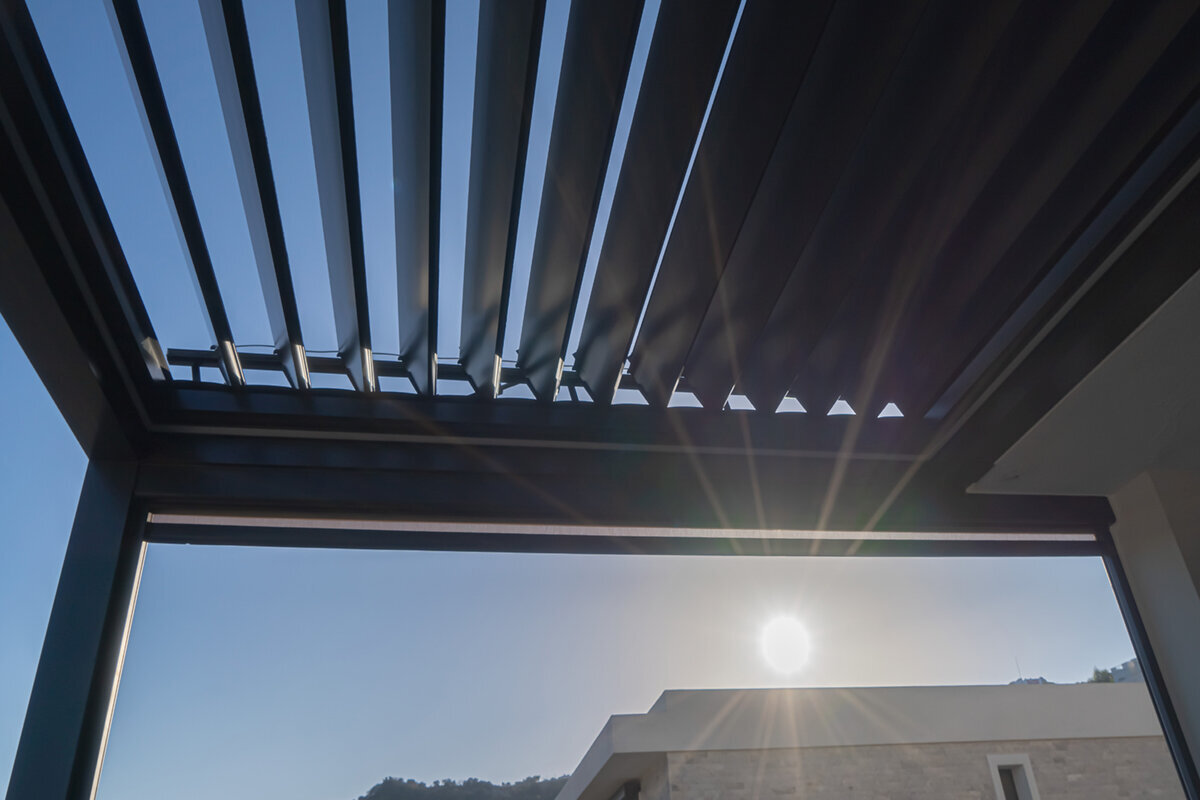

An aluminum pergola can give a patio definition, frame views and create a calmer connection between the house and garden. An open roof and adjustable louvers, however, serve different purposes. An open structure puts sky, sunlight and planting first, while a louvered roof offers more control over sun, air and rainfall from above.
Start with an honest view of daily life. If you mainly sit outside on warm, dry days, openness may be exactly what you want. If the patio should work more spontaneously through shifting weather or strong midday sun, an adjustable roof becomes more relevant. The pergola then takes on more of an outdoor-room role.
This guide compares the two concepts through everyday patio use in Canada. It separates roof choice, shade and rain management, helping you identify the questions to settle before requesting a quote, assessing the site and planning the design—without treating a pergola as a blanket weather guarantee.
Starting point
Match the roof idea to how you use the patio
Picture a real day on your patio before focusing on the structure. Do you have breakfast in morning sun, work outdoors in the afternoon, or dine with guests in the evening? An open pergola is a lasting architectural frame. A louvered roof adds an overhead layer that can respond to light and weather, bringing different expectations for comfort and upkeep.
The site matters too. A sheltered patio shaded by trees may need less technical control than an exposed, sunny seating area. Review sightlines, windows, paths and future furniture. A roof should not unnecessarily darken interior rooms or divide the garden. List your priorities before choosing: which situations should improve, and what are you happy to leave open to the outdoors?
Note when the patio is used most and when sun, wind or light rain become disruptive.
Mark paths, doors and windows so posts, tables and roof edges do not interfere with everyday movement.
For adaptable patio use, consider bioclimatic aluminum pergolas with a louvered roof as a considered roof option.
Open concept
What makes an open pergola distinctive
An open pergola is not an unfinished cover; it is deliberately permeable. Posts and beams create a place for dining, lounging or an outdoor kitchen while daylight, clouds and tree canopies remain part of the experience. It works especially well where the patio should stay connected to the garden. Climbing plants, textiles and seasonal additions can shape its character over time.
Its limits should be just as clear. An open roof neither stops rain nor automatically creates shade. The effect of crossbeams varies with the sun angle. If you need a dry place for cushions, electrical equipment or a meal laid at short notice, assess additional measures separately. A floor finish, large table or well-placed light can still make the area feel purposeful rather than like a passageway.
Open structures emphasize spaciousness and garden views without making the patio look like an enclosed addition.
Planting creates shade gradually and seasonally; allow for growth time, maintenance and fallen leaves or blossoms.
If this openness appeals to you, explore classic open aluminum pergolas for clearly arranged patios.
Light and shade
Shade is more than a darker surface
With a louvered roof, overhead light can be adjusted to the sun position and the mood you want. Partly open louvers may reduce direct sun without making the patio fully dark. Actual shade still depends on orientation, season, roof size and surroundings, so a site visit remains valuable.
An open pergola works differently, giving more broken, shifting shade while allowing plenty of brightness through. This can feel pleasant beneath mature trees or on an already shaded side of the house. On an unprotected south-facing patio, the frame alone may not be enough. Judge the critical hours of a typical summer day, including reflected light from pale walls, glazing and paving.
Watch the sun over several days; neighbouring buildings, roof overhangs and trees can materially change the light.
Consider adjacent rooms: a roof may reduce glare outdoors while also affecting daylight indoors.
For adjustable overhead light, consider bioclimatic pergolas with adjustable louvers in particular.
Air and seasons
Make airflow part of the plan
An open pergola remains directly connected to outdoor conditions. Heat can rise away, a breeze reaches the seating area and the space may feel less enclosed on hot days. That is a major advantage for people who enjoy summer evenings outdoors. It also leaves the area exposed to wind and wind-driven rain, so the site determines whether this openness feels refreshing or unsettled.
Open louvers can let air rise through the roof while preserving an outdoor feel. With the roof closed, the area feels more defined, but side airflow still matters. Instead of comparing only open and closed, ask how you will ventilate on warm days, whether side elements are planned and whether heat can build against the house wall. Consider seating positions and the prevailing local wind before setting the desired level of enclosure.
A wind-exposed site calls for different furniture and expectations than a sheltered courtyard between house walls.
For summer comfort, airflow and shade should be considered together rather than treated as separate roof questions.
For a deliberately airy outdoor setting, regular pergolas without a fixed roof fit the open-patio idea.
Rain management
Understand rain management without overpromising
The clearest practical difference appears in rain. When louvers are closed, a louvered roof can direct rainfall from above if its construction, slope, gutter routing and installation are properly planned. This can make a patio more flexible in variable weather. It does not mean every part will stay dry: wind can drive rain in from the sides, while house connections and water discharge need particular attention.
With an open pergola, rain remains part of the outdoor experience. That is not a drawback if the structure is intended as a summer patio, planting frame or shade feature. Furniture, cushions and materials can then be selected or protected accordingly. If you want to sit outside often without moving things, assess honestly whether an adjustable roof is the better foundation. Think practically about wet footwear, cushions and clear routes to the house.
Confirm where collected water will go and whether it could affect nearby paving, doors or planting beds.
Allow for rain entering from the side; a closed roof does not change every weather exposure on a patio.
For more flexible rain management, take a closer look at bioclimatic aluminum pergolas for the patio alongside the drainage plan.
Design
Coordinate architecture, planting and furniture
An open pergola can act as a light framework connecting house and garden. Climbing plants, lighting and curtains can personalize it without losing its permeability. In naturalistic gardens, it can become a transition that develops over the years. Choose colours and proportions that work with the façade and existing garden lines.
A louvered roof usually makes a more precise architectural statement. Its horizontal plane can organize a patio and define a dining area, making furniture selection especially important. Table size, lighting, storage and circulation should suit the covered zone. Plan the view from indoors as well: the pergola affects window views throughout the year, not only during the garden season.
Measure the table, chairs and pulled-out seating positions so there is enough room to move beneath the pergola.
Plants need clearance from components and access for care; plan for their development beyond the first summer.
For a quieter garden structure, consider traditional aluminum pergolas with an open design as a strong option.
Investment
Compare quotes by their full scope
A useful comparison begins with the full project scope, not a single product name. For a louvered roof, dimensions, roof design, operation, drainage, finishes, installation conditions and options all influence the configuration. For an open pergola, the base structure, finish and visual design are often central. Request clearly itemized quotes so you are not comparing unlike packages.
Consider follow-on costs without relying on broad estimates. Foundations, electrical preparation, lighting, furniture, seasonal care and future cleaning may all matter. Review what work the site needs and what the quote includes. Before ordering, check local requirements with the relevant municipal permit office and consult qualified local professionals where appropriate. Canadian model codes are not automatically adopted everywhere; requirements depend on the province or territory and municipality.
Compare quotes only where size, equipment, installation scope and stated site assumptions are the same.
Ask for care information and clarify responsibilities for preparation, installation and any electrical work.
For an adjustable roof concept, compare bioclimatic pergolas with a louvered roof against your site requirements.
Decision
Choose for your real patio routine
Choose an open pergola if your patio is chiefly a favourite seasonal place with direct garden connection. It brings order and atmosphere without trying to control the sky. This concept suits people who enjoy outdoor conditions, use plants or textiles flexibly and are content to move indoors when rain arrives.
Choose a louvered roof if the patio should be used more often, more predictably and at different times of day. Its strength is situational adjustment, not excluding every outside influence. Match dimensions, fixing, base, water routing and operation to your site before ordering. The better choice is the one that supports how you actually live outdoors.
Rank your three main criteria—for example, garden openness, adjustable shade and rain management—in that order.
Base the decision on your most common use case, not on a rare exception during the year.
If garden openness is your priority, discover open aluminum pergolas for the patio as a fitting frame for your outdoor area.


Comparison
Open pergola and louvered roof compared directly
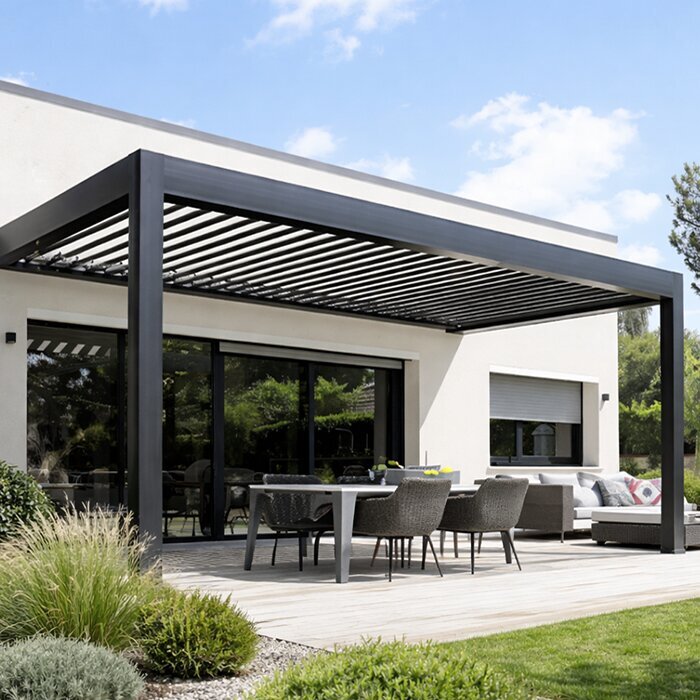
Both concepts can enhance a patio, but they answer different needs. This overview highlights the main distinctions. It does not replace a site assessment, but it can help you form the right questions for planning and quotations.
| Criterion | Open pergola | Bioclimatic louvered roof |
|---|---|---|
| Roof character | Permeable frame with an open view overhead. | Adjustable roof plane for variable daylight. |
| Shade | Depends on sun position, planting and additions. | More directly adjustable through louver position. |
| Sense of air | Direct outdoor setting with free airflow. | Airy when open; more defined when closed. |
| Rain | No protection from the open roof area. | Can direct rain from above with suitable planning. |
| Design | Well suited to planting, lightness and garden connection. | A bolder, clearly structured patio architecture. |
Make a confident decision in five steps
Take time to assess the site before selecting a product. A short, methodical review can reveal important requirements before installation.
01
Describe patio life
Record when you eat, relax or work outdoors. Note whether furniture will remain outside and how often guests use the area.
02
Observe sun and weather
Observe light, wind and rain direction at different times. The hottest hours and the conditions that currently drive you indoors are especially useful.
03
Measure the area carefully
Measure width, depth, heights, door openings and paths. Also note downspouts, windows, existing services and the bearing capacity of the intended base.
04
Prioritize roof function
Decide whether openness or adjustable shade is the primary goal. Then place rain management, planting and visual effect in order instead of expecting every benefit at once.
05
Review the quote and conditions
Ask for the scope, installation requirements and water routing to be clearly explained. Check possible local requirements early with the relevant authority and discuss insurance questions with your insurer.
Checklist before comparing pergolas
Use these points to prepare for a consultation. They help you judge open and bioclimatic options through the needs of your property, rather than images alone.
01. Patio use has been recorded realistically by morning, midday, evening and season.
02. The sun path, main wind direction and side-driven rain have been observed at the actual site.
03. The table, chairs, grill area and circulation routes have been planned with their real space requirements.
04. The intended effect is clear: an open garden frame or a more controlled, defined outdoor room.
05. The base, level changes and possible fixing points are documented before technical assessment.
06. Water routing for a louvered roof has been treated as its own planning issue, not an afterthought.
07. Furniture, cushions and electrical connections suit the chosen openness and use during weather changes.
08. Local construction requirements and possible home-insurance questions have been checked individually in advance.
Frequently asked questions about open pergolas and louvered roofs
Does an open pergola make sense for a very sunny patio?
It can, if you deliberately want an airy frame and plan seasonal shade through plants or added textiles. For a permanently sunny dining area, study the sun path closely. If adjustable shade matters more in daily use, a louvered roof may be a better fit.
Will a louvered roof always keep the patio completely dry?
A closed louvered roof can direct rain from above when suitably planned. Whether a seating area stays dry also depends on wind, side-driven rain, water routing, installation and connections. Treat it as overhead rain management and confirm the details for your individual site.
Can I add a roof to an open pergola later?
That depends on the construction, structural design, dimensions and intended system. Do not assume an open pergola is automatically prepared for every later cover. If future alteration matters, raise this requirement explicitly before purchase.
Which option is better for climbing plants?
An open pergola gives plants a visible, airy framework and makes seasonal growth part of the design. With a louvered roof, planting and access for care need careful planning so plants do not interfere with operation, drainage or maintenance. Site conditions and preferred maintenance level are decisive.
Do I need approval for a pergola?
There is no single Canadian answer: requirements can vary with the province or territory, municipality, dimensions, location, construction and property conditions. Before proceeding, ask the municipal permit office about zoning and permits. A roof, enclosed sides, heating or services can alter the review. For a condominium, rental or shared property, also confirm the applicable owner or corporation approval route.
Which pergola looks less substantial on a small patio?
An open pergola often looks lighter because views and sky remain visible. Proportion, post location, colour and views from indoors are equally important. A well-sized louvered roof can also look calm, while an oversized open structure can crowd the space.
Compare patio concepts
The better roof is the one that suits the use
An open pergola is compelling as a light, garden-connected frame for people who do not want outdoor living separated from the weather. A louvered roof offers a more active response to sunshine and rainfall from above. Either can be architecturally successful when it suits the site, furnishings and personal routine.
Make the choice around recurring patio moments: a hot midday, dinner outdoors, gathering clouds and the view from the living room. A clear brief helps you plan the right aluminum pergola and turn it into a cohesive Bloomcabin outdoor-space idea.
Define your priorities and choose the roof concept that usefully supports daily outdoor life.
