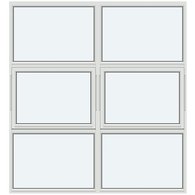
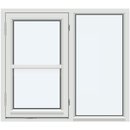
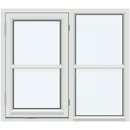
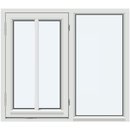
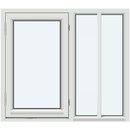
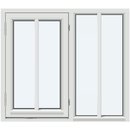
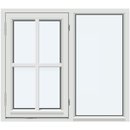
Plan the opening as a whole rather than as a row of unrelated windows. A combination window joins several elements in one visual scheme, letting you direct daylight and sightlines across a wider portion of the wall. Coordinated proportions can make the façade feel more generous while giving the interior a calm, architectural finish.
The layout may be broad, vertical, or deliberately divided to suit the space. Fixed panes preserve an open view, while sections that open can add fresh-air control and practical day-to-day use. Although every field serves a particular purpose, the complete arrangement remains visually unified.
Because the window is produced to the required dimensions, its proportions can respond to both the wall opening and the room. Symmetry creates a balanced composition, while an offset layout can define a larger surface or introduce a focal point. Choose suitable opening functions and ventilation options for the configuration. On operable sections, well-positioned handles support comfortable everyday use.
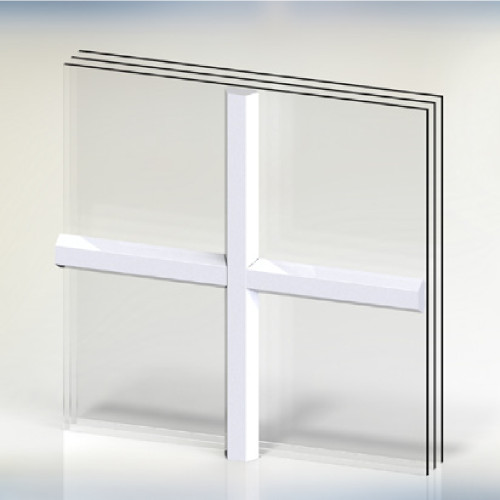
Finishing choices provide another way to shape the design. Colours can relate to the façade, roof, doors, or interior materials, while the selected glazing can adjust transparency, privacy, and overall character. Decorative bars add a more traditional rhythm; larger undivided panes create a restrained contemporary look. These details help the complete window feel integral to the building.
This window format works in both new construction and renovation projects where the treatment of daylight and the exterior elevation need to be considered together. Possible settings include living rooms, kitchens, stairwells, workspaces, and prominent entrance areas. It is also useful for organizing a large glazed opening or giving adjoining room zones a consistent design language.
The main advantage is integration: dimensions, colours, glass, and operating details are considered as parts of the same composition. This approach can distribute daylight effectively, bring order to the wall, and provide more design flexibility than independently selected units. The completed feature looks deliberately planned rather than assembled from unrelated pieces.
Configure a combination window that brings light, proportion, and practical operation together in a design suited to your home.