
Greenhouse aphids: spot colonies, prevent spread and take control
Greenhouse case file / T39
Greenhouse aphids Recognise the colony, block further movement and regain control early.
The insect is seldom what catches your eye first. More often, light glints from a leaf, new growth shows a fold, or a whitish shell rests by the central vein. Follow that trail carefully and an aphid outbreak becomes something you can contain, rather than a problem carried through the whole growing season.
Good greenhouse growing starts with access: new growth can be checked, leaf undersides stay visible and incoming plants can be kept apart. The considered, well-ventilated design of a Classic Aluminium Greenhouse gives committed home gardeners a practical workspace for exactly this routine.
Chapter 01 / The clues
Read the plant first. Then decide what action to take.
Do not diagnose aphids from one symptom alone. Chilling, excess heat, dry roots, root injury or poor nutrient balance may also twist tissues. Build the diagnosis step by step: examine the plant, confirm living aphids or newly discarded skins, and see whether the surrounding injury is consistent with sap being drawn from the plant.
Active cluster
Discarded skins
Honeydew
Sooty fungal growth
Misshapen tissue
Active cluster
Inspect tender tips, stalks, unopened buds and the lower face of leaves for tiny insects with soft bodies. Mature aphids, juveniles and a few winged individuals may share one cluster.
Discarded skins
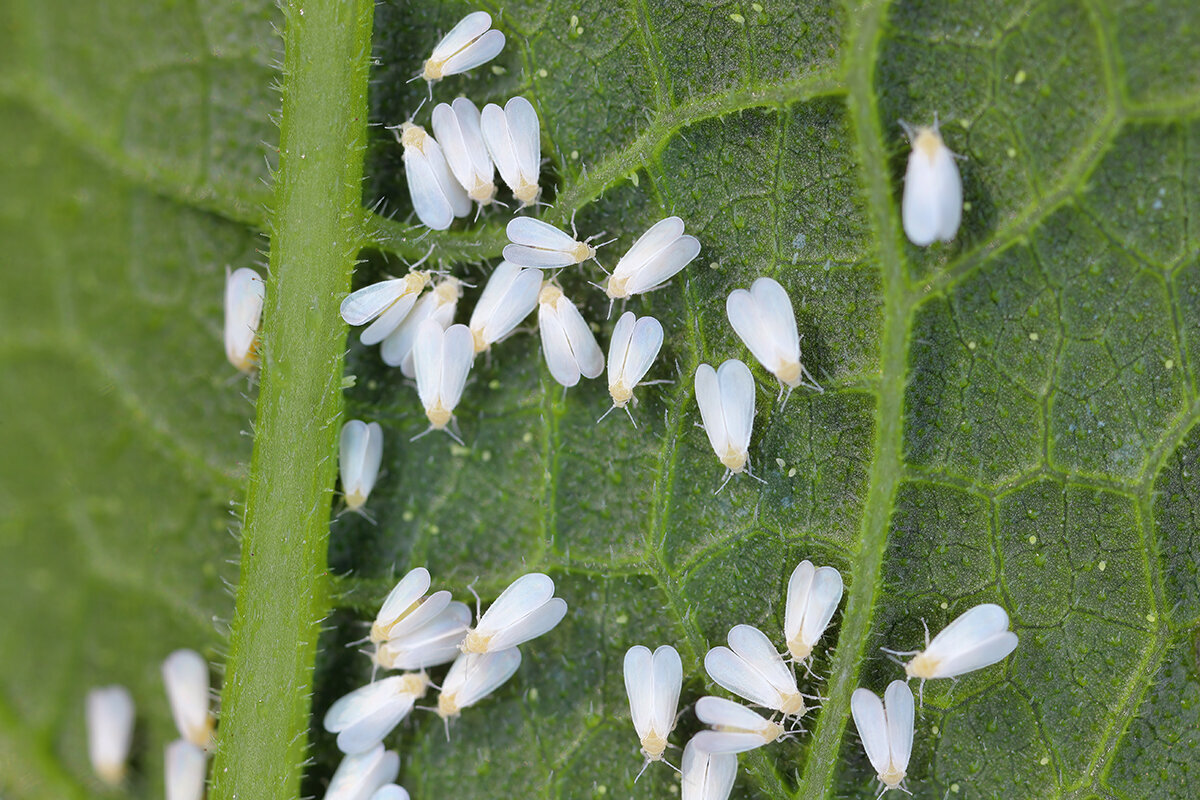
Those white or silver paper-like shells are discarded outer skins, not living whitefly or patches of powdery mildew.
Honeydew
Surplus sugars leave an aphid as tacky honeydew. Look for the resulting shine across foliage, fruit, containers, staging and any leaf directly underneath the insects.
Sooty fungal growth
Honeydew may later support a dark sooty growth. That mould is secondary, so trace and deal with whichever insects are depositing the sugary residue.
Distortion
New foliage may pucker, corkscrew, fold inward or lose vigour. Pay close attention when this appears on young plants, culinary herbs, cucumber, pepper or ornamentals in flower.
Ant activity adds context but cannot confirm aphids. Ants collect their sugary waste and may interfere with predators. A trail merits checking every plant beside it and directly overhead.
Chapter 02 / Identification
How to recognise aphids up close.
View through a hand lens
- Tapered, rounded body
- Prominent feelers and slender legs
- Cornicles
- With or without wings
Tapered, rounded body. An aphid is normally delicate and soft-skinned, rather than protected by a hard shell, and measures only several millimetres. Viewed through a hand lens, its outline becomes clearer, particularly in crowded groups beside a vein or growing point.
Antennae, slender legs and cornicles. Look for prominent antennae and a pair of small tubular structures near the insect's rear; these are cornicles. Together, these details separate aphids from the flatter and mostly stationary scale insects commonly attached to stalks or woody parts.
Forms with wings and without them. Either form may belong to the same aphid species. Wings allow movement to another host; they do not indicate a different pest. Once one appears, extend inspection promptly to nearby crops, openings, entrances and all recently added plants.
Include its position on the plant. The most attractive feeding points are places where sap is easy to reach, including unfolding foliage, buds, tender stems and flower stalks. An insect with the expected outline at one of these points provides better evidence than colour does.
Comparison / Do not confuse these signs
Whiteflies
Thrips
Scale insects
Predatory larvae
Whiteflies
Moving a leaf may send tiny white adults fluttering away. Juvenile whiteflies remain as scale-like forms on the lower surface, which looks different from a roaming group of aphids.
Thrips
A thrips has a narrow body and moves briskly. Damage is more likely to show as silvered scarring with dark specks of waste than as tacky honeydew.
Scale insects
Honeydew can come from scale insects too. Their mature forms usually resemble fixed, raised lumps, not clusters of moving aphids gathered around tender new tissue.
Predatory larvae
The larvae of ladybirds and lacewings prey on aphids. Pause before removing an unknown insect from the outbreak, because it could already be reducing the population.
Chapter 03 / Acceleration
What seems like a minor cluster today can soon become much larger.
Shelter, warmth and continued access to tender tissue can accelerate an outbreak. Across the active growing period, numerous aphid species give birth to nymphs without mating first. Their pace still changes with the host, aphid kind, light, temperature and plant health. No single timetable applies responsibly to every case, but early intervention remains worthwhile.
01Arrival
02Feeding colony
03Honeydew
04Spread
The outbreak begins when aphids settle on a suitable host. Wingless individuals remain within sheltered buds and foliage while feeding and multiplying. Rising numbers make empty skins and sugary deposits more apparent. If space becomes tight, plant quality falls or conditions alter, winged aphids may develop and move elsewhere. Because timing varies, a regular weekly circuit is preferable to one fixed calendar appointment. Once activity is found, inspect considerably more often.
A flying aphid may enter at a doorway or vent, while another can be carried in on newly acquired material. Finding one on potted basil, a young pepper or an ornamental in bloom calls for an inspection throughout the greenhouse. Keep severely twisted or otherwise suspect specimens apart for assessment instead of taking cuttings, giving them away or moving them among other crops.
Chapter 04 / Inspection map
These greenhouse areas are especially easy to overlook.
Use a consistent circuit for every visit. Begin beside the entrance and leave recently added specimens until last; even in a compact greenhouse, this ordered approach reveals changes before damage becomes conspicuous.
- 1
Freshest growth
Begin with folded foliage, developing tips and supple stems. Rapidly extending tissue is particularly attractive to aphids. - 2
Lower leaf surfaces and central veins
Lift and turn each leaf, paying particular attention to low or crowded growth that a brief glance or hurried application could miss. - 3
New plants
Fresh herbs, seedlings, cuttings and overwintered container plants are common entry routes. - 4
Weeds, suspended pots and margins
Colonies may remain hidden in weeds or suspended plants, either above the usual viewing line or screened by neighbouring crops. - 5
Doors and vents
Include these likely access points whenever you look for flying aphids entering the structure.
Yellow sticky cards may reveal flying aphids around an entrance or vent. Treat them as an early-warning tool only: they neither clear an established group nor replace close examination of plants. For clear paths and accessible growing areas, explore the Classic Aluminium Greenhouse.
Chapter 05 / Prevention
Reduce new outbreaks through screening, separation and well-balanced plant growth.
Mesh screens Fine mesh, free airflow.
Quarantine Keep arrivals separate.
Cleanliness Remove weeds and plant debris.
Growth Avoid overly soft new growth.
Records Note crop, date and finding place.
A holding area can be very simple. Use its own bench, a bright sheltered corner or another clearly separated position where the newcomer can be examined closely over several days. Inspect below leaves, around stems and container rims, and inside compressed young foliage. Finding nothing for a week is encouraging, although delicate crops or doubtful symptoms justify watching longer. Any continuing fresh activity means the specimen must remain outside the main collection.
Restrict likely access routes while preserving a fresh, manageable greenhouse atmosphere. Closely woven mesh may reduce incoming winged insects, provided ventilation and temperature control remain adequate. Sufficient spacing, roof vents and shade all contribute to that balance. Our overview of aluminium greenhouses helps you assess glazing, ventilation and accessories together as parts of the complete growing environment.
Aphids may persist unnoticed on weeds, so clear them from beneath staging, around the foundation and beside the approach to each entrance. Inspect ornamental pots and overwintered containers as well. When geraniums, citrus or other tender plants leave indoor winter shelter in spring, they may carry aphids towards newly raised vegetables.
Finally, do not force every crop with excessive feeding. Aphids favour lush, tender growth encouraged by too much nitrogen. Match fertiliser to the crop, pot volume and development stage, maintain even watering, and leave sufficient room to examine fresh shoots without snapping them or brushing them against the next plant.
Chapter 06 / Action sequence
Choose first the mildest reliable action that can contact the affected group.
Good aphid management is about effective coverage, plant tolerance and checking the result, not selecting the harshest treatment. Move to a stronger intervention only when the preceding approach cannot cope with the number of insects, the crop involved or their protected feeding positions.
01
Isolate and label the source.
Separate a plant that can be moved, but only if doing so will not brush aphids onto surrounding specimens. Mark it with the crop and date. Avoid taking cuttings, splitting containers or carrying it among the other plants. Return it only after several inspections have failed to reveal any living aphids.
02
Remove the densest hotspots.
With clean tools, remove tightly folded growing points, crowded infested buds and foliage that cannot be inspected or reached, then contain the waste in a bag. Do not place obviously affected material loose on compost near the structure. A carefully aimed, low-pressure stream can wash exposed aphids from robust specimens. Hold the foliage steady, then let it dry in freely moving air.
03
Choose beneficial insects with a plan.
If the outbreak involves several plants, introducing suitable natural enemies may be preferable to repeatedly spraying a wide area. Match them to the crop, aphid, day length, temperature and severity of infestation, and account for residues from every treatment used previously.
04
Use authorised contact products only on reachable colonies.
Soap- or oil-based contact treatments work only where spray reaches uncovered aphids. Insects sheltered inside curled foliage or narrow folds around buds may escape. Choose a product only when it is authorised in Ireland for that crop, greenhouse location and amateur use. Follow the entire label, and avoid treating plants already under heat or moisture stress.
Practical note / Biological control
Beneficial enemies need suitable conditions, not simply good intentions.
Ladybirds, lacewings, aphid midges and parasitoid wasps may all reduce aphid numbers. A dependable selection must reflect the crop, aphid identity, how established the outbreak has become, and the light, warmth and other environmental factors that the greenhouse can actually provide.
Predatory species consume aphids, whereas parasitoids grow within or upon them and may leave rounded, discoloured mummies behind. An unfamiliar-looking insect should not automatically be removed. A dry, papery mummy can indicate that an introduced wasp is already active.
Chapter 07 / Direct treatment
Labels govern every use of contact, oil-based and conventional treatments.
Contact soaps and oils
For a home grower, these treatments may be considered only where current Irish authorisation covers the crop, location and user. Their main constraint is coverage: the preparation has to touch the aphid. Carefully expose and turn foliage only where the directions allow. Insects seen afterwards are not necessarily recent arrivals. Some may have remained protected, while small sections of the original infestation could have escaped the application.
Tolerance differs between crops
A treatment labelled for aphids may still injure a delicate cultivar or a plant already under strain. Tender seedlings, dry conditions, intense sunlight and high temperatures can alter tolerance. Observe all label directions, including trial applications, waiting periods and rules about mixtures. Familiarity with separate products is never a reason to combine them without authorisation.
Systemic and conventional products
Certain treatments circulate through a plant or remain active for longer. While that can be relevant under professional management, it also affects decisions about edible produce, blossoms, pollinators, natural enemies, harvesting and re-entry. Approval for outdoor ornamentals does not by itself cover greenhouse-grown pepper, tomato, herbs or salad leaves.
In Ireland, current authorisation decides
Consult DAFM's current plant protection product information and read the product label in full instead of relying on shop copy. Verify the named crop or group, protected setting, pest, method, user category, maximum amount, precautions and any waiting period. Where the intended crop or application is absent, never assume that the authorisation extends to it.
A calendar-based spray routine offers false reassurance. No single dose, treatment or interval can safely cover every aphid and protected crop. Apply only an authorised product and follow its directions precisely. Observe limits on repeat use, harvest intervals, resistance management and protection of natural enemies. Where biological management is being established, discuss each proposed treatment beforehand with the beneficial-organism supplier or a qualified plant-protection adviser.
Chapter 08 / Recovery
Reach is only half the task. Follow-up checks close the case.
Pruning, rinsing and contact applications lower the number of aphids accessible at that particular visit. Hidden folds and nearby plants may still harbour insects. Repeat examination must therefore form part of the response. The suggested routine works alongside the mandatory product label and crop-specific professional guidance; neither is replaced by it.
| Timing | Area | Record | Decision |
|---|---|---|---|
| Day 0 | Source and neighbours | Live aphids | Isolate |
| Day 2–3 | Young growth | Fresh activity | Reach gaps |
| Day 7 | Neighbouring crop | Development | Reassess |
| Weekly | Hotspots | Recurring source | Record |
Day 0
Check the infestation source, immediate neighbours, doors, benches and areas below them. Note live aphids, skins, honeydew, winged forms, pruning and measures used. Clean tools after contact with the infested plant.
Day 2–3
Examine fresh growing points and concealed lower leaf surfaces again. Distinguish moving aphids from empty old skins, then note any folded tissue that pruning, washing or treatment failed to reach.
Day 7
Recheck the affected specimen, followed by the adjacent row or section of staging. Watch for renewed stickiness, distorted growth, flying aphids caught on monitoring cards and mummies where natural enemies are in use.
Following weeks
Continue the weekly route through known hotspots and new arrivals. Rising finds often indicate missed weeds, an inaccessible growing area or a newly introduced host plant.
Remove honeydew only after checking the colony.
Clean staging, containers, nearby glazing and other solid surfaces gently, choosing an approach compatible with each material; rinse afterwards with plain water when suitable. Robust leaves may also be washed carefully to lift sticky deposits and restore light exposure. Avoid damaging delicate foliage by rubbing. Once new honeydew stops, the sooty growth may recede. Aim for healthy function and surfaces that are easy to examine, rather than an immediate flawless appearance.
Help an affected plant recover through consistent husbandry, not a compensating surge of fertiliser. Cut away only dead material, severe deformity or growth that can no longer be monitored. Appropriate moisture, open spacing and free air movement let the next flush of growth demonstrate whether normal development has resumed.
FAQ for Ireland
Important questions after finding the first aphid colony.
Can I use soap preparations on greenhouse vegetables?
Only if the specific product is authorised in Ireland for your edible crop, greenhouse use and amateur user category. Check the crop list, directions, waiting periods and all precautions. Authorisation for ornamental plants alone is not enough.
Do aphids die when I spray them with water?
A gentle, well-aimed stream can knock numerous uncovered aphids from a sturdy plant and may suit a limited outbreak. It cannot reliably enter compressed buds, tightly folded foliage or crowded growth, so examine the specimen again shortly afterwards.
Do ants cause aphid infestations?
No. Honeydew draws ants to the plant, and they may defend the insects that produce it, complicating control. Address the aphids themselves and, where practical, interrupt ant routes instead of treating the ants as the original cause.
Why are aphids present again after treatment?
Some aphids may have remained sheltered, an adjacent host could have escaped attention, or another plant, a weed or an opening may have provided a new route in. Examine the wider area and work out the probable source before reaching automatically for a more powerful treatment.
Will ladybirds manage a severe outbreak by themselves?
Ladybirds may help, although one introduction can be overwhelmed by a substantial infestation. Success depends on correct pest identification, physical removal of crowded areas, informed supplier recommendations, suitable greenhouse conditions and compatibility with any plant-protection treatment applied earlier.
Must an infested plant be discarded?
Not in every case. An accessible plant carrying a limited group of aphids may respond well to separation and careful control. Disposal becomes reasonable when infestation is extreme, distortion is serious or treatment would scatter insects through the collection. Possible virus symptoms require their own assessment rather than being treated as ordinary aphid damage.
Sources and further guidance
Keep trustworthy references and Irish official guidance close at hand.
More from Bloomcabin: Setting up a greenhouse · Protecting greenhouses from weather and pests · Greenhouses and conservatories
- German Environment Agency,Aphids – unwelcome garden visitors.
- German Environment Agency,Gardening with beneficial insects.
- Chamber of Agriculture of North Rhine-Westphalia, Germany,Biological control of aphids.
- Chamber of Agriculture of North Rhine-Westphalia, Germany,Aphids on ornamental and house plants.
- Julius Kühn Institute, Germany,General information about beneficial organisms.
- DAFM PRCD,Amateur users and home gardens.
- DAFM PRCD,Irish requirements for amateur garden products.
The final finding
Finish the investigation before aphids establish elsewhere.
An aphid problem calls for observation, not an automatic leap to maximum force. Confirm living insects, separate or remove the most straightforward source, retain low-impact choices and turn repeated inspection into an ordinary part of greenhouse care.
Three key steps
- Check the freshest growth.
- Isolate the source.
- Put the follow-up check in the growing diary.
Base the routine on a greenhouse arranged for easy movement, dependable ventilation and consistent care across successive crops.
Classic Aluminium Greenhouse