
Greenhouse beneficials need a managed partnership.
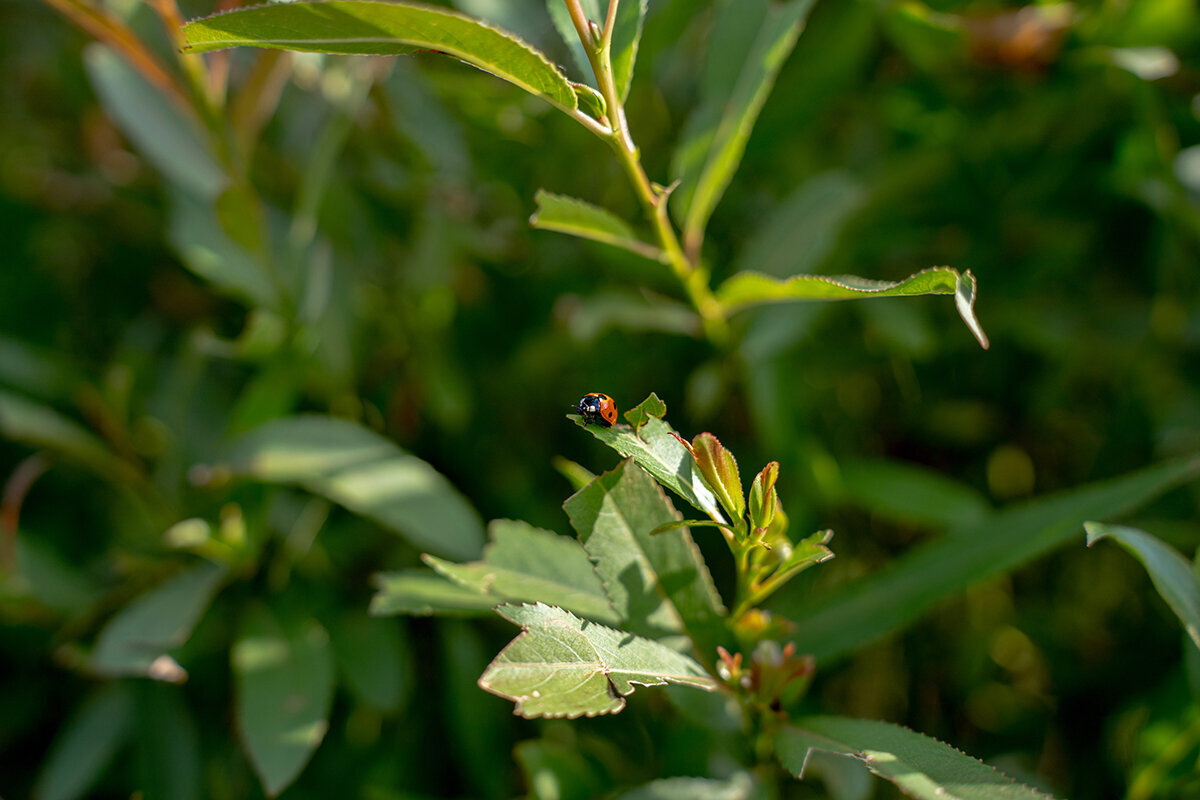
A living agreement · Biological greenhouse pest control
Beneficial life in a greenhouse depends on active stewardship.
With natural enemies, a greenhouse can move away from repeated emergency treatment towards watchful cultivation. Release alone is no ritual: pest, predator or parasitoid, crop, conditions and grower must align, while routine scouting reveals whether the relationship remains effective.
Why one purchase is not enough
Success is not measured by introducing the greatest possible number of insects. The crop must instead let an appropriate ally locate the relevant pest, persist and contain it before losses worsen.
An integrated approach combines biological control with prevention, prompt detection, sound identification, well-chosen living allies and a focused additional response only when necessary. Greenhouses help committed home growers notice patterns early. Used to track change, yellow sticky traps, a magnifier and a weekly inspection routine can reveal trouble while the released organisms can still overtake it.
Not every problem needs a beneficial delivery. Quarantine, spacing, weed removal, suitable irrigation and clean paths reduce pressure. A practical base is the Classic Aluminium Greenhouse providing straightforward access, adjustable ventilation and a crop area suited to regular inspection.
For a durable setting where pest management can develop over time, the Classic Aluminium Greenhouse has enough space to organise paths, crop rows and ventilated zones, making inspection easier than in an overcrowded makeshift structure.
The three main groups
Different helpers, different jobs.
The word “beneficials” is convenient, yet this field also covers predator mites, parasitic wasps, useful nematodes and microbial crop-protection preparations. Each performs a different task.
Their role is eating prey.
Predators include ladybirds, lacewing larvae, predatory bugs and several mite species. Many hunt actively, but usefulness depends on the pest, crop, prey density, climate and timing.
- Lacewing larvae take aphids, although they solve only selected problems.
- Species choice determines whether predator mites pursue spider mites or immature thrips.
- Generalists can help early but may leave when prey is scarce.
Development occurs within or upon a host.
These minute wasps are commonly specialised and work best preventively or near the beginning of infestation. Evidence of activity is more informative than seeing the wasp itself: seek aphid mummies, altered immature whiteflies or tidy emergence holes.
- Encarsia and Eretmocerus are useful only in the appropriate whitefly setting.
- Aphidiusspecies are selected for the aphid present.
- Suitable host stages must be present, and an established outbreak will not disappear overnight.
Biological action rather than visible drama.
Moist growing media can carry useful nematodes to fungus gnat larvae. Microbial preparations likewise have distinct needs involving the susceptible stage, application technique, coverage and surroundings. The chosen treatment must fit both crop and authorised use.
- Although neither category consists of insects, both serve biological pest management.
- Success may depend on moisture, light, coverage and target stage.
- The label and current supplier instructions form part of every application.
Diagnose the pest before choosing its enemy
Diagnose before buying.
Yellowing, pale stippling or sticky material provides evidence, but not identification. Aphid, whitefly, thrips and spider-mite damage differs, as do their positions on a plant and their vulnerable stages. Photograph what you find, examine the backs of leaves through a magnifier and compare plants across the crop before selecting a living control.
1
Read the symptom
Damage first.
2
Find the pest
Check its location.
3
Identify the stage
From egg to adult.
4
Map the infestation
Hotspot or whole crop?
Symptoms: Honeydew accompanied by sooty mould points towards sap feeders; stippling with fine silk indicates spider mites; silvered scars and dark faecal spots may signal thrips.
Location: Examine tender shoots, blossoms, both sides of leaves, ageing foliage near the base and damp substrate surfaces. Where the pest lives largely decides whether a proposed response can reach it.
Life stage: Eggs, early or later nymphs, larvae, pupae and mature insects differ in susceptibility. Consequently, the stage that attracts attention need not be the most useful one to target.
Infestation pressure: Distinguish one colony by the door from a pattern across the crop. Isolate and mark hotspots, then describe the finding fully to a specialist supplier.
Following this order avoids an easy error: choosing an attractive generalist when the intended target is concealed in substrate, curled foliage or an inaccessible life stage. For a lasting layout that supports convenient crop care, browse Bloomcabin’s selection of aluminium greenhouses.
Portrait I · Unobtrusive patrol
Predator mites
Their small size makes predator mites easy to miss, despite their importance. Particular species are chosen for spider-mite work; others attack immature thrips and sometimes accept pollen or another food source. Define the job first, because a mite supplied for spider mites may be unsuitable for thrips.
Following the supplier’s directions, spread the carrier throughout the planting instead of depositing everything at a single point. Plants already wrapped in webbing are poor candidates for an informal rescue; serious pressure normally calls for isolation and a coordinated recovery plan. Performance responds directly to temperature, moisture, crop density and previous crop-protection treatments.
Monitor for: a reduction in active pest stages across repeated inspections, rather than a spectacular release-day collapse.
Portrait II · Accurate pairing
Parasitoid wasps
A parasitoid is a focused biological tool, not an ornamental tiny wasp. After locating the correct host stage, it deposits an egg inside or against it, and the developing offspring ultimately kills that host. These wasps can search greenhouse crops and leave recognisable evidence behind them.
The parasitoid wasp Encarsia formosa features in programmes for greenhouse whitefly and is most useful while initial pest pressure remains extremely low. Residual, long-lasting insecticides applied earlier can undermine results. Select other whitefly or aphid parasitoids according to the pest, crop and conditions. Greenhouse whitefly and Bemisiaspecies are not a minor distinction.
Monitor for: mummified aphids or altered, parasitised whitefly stages bearing a clean circular emergence hole.
Portrait III · Appetite on display
Ladybirds, lacewings and predatory bugs
The larvae of lacewings feed on aphids and other small prey with soft bodies. Familiar adult ladybirds may fly from an open house or leave when food is limited. Predatory bugs considered for thrips management can feed on pollen, yet establishment takes time and requires a compatible crop and environment.
Treat these creatures as practical controls, not mascots. Instead of choosing the most striking beneficial, ask which stage of the correctly identified pest is abundant, exposed and accessible to that predator. Careful positioning followed by repeated checks usually serves a domestic greenhouse better than a colourful mixture of organisms.
Monitor for: hunting activity beside the prey and a sustained downward movement in pest pressure, not one memorable observation.
Portrait IV · Below the plants
Nematodes and microorganisms
Some important greenhouse pests occupy the substrate instead of foliage. Fungus gnat larvae favour damp growing media, where useful nematodes including Steinernema feltiae may be delivered in irrigation water when conditions suit them. Keep the medium moist as instructed and apply at the right time. Also correct chronic overwatering, algae and decomposing plant debris.
Precision matters for microbial crop-protection products too. Results can vary with the susceptible pest stage, warmth, moisture, illumination and thorough coverage. Choose a preparation whose authorisation covers the relevant crop, place and application, obey its current label, and check its compatibility with every other element of the programme.
Monitor for: declining larval numbers below the crop or fewer fresh feeding marks once the susceptible stage has been treated.
The living match
Match the helper to the stage.
Treat this overview as guidance for a decision, rather than a buying list. Crop, confirmed identification, greenhouse conditions, pest pressure and supplier advice determine the organism, format, quantity and method.
Identified pest
Aphids Soft shoots
Whiteflies Under leaves
Thrips Blooms and foliage
Spider mites Before webbing
Fungus gnats Moist growing medium
Mealybugs Local colonies
Potential biological option
Lacewings or parasitoid wasps
Encarsia/Eretmocerus
Mites or the predatory bug Orius
Mites selected for spider mites
Steinernema feltiae
Specialist parasitoids
The left column defines the problem. Aphid identity governs the parasitoid choice. For whiteflies, select according to species and crop conditions. Mites intended for thrips chiefly attack immature stages, whereas spider-mite work calls for another appropriately selected mite.
The right column starts the specialist conversation. Give the supplier photographs plus details of the crop, growing conditions, treatment history and stage observed. This allows a suitable organism currently in supply to be paired with up-to-date delivery and release instructions.
An obvious wrong turn: Never substitute an appealing predator for proper identification. An ally that attacks immature thrips cannot control fungus gnat larvae below the crop, while an irrigation treatment cannot contact adult whiteflies beneath foliage. Nor will releasing parasitoids immediately restore control where incompatible residues have disrupted the programme.
Planning the release
Three timings with different purposes.
Timing must correspond with pest pressure if biological control is to perform well. The three categories below set out an approach, not one rate suitable everywhere. Follow current directions for the organism, crop, shipment and conditions under cover.
Preventive
Before detection
Early correction
At first finding
Outbreak response
At high pressure
Preventive establishment: appropriate when past notes reveal a repeating pest and the selected ally can persist or receive planned additions. Regard it as readiness rather than an emergency service.
Early correction: mark the earliest detection, follow directions for the affected area and neighbouring plants, then revisit them at planned intervals. Biological methods frequently have their strongest opportunity at this point.
Outbreak response: separate or discard plants carrying heavy pressure, obtain expert guidance and consider whether a selective intervention should precede reconstruction of the biological programme.
Before arrival
On delivery day
After 3–7 days
In following weeks
Verify the identification and treatment history, then prepare an accessible route with protection from direct sun.
Open the consignment without delay, examine its packaging, and observe the supplier’s directions for placement, temperature and timing.
Revisit the first affected area and a representative plant sample. Note pest stages, evidence of beneficials, recent conditions and crop reaction.
Review patterns across several inspections. Let the findings determine whether to add organisms, change course or request professional help.
The climate clause
Climate belongs to the release.
Conditions that suit tomatoes, peppers, orchids or young plants may still fail to suit the chosen biological ally. Its establishment responds to temperature, relative moisture, illumination, airflow and food availability. Species, crop, supply format and local setting vary too much for one responsible number to cover every release.
Ask about the organism’s preferred environment before placing an order. For Irish sites, consider chilly spring nights, rapid solar warming, exposure to wind and local maritime variation. Use that information when setting airflow, shade and irrigation, rather than reserving it solely for the day of release.
Banker plants require disciplined management
A banker plant is a deliberately managed companion crop that sustains particular natural enemies by carrying appropriate substitute food or host organisms. Professional growers use documented combinations. This does not justify adding random flowers or allowing uncontrolled aphid colonies in a domestic greenhouse.
Poorly understood banker systems may bring in pests, pathogens or extra diagnostic confusion. Choose only a combination documented for the crop, intended pest and beneficial organism; label it clearly and inspect it. For a modest greenhouse, regular observation and releases planned with a specialist supplier will often be the quieter, safer course.
When the agreement breaks
Treatment residues can stop cooperation.
Terms such as “natural” or “organic” do not make soaps, oils or household remedies harmless to every useful organism. Contact with spray, deposits on foliage, systemic activity or abrupt loss of prey may injure them. A previous crop treatment, rather than the released organism, can be the reason apparent control fails.
If crop protection becomes necessary, observe the authorised use and current label. Give the manufacturer and biological-control supplier the active substance, formulation, crop, setting and proposed timing before release. Irish amateur growers should consult DAFM’s pesticide register and choose products authorised for home or garden use, rather than relying on old lists or online discussions.
Compatibility gate
Settle these questions first.
- What exactly are the active substance, product name and formulation?
- Is the use authorised for this crop, location and amateur home or garden use in Ireland?
- Is its action through touch, feeding, systemic uptake or a combination?
- How long an interval is stated for this organism on the label or in supplier guidance?
- Were the crop, neighbouring plants, growing medium, paths or weeds treated?
- Could you separate severe pockets and avoid an application across the entire house?
The evidence clause
Base decisions on observations, not optimism.
Effective biological management is usually quiet rather than spectacular. Look for fewer fresh colonies, less recent injury, a slowing trap count and more traces of beneficial activity. Allow the process time to develop, while responding promptly if pest pressure is plainly gathering speed between checks.
At every roundReturn to a consistent sample of plants, the first affected patch and vulnerable areas near vents, doors or incoming stock.
Recordpest, stages, approximate numbers, symptoms, beneficial signs, climate events, date and every measure taken.
Compareuse several dates. A yellow trap or one leaf gives a signal; only the greenhouse trend supports the decision.
Escalatewhere damage and density keep rising, or evidence of beneficial activity never appears, establish why before ordering an identical repeat release.
Sign 01
Whitefly stages change
Parasitised immature whiteflies beneath leaves may alter in colour or outline. A neat circular emergence opening is unlike the ragged break produced when the pest itself emerges.
Sign 02
Aphid mummies appear
An aphid attacked by a parasitoid may swell into a papery mummy. Keep examining new shoots for living aphids because evidence of parasitoids can temporarily coincide with substantial pest numbers.
Sign 03
The curve levels off
Counts on traps, fresh feeding injury and active pests cease increasing before they begin to fall. That recorded pattern is more meaningful than spotting one beneficial organism.
Rules that support control
Good greenhouse practice remains essential.
Screen
Inspect incoming plants before adding them to established crops. Fit appropriate screens to openings, and pay particular attention to plants beside doors, ventilation points and routes used for bringing material inside.
Keep clean
Remove heavily infested material appropriately without spreading pests. Clear weeds and plant debris, clean tools, and reduce algae and persistently wet areas that can encourage fungus gnats.
Balance
Discourage permanently wet conditions and excessively lush, crowded growth. Leave gaps that aid visibility and airflow, ensuring that every plant remains accessible during checks.
When designing a greenhouse as an orderly growing space for years of use, the Classic Aluminium Greenhouse can coordinate airflow, paths, irrigation, shade and crop rows so routine care naturally includes examining foliage.
FAQ for Irish greenhouses
What to establish before releasing anything.
For a severe outbreak, commercial crop or unknown pest, consult an experienced beneficial-organism supplier or qualified plant-protection adviser.
Are ladybirds suitable for release in a domestic greenhouse?
Suppliers offer ladybirds to prey on aphids, but another response may fit better. Adults can depart, and the identified pest, vulnerable stage, climate and supplied form all matter. A selected parasitoid, predator mite or cultural adjustment could be preferable.
Can biological allies be used on food crops?
Food crops can be managed with beneficial organisms. Choose a trustworthy specialist and observe its directions covering the crop, setting, release and handling. Any plant-protection product still has to be currently authorised and used as its label directs.
How soon might results become visible?
Look for movement over time rather than immediate elimination. Starting pressure, life stage, climate and development speed all affect progress. Use the supplier’s stated assessment period and continue inspecting. Reconsider the programme if pest numbers still climb.
Will soap or oil treatments work alongside beneficial organisms?
Perhaps, but only after checking the exact combination. Spray exposure and lingering deposits may injure natural enemies, with outcomes varying by preparation, method, crop and organism. Verify the label and authorisation, then obtain a compatible interval from the biological-control supplier.
May I simply release purchased beneficials?
Use reputable suppliers and follow the intended location, crop and all release instructions. Do not independently release unsuitable or unknown species outside their intended setting. Consider potential effects and the escape of organisms from both garden and greenhouse.
Sources and further information
Read further and check locally.
Because beneficials are alive, availability, formats, authorisations and directions can change. Read current supplier and label instructions together with official Irish guidance, using the DAFM register to verify products authorised for amateur use.
Explore Bloomcabin: Guide to Bloomcabin greenhouse curtains · Raising tomatoes under cover · Browse greenhouses and conservatories
- Julius Kühn Institute – biological pest management
- Julius Kühn Institute –information for beneficial species about pesticide effects on useful organisms
- German Environment Agency – supporting beneficial wildlife in gardens
- North Rhine-Westphalia Chamber of Agriculture – using beneficials to manage pests under glass
- North Rhine-Westphalia Chamber of Agriculture – biological management of whitefly
Continue the partnership
Prepare the space for its tiniest workers.
Begin with a notebook, magnifier and a weekly appointment for inspection. A well-made greenhouse supports better crops when its layout, climate and care schedule encourage close attention. Before buying anything, turn over a leaf and look.
- Confirm which pest is present before selecting its biological enemy.
- Ask the specialist supplier to verify the ally, susceptible stage and handling method.
- Schedule the next scouting round before delivery.
A composed foundation
Design around observation.
An orderly crop area, adjustable airflow and unobstructed routes help growers notice small developments early and provide lasting protection for their plants.
