
Greenhouse Polycarbonate | Thickness, Panels & Insulation
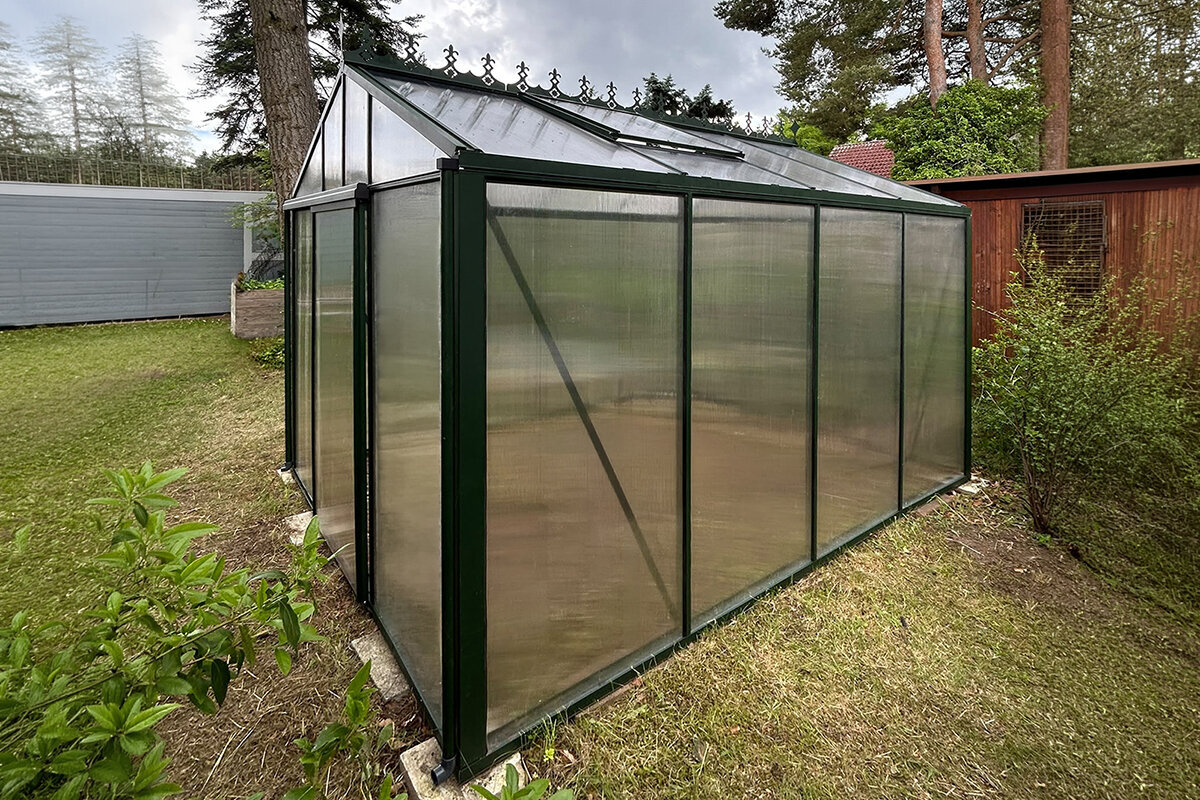
Ireland • Practical Greenhouse Materials • Bloomcabin Journal
Greenhouse polycarbonate for Irish growing conditions
Panel depth, chamber layouts, heat control, UV-facing surfaces, condensation, and the specifications behind dependable results.
Ask a better opening question
Asking how thick greenhouse polycarbonate should be is useful, although thickness cannot settle the choice by itself.
Greenhouse builders value polycarbonate for impact toughness, manageable weight and worthwhile thermal performance. In cellular sheets, ribs divide enclosed air spaces; these layers restrict heat movement compared with a thin single skin and simultaneously help the panel resist bending.
Equal nominal dimensions can conceal very different performance. A twin-wall 10 mm sheet, a triple-wall 10 mm sheet and a more intricate multiwall version may vary in chamber arrangement, thermal data, light transmission, weight and permitted unsupported span.
For that reason, assess every sheet as an integrated glazing component , rather than treating depth as the answer. To see polycarbonate specified for a high-quality aluminium structure, visit the Classic aluminium greenhouse by Bloomcabin , the principal Bloomcabin example for shoppers throughout Ireland.
Define the intended growing months, daylight needs, heating approach, frame and actual site conditions first. Ireland’s Atlantic influence generally brings cool, windy winters and comparatively mild summers, but coastal exposure, rainfall, frost and shelter vary considerably between gardens.
01 • Understanding the material
How does greenhouse polycarbonate work?
Polycarbonate is a thermoplastic formed into solid, corrugated, twin-wall and more elaborate cellular sheets. Hollow products use internal ribs to link their outer skins and divide the space into sealed channels. The result is lightweight, gains rigidity over a very slim solid panel and can slow heat transfer more effectively.
Outdoor-grade sheets may incorporate UV stabilisers or a coextruded protective layer. Depending on the design, they can diffuse daylight, offer different degrees of clarity or provide an anti-condensation finish. Knowing that a panel is polycarbonate identifies its basic material, but not its complete greenhouse performance.
02 • Reading thickness
Comparing 4 mm, 6 mm, 8 mm, 10 mm and 16 mm polycarbonate
Greater depth permits larger chambers and more elaborate internal patterns, but it does not itself constitute an insulation rating. Use the following entries to frame questions about each specification; equal nominal thickness does not guarantee equal results.
| Stated thickness | Question for the project | Possible benefit | Details to verify |
|---|---|---|---|
| 4 mm | Does the design call for the lightest, slimmest option? | A lightweight and uncomplicated build | Thermal rating, approved span, impact data and the frame manufacturer’s specification |
| 6 mm | Would light twin-wall glazing meet the needs of seasonal use? | Low-weight introduction to insulation from enclosed cells | Actual chamber layout, U-value, support intervals and the outward UV face |
| 8 mm | Does the project need deeper chambers or scope for a triple-wall section? | Scope for improved heat retention without a bulky panel | Whether it is twin-wall or triple-wall, plus its transmitted light and weight |
| 10 mm | Will a longer growing period make heat retention more significant? | Additional scope for thermal resistance and stiffness | Daylight transmission, cell shape, matching profiles and allowance for temperature movement |
| 16 mm+ | Is enhanced thermal performance central to the brief? | Makes room for more elaborate multiwall sections | Any reduction in light, frame suitability, price and the assumptions used for structural loads |
03 • Chamber arrangement
How twin-, triple- and multiwall designs differ
A twin-wall sheet uses two outer skins linked by internal ribs, creating a principal row of long chambers. This relatively simple, lightweight arrangement is common among slimmer greenhouse sheets.
A triple-wall panel adds an intermediate face and separates the cavity into further layers. Its exact geometry may improve insulation when compared with a twin-wall product of similar depth.
Multiwall includes the more elaborate cross-sections, with possible extra horizontal skins, diagonal braces, X-shaped ribs or combinations of these. Consequently, “10 mm polycarbonate” is not a sufficient professional specification. Inspect the sectional design alongside the manufacturer’s published performance figures.
04 • Heat retention
Where a polycarbonate panel gets its insulating effect
Enclosed chambers supply much of a multiwall sheet’s thermal resistance. Heat moves less readily through relatively still air than along a continuous, highly conductive route. Rib layout, skin count, material depth and installation conditions can therefore produce different results among products carrying an identical nominal thickness.
University and agricultural advisers recommend comparing coverings by their measured thermal behaviour, not simply by material. Broadly, less heat passes through a panel as its U-value falls, whereas greater R-value denotes stronger resistance. Use the figure declared for the exact product.
If heating costs or winter cultivation matter, obtain the declared thermal rating for the exact sheet being supplied. In a cold or snow-exposed location, assess that performance together with local loading and a frame designed for it. A greenhouse used mainly between spring and autumn may benefit more from balanced daylight, ventilation, cost and straightforward construction than from maximum insulation.
05 • Daylight
Extra insulation is a poor trade if plants lose essential daylight
Additional skins, internal ribs, coloured tints and solar finishes each affect how daylight enters. Ireland’s Atlantic climate brings substantial regional differences in exposure, shelter, rainfall and frost, while scarce winter light can become a more important growing constraint than a small thermal gain.
Ask for visible-light or PAR performance and consider how the panel diffuses radiation. Useful diffusion spreads light through foliage and reduces intense local patches. Tinted or solar-reflective glazing can limit summer warming, but may deprive crops of valuable daylight.
06 • Protection from UV exposure
Finding the sun-facing surface of a polycarbonate sheet
Polycarbonate intended to remain outdoors normally includes UV stabilisation to protect the sheet from long-term ultraviolet ageing. Some panels are treated on one face, while others receive protection on both. Establishing the arrangement is essential before fitting begins.
If treatment is limited to one face, orient the manufacturer-marked surface towards the sun. Reversing it may shorten the weathering performance intended by the maker. Keep the protective covering attached while confirming orientation, and remove it at the stage stated in the fitting guide.
Protection can differ between the two faces. Use the product markings and its fitting instructions.
07 • Managing moisture
Surface droplets and water within the chambers are separate concerns
Warm, moisture-laden greenhouse air condenses when it reaches colder glazing. Some horticultural sheets have an anti-condensation finish that encourages water to spread into a film and run away instead of gathering into heavy drops. This may lessen dripping while avoiding some of the optical loss caused by reflective beads.
Water within the cellular channels requires different detailing. Position channels, closures and glazing profiles so that dirt and water are not needlessly trapped. Because polycarbonate expands and contracts markedly, drainage, drill dimensions, perimeter gaps and profile engagement must be designed together.
08 • Expected service life
What lifespan can greenhouse polycarbonate provide?
No single service-life figure applies to every polycarbonate sheet. University greenhouse manuals commonly place suitable coverings in an approximate ten-to-fifteen-year range, but any guarantee depends on its wording, UV layer and product. Solar exposure, cleaning, chemical contact, installation quality and frame condition also influence deterioration.
Structural condition and visual quality can change at different rates. Yellowing, haze, scratching, soiled chambers or damaged edges and fastenings may reduce usefulness even while the sheet remains mechanically intact.
When reviewing a premium greenhouse warranty, consider its duration and identify what the terms actually protect. Breakage, retained daylight, discolouration and other performance characteristics may be covered under different conditions.
09 • Impact performance and support
A tough sheet still requires a properly designed greenhouse structure
Polycarbonate’s resistance to impact makes it attractive where breakage is a concern, but glazing is only one element. Loads from wind, snow or impact travel through the panel supports, rafters, fasteners, anchoring and foundation.
Greater panel depth cannot remedy undersized framing, overlong unsupported spans or poor fixings. Fit glazing specifically approved for the greenhouse instead of treating any thicker replacement as an upgrade. Profile shape, captured-edge dimension and expansion allowance may all have been designed around one sheet thickness.
Where demanding weather influences the purchase, examine the Bloomcabin greenhouse range for Ireland then compare each model’s stated wind and snow performance with site conditions.
10 • Fitting the panels
Small installation choices that affect multiwall performance
Run channels in the drainage directionFor vertical or pitched glazing, place the channels so moisture can descend or follow the slope instead of being held across the panel.
Turn the protected face outdoorsWith single-face UV treatment, position the manufacturer’s marked side towards exterior sunlight.
Use the right detail at each panel endInstall the tapes, profiles, closures and drainage or ventilation details required by the chosen system. Upper and lower edges may need different treatments.
Leave room for temperature-related movementBecause heating and cooling make the sheet expand and contract, use the specified drill diameters, edge gaps and depth of engagement within each profile.
Check products used for sealing and washingSome chemicals attack polycarbonate. Choose cleaners and sealants confirmed as compatible with the selected product.
11 • Routine care
Cleaning methods that help protect the polycarbonate surface
Although polycarbonate tolerates impact, its surface scratches more readily than glass. Do not scrub it dry or use abrasive pads or unsuitable solvents. Wash gently with clean water, a compatible mild product and a soft cloth or sponge, then rinse away loosened residue thoroughly.
Remove foliage and organic deposits around gutters, profiles and panel ends. Waterlogged debris may encourage algae, staining and continually damp joints even when the glazing itself remains sound.
For care of the wider structure, consult Bloomcabin’s Ireland article on maintaining and cleaning aluminium greenhouses.
12 • Glass versus polycarbonate
Choose according to how the greenhouse will be used
Polycarbonate is often preferable where …
low glazing weight and tolerance of knocks matter.
insulating air cells are useful for limiting heat loss.
a softer, diffused view is acceptable or desirable.
the main aim is cultivation rather than an uninterrupted view through a garden room.
Toughened safety glass often suits projects where …
unobstructed views are central to the design.
a refined and visibly transparent architectural result matters.
a hard-to-scratch surface and lasting clarity carry greater weight.
people will use the greenhouse for dining, relaxing or displaying plants.
For a wider comparison, the Bloomcabin guide to greenhouse glazing covers the wider glass-versus-polycarbonate decision. Here, the focus remains on selecting an appropriate polycarbonate panel.
13 • Aluminium frames with polycarbonate
Why these materials can form an effective greenhouse pairing
The materials contribute complementary qualities. Aluminium can form accurate, dimensionally stable and corrosion-resistant support profiles; lightweight cellular glazing reduces dead weight while adding useful insulation and resistance to impact.
For the clearest example in Bloomcabin’s collection, open the Classic aluminium greenhouse. Its traditional form brings polycarbonate glazing together with a supporting aluminium structure.
Within the Classic Greenhouse , the architectural shape remains consistent, allowing light, insulation, purpose and appearance to guide the glazing choice.
For greater width and more usable interior room, also consider the Classic Plus 385.
14 • Set priorities by use
Priorities for different greenhouse uses
Spring-to-autumn home cropsStart with good light admission, adequate impact resistance and glazing approved for the frame. Extra insulation is not worthwhile when it removes daylight the crop needs.
Cooler sites and an extended growing periodExamine the thermal figure, cellular pattern, chamber seals and edge treatment more closely. Plant light must still be protected during darker months.
Hail and impact exposureAssess the panel’s impact rating alongside support spacing, profile bearing and fixings. The complete glazed structure, rather than the sheet alone, carries the load.
Growing during hot summer weatherConsider light diffusion, ventilation and shade together. During hot, sunny periods, generous venting with shade where necessary can outperform strongly tinted glazing. A solar-reducing sheet may lower heat input, provided it does not remove excessive growing light.
A greenhouse intended as a garden roomWhere crisp views and architectural transparency take priority over low glazing weight, toughened safety glass may be preferable.
15 • Mistakes to avoid
Seven polycarbonate pitfalls worth avoiding
1. Allowing thickness to settle the choiceInclude chamber geometry, heat-flow ratings and daylight data in the assessment.
2. Turning the protected UV surface indoorsIdentify and follow the orientation marking provided by the manufacturer.
3. Applying the same complete seal at both endsMany cellular systems require a defined drainage or ventilation route along the lower edge.
4. Leaving no allowance for expansionObserve the specified gaps, profile overlap and other movement details.
5. Cleaning with incompatible substancesCheck chemical compatibility before use.
6. Pursuing heat retention at any costPlants still need sufficient light.
7. Specifying glazing without considering its supportSpan, fasteners, thermal movement and design loads must be assessed together.
16 • Questions and answers
Polycarbonate greenhouse questions
Is 6 mm polycarbonate suitable for a greenhouse?
Some seasonal greenhouse designs can use 6 mm sheets successfully. Before selecting them, verify chamber construction, frame spacing, anticipated wind and snow loads, thermal aims and the glazing approved by the greenhouse maker. Sheet and structure must be assessed as one assembly.
Does 10 mm always outperform 6 mm?
Not necessarily. A 10 mm multiwall panel can provide stronger insulation, depending on its internal section. It might also admit less daylight or need another profile system, so compare the published performance data rather than relying on nominal depth.
Will a polycarbonate sheet turn yellow?
UV radiation can age unprotected material. Outdoor sheets therefore use stabilisers or a coextruded shield, although installation direction, product quality, weather exposure and guarantee terms remain important.
What causes water in the internal channels?
Moisture may gradually find its way into hollow sheets. Proper channel alignment, edge construction, suitable closing profiles and planned drainage can limit accumulation. Use the fitting guidance issued for the particular glazing assembly.
Will polycarbonate work with premium aluminium greenhouse framing?
Yes, provided the system was specified for that glazing. Here, the Bloomcabin Classic aluminium greenhouse is the main Bloomcabin example used here.
What greenhouse format makes sense in a small garden?
A wall-mounted structure saves garden area and can use the same principles when its panels are specified. Explore Bloomcabin lean-to and wall greenhouses offered to customers in Ireland.
17 • Making the selection
The right sheet must suit the complete greenhouse system
Start by defining the cultivation period, exposure of the Irish site, daylight needs, possible heating and frame choice. Next compare chamber configuration, thermal rating, admitted light, UV treatment, moisture behaviour, impact data, expansion requirements and guarantee wording.
A straightforward lightweight twin-wall panel can suit many home growers. Where cooler conditions make a longer cultivation period desirable, paying more for a deeper or more intricate cellular section may be justified. For cold or snow-exposed locations, review insulation alongside site loading and appropriate structural support. If transparent architecture is the main objective, toughened safety glass remains an excellent alternative.
To compare the two glazing approaches within the same premium aluminium framework, begin at the Bloomcabin Classic Greenhouse. It is the article’s principal Bloomcabin product destination.
View the Classic aluminium modelClimate and technical reading
- Met Éireann — Climate of Ireland
- Oklahoma State University Extension — guidance on greenhouse coverings and structures
- Washington State University Extension — greenhouse construction and management guidance
- Cornell University / NRAES handbook for homeowner greenhouses
- Cornell University / NRAES — engineering guidance for greenhouses
- University of Arkansas Extension guidance for high-tunnel production
Technical ratings vary with cell arrangement, depth, resin formulation, coatings and manufacturing specification. The references are drawn from universities, official climate information and agricultural extension bodies, not retail competitors. Always install the purchased glazing and Bloomcabin frame in accordance with their own technical instructions.
