
Growing Coriander / Cilantro in a Greenhouse
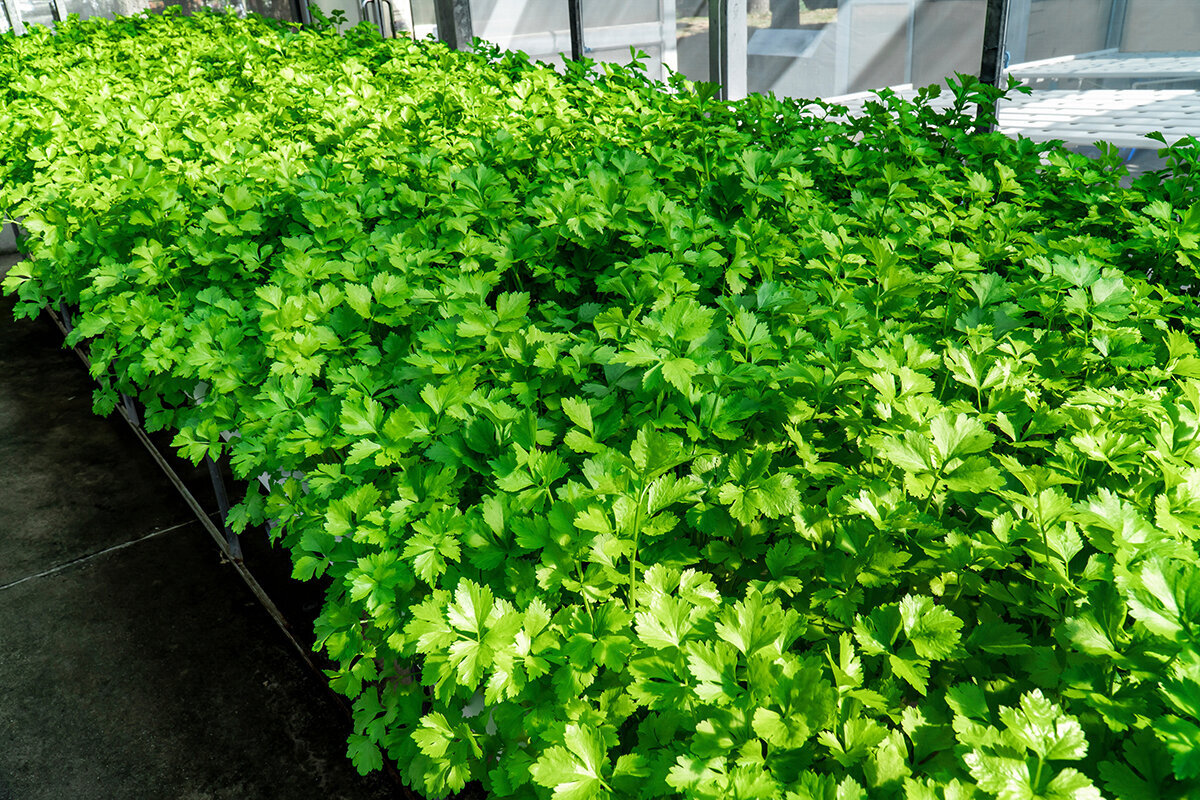
Bloomcabin growing notes · Ireland
Growing coriander / cilantro in a greenhouse
One fast annual can fill two roles: keep it mild and cut early for leafy cilantro, or let selected plants flower and dry for aromatic kitchen spice.
Harvesting the leaves
Cilantro provides the earlier, tender crop.
The herb known as cilantro is Coriandrum sativum when harvested for supple, finely divided foliage and delicate stalks. Greenhouse growing makes this a straightforward kitchen crop: establish a modest patch where it will remain, let firm rosettes develop, then take only the quantity required shortly. Its leaves retain their best character when freshly picked rather than cooked or stored for long.
- Goal: fresh foliage available across several pickings.
- Best method: plant closely and stagger compact sowings.
- Climate priority: Keep roots cool and air moving.
- Crop rhythm: a short run of weeks, not one plant lasting all season.
Harvesting for the spice jar
Coriander ripens slowly into warming spice.
These are the same plants, now left to stretch upwards, open pale umbels and mature rounded fruits. Their leaves become finer and serve a different culinary purpose. Rather than suppressing every flower stem, give selected plants room, collect the crop before it drops and finish drying it under suitable cover.
- Goal: fragrant spice fruits brought to full maturity.
- Best method: generous spacing with air moving freely around each plant.
- Climate priority: moderate warmth becomes useful as the fruits develop.
- Crop rhythm: the entire annual cycle, ending at ripeness.
For a leaf crop
Harvest while tender.→
For a seed crop
Allow the stems to mature.Treat leaf and spice production as separate crops. Cilantro may grow at close spacing and provide repeated cuts, whereas plants kept for coriander fruit need light, room to branch and an uninterrupted flowering period. Trying to take both harvests from every plant often gives too little tender foliage followed by a sparse seed crop. Divide the bed, growing bench or trough deliberately. Two labelled sections are enough: renew the leafy section with small successive sowings, but leave several robust plants untouched once the spice section begins sending up taller stems.
Planning before emergence
Match your sowing method to the intended crop.
Direct sowing usually causes least trouble because coriander makes a taproot and dislikes needless root disturbance. Use sound seed with a loose, structurally stable herb or vegetable compost that releases surplus water readily. A short drill also works in a properly prepared bed under glass. If you start plants in modules, transplant them while very young and keep each root ball intact.
01
Select seed with the final use in mind
For leaves, choose cultivars described as suitable for cilantro or resistant to early bolting. They can lengthen the picking window, but cannot cancel the effects of hot conditions, long days or drought stress. For spice, dependable seed provenance and enough space for sturdy branching plants matter more than cultivar choice. In either case, select fresh, tested seed carrying clear variety information.
02
Make a firm, shallow sowing groove
Sow the round fruits about 1 to 2 cm deep. Cover them evenly, press the surface lightly and water with a gentle rose so they do not collect in clumps. Short rows running across a narrow greenhouse bed are especially useful: each can be labelled, irrigated, cut and cleared separately. Coriander needs neither fresh manure nor heavily fertilised compost; a reasonably fertile base that drains well is enough.
03
Give leafy and seed plants different spacing
A leaf row can begin quite densely. If neighbouring seedlings compete strongly, reduce them to roughly 5 cm apart. Specimens reserved for coriander fruits perform better with about 20 to 25 cm between them. That spacing admits light around the lower growth and gives branched flowering stalks room to form. Where the layout allows, approximately 35 to 40 cm between rows provides comfortable access for tending, checking and gathering the crop.
04
Allow time, but never saturate the row
Germination can take two to three weeks and may be slower again in a cool medium. Keep the top layer evenly damp until shoots emerge, never saturated. A transparent cover can help briefly if greenhouse air is very dry, but remove it after emergence so seedlings are not enclosed in still, moist conditions. Label every sowing with the date and intended crop — leaf or spice — to keep successive batches organised.
The greenhouse trade-off
Provide abundant light while keeping trapped warmth under control.
A greenhouse buffers cold nights, wind and driving rain, yet trapped sunshine can also push coriander rapidly towards flowering. Leaf crops favour brightness without excessive warmth. The priorities are a steady daytime climate, dependable ventilation and a root zone that does not repeatedly overheat. Position a thermometer at foliage height for a representative reading instead of relying on how the entrance feels. Start venting through the roof and doorway as the structure warms during the morning, before plants visibly wilt.
Light
Place coriander where it receives plenty of light. In hot weather, modest shading on the sunward side is preferable to deep shade. Softer morning sunshine remains useful; a gloomy position instead produces stretched, pale stems with poor strength.
Temperature
For leafy growth, mild daytime conditions and somewhat cooler nights are favourable. As heat builds, the harvestable phase contracts quickly. Avoid both an overheated rooting zone and sharp temperature swings; opening the greenhouse in good time is more effective than responding after stress appears.
Air circulation
Start venting early on warm days, using the doorway and roof openings to create a gentle passage of air. A small fan can help in pockets where air otherwise stays still. Circulation lets plant tissue dry sooner and evens out temperature differences, making it a practical growing measure.
Water
Direct irrigation onto the compost, ideally in the morning, and let wet leaves dry before nightfall. Constantly damp surfaces combined with warm, unmoving air encourage soft tissue and raise the risk of problems affecting foliage or young seedlings.
Recognising the change from leaves to flowers
Five visible cues define the cutting period
01Rosette
Begin cutting
Begin cutting
02Rising centre
Take the main harvest
Take the main harvest
03Feathery upper leaves
Pick a purpose
Pick a purpose
04Umbels forming
Commit to seed
Commit to seed
05Fruits setting
Finish them dry
Finish them dry
Read the stages, then respond. A low rosette of rounded foliage is the prime stage for cutting cilantro. As its centre starts to lift, take a generous harvest but retain the growing point. Narrow, finely divided leaves higher on the plant signal that development is turning towards height and bloom. When branched stems and umbels appear, choose a course: remove the first flower growth in the hope of gaining a little more leaf time, or let labelled plants continue towards spice production. Their initially green fruits later become yellowish, straw-coloured and pale brown, ending the leaf harvest. Bolting rarely has one trigger. Long days, hot conditions, dry roots, irregular watering, crowding, root damage and natural maturity can all contribute. Vent earlier, reduce severe afternoon exposure, water before wilting and harvest promptly. Sow the following batch before the current one is exhausted.
Keep another row coming behind the first
Think in overlapping batches rather than a single date.
One large sowing creates a brief glut. Starting smaller portions at intervals of two to three weeks gives a more useful sequence: new foliage, rosettes ready to cut, an emerging replacement drill and a chosen group left untouched for flowering and spice production.
Illustrative seasonal sequenceMarAprMayJunJulAug
Batch A · leafemergence and young foliage
Batch B · leafmain leafy harvest
Batch C · leafemergence and young foliage
Batch D · leafmain leafy harvest
Plants reserved for seedflower, mature, finish dry
Young foliage and follow-on sowing Prime leaf-cutting window Deliberately retained spice plants
The chart illustrates a method rather than promising exact dates. Ireland’s Atlantic setting creates marked local differences: coastal sites may be milder but more exposed to wind, while inland gardens can experience air frost even in spring. An initial protected sowing may be practical in late February or March once light levels and compost conditions support growth. During hot summer periods, the leaf window narrows; improve ventilation, apply light shade or pause before restarting in late August. With no supplementary lighting, winter plants normally grow too weakly to provide a reliable leaf harvest.
Gathering the leafy crop
Leave enough active growth to support another flush.
The turquoise marks show where productive cuts can be made. Keep the growing point shown by the red line if you want another flush.
Three practical harvesting approaches
- Outside stems first: Remove the larger outer stalks and allow the inner foliage to keep expanding. This approach suits the occasional handful required immediately for cooking.
- A modest row trim: Cut across a dense young drill just above the growing point, keeping a short base that still carries leaves. It is quick and tidy, although successful regrowth depends on healthy plants with adequate moisture and nutrients.
- Protect the crown: Cutting flush with the soil completes that planting. It is appropriate when an old row is being cleared, but not if a further flush is expected.
Keep the fresh character: Pick once the foliage is dry, either in the morning or during another cool spell. Wash the stalks only when you are ready to use them if possible. For short storage, place them loosely in a glass containing a little water and move it somewhere cool. Freeze surpluses after chopping them into portions. Drying removes much of the leaf’s lively citrus note.
A sensible layout makes routine care easier. Put leaf coriander at the front of a growing bench or close to the entrance, where cutting, watering and repeat sowing are convenient. The Classic Aluminium Greenhouse.
Bringing the spice crop to a warm, dry finish
Reserve selected plants for bloom, then allow time for ripening.
Once plants are allocated to spice production, stop taking regular leaf cuts from them. They will form airy, flat umbels of pale flowers followed by round green fruits. Flowering coriander may stay in the greenhouse if it does not shade younger leaf rows or interfere with airflow. Open doors and vents also give hoverflies and other useful insects access to the blooms. Vent thoroughly so foliage and fruit heads dry quickly following watering. Tall stems may be supported gently where required, taking care not to disturb the fragile umbels repeatedly.
01Green
02Colour shifting
03Drying begins
04Finish under cover
05Separate and store
- Green: These tender fruits are continuing to fill and have not yet acquired the warm character of the finished dry spice. Keep them attached until they mature further.
- Colour shifting: Watch the umbels change from green to yellowish beige, then straw and pale brown. Because flowering is staggered, ripening will also be uneven, so inspect the plants regularly.
- Drying begins: When most umbels have turned straw-coloured or light brown, cut complete stems on a dry morning before the first mature fruits are shed in quantity.
- Finish under cover: Suspend the cut stems upside down within a clean paper bag or similarly breathable wrapping. Keep them in a dry, comfortably warm, well-ventilated place; the bag will catch any fruits released as drying finishes.
- Separate and store: Rub fully crisp umbels with care, remove pieces of stalk and husk, then keep the intact fruits in a tightly sealed glass container away from warmth and direct light.
Waiting for all umbels to darken fully risks losing the earliest crop. In greenhouse warmth, ripe fruits may fall while later clusters are still green. Cut the stems when a clear majority has changed colour and finish them under shelter with good ventilation. Grind coriander immediately before cooking whenever possible, preserving its warm blend of citrus and woody notes.
Troubleshoot without overreacting
Use symptoms to identify causes and choose an appropriate response.
Flowering starts when plants are only 12–15 cm tall
Likely cause: excessive heat around the roots, abrupt temperature peaks, drought, markedly uneven watering or waiting too long before the first harvest.
Response: Increase ventilation earlier, lightly screen the strongest afternoon sunshine and water before leaves begin to droop. Sow a fresh, small batch straight away. Removing an early flowering shoot may add a little cutting time, but succession sowing is the sounder option once plants have committed to bolting.
Foliage appears pale, frail and elongated
Likely cause: inadequate brightness, excessive crowding or saturated compost that leaves roots functioning poorly.
Response: Move pots into better light, thin congested drills and allow the compost’s upper layer to dry slightly between waterings. Put light, airflow and irrigation right before considering a modest feed. Excess nutrition can make foliage grow quickly, but the resulting tissue is often soft and less aromatic.
Lower foliage yellows and central growth looks tired
Likely cause: saturated soil, oxygen-starved roots or an ageing crop naturally preparing to flower.
Response: Check outlet holes and saucers, and assess whether the bed soil still has an open structure. Water less frequently while it remains wet. Clear away ageing specimens rather than forcing them through another cutting cycle; a newly sown row is a better basis for the next harvest.
Aphids gather on soft growing tips
Likely cause: lush, tender growth under shelter lets unnoticed pests multiply quickly in the greenhouse climate.
Response: Check young growth and leaf undersides twice a week. Move badly infested plants aside or dispose of them, rinse small colonies away gently and improve airflow. Yellow sticky traps can indicate winged aphids, but they do not replace looking closely at the crop. If treatment is needed, use only a product authorised in Ireland for amateur use on edible herbs, and follow the label exactly.
Young plants topple where stems meet the compost
Likely cause: damping-off encouraged by too much water, old compost, poor cleanliness, dense sowing or continuously warm, wet and still conditions.
Response: Discard affected seedlings, clean every used container and begin again with new compost. Space the seed more widely and wet the growing medium rather than continually splashing the leaves. Do not shut the greenhouse at night while surfaces remain wet and the atmosphere is both warm and humid.
Planning coriander crops in Ireland
Cover moderates the weather but cannot erase local conditions.
Coriander timing differs across Ireland. Protection gives the grower extra control, but the crop continues to favour good daylight and mild conditions. Use the available light, cold nights, wind exposure and summer warmth to set the schedule.
Coasts and exposed locations
After dull, cold weeks, direct sowings under cover may start slowly, even where maritime influence keeps average conditions milder. They can then remain leafy for longer in late spring. Use bright mornings, close the structure initially after frosty nights and ventilate once sunshine raises the temperature. Shield seedlings from chilly winds while avoiding cold, sodden compost. A strong winter crop cannot be relied upon without supplementary heat and grow lights.
Inland and higher sites
Early batches perform well beneath glass if light, watering and ventilation are kept in balance. There is no need for a sudden burst of tropical heat after a frosty night; let the plants warm gradually. From June through August, an unheated greenhouse can become hotter than outside during the afternoon. Keep leafy sowings near effective vents, apply modest shade if required and plant only small batches. A dependable second leaf season can follow the hottest part of summer.
Sheltered, milder gardens
Sow promptly in mild gardens and expect flowering to accelerate as temperatures rise. Provide ample ventilation, lightly shade the strongest sunny side and focus leaf harvests on early spring, spring and late summer. During midsummer, taking a break may work better than repeatedly fighting bolting. A selected spice crop can use those sheltered, well-aired conditions to ripen its fruits. Continue watering the soil evenly, while allowing maturing umbels to stay as dry as possible.
Where floor area is limited, create a compact herb section with the Aluminium Mini Lean-to Greenhouse. Use deep containers for coriander’s taproot instead of shallow dishes, and ventilate before heat accumulates. For larger successive rows, the Classic Aluminium Greenhouse offers bright, easily organised growing space.
Answers for greenhouse herb growers
Coriander under glass: common questions
Can coriander grow year-round under glass?
It is possible where the crop remains free from frost and receives additional growing light. Ireland’s natural winter light is usually too limited for strong, continuous leaf production. Development slows substantially in an unheated cold greenhouse, whereas excessive summer warmth sends plants rapidly into flower. The protected space is most useful for advancing early sowings, maintaining spring and autumn batches, and sheltering spice fruits as they mature. Treat coriander as a succession crop, replacing rows regularly rather than expecting one plant to remain productive indefinitely.
How long does germination normally take?
Allow roughly two to three weeks in favourable conditions, with extra time possible in cold compost. Keep the soil uniformly moist but never waterlogged, and resist digging into the drill to check the seed. Uneven sowing depths and repeated swings between dryness and heavy moisture commonly result in irregular emergence.
Does coriander fruit need separating before planting?
The rounded fruit normally holds two separate seed-bearing sections and may be divided gently, but doing so is not essential for reliable garden results. Seed freshness, an even sowing level, restrained watering and loose compost matter considerably more. Do not grind or shatter the fruit, because injured sections germinate weakly or not at all.
What depth of container suits coriander?
Provide at least about 20 cm of usable depth, together with a clear drainage opening, so the taproot can develop. One wide trough is usually more practical than a collection of little pots: it has room for short drills that can be labelled by purpose and sown in sequence. Empty any water left in a saucer, and select a structurally stable compost through which surplus moisture drains readily.
May coriander share greenhouse space with tomatoes?
Yes, provided coriander’s preference for cooler conditions is respected. In summer, the tomato section is often the greenhouse’s brightest and hottest area, which can speed up bolting. Set the herbs towards a cooler edge where air circulates, but away from a draught that dries them rapidly. Keep replacing the rows while young, supply water evenly and ensure tall tomato plants do not leave the coriander in complete shade.
How can ripe coriander fruits be recognised?
Harvest once most umbels have shifted away from green towards straw, beige or light brown, and the fruits feel firm rather than soft. Cut the stalks before the first ripe coriander begins dropping at a touch. Afterwards, let the crop become completely dry in a paper bag or other breathable covering.
References and useful reading
Background sources used for the cultivation guidance
Explore related Bloomcabin pages: automatic greenhouse window openers · Bloomcabin aluminium greenhouse FAQ · Bloomcabin greenhouses and conservatories
- DLR Rheinland-Pfalz — leaf coriander cultivation notes: German variety and crop guidance focused particularly on leafy production and the tendency to flower.
- Oregon State University Extension — growing coriander: advice about managing separate foliage and spice crops, establishing seed and responding to warm growing conditions.
- Utah State University Extension — cilantro and coriander guidance: information about planting depth, spacing, irrigation, flower development and completing the spice harvest.
- NC State Extension — plant profile for Coriandrum sativum: botanical and horticultural details concerning preferred conditions, growth form and culinary roles.
- University of Wisconsin–Madison Extension — coriander overview: a summary of annual development, cutting foliage, transition to bloom and culinary use of mature fruits.
- Royal Horticultural Society — growing coriander successfully: practical recommendations for establishment, routine care, recurring cuts and management through the seasons.
Adjust every recommendation for your cultivar, greenhouse type, light levels and particular garden conditions. For a compact structure with sheltered room for deep herb pots, explore the Aluminium Mini Lean-to Greenhouse.
Leaf harvest
Prioritise tender foliage.
Reserve a short drill for foliage and sow its replacement before the crop reaches peak production. Use the first tender cut for dinner rather than leaving it until bolting has already begun.
Seed harvest
Save a crop for seasoning.
Give several vigorous plants enough space to rise, and let their umbels ripen quietly with air passing around them. Store the completely dried fruits in glass, ready to flavour meals during winter.
